MOSAICO: Italian Code of a Timeless Art
Patricia and Phillip Frost Art Museum
Until 22 February 2026
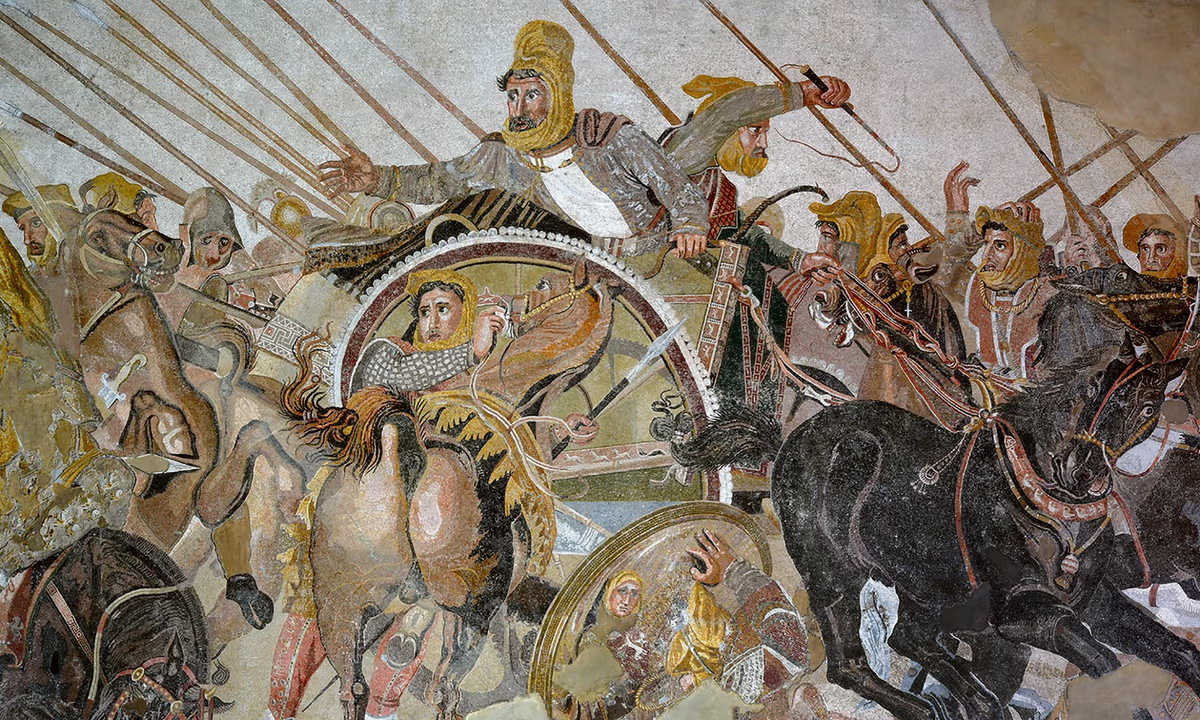
Fragments of a mosaic floor that once adorned a ship belonging to Caligula, the tyrannical Roman emperor, have landed in Miami. The Frost Art Museum at Florida International University (FIU) is presenting the restored artefact along with 11th-century mosaic stone slabs. All are on view in the US for the first time, thanks to loans from the world’s oldest museum, the Capitoline in Rome. The exhibition, titled MOSAICO, unites these pieces with digital representations of major Italian mosaics that immerse viewers in intricate histories of ruin and repair.
MOSAICO is a collaboration with the Italian Ministry of Foreign Affairs and International Cooperation, and the Italian Cultural Institute and Consulate General of Italy in Miami. “It came together through a shared vision of cultural exchange and education,” says Miriam Machado, the Frost museum’s interim director. “It was a great opportunity for us to integrate art history and technology.”
The twin stone slabs, from the tombs of Saints Benedict and Scholastica, greet visitors at the exhibition entrance. They hail from an abbey church in Montecassiano, in Italy’s eastern Marche province, and depict dogs in checkerboard patterns of red glass paste and white marble tesserae, or tile. The canine design perhaps symbolised the saints’ safe journey to the afterlife. The slabs, which once adorned the abbey floor, disappeared under 18th-century paving and were rediscovered after bombings during the Second World War.
The artefacts’ craftsmanship features techniques refined during the Hellenistic period between the third and second centuries BC, when artisans set cube-like pieces of stone into mortar. The method spread throughout the Roman Empire in subsequent centuries. The other major Roman technique, opus sectile, created images from larger sections of inlaid marble.
Visitors advance from these works into an exhibition layout organised by region. Six sections detail architectural standouts, some of them Unesco World Heritage sites, from Sicily to Aquileia, west of Italy’s Slovenian border. Immersive digital projections by Magister Art bring viewers into the Mausoleum of Galla Placidia in Ravenna, where mosaics depict starry blue skies, floral designs and an elaborate composition of Jesus as the Good Shepherd among his sheep. Other projections transport visitors to a luxurious residence in Pompeii and to the Basilica of San Vitale, consecrated in AD547. The latter features a dazzling mosaic of an imperial procession.
Winning images of daily life appear amid these religious and royal motifs. The Piazza Armerina section includes the strikingly contemporary “Bikini Girls” mosaics from the fourth century AD. Ten barely clad female figures participate in sporting events and receive awards. One lifts weights, while two appear to bat a ball back and forth. The work adorned a reception hall of Sicily’s Villa Romana del Casale, which features more than 3,000 sq. m of mosaics.
Restoration over generations
The restoration from Caligula’s ship appears at the entrance to the museum itself. It unites both Roman mosaic techniques—tessellatum and opus sectile—to create a hypnotic composition of red porphyry disks surrounded by green, white and red patterns and curves that ripple and radiate in symmetrical quadrants. The antiquarian Eliseo Borghi assembled the restoration in 1895, though Italian fishermen had searched for pieces from the ship for centuries. The vessel sank in Lake Nemi, outside Rome, becoming an icon of a bygone empire. Mussolini even drained the lake during his reign in an attempt at further recovery.
The exhibition raises timely questions about the relationship between adornment, restoration and nationalist mythologies. “There’s a 2,000-year-old history of Italian mosaics,” Machado says. “You can’t always travel to Italy and access these archaeological sites. We have artefacts that you can experience. It’s a tradition that’s relevant today; digital technologies enhance the ability to engage and learn.”