







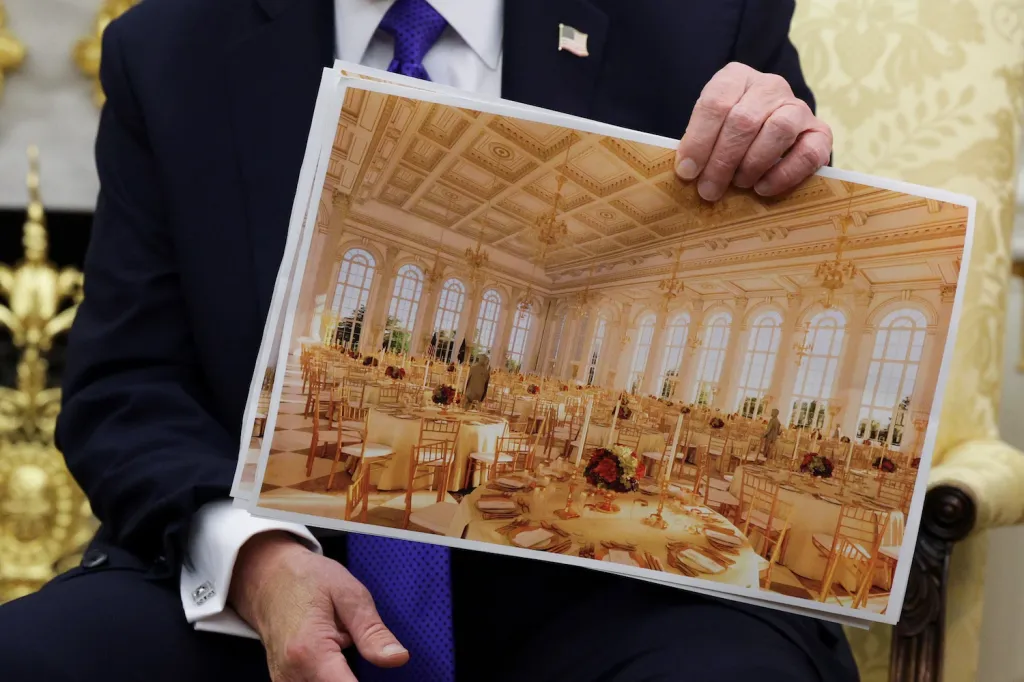
Donald Trump’s $400 million plan to remake the White House with a sprawling ballroom has hit a familiar Washington obstacle: Congress—and a judge who says he cannot go around it.
A federal judge earlier this week, passionately and emphatically, ordered construction on the project to stop unless lawmakers authorize it, throwing the future of the ballroom into doubt and forcing the administration into a choice it has so far avoided: fight on Capitol Hill or in the courts.
On Capitol Hill, there is little sign of a rescue. Democrats have dismissed the project outright, while Republicans have largely steered clear of the issue, wary of tying themselves to a costly and unpopular proposal in a midterm election cycle.
The ruling itself left little room for interpretation. In a sharply worded opinion, U.S. District Judge Richard Leon rejected the administration’s claim that the president could proceed without congressional approval, writing that Trump is “the steward of the White House,” not its owner.
That finding cuts directly against the logic of the project. Trump has framed the ballroom as a privately funded upgrade, backed by what he has called “patriot donors,” and pushed ahead with construction after demolishing the East Wing last year. But the court found the funding question beside the point, citing long-standing statutes that require Congress to authorize major construction on federal land.
The White House has already appealed, and Trump has struck a defiant tone, insisting that congressional approval has never been required for projects like his. Lawmakers and historians say otherwise, pointing to more than a century of congressional involvement in changes to the White House grounds.
For now, the administration appears to be betting on the courts rather than Congress. That may be the simpler path politically. Seeking authorization would likely trigger a prolonged and highly visible fight over the scale, cost, and purpose of the ballroom—a project critics have already cast as a vanity exercise, and one that now sits stalled by court order.


