







The United Kingdom’s Department for Culture, Media and Sport (DCMS) has accepted several recommendations from a report last year aimed at increasing access to the arts in the country. One of these would require international visitors to pay an entry fee to visit the UK’s national museums, according to a report in the Financial Times.
The initial report, reviewing the Arts Council England, was published last December and led by Baroness Margaret Hodge, a former member of Parliament. It was then sent for review by the UK government, which has accepted several of the recommendations in the report.
Per the FT article, the implementation of charging international visitors to enter national museums is “conditional on the government first rolling out a universal ID scheme, which would make it easier to differentiate domestic and international visitors.”
The entry fees for international visitors, as well as “incentivising philanthropy [and] cultural tax reliefs,” are meant to fund the other recommendations, which include a new fund aimed at supporting aspiring artists, access to arts education to every child, and funding arts programs across the country, so “people will be able to experience artistic excellence where they live, realise their creative ambitions and build skills for a career in our high-growth creative industries,” according to a release by the UK government announcing its acceptance of the recommendations.
“For far too long, the benefits of culture have not been equally distributed,” UK culture secretary Lisa Nandy said in a statement. “We must seize the opportunity we have to build a culture sector that works for the whole country and provides the tonic we need in the face of division.”
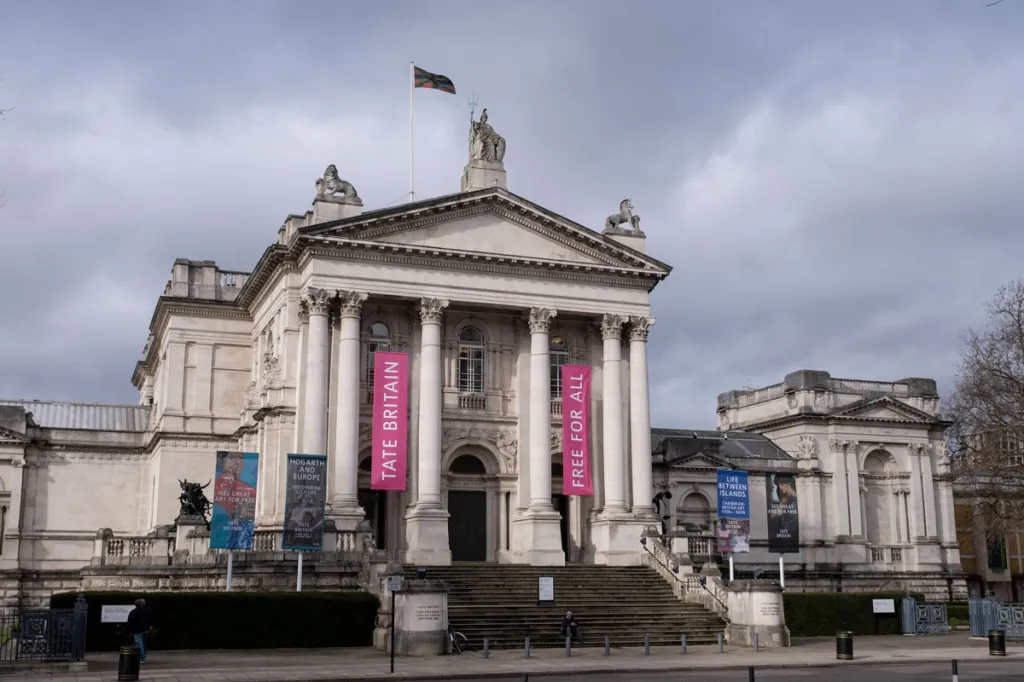
The policy change would affect museums like Tate, the V&A, the British Museum, and the National Gallery, all of which provide access to their collections for free. (Some of these already charge ticket prices for special exhibitions, especially high-profile ones like Tate Modern’s current retrospective, which is £20 for non-members.)
Several high-profile UK museum leaders have come out against it, with V&A director Tristram Hunt telling the FT this week that his museum was not “institutionally attracted to” charging international visitors, and outgoing Tate director Maria Balshaw telling the paper last week that a tourist tax to England should be imposed instead of charging entry to the UK’s museums.
A UK governmental report for 2023–24 states that international visitors to 15 museums sponsored by the DCMS made up 17.5 million between April 2023 and March 2024, or about 43 percent. The FT report suggested that admission could range between £15 and £20, which, if international figures hold steady, would generate between £262 million and £350 million, though visitor figures would likely drop once an entry fee is impose.
According to the Art Newspaper’s annual museum visitor report for 2024, the British Museum was the world’s third-most visited museum, receiving just under 6.5 million people, with Tate Modern coming in at fifth with 4.6 million visitors.
While the British Museum beat the record-number of 6.2 million visitors it received in 2019, several UK museums are still recovering from the pandemic and have yet to meet pre-Covid figures. In teasing its 2025 survey, the Art Newspaper reported that the National Gallery saw 4.2 million in 2025, an increase from the 3.2 million of 2024, but still nowhere close to the 6 million it got in 2019.
In a statement, UK arts minister Ian Murray said, “We will stand alongside the Arts Council as they implement these reforms to revolutionise the way we fund the arts in this country and the way we work with creatives and the public to provide the access to culture that our country needs, wants and deserves.”


