






Several Unesco World Heritage sites in Iran, along with other historic landmarks, have been damaged in an intensifying campaign of US-Israeli strikes, threatening some of the nation’s most treasured cultural sites.
In the city of Isfahan, local media reported on Monday that the 16th-century Chehel Sotoun Palace (Forty Columns) and sites within the 17th-century Naqsh-e-Jahan Square were damaged when a strike hit the provincial governorate building in the Dawlatkhaneh complex, which also dates to the 17th century and lies in city’s historic centre.
Located about a five-hour drive from Tehran, Isfahan is one of the most significant relics of Iranian art and architecture, built under the Safavid dynasty (1501–1736), during the country’s political and cultural revival following the Mongol and Timurid invasions of the late medieval period. The city contains some of Iran’s most celebrated architectural landmarks—bridges, palaces, cathedrals, synagogues and bazaars—many of which are still in every-day use and situated in densely populated areas. It has witnessed some of the most intense attacks in recent days.
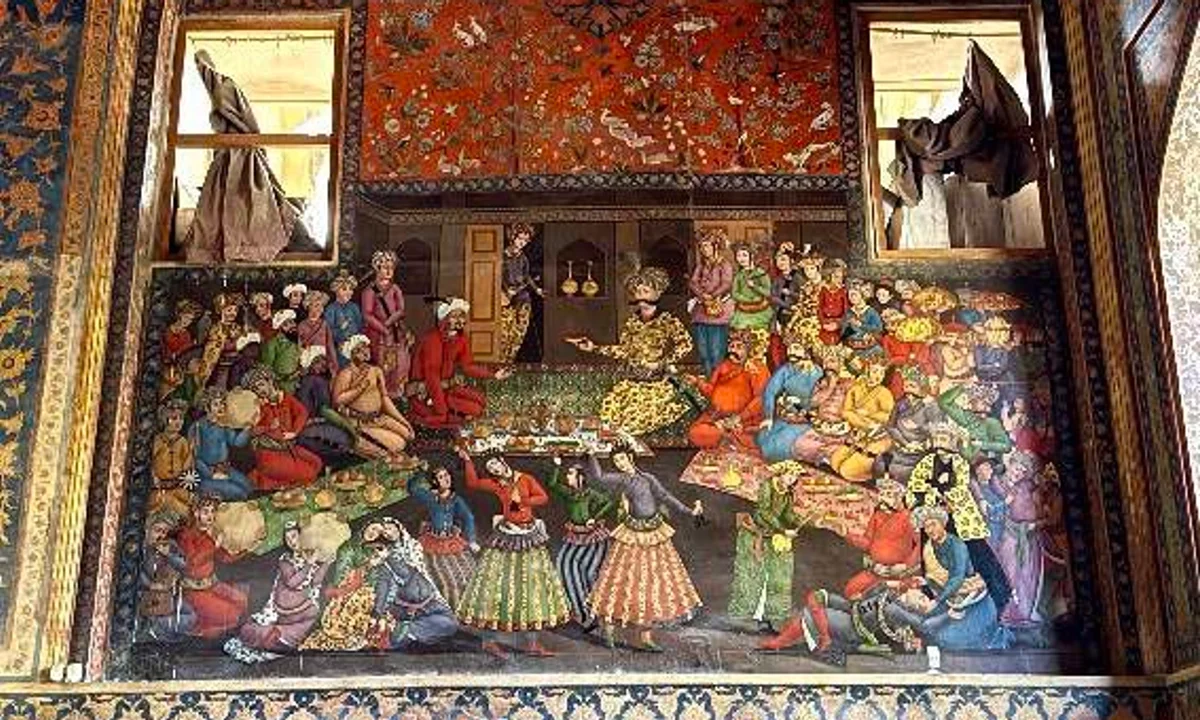
Images and video published by local media show scattered debris, shattered windows, and broken wooden doors at the 17th-century Chehel Sotoun Palace. The monument is listed by Unesco as part of Persian Gardens World Heritage inscription, a group of nine historic gardens illustrating the evolution of Persian garden design. Chehel Sotoun is renowned for its extensive frescoes depicting historical battles, royal receptions and scenes from Persian mythology, which are among the largest, most unique examples of Persianate painting.
Another view of the Chehel Sotoun palace, showing damage done to the windows and fittings
Provincial officials were quoted saying the site’s famous Safavid mirror-work decorations were also damaged, while indicating that the palace’s interior paintings appear to have been largely spared. Videos show that a large crack has opened down the middle of one of the palace’s 17th century frescos—depicting the Iranian Safavid ruler Shah Tahmasp and the Indian Moghul Humayun—possibly exacerbating the work’s existing fragility.
Nearby, in the popular Naqsh-e-Jahan Square, also known as Meidan Emam, authorities reported that the 17th-century Ali Qapu Palace had its doors and windows shattered, while the 17th-century Jame Abbasi Mosque, also known as Shah Mosque, sustained damage to sections of its iconic turquoise and calligraphic tiles. Officials told local media the site is being assessed and that a damage report would be submitted to Unesco.

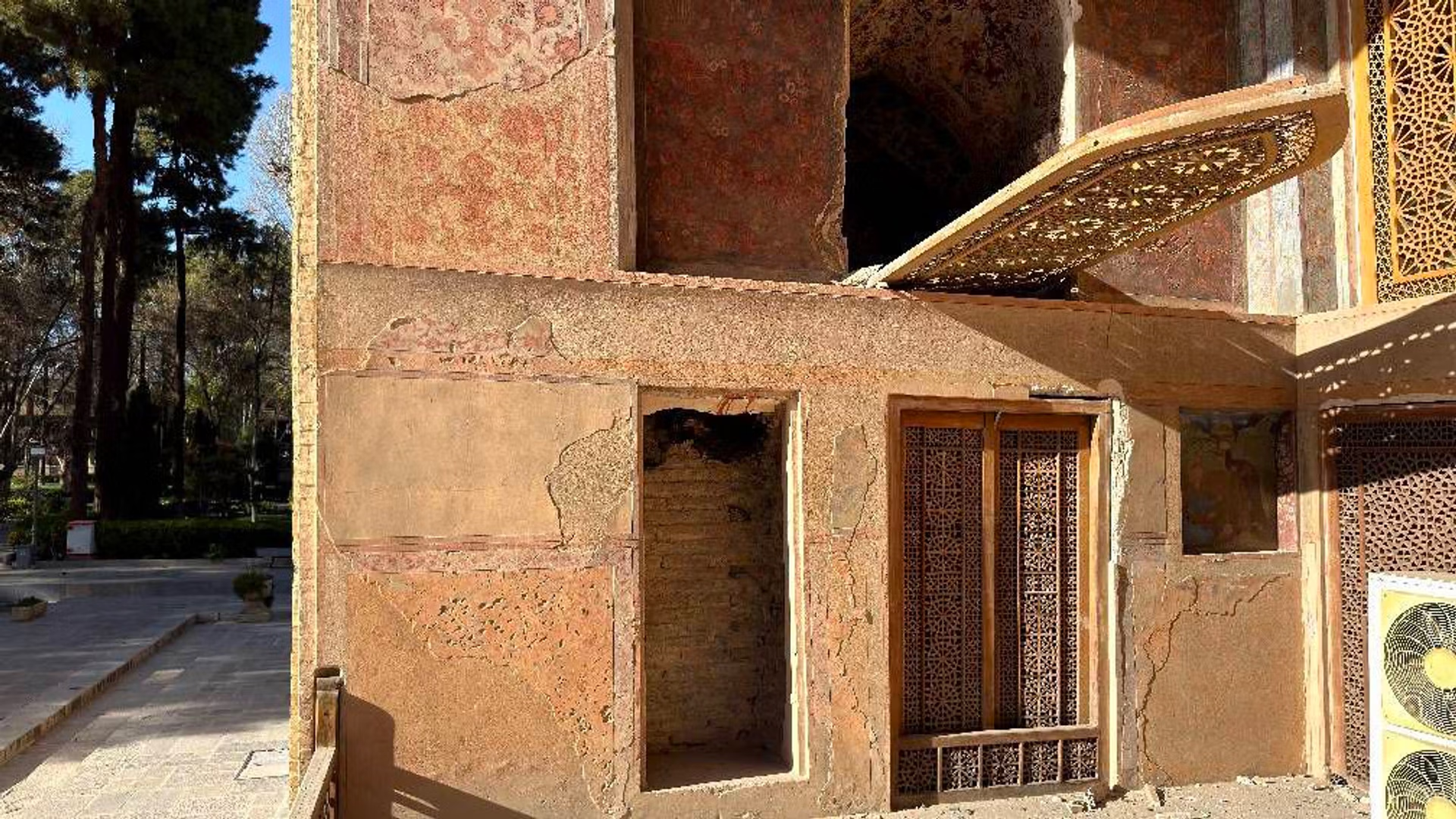
Damage to a carved fretwork panjareh window at the Chehel Sotoun Palace
Several other sites within the Safavid-era Dawlatkhaneh complex also reportedly suffered damage. These include the 17th-century Rakeb-Khaneh pavilion (House of the Jockey), originally built to store the equestrian equipment and the harnesses of the royal stables, Ashraf Hall, a highly decorative residential structure associated with the Safavid court, and the nearby 15th-century Teymouri Hall, a Timurid-era building later converted into the Natural History Museum.

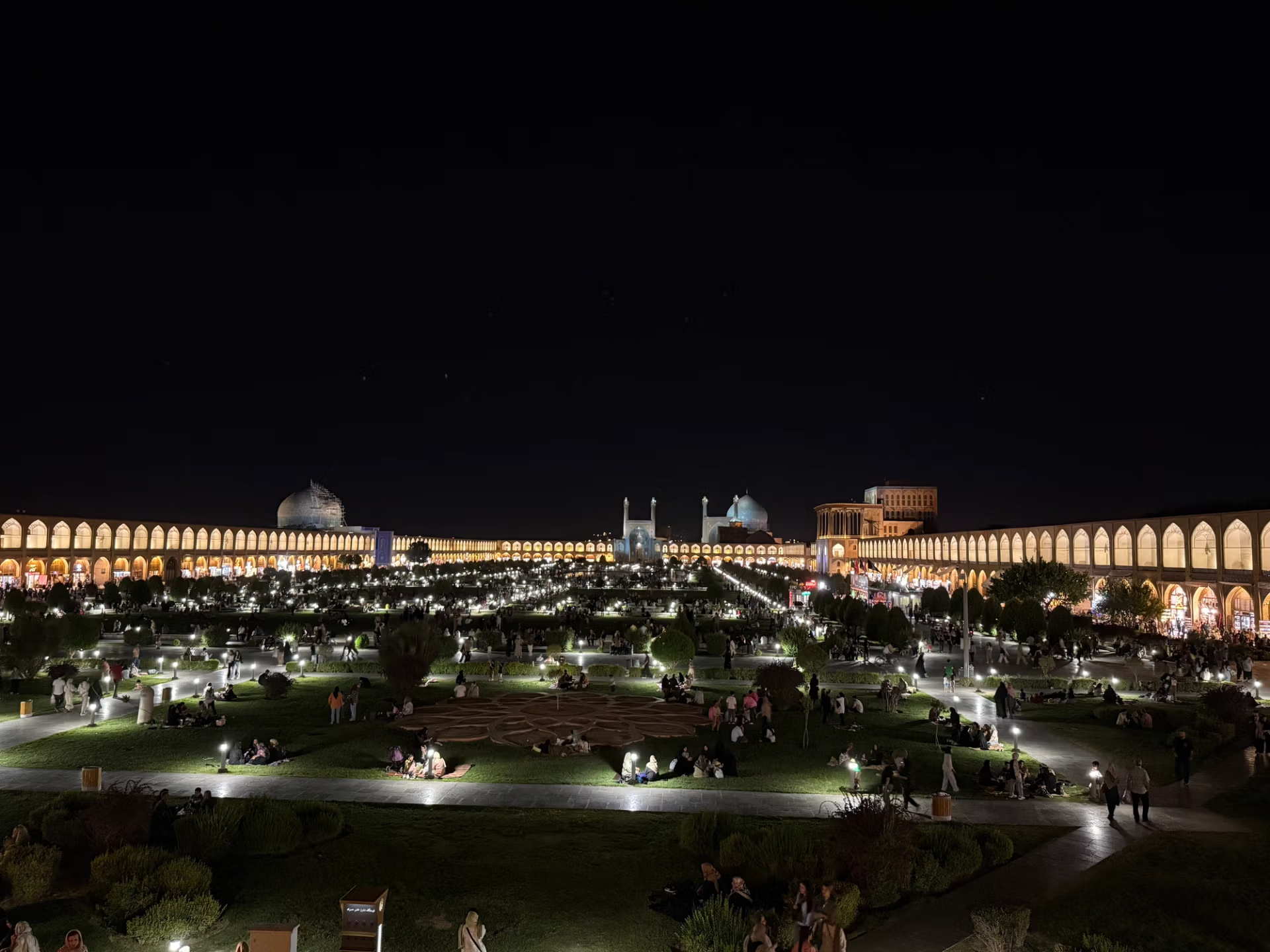
Naghsh-e-Jahan square, Isfahan, (August 2025)
Sarvy Geranpayeh
Protecting heritage
Prior to the US-Israeli strikes that began on 28 February and the retaliatory Iranian attacks that followed, authorities had taken precautions to protect the country’s artefacts. In anticipation of potential attacks, museums objects were moved to secure locations. Officials confirmed that similar precautions had been taken for the museum objects from the Rakeb-Khaneh pavilion.
With the attacks now intensifying, authorities across the country have been racing since last week to install the Blue Shield emblem at historic sites and museums. The symbol, recognised under the 1954 Hague convention and used to mark cultural property that should be protected during armed conflict, has been placed in an effort to safeguard some of Iran’s most important monuments.

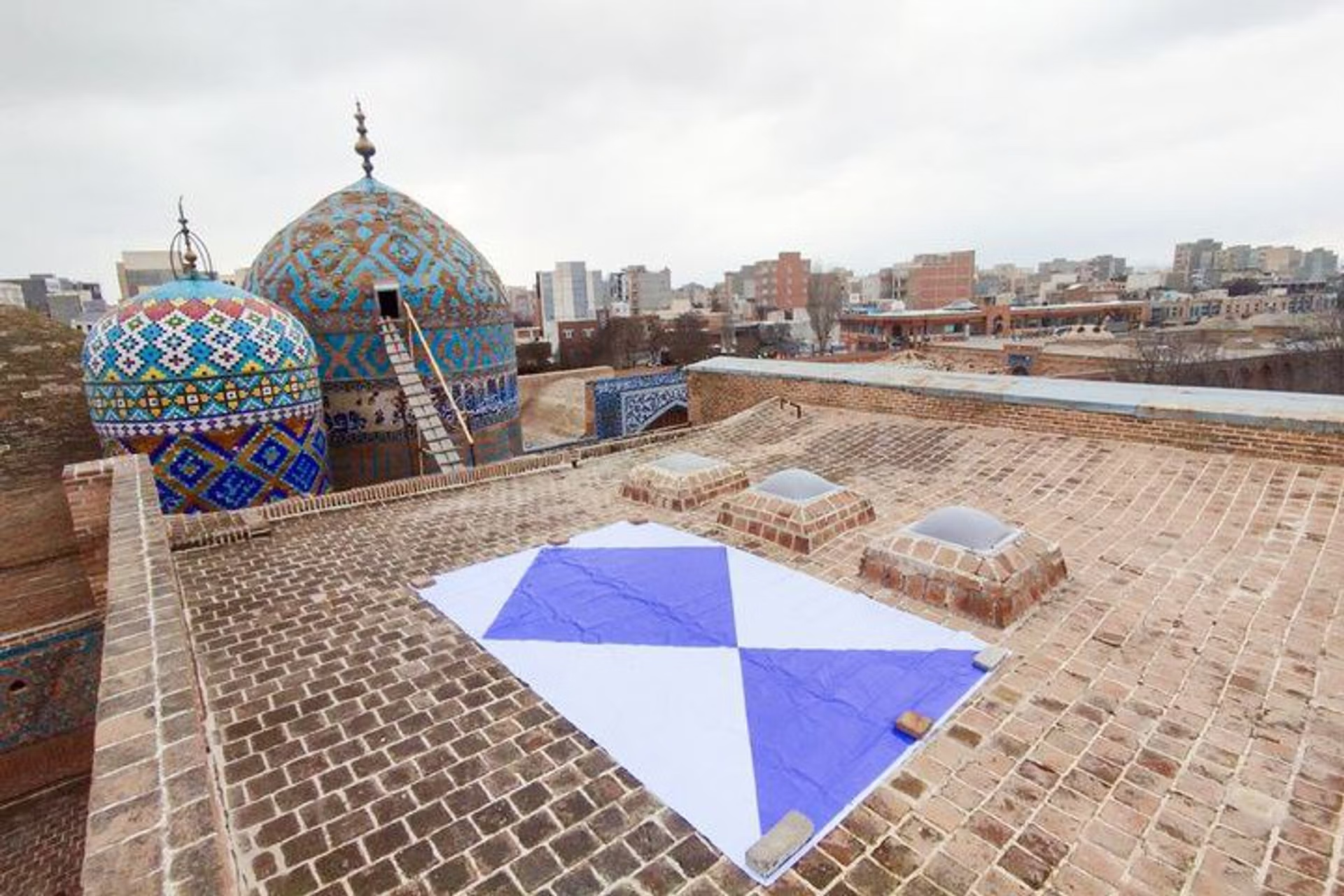
An example of the blue shield emblem, designed to mark heritage sites in the event of aerial bombardment
However, according to officials in Lorestan province in western Iran, the presence of the emblem did not prevent damage to the third-century Falak-ol-Aflak Citadel in Khoramabad on Sunday.
In a video published online by local media, Ata Hassanpour, the head of Lorestan province’s cultural heritage department, says that a US-Israeli strike on the perimeter of the citadel at 5.30pm local time on Sunday destroyed the province’s cultural heritage department and seriously damaged the site’s archaeology and anthropology museums. According to Hassanpour, the citadel’s barracks, officers’ club, regimental building, and several other surrounding historic spaces were also damaged. “Fortunately, the main structure of Falak-ol-Aflak Castle was not damaged,” he adds. Five staff members were reportedly injured and taken to hospital.
Dating back to the Sassanian period (224-651 AD), the Flak-ol-Aflak Ciadel sits in the historic Khorramabad Valley, a site with over 65,000 years of human history. The prehistoric sites of the valley became Iran’s newest site to be inscribed on the Unesco World Heritage List in 2025.
The most recent damage to Iran’s cultural heritage sites comes a week after a strike that damaged Golestan Palace, Tehran’s only Unesco World Heritage Site, which dates back to the Safavid era but was largely constructed during the subsequent Qajar Dynasty (1789-1925).
Iran’s ministry of cultural heritage, tourism and handicrafts released a statement via local media on Monday, urging Unesco, the United Nations, and other international bodies to activate legal and monitoring mechanisms to protect cultural heritage during conflict, and to dispatch independent experts, observers, and journalists to assess the damage and evaluate the harm inflicted. Cultural property is protected under international law, notably the 1954 Hague Convention for the Protection of Cultural Property in the Event of Armed Conflict, including its enhanced protection mechanism, as well as the 1972 Convention concerning the Protection of the World Cultural and Natural Heritage
The Art Newspaper reached out to Unesco for comment, however, no response was received by press time.
The human cost of the conflict continues to rise across the region. According to the Iranian Red Crescent Society more than 1,250 Iranians have been killed in the war so far. The US Central Command says seven US servicemen have been killed. Israeli strikes on Lebanon have killed at least 400 people and displaced almost 700,000, according to authorities, while at least 11 people have reportedly been killed in Israel.
At least 12 civilians have been killed in attacks across the Emirates, according to a tally in the New York Times. The US-Israeli assault and the killing of Khamenei has also sparked protests in Pakistan, Bahrain and Iraq, including attempts to attack US embassies and consulates, with at least 22 fatalities in Pakistan alone. The US has closed a number of its embassies in the region and on Sunday ordered its “non-emergency US government employees and US government employee family members” to leave Saudi Arabia due to rising security risks in the region.


