






Marking the latest chapter of India’s art market ascension, the auction record for a South Asian painting has been broken just one year since it was last set.
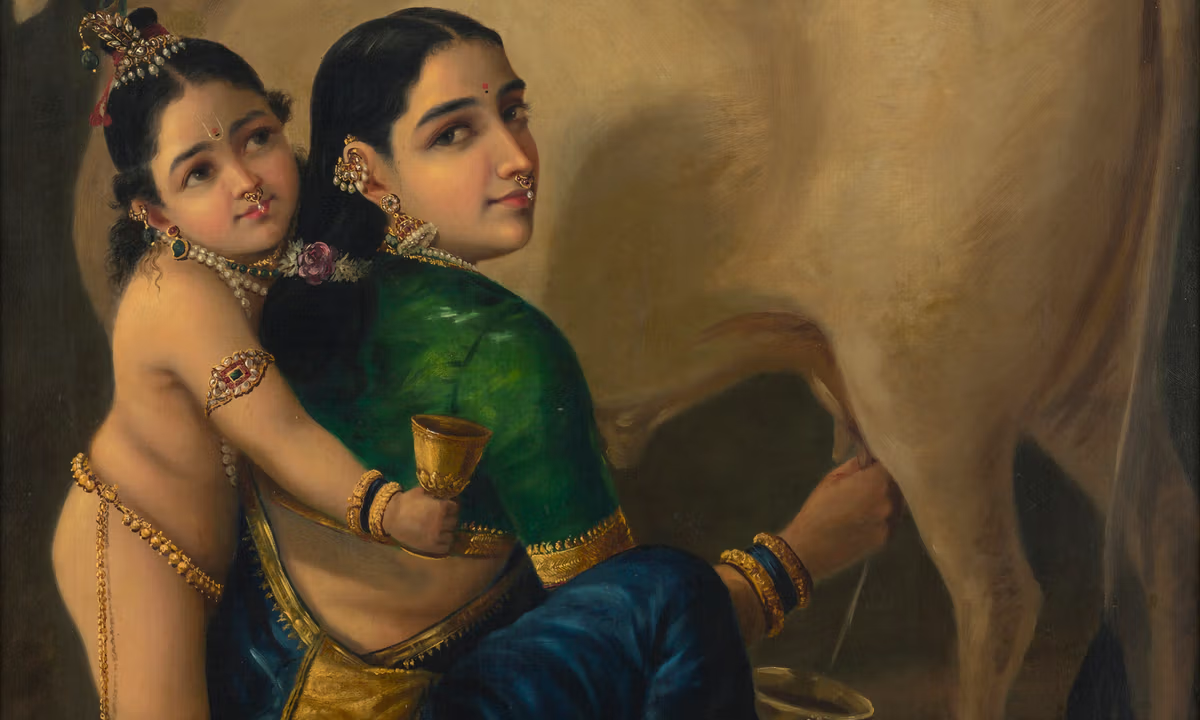
On 1 April, Raja Ravi Varma’s Yashoda and Krishna (1890s) hammered at $15m ($17.9m, or 1,672m Indian rupees, with fees) at Saffronart in Mumbai, outperforming its $8.6m to $12.9m estimate. It dethrones MF Husain’s Gram Yatra, which made $13.7m (with fees) at Christie’s New York in March 2025.
Yashoda and Krishna is also the second-highest price paid for any work of art from South Asia, the record for which remains $24.6m, paid for a 12th-century black stone figure of a bodhisattva from northeastern India, sold at Christie’s New York in 2017.
Cyrus Poonawalla in 2019
© BY-NC-ND 2.0 via Flickr
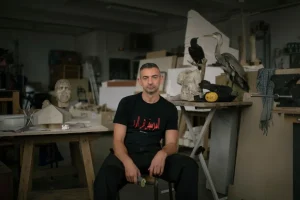
The Ravi Varma painting was bought by the Indian pharmaceuticals billionaire Cyrus Poonawalla, according to a representative for Saffronart. Poonawalla said in a statement: “This national treasure deserves to be made available for public viewing periodically, and it will be my endeavour to facilitate this going forward.”
A shot in the arm
Poonawalla is the founder of the world’s largest vaccine manufacturers, the Serum Institute in Pune, western India. Worth an estimated $24.8bn according to Forbes, he is the ninth-richest person in India. Although his art patronage is less public facing than some of India’s other billionaire collectors, the Poonawalla trove is understood to be one of India’s most valuable and international. In a 2017 interview, Cyrus’s only son, Adar Poonawalla, described it as worth “close to $70m to $80m” and “perhaps the best European art collection in India”. It includes a £1.3m Van Gogh landscape, as well as several works each by Renoir, Monet, Dalí and Chagall.
The Poonawallas’ latest purchase was painted at the height of Ravi Varma’s career. The oil on canvas depicts the baby Krishna holding a golden goblet, and shown alongside his foster-mother, Yashoda, who is milking a cow. It exemplifies the merging of the Western academic realist style with mythological Indian subjects, which Ravi Varma, known as the “father of Modern Indian art”, is considered to have pioneered.
Until yesterday, the auction record for Ravi Varma was held by another Yashoda and Krishna scene, which sold at the Mumbai auction house Pundole’s in 2023 for $4.5m.
Turning point for patrimony
Ravi Varma is one of 11 artists who was designated a “national treasure” by a 1972 Indian art and antiquities act, which prevents their works from leaving the country. This means the buyer of Yashoda and Krishna, which was consigned from a New Delhi private collection, could not have been from overseas.
While bestowing art historical gravitas, the designation of “national treasure” has long been thought to hamstring the markets of some of India’s greatest historical artists by diminishing the global circulation of their work.
This might no longer be the case, as India’s domestic collector base grows in size and scope. According to Ashish Anand, the chief executive of the New Delhi-, Mumbai- and New York-based DAG gallery, which has previously exhibited the painting, the price achieved by this national treasure and registered antiquity “marks a turning point” for the country’s art market, and “further underscores a maturing collector base—one that is both globally competitive and deeply invested in retaining cultural patrimony within India”.

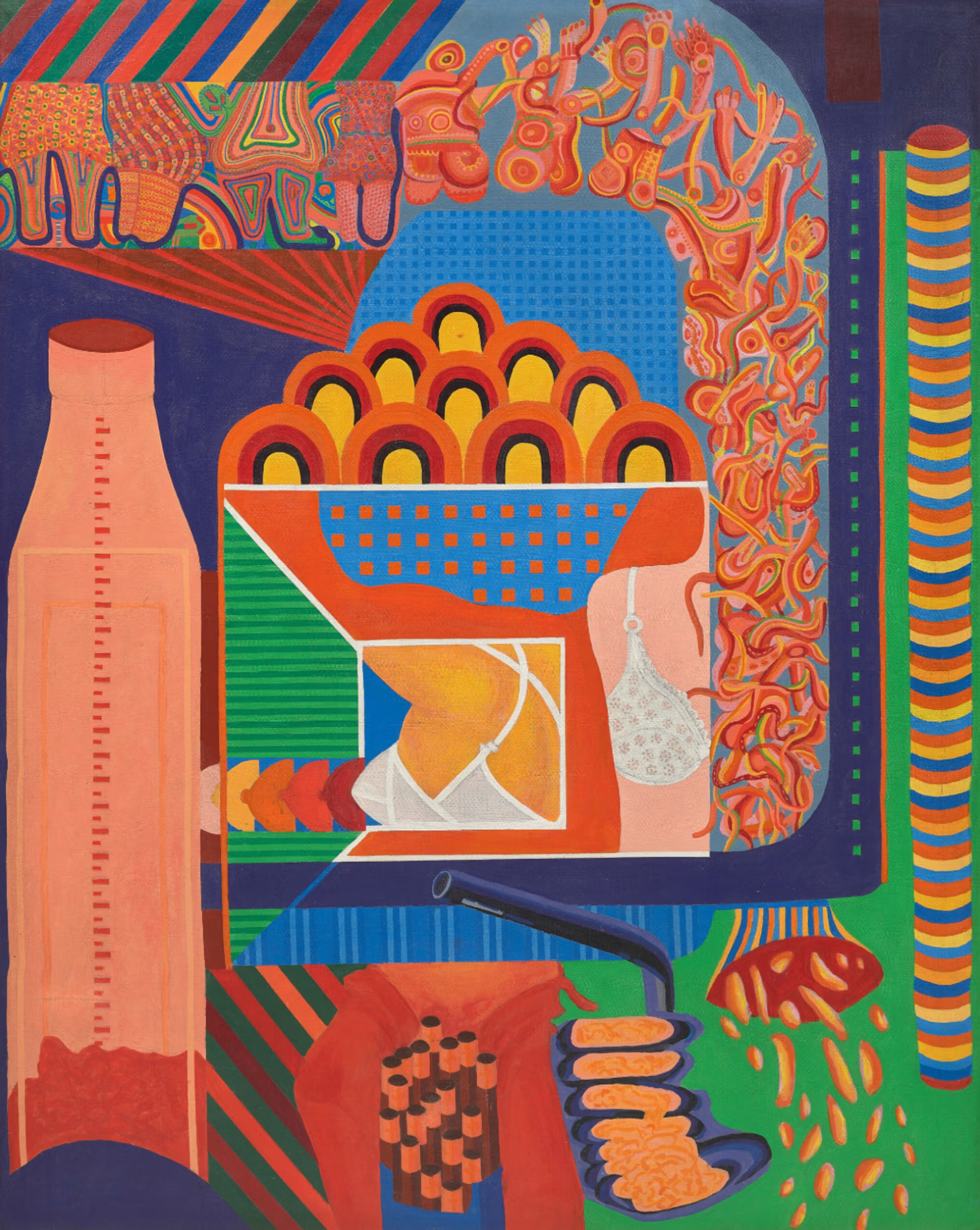
Vivan Sundaram’s Inbetweeness (1967) sold at Sotheby’s New York for $896,000
Courtesy of Sotheby’s
In the past three years, Indian highest-valued historic artists have broken their auction records at an ever-quickening pace, as the country’s wealthiest see their fortunes rapidly expand.
These record sales are typically made by mid-20th century Modernists like Husain, SH Raza and Tyeb Mehta, as well Amrita Sher Gill, all of whom began painting after 1930, often to critique the artistic traditions of India. Ravi Varma’s Yashoda and Krishna is notable both for having been executed in the 19th century, as well as its more traditional subject matter. Anand notes that it marks “a growing recognition of mythology as a serious and desirable genre within the global art market”.
Stellar South Asian sales season
Saffronart’s sale totalled $30.7m (with fees) and closes out another stellar auction season for South Asian Modern and contemporary art, held across Mumbai and New York.
On 24 March, Sotheby’s set new best prices for 12 artists in its $22.1m (with fees) white-glove sale in New York. This includes the late Vivan Sundaram, whose 1967 semi-abstract painting Inbetweeness, a riotous blend of British Pop Art and Baroda School Modernism, made $896,000, more than seven times its $120,000 high estimate. The top price achieved in this sale was $5.1m for Husain’s Second Act (1958).
The following day, Christie’s New York sale netted $27m (with fees), the highest total for a South Asian sale held outside of India. Led by the 1977 Tyeb Mehta canvas Gesture, which made $3.7m, the sale set two consecutive records for the Bengal painter Ganesh Pyne, now at $2.5m for his macabre Encounter in the Twilight Zone (1974). Buoyed by this success, Christie’s announced this week that it will hold its first live London sale for the category in seven years.


