








The five-star Georges Seurat exhibition at London’s Courtauld Gallery offers an unusual opportunity to experience the pioneer work of the Neo-Impressionist artist who influenced Van Gogh in Paris. In the 1880s Seurat was the leader of the avant-garde group of painters who used pointillist dots of pure colour to create their pictures. The eye blends Seurat’s colours harmoniously, giving his paintings a luminosity and vigour.
Seurat reported that he first met Van Gogh in November 1887 at an exhibition held in the Restaurant du Chalet in the raffish Boulevard de Clichy. Along with Van Gogh, other artists showing there included Henri de Toulouse-Lautrec and Emile Bernard.
Vincent, accompanied by his brother Theo, later called on Seurat on 19 February 1888, the day he left for Provence. Although he would have been doing the last-minute preparation for a trip to Arles that would last well over a year, he still found the time – evidence of the importance he attached to seeing Seurat’s work. Van Gogh subsequently wrote to his colleague Paul Gauguin about the occasion: “I visited his studio just a few hours before my departure.”
The Van Gogh brothers would have been overwhelmed to enter Seurat’s studio. There they saw two of the French artist’s greatest and largest paintings: A Sunday on La Grande Jatte (begun 1884) and Models (begun 1886). They must also have seen some of the nine 1885-86 Normandy seascapes which are currently on view at the Courtauld exhibition. Vincent later wrote to Theo that he was “so struck by Seurat’s canvases”.
Georges Seurat’s A Sunday on La Grande Jatte (1884-89)
Art Institute of Chicago
Two weeks later Theo bought a Seurat drawing, Eden Concert (1887), for his personal collection. Soon after hearing this news Vincent told his brother that he would like to exchange a painting with Seurat, later suggesting they might swap self-portraits. This never happened.
Van Gogh remained an admirer of Seurat and his Neo-Impressionist dots. As he wrote from Arles, “I often think about his system, and yet I won’t follow it at all, but he’s an original colourist”. Although a few of Van Gogh’s pictures are Neo-Impressionist in style, when he followed their technique he usually preferred to use small dashes of paint rather than Seurat’s dots.
In October 1888, Van Gogh suggested to Theo that Seurat might possibly want to join him Arles, to share the Yellow House and work together. This was just before the arrival of Paul Gauguin and he envisaged that they might form a trio of artists. Once again, it remained simply a hope. In view of Van Gogh’s mutilation of his ear, just over two months later, Seurat would have felt relieved that he had stayed in Paris.
Borders
What has gone largely unnoticed by art historians is how Seurat and Van Gogh both shared an unusual practice: painting borders around the edges of their canvases. They not only painted borders, but sometimes did so in several colours to contrast with the adjacent colour in their compositions. For Seurat, this quickly became his usual technique; for Van Gogh, it was a very brief experiment.
Seurat reworked his 1884 A Sunday on La Grande Jatte at some point in 1888-89. At the same time he added a narrow painted border, which he varied in colour to contrast with the adjacent colouration. Most of the border is violet (in two different shades), but for a short section it is now blue next to the sunlit leg of the reclining man. By late March 1888, he had also added a painted frame to Models (the frame has since been lost).

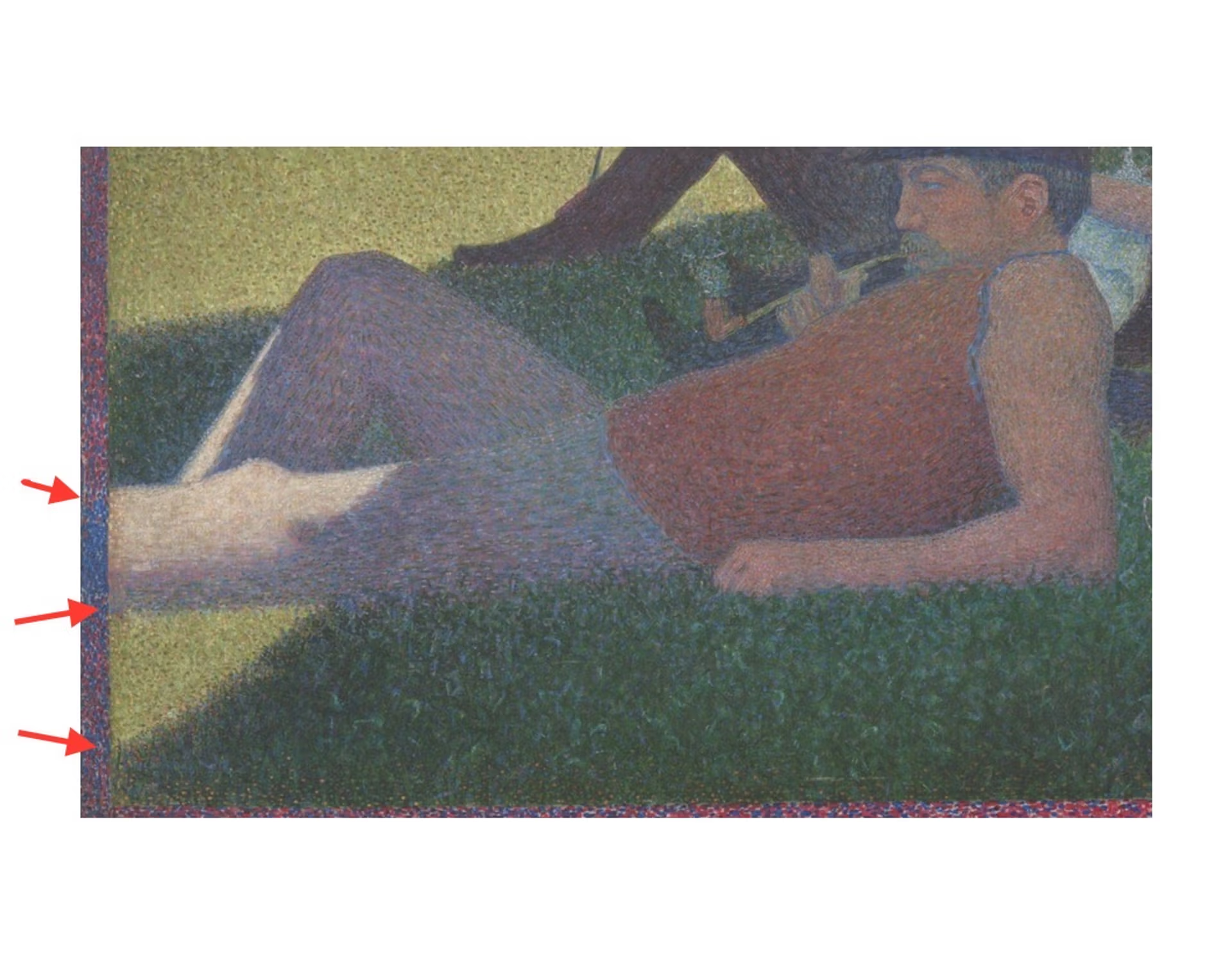
Detail of Seurat’s A Sunday on La Grande Jatte: Most of the added border is violet (a darker shade on the left by the sunlit grass and a lighter shade at the bottom by the shaded grass), but with blue next to the sunlit leg
Art Institute of Chicago
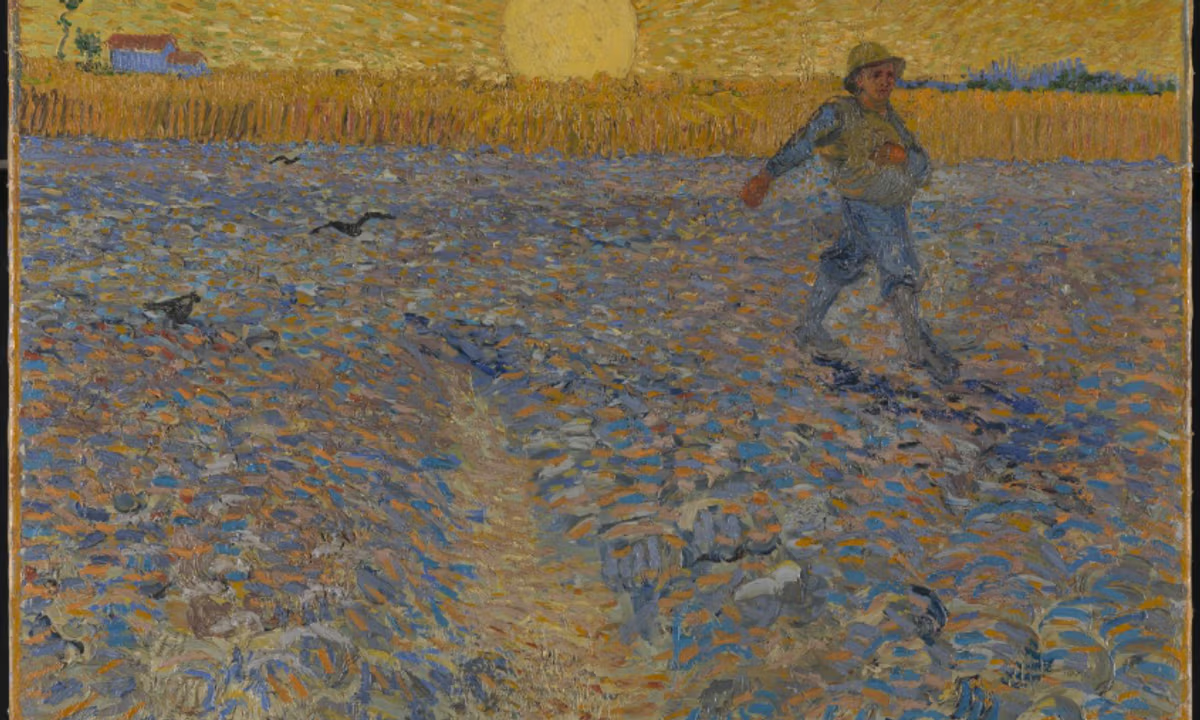
Unlike Seurat’s painted borders, which are composed of dots, Van Gogh’s border in The Sower (June 1888) is in solid colours. But Van Gogh followed Seurat in using varied colouration, placing what may have been a violet edging (it has now faded to a dark grey-green) next to the golden sunset of sky and wheat, with ochre next to the blue-purple earth.

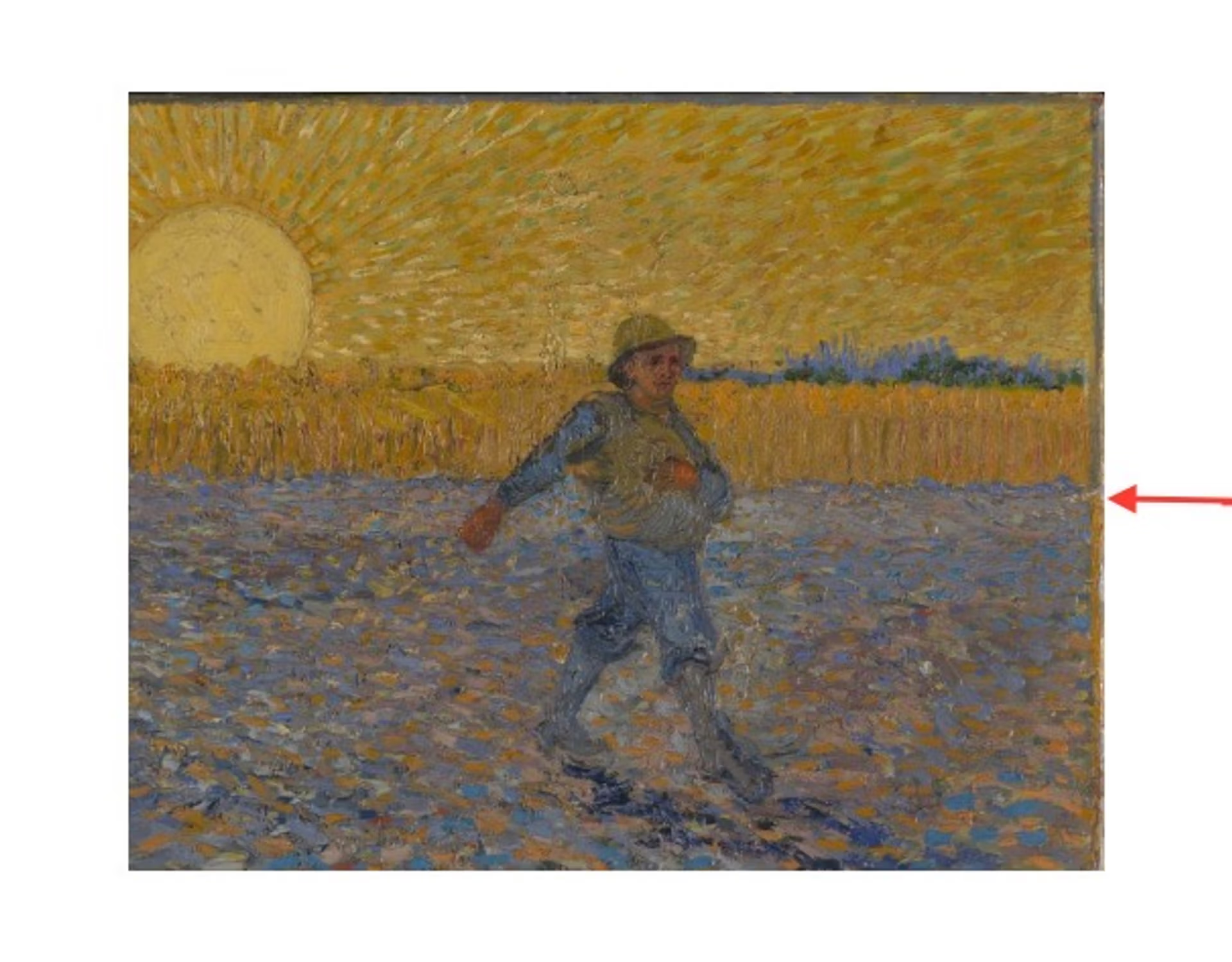
Detail of Van Gogh’s The Sower (June 1888): A dark edging border now lies next to the sunset sky and golden wheat, with an ochre border next to the blue-purple earth.
Kröller-Müller Museum, Otterlo
Vincent must have had Seurat in mind, since the picture was completed just two weeks after he had described the Neo-Impressionist, in a letter to Theo, as “the leader” of the radical artists. He called this group the painters of the “Petit Boulevard”, in contrast to the establishment which exhibited in the “Grand Boulevard”.
With his painted border in The Sower, Van Gogh paid homage to Seurat. The picture was recently temporarily in London, one of the key works in Radical Harmony: Helene Kröller-Müller’s Neo-Impressionists at the National Gallery (until 8 February).
Van Gogh also tried a similar effect on a narrow wooden frame he made for one of his Sunflower pictures. Six Sunflowers (August 1888) was sadly destroyed in Japan at the end of the Second World War. However, I discovered a 1921 colour print published in Japan which revealed that Van Gogh had originally framed it with coloured strips of wood.

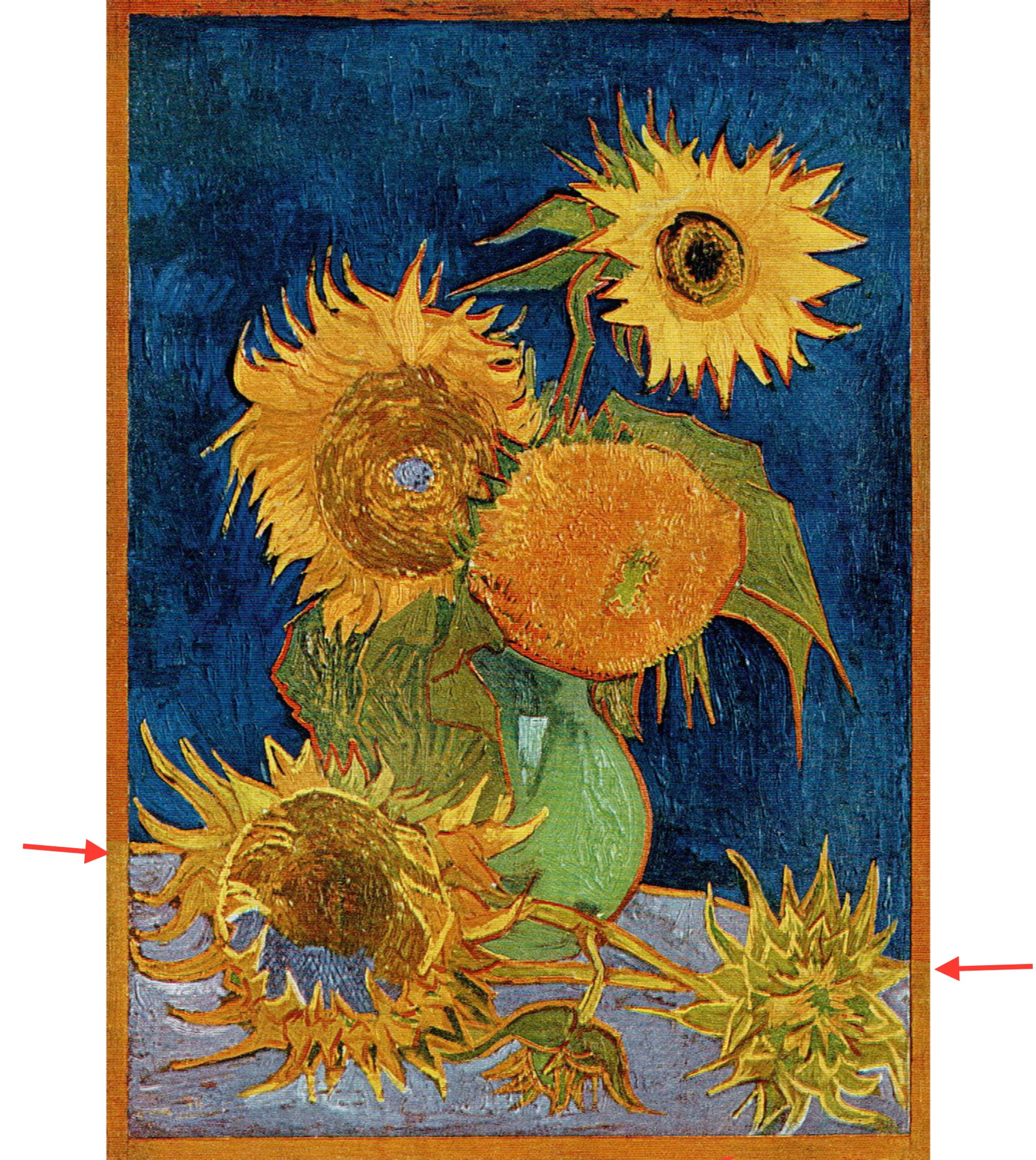
Van Gogh’s Six Sunflowers (August 1888) with the added narrow wooden frame: in colouring the frame he made it a lighter brown next to the light violet table and a darker brown next to the deep blue background
Print portfolio published by Shirakaba, Tokyo, 1921
Seurat specialists generally believe that he only began to add painted frames and borders from spring 1888, a few weeks after Van Gogh’s visit to his studio and his departure from Provence. Van Gogh painted The Sower in mid-June 1888, so this suggests that Seurat may have begun to paint the borders in the first weeks of 1888, before Van Gogh left on 19 February, or even in late 1887. When it came to painted frames and borders, Van Gogh seems to have been Seurat’s first follower.
Tragically, both artists died young. Van Gogh shot himself on 27 July 1890, dying two days later, at the age of 37. Seurat was then working in Normandy, where he was painting some of the seascapes now in the Courtauld show, so he was unable to attend the funeral. Seurat died suddenly in Paris of diphtheria on 29 March 1891, aged just 31.
Neither artist was successful in their lifetime. Van Gogh sold only one identified painting; Seurat managed to sell three (all of which are in the Courtauld show, until 17 May). For their avant-garde colleagues, the deaths of two leading figures within less than a year was a great loss.
Other Van Gogh news
Two dealers will be taking Van Gogh drawings to the Tefaf art fair in Maastricht (14-19 March). Both are Dutch works, drawn in Nuenen. Their relatively modest prices (for Van Gogh’s works) reflect the fact that they are early, not from the artist’s much more valuable later French period.
London dealer Paul Coulon has Peasant woman with a washtub in a garden (September-October 1885). It was last sold at Christie’s in 2023, when it went for £1.5m. Presumably the present price will reflect the dealer’s mark-up.

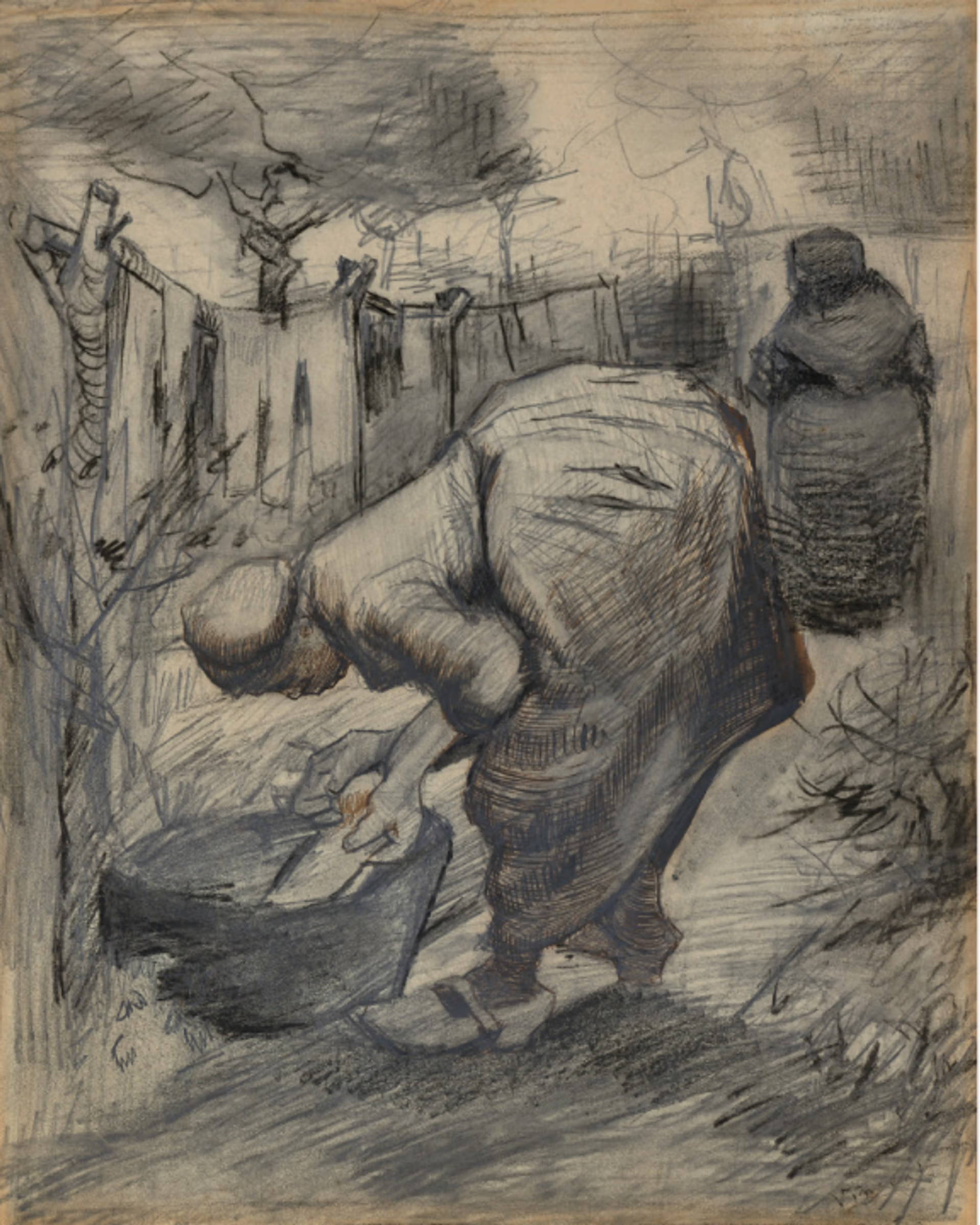
Van Gogh’s Peasant woman with a washtub in a garden (Paysanne au bassin dans un jardin) (September-October 1885)
Paul Coulon, London
New Orleans-based dealer M.S. Rau will show Weaver facing Left (February 1884). It has only been exhibited once, in 1982 in Mönchengladbach in western Germany.

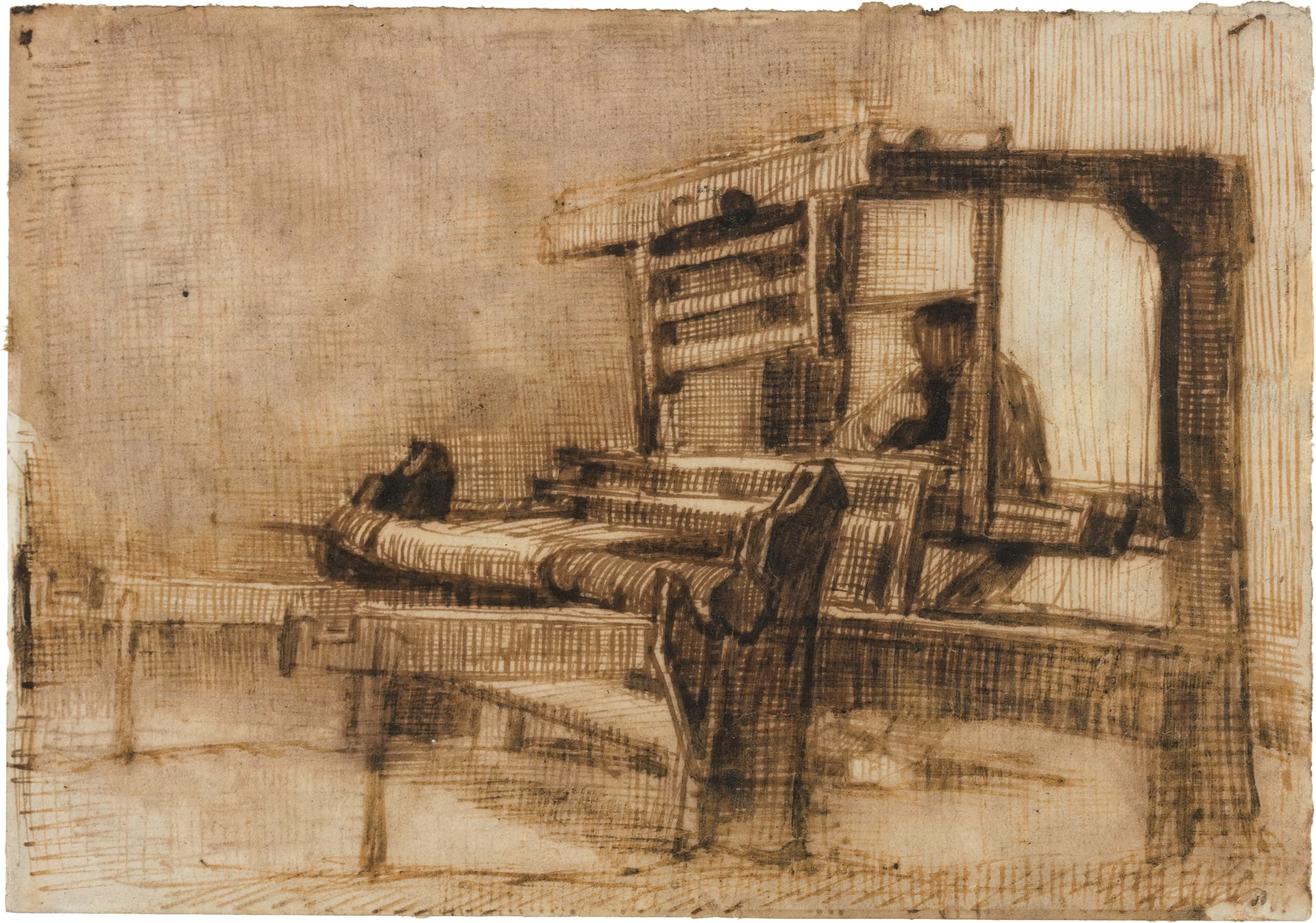
Van Gogh’s Weaver facing Left (February 1884)
M.S. Rau, New Orleans
Martin Bailey is a leading Van Gogh specialist and special correspondent for The Art Newspaper. He has curated exhibitions at the Barbican Art Gallery, Compton Verney/National Gallery of Scotland and Tate Britain.

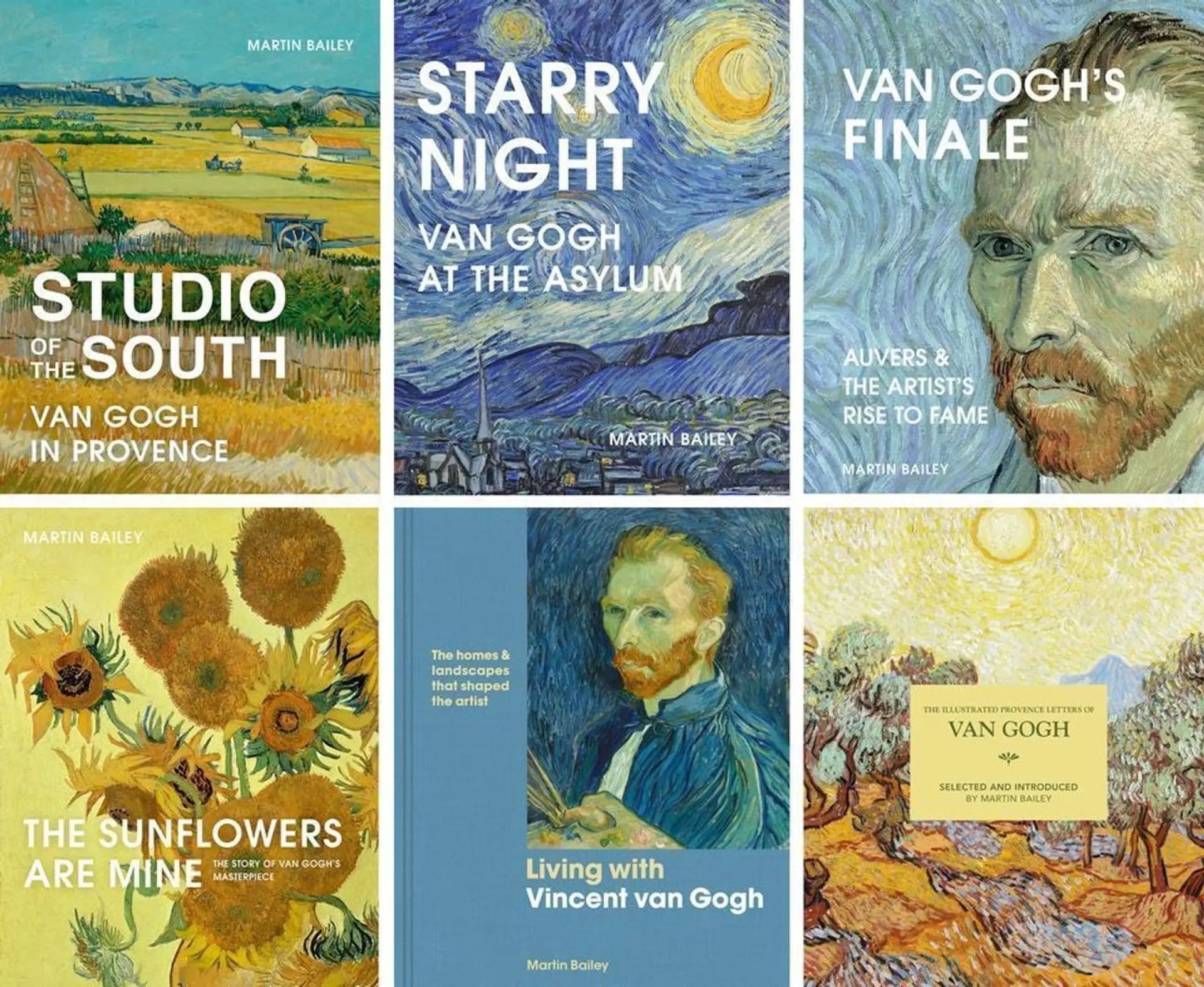
Martin Bailey’s recent Van Gogh books
Martin has written a number of bestselling books on Van Gogh’s years in France: The Sunflowers Are Mine: The Story of Van Gogh’s Masterpiece (Frances Lincoln 2013, UK and US), Studio of the South: Van Gogh in Provence (Frances Lincoln 2016, UK and US), Starry Night: Van Gogh at the Asylum (White Lion Publishing 2018, UK and US) and Van Gogh’s Finale: Auvers and the Artist’s Rise to Fame (Frances Lincoln 2021, UK and US). The Sunflowers are Mine (2024, UK and US) and Van Gogh’s Finale (2024, UK and US) are also now available in a more compact paperback format.
His other recent books include Living with Vincent van Gogh: The Homes & Landscapes that shaped the Artist (White Lion Publishing 2019, UK and US), which provides an overview of the artist’s life. The Illustrated Provence Letters of Van Gogh has been reissued (Batsford 2021, UK and US). My Friend Van Gogh/Emile Bernard provides the first English translation of Bernard’s writings on Van Gogh (David Zwirner Books 2023, UKand US).
To contact Martin Bailey, please email vangogh@theartnewspaper.com
Please note that he does not undertake authentications.
Explore all of Martin’s adventures with Van Gogh here


