





The Venice Biennale’s jury has resigned just nine days before the event’s scheduled opening amid mounting controversy over its decision to exclude artists from countries whose leaders are under arrest warrants for crimes against humanity.
In a short statement circulated on Thursday (30 April), the Biennale’s organisers wrote that “as of today, the resignations of the International Jury of the 61st International Art Exhibition, In Minor Keys by Koyo Kouoh (9 May-22 November 2026), have been received”.
The Biennale’s statement did not elaborate on why the members of the five-person jury—which is presided by Brazilian curator Solange Farkas and also comprises curators Zoe Butt, Elvira Dyangani Ose, Marta Kuzma and Giovanna Zapperi—had resigned. In a separate statement issued Thursday, the Biennale’s organisers clarified that the prize-giving ceremony originally scheduled for 9 May will now take place on 22 November.
In the absence of a jury, two Golden Lion prizes will be awarded to the top artist and best national pavilion via a popular vote. Ticketholders who have visited both of the Biennale’s venues, at the Biennale Gardens and the Arsenale, will be eligible to vote.
The row centres on the participation of Israel and Russia in this year’s event. Israel has been absent since the start of the Gaza war in 2023 after the country’s selected artist Ruth Patir and curatorial team opted to keep its pavilion shuttered in 2024. Russia has not participated since launching its full-scale invasion of Ukraine in 2022. (For the 2024 Biennale, Russia loaned its pavilion to Bolivia.)
In a brief statement posed to the site e-flux on 30 April, the five former jurors said their resignations came “in acknowledgment of” an earlier statement posted to the site, on 23 April. In that earlier statement, the Biennale’s jury announced that it would not award prizes to countries “whose leaders are currently charged with crimes against humanity by the International Criminal Court” (ICC).
The statement did not name any countries directly but was broadly understood to apply to Israel and Russia. The ICC has issued arrest warrants for Vladimir Putin, the Russian president, and Benjamin Netanyahu, the Israeli prime minister, for alleged war crimes and crimes against humanity in Ukraine and Gaza respectively in 2023 and 2024.
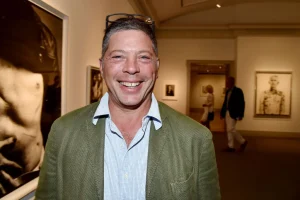
Responding to the announcement, the Israeli foreign ministry said in a post on X on 26 April that the jury had decided to “boycott” Belu-Simion Fainaru, the Romanian-born Israeli sculptor who will represent the country at the Biennale.
In an interview with Italian daily Corriere della Sera published on 29 April, Fainaru described protests planned against Israel at the Biennale as “financed by Islamic Jihad”, adding: “unfortunately, I feel an antisemitism that has been going on for four thousands of years”.
Fainaru’s lawyers had reportedly issued a letter to Biennale—as well as the Italian culture ministry and Palazzo Chigi, the seat of the country’s prime minister Giorgia Meloni—claiming that the artist had been the victim of discrimination. The lawyers had threatened to take the case to the European Court of Human Rights, according to reports.
Italy’s culture ministry subsequently issued a statement on the evening of 29 April stating that Alessandro Giuli, the culture minister, had had a “cordial” phone conversation with Fainaru. It added that Giuli had “expressed total solidarity for the attacks recently received”.
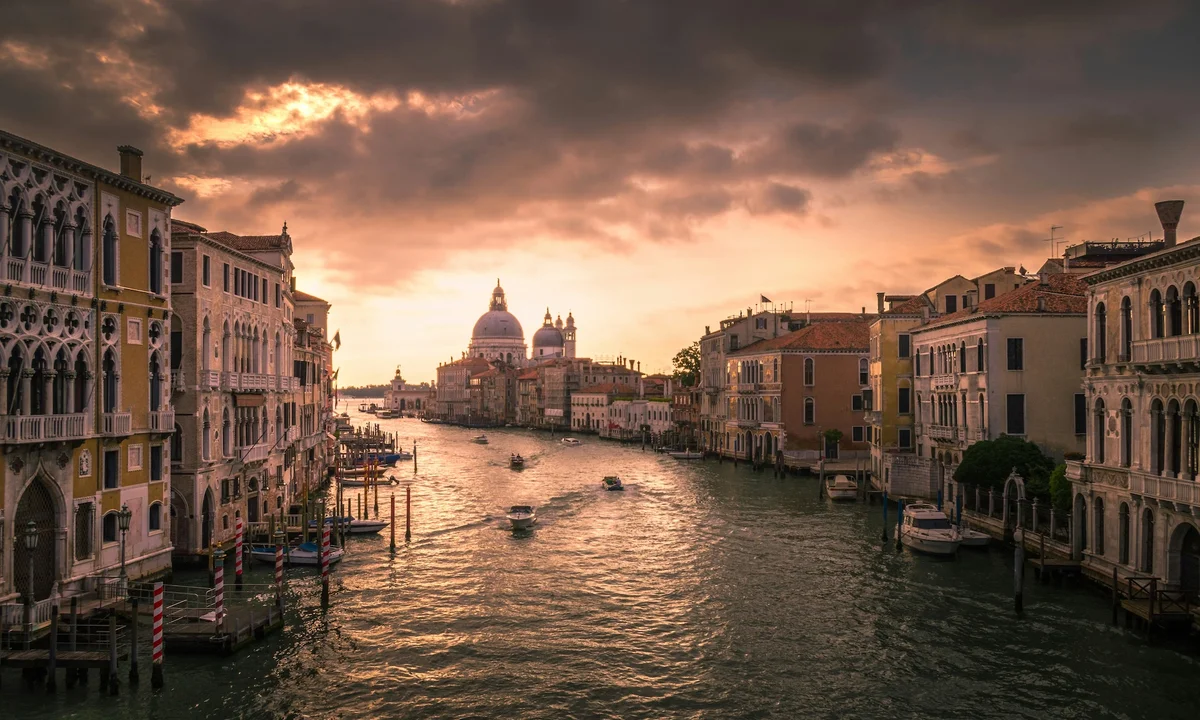
Giuli has previously criticised the Biennale for readmitting Russia, and demanded that the organisation provide documentation to determine whether the exhibition’s organisers had complied with international sanctions. The ministry sent officials on 29 April to inspect the Biennale’s headquarters at Ca’ Giustinian, a 15th-century palazzo on the Grand Canal, according to reports.


