








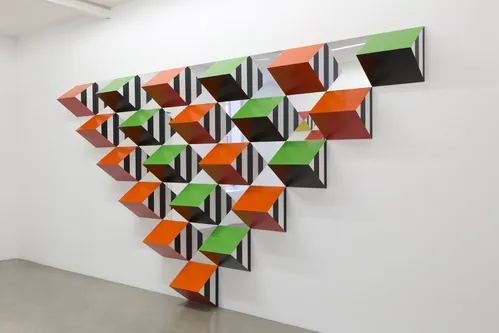
Pyramidal, haut-relief, travail in situ – A 2, 2017
Daniel Buren
Mennour
A large artwork can turn heads and elevate a room from ordinary to unforgettable. But purchasing and installing these pieces can require unique logistical and practical considerations.
Works considered “large” typically refer to pieces around 30 by 40 inches and up. At that scale, questions for would-be buyers shift quickly from “Do I love it?” to “Can I live with it?”
Still, these works can anchor the atmosphere of a space, pulling focus from across the room. That’s part of the large appeal of large artworks: one piece can give a home a sense of intention.
That said, scale raises the stakes. These works are harder to ignore, harder to move, and harder to uninstall.
But buying large doesn’t have to feel daunting. Here, we share a practical guide on what you need to know about buying large wall art.


XL Jumbo Bubble Tag (Bubblegum & Blue), 2026
SEEN
APC Gallery
Why scale matters at home
The size of your art matters. Large wall art shifts the “center of gravity” of a room. It’s often the first thing you see when you enter, and where your eye naturally returns.
As London-based gallerist Valentina Bonomo puts it, a large work becomes “a big influence in the life of the people that share the space with the artwork—it changes your feelings, your way of living.”


PELLYCAN, 1999
Bob and Roberta Smith
von Bartha
The intimidation factor (and how to buy with confidence)
Large wall art can feel like a bigger commitment. It’s hard to ignore—and often more expensive. But that’s exactly the advantage: One piece can define an entire wall.
“It’s about the quality of the work…[collectors] have to fall in love with it,” Bonomo said, noting that “there must be a good relation between the price and the size.”
Confidence is key when buying large wall art. As New York art advisor Adam Green explains, “most collectors only have a few walls that can really handle large, oversized work, so they should try to reserve them for really special pieces.”
Know your space before buying large wall art
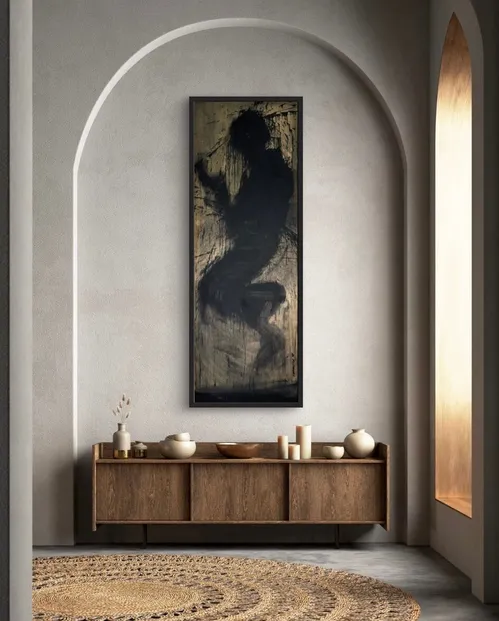

Black Shadow, 1999
Richard Hambleton
Leonards Art


Marcos and His Cronies, 1985
Pacita Abad
Pacita Abad Art Estate
Start with measurements
Before browsing a gallery, measure your wall height and width. This helps galleries recommend works that actually fit your space.
Don’t forget common obstacles: vents, radiators, light switches, door trim, and windows. These can limit placement more than you might expect.
“Know your measurements,” New York–based interior designer Robert Stilin told Artsy. “You’ve got to know your size, and you’ve got to know your access…make sure you can actually get it inside before you buy it.”
Also consider ceiling height. A piece that looks moderate in a gallery can feel overwhelming in an apartment with a low ceiling.


Terruño, 2025
Irene Ortiz
PIGMENT Gallery
Interior design basics for large wall art
Large artworks work best for Stilin as “focal points” and in places where they can “breathe,” rather than crowded walls.
A common interior design tactic is the “two-thirds” rule. Art tends to look best when it’s about two-thirds the width of the furniture below it. This keeps proportions balanced and avoids a cramped feel.
Choosing the right medium
Material affects cost, installation, and long-term care. Beirut gallerist Hiba Chehab of Galerie Janine Rubeiz told Artsy that collectors must start with “the physical condition of the room where they’re installing it, whether related to heat, light, security, or if it’s insured.”
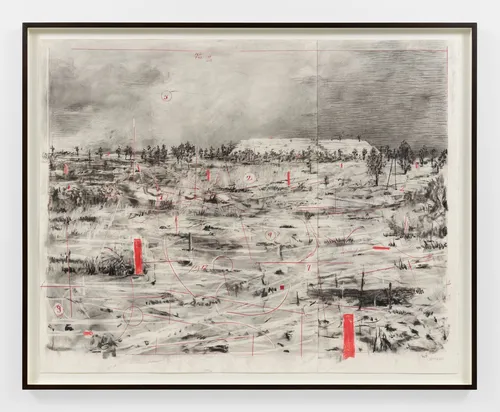

Drawing for Self-Portrait as a Coffee-Pot (Mine Dump), 2020
William Kentridge
Hauser & Wirth
Canvas versus paper
Large works on paper often require glass or acrylic, which adds weight to the wall and increases shipping costs. They are also more sensitive to light and humidity. Canvas can be easier to hang, but it’s still bulky and heavy at a large scale.
Photography
Oversized photography is a common way to go big, often sold in limited editions that can matter for value. But large prints—especially in large frames—can be heavy, expensive to ship, and require attention to print quality and longevity.
Textiles and tapestries
Textiles are lighter and can soften sound in a room. They’re often easier to install, but still need protection from dust and sunlight.
Installation and logistics
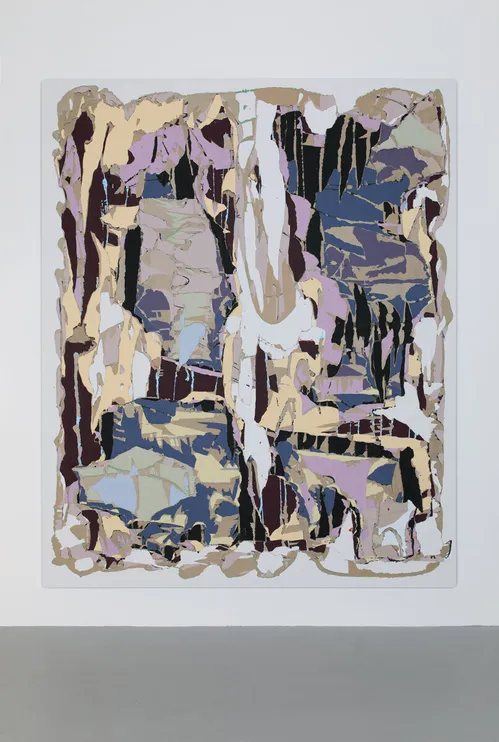

Ustedes vosotros (IV), 2025
Guillermo Mora
Casa Triângulo
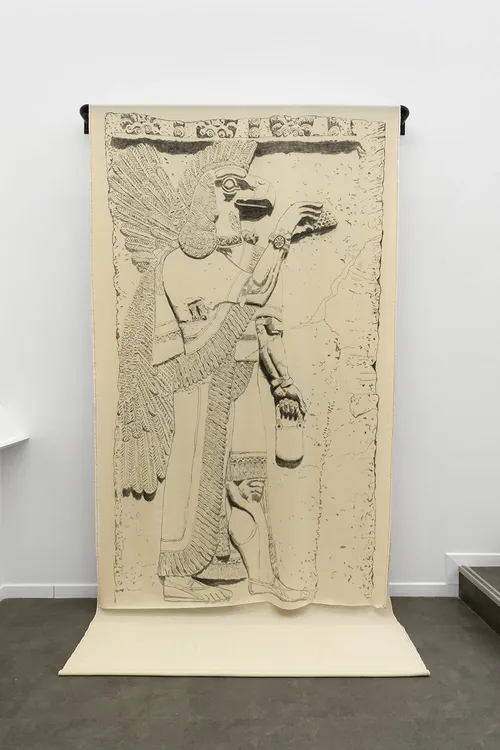

Shadows of history ( Nr. 2 Apkallu ), 2024
Elias Kurdy
Dilecta
Shipping and framing
Shipping large artwork is often more complex than it looks. Crating, freight delivery, and international shipping can also add costs.
Rolled canvases are easier and cheaper to move, but you’ll need to budget for stretching or framing later.
Framing can be a major expense, especially for oversized works with custom glazing.
Plan how it gets into your home
Access matters. Check elevator size, stairwells, and doorways before buying.
“You need a plan with a shipper and installer before you buy,” Green told Artsy. “The practical questions really come first or during the acquisition process.”


Range: of Apertures Masters of Photography (installation for Aperture Remix Exhibition), 2012
Penelope Umbrico
Mark Moore Fine Art
Weight and installation
Large wall art often requires more than a nail. Heavy pieces may need wall anchors and cleat systems. For heavy works, hiring a professional art handler is often cheaper than repairing wall (or artwork) damage.
Lighting large wall art
Lighting is essential for oversized pieces. Track lighting or adjustable picture lights can evenly light a surface.
Avoid direct sunlight, which can fade works—especially large photographs and works on paper. Make sure the piece looks good at all times of the day.
Where to find large wall art
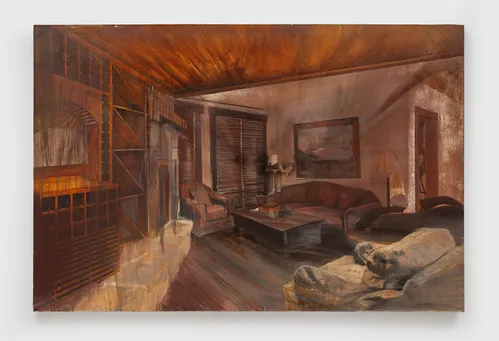

Temporary Family /No.20110913, 2011
Chen Yujun 陈彧君
Migrant Bird Space
Start with galleries or Artsy’s online marketplace, where you can filter by size. Pay attention to installation views and in-situ images—they can help you visualize a piece on your wall with mock-ups.
But after you find a piece that resonates with you, consider getting a second opinion. As Stilin advises:
Stilin suggested taking one final step: “Whoever you decide you trust and you value in terms of art […] It’s good to see what they think and say before you pull the trigger, especially if it’s big and expensive.”


