






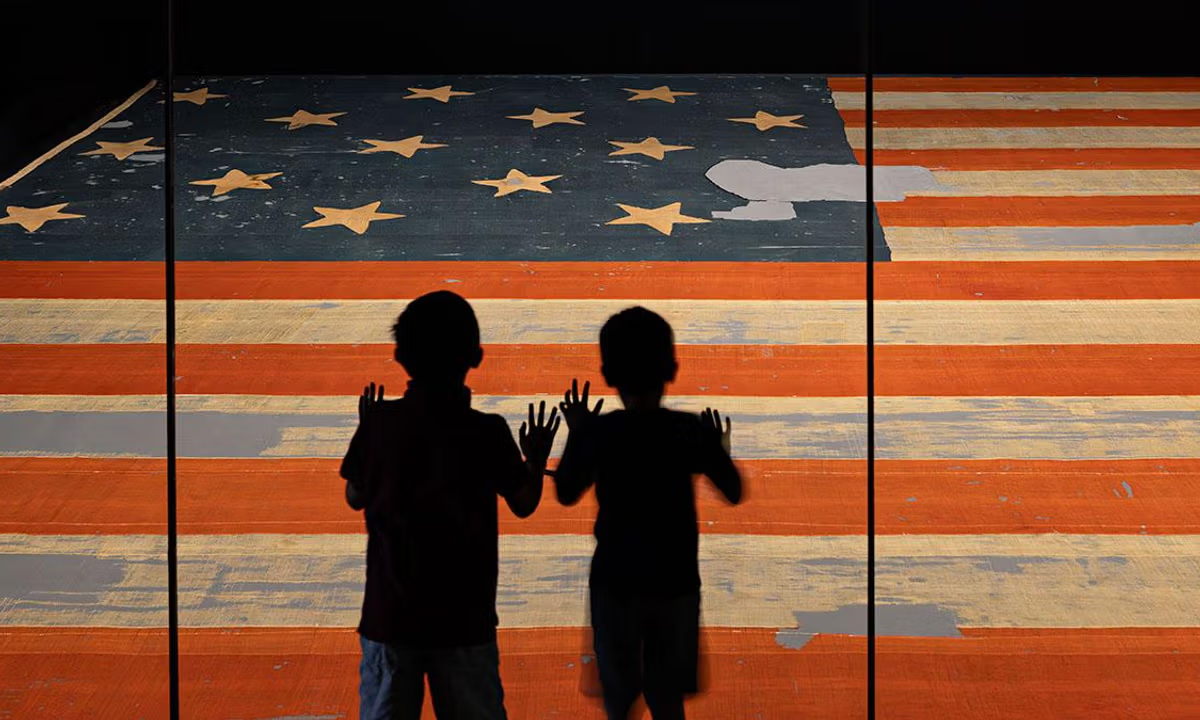
A 162-page report on the Smithsonian’s National Museum of American History (NMAH)—authored by the White House’s Domestic Policy Council and released on 4 July, as the country celebrated the 250th anniversary of the signing of the Declaration of Independence—reveals a litany of complaints about the museum. But more tellingly, by focusing on the kinds of stories the White House does not want presented, the report outlines the vision of US history and culture the current administration seeks to instil through its federally funded institutions—one that is more white, patriarchal and Christian.
Arguing that the NMAH was meant to be “proudly patriotic” since its inception, the report claims that the institution has instead become an instrument of “radical, activist ideology” through its efforts to present a more expansive view of history that includes the experiences of Indigenous and Black people, immigrants and women. Because of this, the report says, the museum and its leadership have “denigrated and displaced whites, males, Christians and Americans” and have focused on “race in areas where it has little to no historical relevance”.
“Walking through the museum today, you will find no exhibits dedicated to presenting a general narrative of American history or telling the story of any of our Founding Fathers, the Second Continental Congress, the Mayflower, the Pilgrims, the Puritans or Washington crossing the Delaware,” the report states, ignoring or dismissing many of the displays that do exactly that.
The report also bristles at the ways the history of slavery in the US is presented, suggesting that the museum should instead “tell the story of how the colonies inherited slavery from both global and European slaving practices, but also how the words, actions and ideas of America’s founders helped spark a worldwide movement that ultimately ended slavery”. In fact, most of Europe abolished slavery before the US did.
Along with a perceived lack of presentations focusing on the so-called Founding Fathers—such as George Washington, Benjamin Franklin and Thomas Jefferson—the report states that the museum “makes no meaningful effort to acknowledge the central and positive role Christianity played in the founding and flourishing of America”. As an example, it claims that displays presenting the extensively documented history of forced conversion among Indigenous communities “erases the historical record of voluntary conversion and the significant role Christian Native leaders played”.
National Museum of American History, Washington, DC Photo: Billy Hathorn, via Wikimedia Commons
It also finds fault with descriptions of the arrival of European colonists on the continent as driven by “religious fervour” rather than an effort to “flee life-threatening persecution, spread the good news of the Gospel, and share the love of Jesus Christ with those in this new land”. The influence of any other religions or spiritual practices, however, are never mentioned in the document.
The report further takes issue with how the museum presents contemporary American culture, particularly the role of women, transgender people and immigrants. “In early 2026, 75% of the advertising boards placed on sidewalks around the museum showcased exhibits dedicated to peoples and cultural traditions foreign to the United States,” the report states. A footnote—one of more than 500—reveals that those exhibitions were Corazón y Vida: Lowriding Culture, highlighting Mexican Americans and Chicano culture (which is by definition based in the US), and How Can You Forget Me: Filipino American Stories, highlighting Filipino Americans and Filipino culture. This suggests that immigrant communities are somehow “foreign” rather than a homegrown aspect of US society.
A 2020-23 exhibition titled Girlhood (It’s Complicated) is mentioned several times, first for its inclusion of a pair of monarch butterfly wings worn by young immigrants brought to the US as children without documentation, which NMAH director Anthea M. Hartig highlighted as one of her favourite displays. Adopting the Trump administration’s hardline stance on immigration, the report instead describes the monarch butterfly as a “well-known symbol in the illegal alien activist community”.
The report also claims that the Girlhood show “frames motherhood as something to be escaped from or questioned” because it explains that the push for women’s education following the American Revolutionary War was based on the expectation that they would raise the next generation of well-informed citizens. Yet women were denied the vote until 1920. Similarly, the report claims the museum “encourages all young children—but girls in particular—to ‘talk back’, defy authority, including teachers, parents and religion”, based on a single wall text in the show that reads: “When the rules don’t fit, many girls take action.”
The exhibition’s inclusion of transgender stories and experiences is a particular target of the report, which calls it “one of the clearest examples of NMAH’s radical ideology”, claiming this is something most Americans do not support. However, a recent survey by the Human Rights Campaign found that 85% of Americans believe “transgender people should have the same rights and protection as everyone else”. The report further complains that the museum encourages activity that “blurs the lines between the two genders, whether it be women embracing more masculine dress and hair styles, or participating in traditionally ‘male-dominated’ academic fields and sports”.

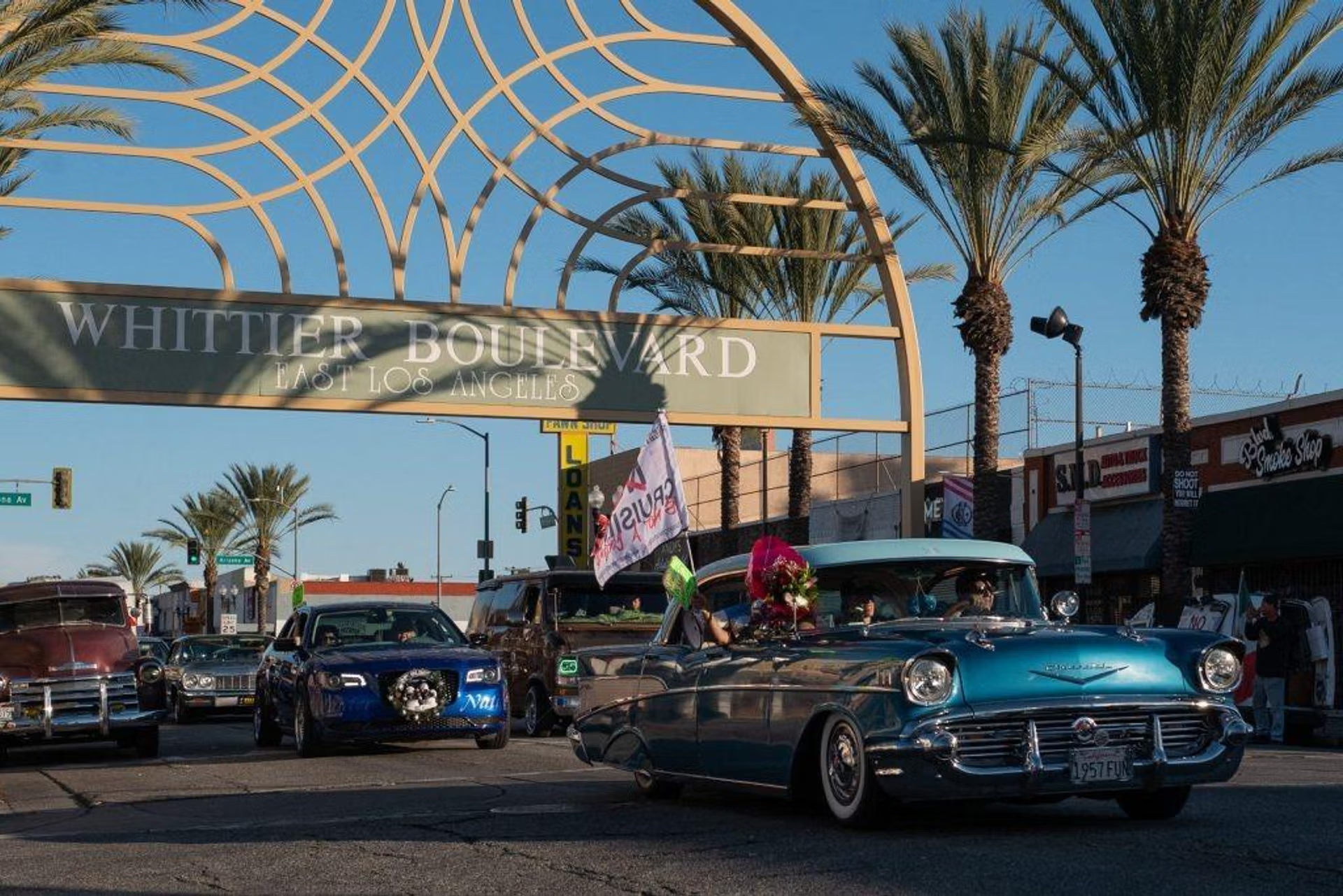
Semantha Raquel Norris’s Cruising on Whittier Boulevard, Los Angeles (2024) is part of the exhibition Corazón y vida: Lowriding Culture
Courtesy the National Museum of American HIstory
In a statement, a spokesperson for the Smithsonian tells The Art Newspaper: “For more than 180 years, the Smithsonian has served the American public with nonpartisan and independent scholarship, and we remain committed to doing so.”
The report and its criticisms are just the latest attempts by the Trump administration to steer the national narrative of American culture at the Smithsonian, which receives more than $1bn in federal appropriations making up about 62% of its annual budget. Those efforts could ramp up in the coming months, as the terms of more members of the Smithsonian’s board of regents expire in September, which could allow the president to instil loyalists there—as he did at the John F. Kennedy Center for the Performing Arts. The board is in charge of administrative and governing decisions at the Smithsonian, including the appointment of its secretary, currently Lonnie G. Bunch, who has repeatedly asserted the institution’s independence.
The next big test of this independence might be seen at the Smithsonian American Art Museum, which is currently renovating its galleries for 18th- to early 20th-century art, with a planned opening date pushed back from the summer to sometime this autumn. Among the works previously installed in the galleries was Manifest Destiny (2004), a monumental painting by the contemporary artist Alexis Rockman, depicting an apocalyptic scene of the Brooklyn waterfront submerged by rising waters caused by climate change.
“The Smithsonian American Art Museum offers an ideal context for such a multivalent work,” the museum stated in a wall text before the work was taken off view for the renovation. “Not only does it connect to works like Walton Ford’s Tur, but it also relates to the museum’s collection of 19th-century landscape painting. And the Smithsonian-wide emphasis on natural science and biodiversity affords a still richer framework for understanding this work.”
Whether context like this remains will become apparent when the galleries reopen.


