







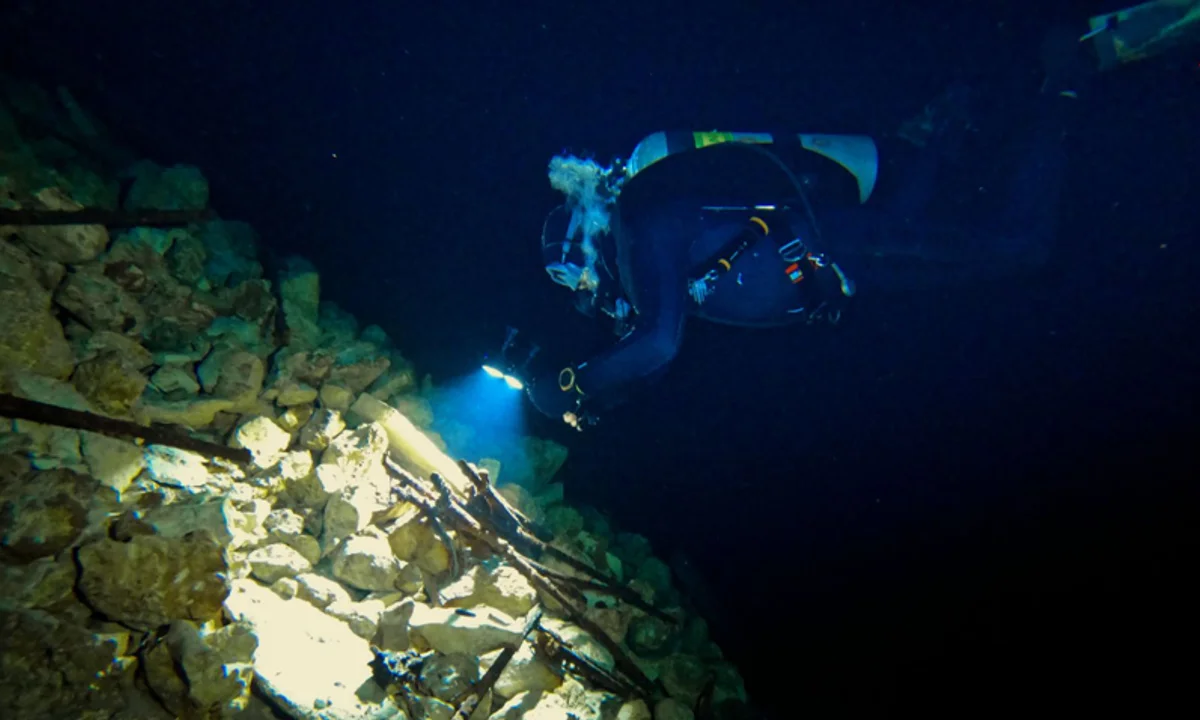
Prehistoric, pre-Hispanic and modern remains lie beneath the Yucatán Peninsula’s more than 8,000 cenotes. At the Síis Já cenote, beneath the 16th-century former convent San Bernardino de Siena in Valladolid, Mexico, archaeologists recently found 153 Spanish and British muskets and rifles, as well as an iron cannon. The weapons were likely discarded by the Yucatecan (Spanish colonial) government during the early years of the Caste War of Yucatán (1847-1901), preventing them from falling into Maya rebels’ hands. Mexico’s National Institute of Anthropology and History (INAH) also reported debris and pollution affecting the site.
Cenotes are limestone sinkholes that form unique ecosystems connected to the peninsula’s underground aquifer. They are a key source of water and preserve significant archaeological and anthropological remains. “Cenotes help us understand the settlements of the continent 13,000 to 15,000 years ago,” the archaeologist Arturo Montero tells The Art Newspaper. “Specific conditions facilitate the conservation of ancient remains.”
The ritual use of cenotes dates to prehistoric times. They later became central to Maya cosmology. Offerings and everyday objects were deposited into cenotes and caves. These locales later became strategic during wartime.
A rifle found at the Síis Já cenote Courtesy INAH
“Weapons from the Caste War have been uncovered in other cenotes, like those in Homún,” says Roberto Junco, the head of INAH’s underwater archaeology division. “But this is the only cenote where an iron cannon has been found, and it is beneath one of the region’s oldest convents.” Junco notes that Maya ceramic pieces and 18th-century Chinese porcelain were also found there, “tracing the region’s history”.
INAH first explored the Síis Já cenote in 2003. After the local archaeologist Sergio Grosjean denounced the presence of illegal tourist infrastructure there, including a wooden bridge, INAH surveyed the site again in February 2026. “The water is polluted by sewage and trash,” Junco says. “Catfish that were once abundant are now gone.”
Environmental and heritage concerns
For decades, infrastructure, tourism, urbanisation, agriculture and pork production have impacted cenotes. Recently, activists say the Maya Train project altered more than 125 cenotes by inserting pillars right through them. “The Maya Train not only affected the cenotes but also the entire aquifer, which is the region’s only water source,” says José Urbina, the founder of the environmental activist group Sélvame MX. Unregulated tourism is also harmful. “Some tourists, companies and even inhabitants view cenotes as swimming pools and do not care for them, leaving trash behind,” Urbina says.
Unauthorised cave diving is also a concern. INAH has reported evidence of diving at Síis Já. Other sites, like the 55m-deep Hoyo Negro cenote in Tulum, home to Pleistocene remains—including “Naia”, one of the oldest human skeletons found in the Americas, recovered in 2007—have been damaged by divers. “This has been a problem for years, but recent trespassing has caused irreparable damage,” the researcher Alejandro Álvarez told Aristegui Noticias last month. He noted that at Hoyo Negro, a 15,000-year-old remains of a puma had been broken. “This is a federal crime,” he said.

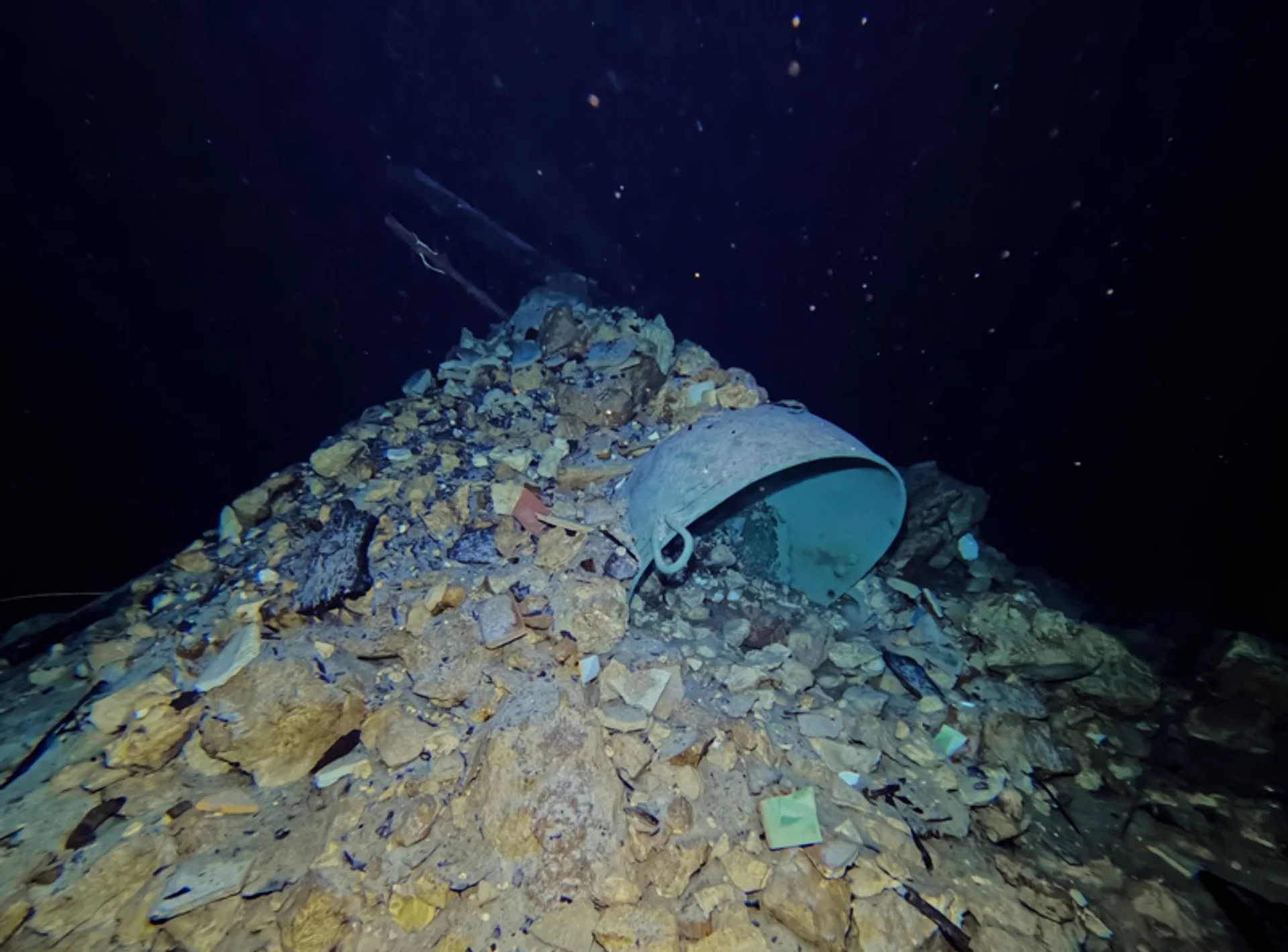
Debris and artefacts found at the Síis Já cenote Photo: G. García, courtesy INAH
“While diving in cenotes is not forbidden by law, touching, removing or documenting remains is prohibited,” Junco says. “Many divers are respectful, but others damage cenotes or alter their archaeological contexts.”
Urbina, Junco and Montero agree that education and community consciousness are key to protecting cenotes, as official oversight has been insufficient. Tourism is considered necessary but requires much stricter regulations.
Plans for Síis Já include research, conservation and trash removal. INAH, with support from Fundación Convento Sisal Valladolid, is evaluating which artefacts should remain in situ. Studies show that some, including the cannon, are deteriorating underwater. “In the meantime, restored objects recovered in 2003 will return to the convent for display,” Junco says.


