






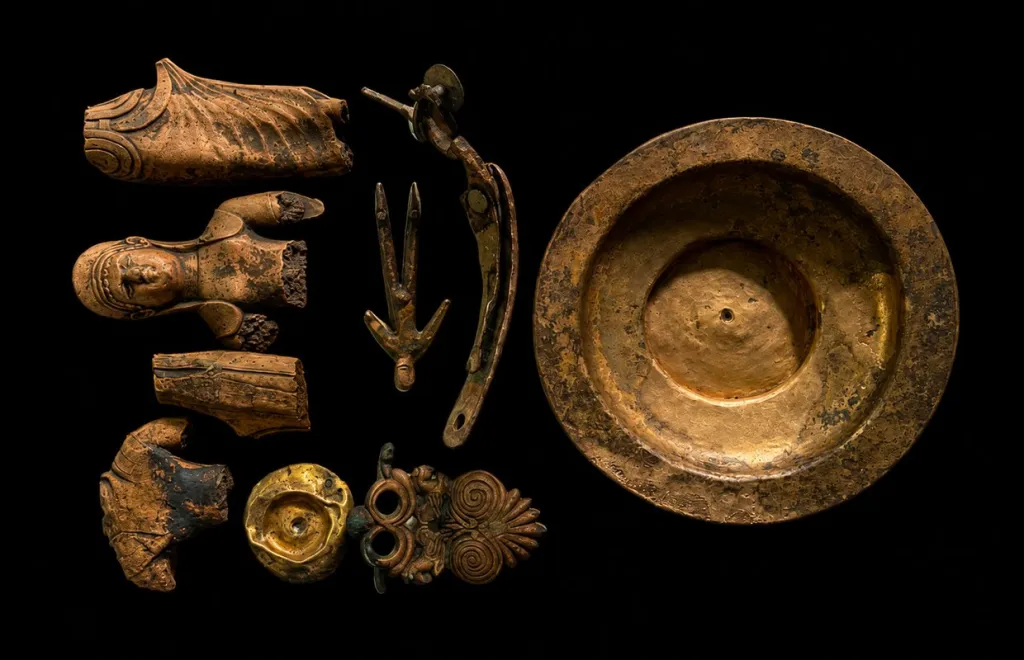
Archaeologists working in northern Italy excavated “remarkably well-preserved” bronze artifacts from a well dating back to the ancient Etruscan city of Kainua.
As reported by Heritage Daily, “Bronze figures buried at the bottom of an ancient well for nearly two and a half millennia are now emerging with their metallic lustre still present, as archaeologists have unearthed evidence of ritual activity at one of Italy’s most important Etruscan sites.”
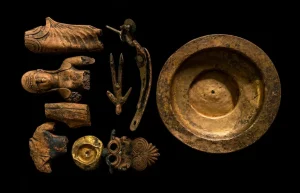
The excavation, undertaken by the University of Bologna and the Ravenna Archaeological Group, led to the discovery of two bronze statues of female figures and an “extremely rare” bronze bowl near the town of Marzabotto. Also found at the site were human remains belonging to two adults.
“Archaeologists believe the bronze objects were deliberately deposited as votive offerings rather than accidentally lost,” according to Heritage Daily. “The discovery suggests the well served not simply as part of the city’s water supply but as a sacred place associated with ceremonies involving water and possibly the foundation of Kainua itself.”
The human remains are thought to be from a different era than the bronze works found, suggesting the enactment of a later ceremony at the site. If that is the case, “the discovery suggests that the well retained its sacred significance for an extended period.”


