





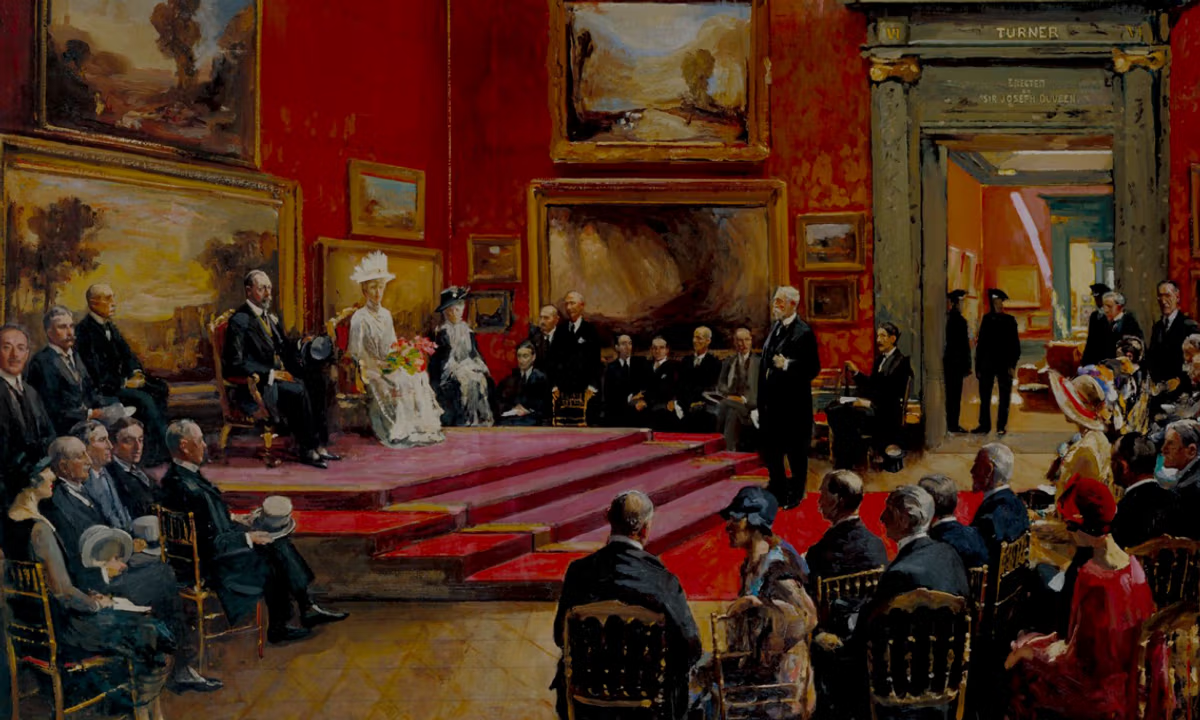
In June 1926, London’s Tate Gallery inaugurated its first rooms devoted to what it then called “modern foreign” pictures. King George V and Queen Mary presided over the opening, giving royal approval to the decision to broaden what had been a collection of solely British art.
It was a grand occasion, with the gentlemen wearing morning suits and clutching top hats, in a scene that was captured in an atmospheric painting by John Lavery. The ceremony was held in the Tate’s most impressive room, then housing work by J.M.W. Turner.
To celebrate the opening of Tate’s modern foreign wing, a massive loan exhibition was held, with over 250 works. The gallery’s own collection of international art was so modest that it did not have enough paintings to fill its walls. Although then called the National Gallery, Millbank, it was already informally known as the Tate, following British philanthropist Henry Tate’s 1897 donation for the building construction.
Catalogue listing of the Van Gogh loans to the Tate Gallery’s “modern foreign” exhibition
List of Loans at the Opening Exhibition of the Modern Foreign Gallery, 1926
The Van Gogh loans, all from British collectors, comprised four paintings and one drawing. These were hung in the northwest corner room, in an extension funded by Joseph Duveen and built on the former site of the Millbank prison. With advances in scholarship during the past hundred years, the Van Goghs lent in 1926 have been redated and retitled.
The five loans

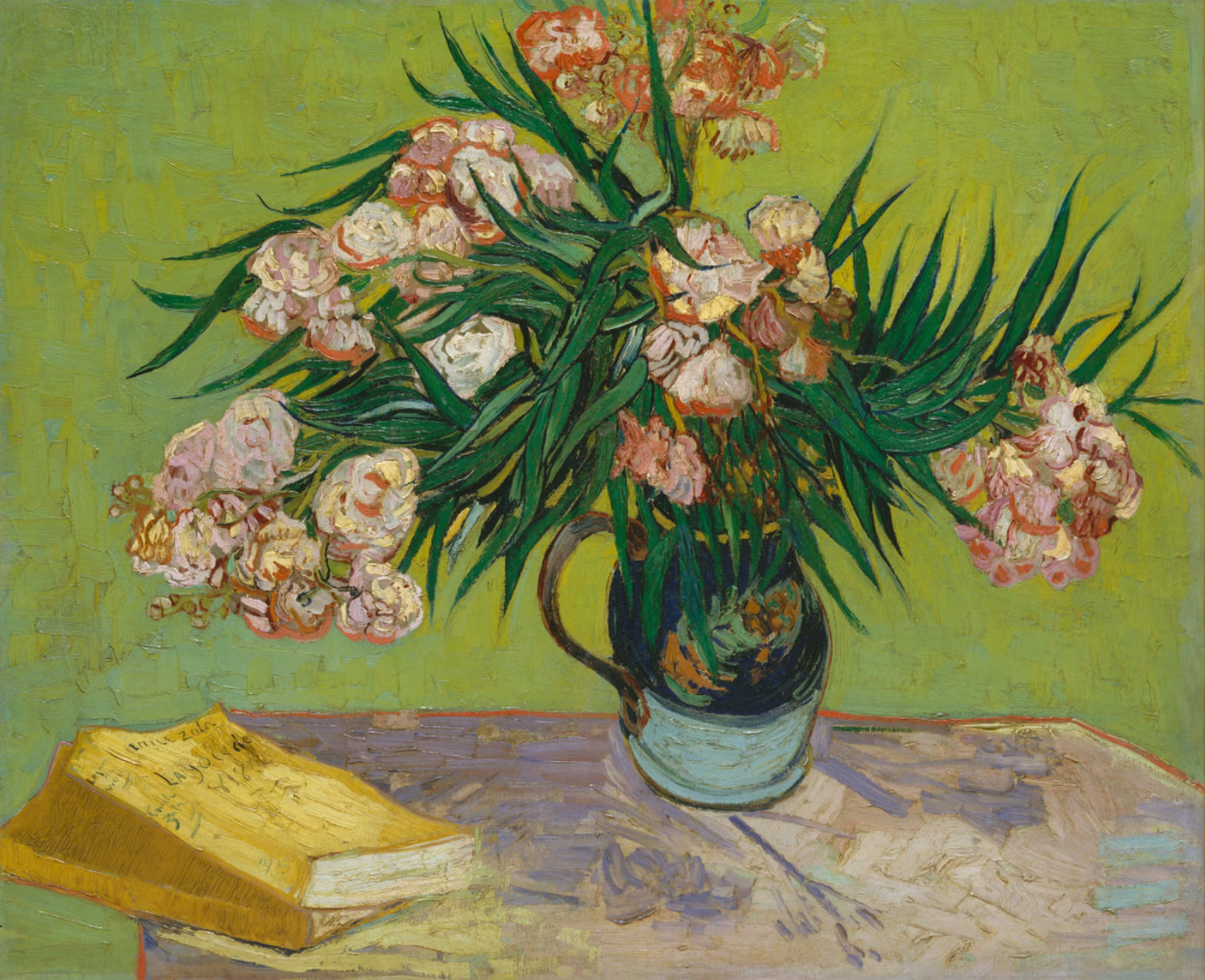
Van Gogh’s Les Lauriers rose, now known as Oleanders (August 1888)
Metropolitan Museum of Art, New York (gift of Mr. and Mrs. John L. Loeb, 1962)
Among the most important early collectors of Van Gogh’s work was Elizabeth Workman, a woman who until recently has received little attention. Tate’s records show that she originally intended to lend Van Gogh’s Au bord de la Rhône, now known as The Trinquetaille Bridge, (June 1888), but at a late stage this was replaced by Les Lauriers rose, now known as Oleanders (August 1888). When her husband, a wealthy shipbroker, faced financial problems in 1928, she sold the floral still life. The painting was then offered to the Tate, which declined to purchase it. It then went to New York collector Anna Clark, and was later acquired by the Metropolitan Museum of Art in 1962 as a gift from John Loeb and his wife.

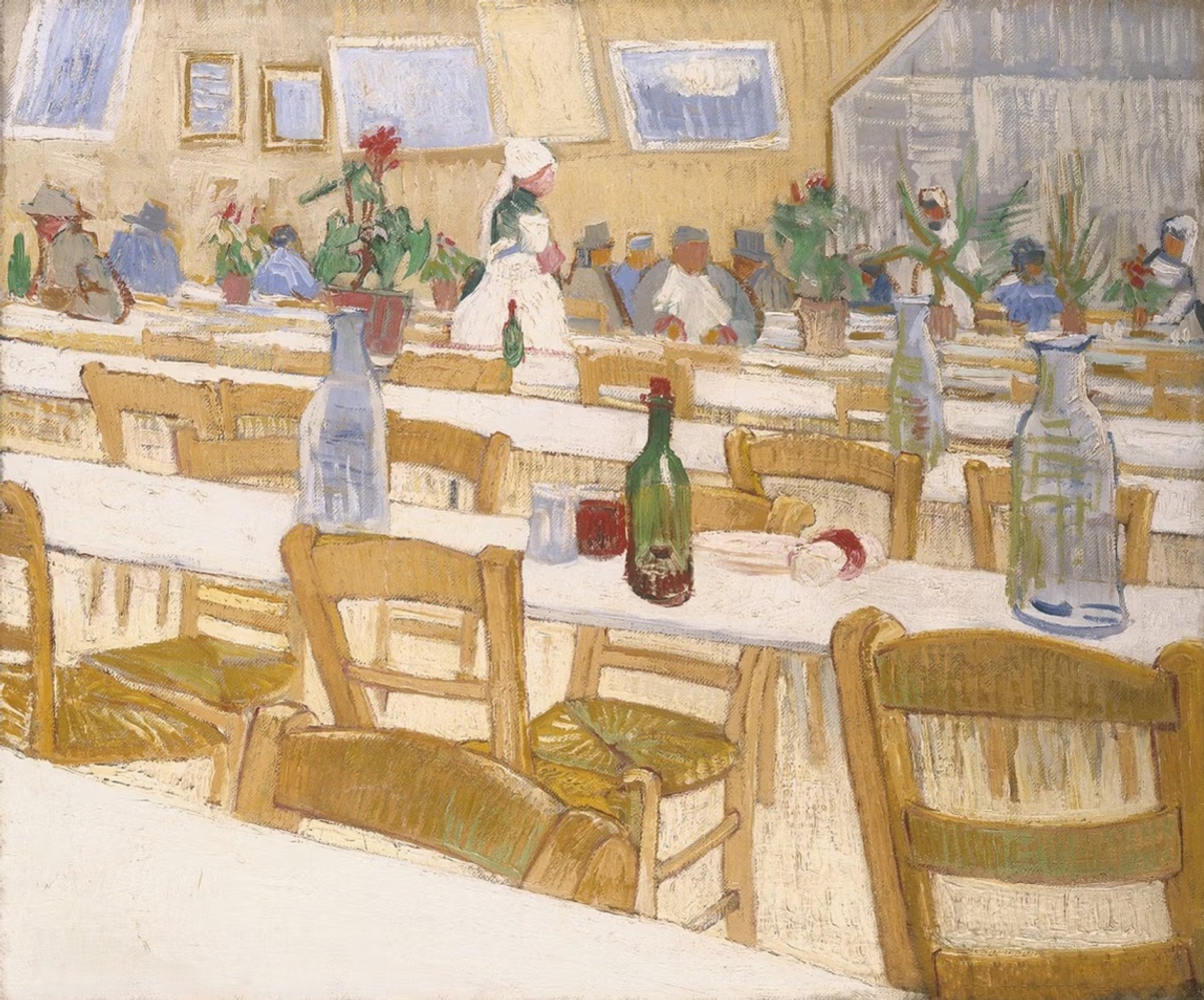
Van Gogh’s Café at Arles, now known as Interior of a Restaurant (1887 or 1888)
Private collection, courtesy of Simon C. Dickinson Ltd, London
Café at Arles was lent by another female collector, Esther Sutro. Along with her husband Alfred, they were among the earliest UK-based collectors to buy Van Gogh’s work. Café at Arles was acquired as early as 1896. Esther kept the painting until her death in 1933, and it has since passed through several private collections. At the time of the opening, the picture was thought to have been painted in Arles in 1888, although it is now dated to the previous year, when Van Gogh was living in Paris. The picture has therefore been retitled Interior of a Restaurant.

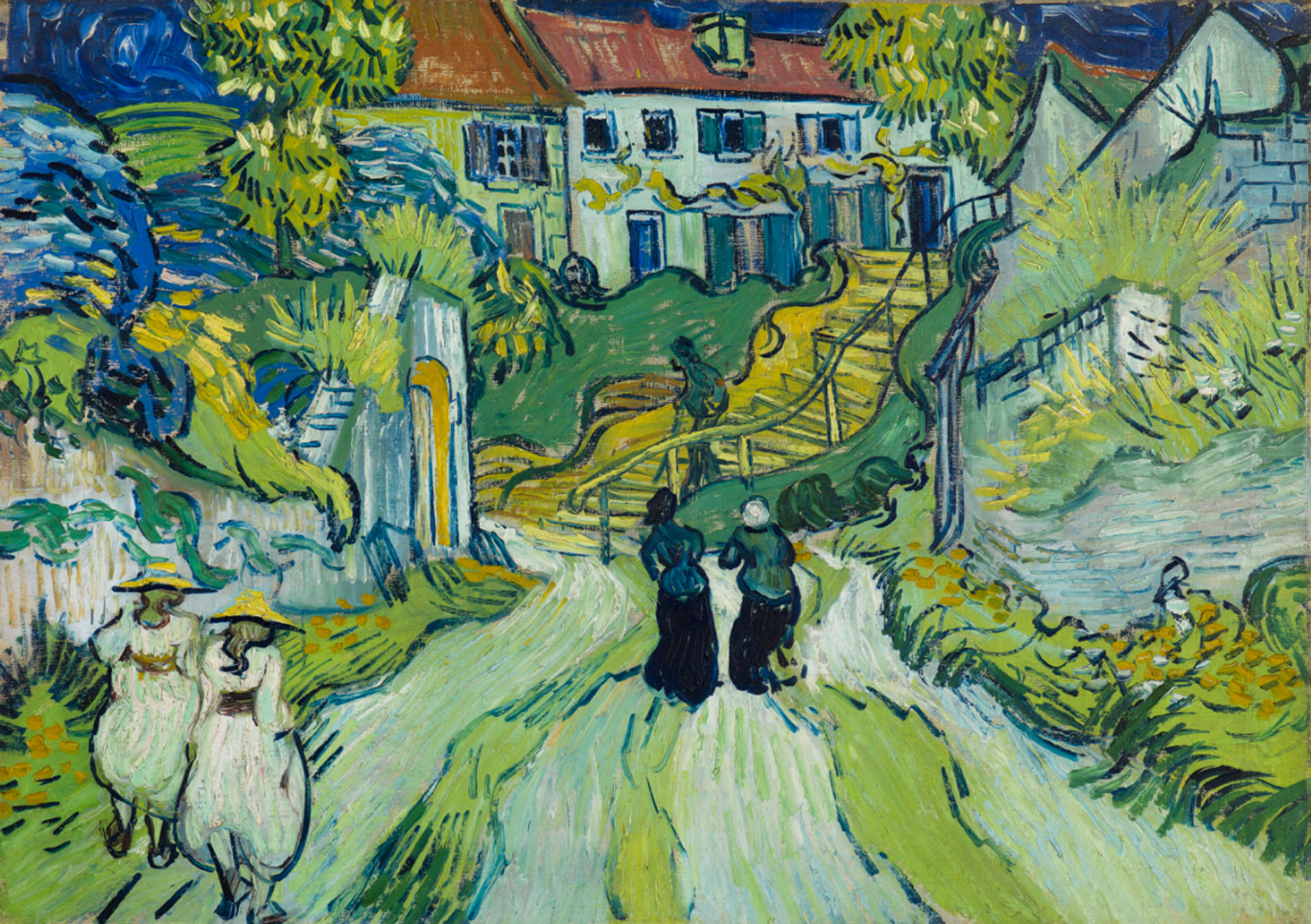
Van Gogh’s Village at Arles, now known as Stairway at Auvers (June 1890)
Saint Louis Art Museum
Herbert Coleman, a Manchester shipping magnate, lent Village at Arles to the Tate exhibition. He kept it until it was bought by the Saint Louis Art Museum in 1934. Although in 1926 the painting was dated from Van Gogh’s period in Arles (1888-89), it was later realised that it depicts the steps very close to the inn where the artist was staying in Auvers-sur-Oise in 1890. The painting was then retitled Stairway at Auvers (June 1890).

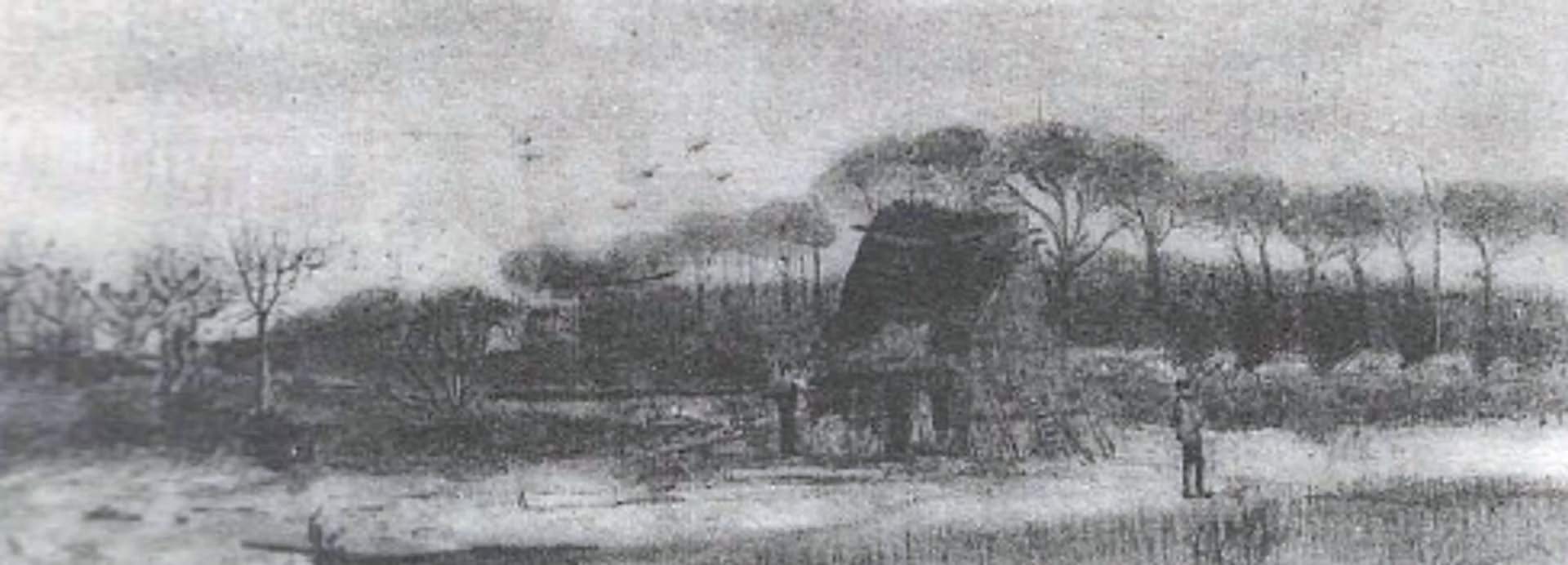
Van Gogh’s lost Landscape near The Hague, now known as The Hut (early 1881)
Private collection
Only one Van Gogh drawing was shown at the Tate in 1926: Landscape near The Hague, lent by a man called Frank Wilson, of whom nothing is known. A poor photograph of the work was published in 1928 and the drawing then disappeared. It may well have been done when Van Gogh was living in Brussels and it is now simply titled The Hut (early 1881).

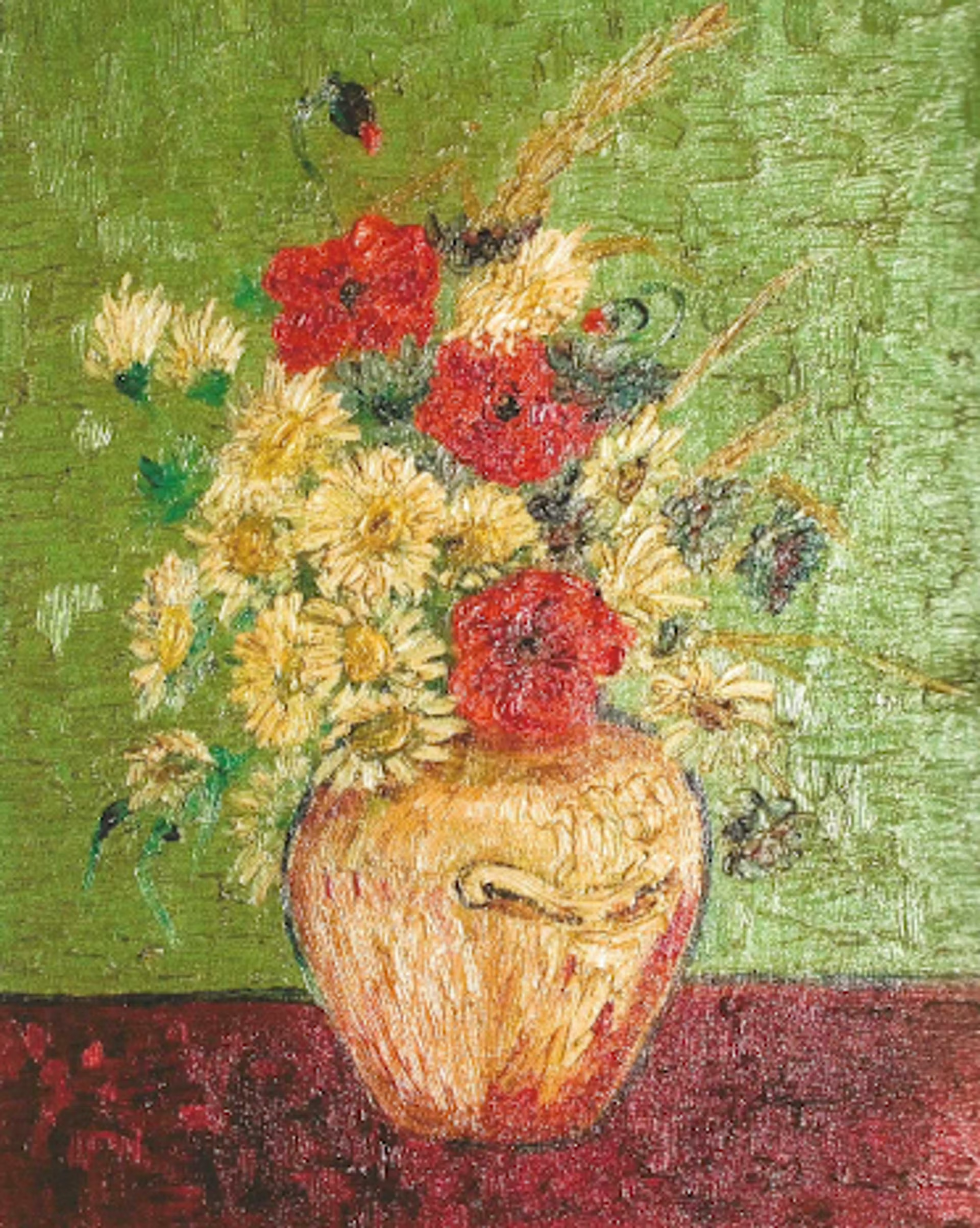
The fake: Still life with Daisies and Poppies
Picton Castle Trust, Pembrokeshire
Still life with Daisies and Poppies was one of the earliest Van Gogh fakes to be inadvertently bought by a British collector. It was lent to the 1926 Tate exhibition by James Murray, an Aberdeen-based businessman. A year later he sold it at Christie’s, making it the first “Van Gogh” to be auctioned in the UK. The buyer was Laurence Philipps, the owner of Picton Castle in Pembrokeshire, Wales. The floral still life was exposed as a recent fake in the late 1920s, having come from the notorious Wacker Gallery in Berlin, the source of dozens of forgeries. The painting is still owned by the descendants of Philipps and kept as a curiosity. It has only been exhibited once, as a fake, in an exhibition curated by the author in 2006 at Compton Verney, Warwickshire and Edinburgh’s National Galleries of Scotland.

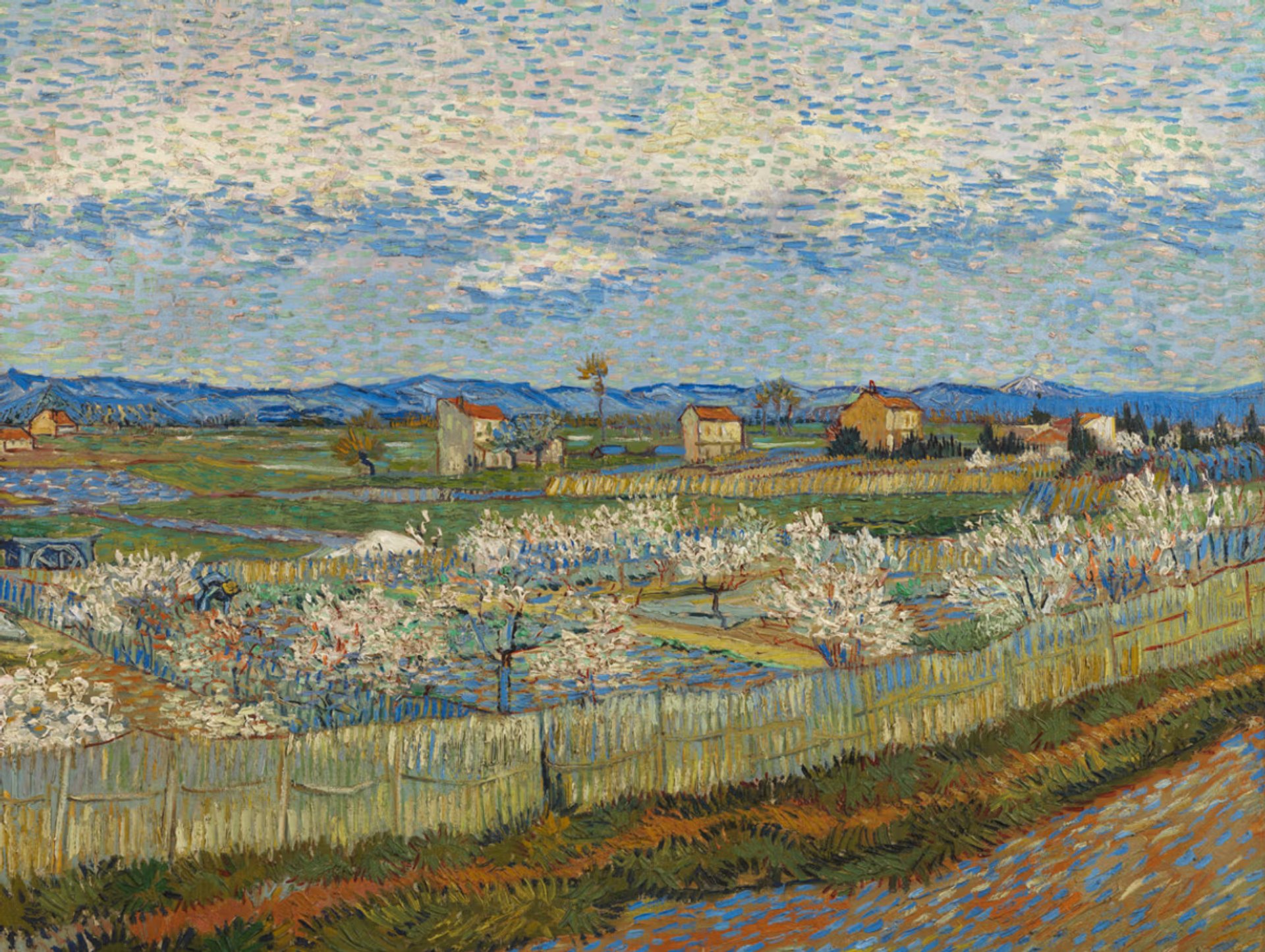
Van Gogh’s Landscape: Arles, now known as Peach Trees in Blossom (April 1889)
Courtauld Gallery, London (Samuel Courtauld Trust)
In addition to the five outside loans, the Tate also displayed another Van Gogh, Landscape: Arles, which had been bought earlier that year by philanthropist Samuel Courtauld, who had set up a fund to buy modern French art for the National Gallery. Now at the Courtauld Gallery, the landscape has been retitled Peach Trees in Blossom (April 1889).
The gallery that once housed the Van Gogh loans and other “modern foreign” art is currently known as room 4 and presents a dense display of British paintings from 1760 to 1815. The Millbank building is now Tate Britain, with international paintings from around 1900 having been hived off to Tate Modern at Bankside in 2000.

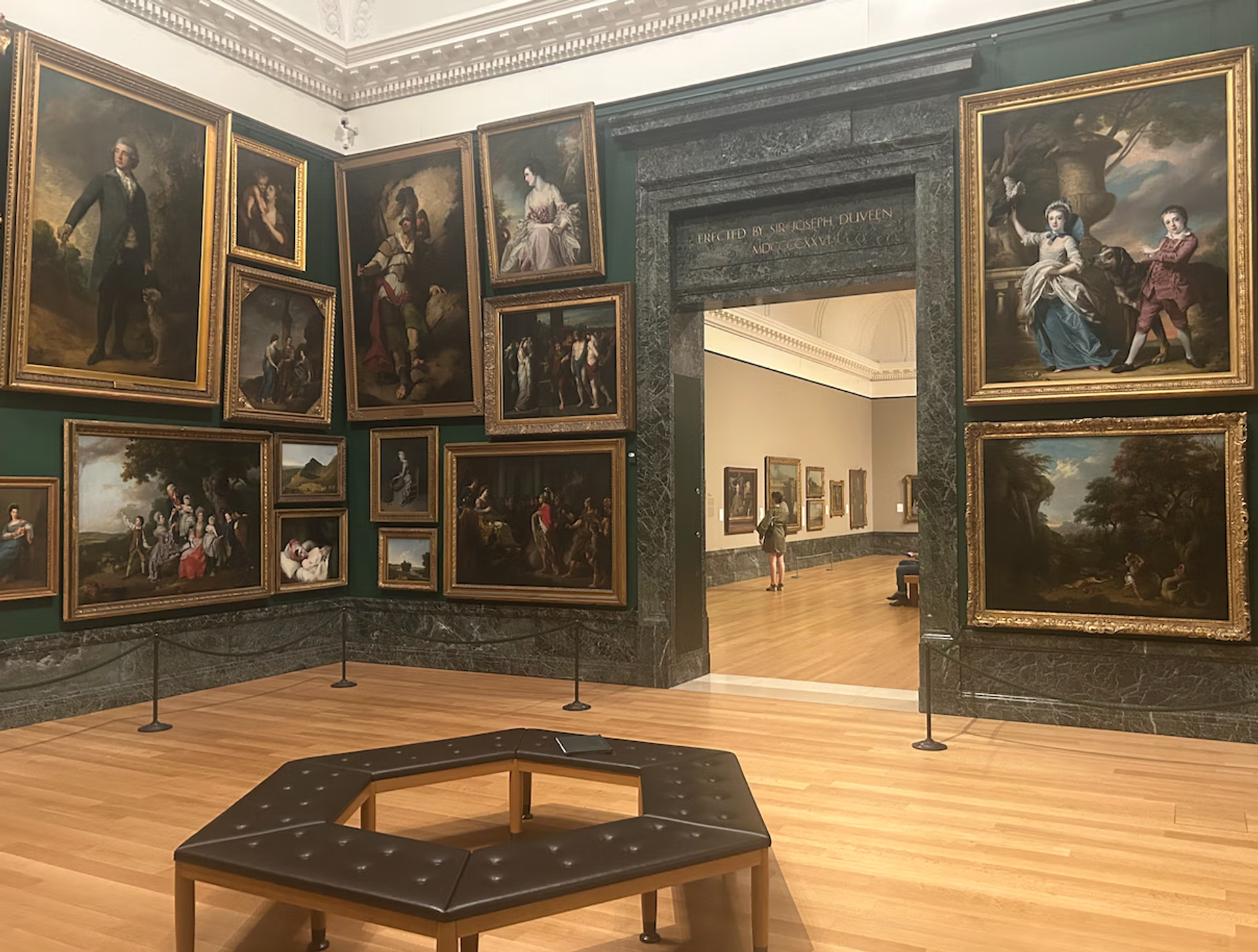
Tate Britain’s room 4 today, where the Van Goghs hung in 1926
The Art Newspaper
Tate has only acquired Van Gogh works on one occasion, thanks to a bequest. In 1933, the Dutch stockbroker and collector Frank Stoop gave three works on paper, which are normally in store for conservation reasons, and one painting, Farms near Auvers (July 1890), which is on long-term loan to the National Gallery.
Although Tate’s Van Gogh holdings remain small, it has nevertheless successfully acquired several thousand international works during the past hundred years, and now has absolutely no problems in filling its walls.
Martin Bailey is a leading Van Gogh specialist and special correspondent for The Art Newspaper. He has curated exhibitions at the Barbican Art Gallery, Compton Verney/National Gallery of Scotland and Tate Britain.

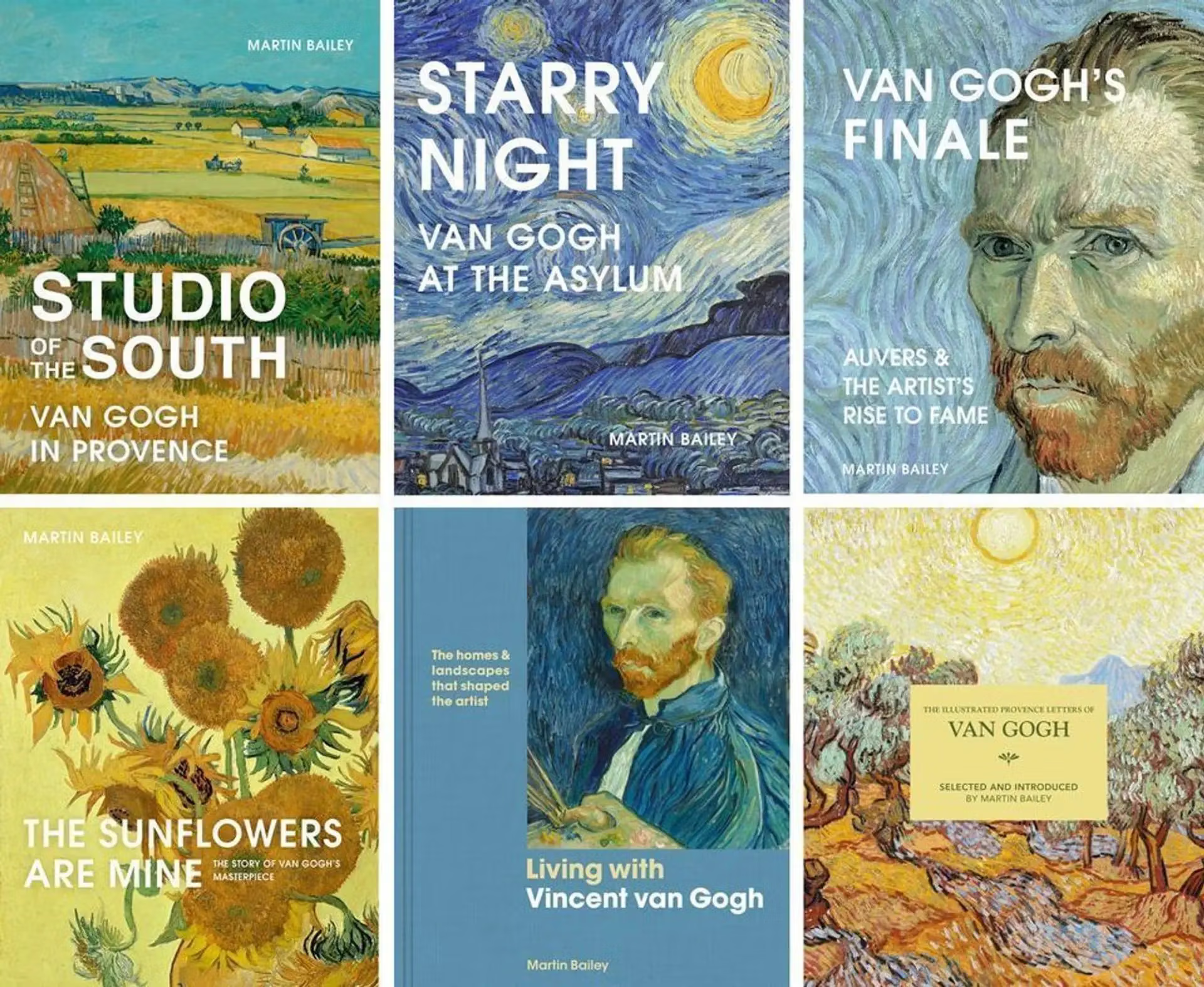
Martin Bailey’s recent Van Gogh books
Martin has written a number of bestselling books on Van Gogh’s years in France: The Sunflowers Are Mine: The Story of Van Gogh’s Masterpiece (Frances Lincoln 2013, UK and US), Studio of the South: Van Gogh in Provence (Frances Lincoln 2016, UK and US), Starry Night: Van Gogh at the Asylum (White Lion Publishing 2018, UK and US) and Van Gogh’s Finale: Auvers and the Artist’s Rise to Fame (Frances Lincoln 2021, UK and US). The Sunflowers are Mine (2024, UK and US) and Van Gogh’s Finale (2024, UK and US) are also now available in a more compact paperback format.
His other recent books include Living with Vincent van Gogh: The Homes & Landscapes that shaped the Artist (White Lion Publishing 2019, UK and US), which provides an overview of the artist’s life. The Illustrated Provence Letters of Van Gogh has been reissued (Batsford 2021, UK and US). My Friend Van Gogh/Emile Bernard provides the first English translation of Bernard’s writings on Van Gogh (David Zwirner Books 2023, UKand US).
To contact Martin Bailey, please email vangogh@theartnewspaper.com
Please note that he does not undertake authentications.
Explore all of Martin’s adventures with Van Gogh here


