








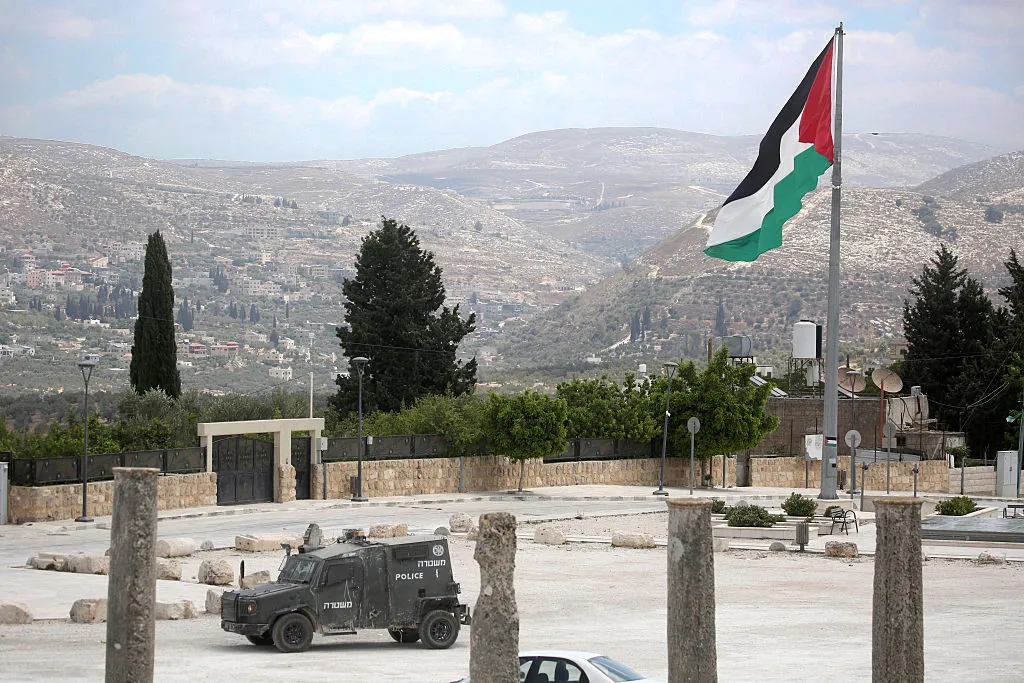
A UNESCO committee voted on Friday to add an archaeological site in the occupied West Bank and a complex of castles in southern Lebanon to its World Heritage List and List of World Heritage in Danger, despite objections from Israel.
The vote took place at a meeting of the U.N. Educational, Scientific and Cultural Organization in Busan, South Korea, as Israel’s Foreign Ministry urged the committee to reject calls to inscribe the West Bank town of Sebastia and five castles in Lebanon’s Mount Amel area, characterizing their nomination as a “weaponization of cultural heritage.” The committee voted to add both sites to the World Heritage List and the List of World Heritage in Danger, citing the emergency posed by the concurrent conflicts in the Middle East.
Cultural authorities and civilians alike in Lebanon and the West Bank have called with increasing desperation for international intervention to protect their archaeological treasures, which have been threatened by Israeli military assaults as the regional order continues to unravel.
Sebastia, a hilltop town roughly 6 miles northwest of Nablus in the Israeli-occupied West Bank, includes a major archaeological site spanning the Iron Age, Roman, Byzantine, and Islamic periods. The Palestinian delegation to UNESCO first nominated Sebastia for World Heritage status in 2012, arguing that the designation was needed to protect the area, whose historical significance has placed it at the center of disputes over heritage preservation and governance.
In recent months, the Israeli government has advanced legislation to assume full control of the site, a move that the town’s roughly 3,500 Palestinian residents, who depend on nearby olive groves for their livelihoods, describe as a pretext for expropriating vast swaths of land to expand Israeli settlements. Its recognition by UNESCO comes during a surge in violence by Israeli settlers against Palestinian villages in the West Bank, including in the area around Nablus.
“The main threat facing the site concerns the planned expropriation and creation of the “Samaria” (Shomron) national park, which could divide the property,” UNESCO wrote in a citation published yesterday. “In addition to the impact of the conflict in the Middle-East, the site also faces pressures related to development, land-use planning, governance and the erosion of the remains.”
Beaufort Castle, or Qalaat al-Shaqif, one of the five Lebanese Crusader castles newly inscribed by UNESCO, was struck directly by Israeli forces in May, according to multiple reports. The Israeli military also published footage appearing to show its troops at Beaufort Castle, a strategic hilltop fortress, during an advance through villages in southern Lebanon. Originally constructed in 1137, the structure “stands as one of the best-preserved examples of medieval castles in the Near East,” according to UNESCO, which granted the site enhanced protection from armed conflict in 2024.
UNESCO’s committee members also moved to inscribe Tyre, a Lebanese town and World Heritage Site since 1984, on the List of World Heritage in Danger. Founded by the Phoenicians, the city served as a major maritime and commercial hub across successive civilizations of the ancient Mediterranean. The modern city has been battered by Israeli aerial bombardment, with some strikes landing perilously close to the columns, Roman baths, and necropolis.
In a statement, the committee said it “expressed its deep concern over the ongoing hostilities in Lebanon, which continue to pose a threat to the property, and determined that the conditions necessary to ensure the conservation and protection of the property’s Outstanding Universal Value are no longer met.”


