







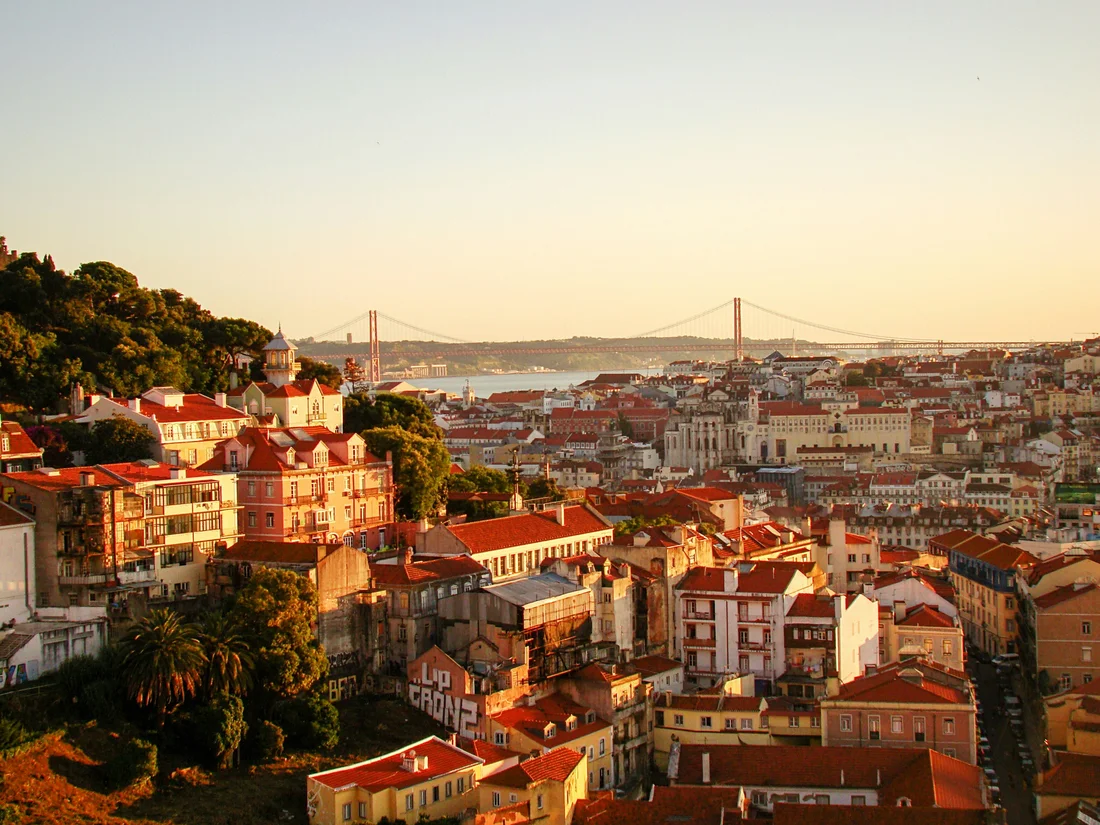
In barely a decade, Lisbon has become one of Europe’s most-watched art scenes. The 2011–2014 financial crisis and international bailout left deep bruises across Portuguese society, forcing the city’s cultural milieu to invent new ways of getting by.
What followed still caught everyone off guard: An influx of foreign capital—and of the foreigners who bought it—transformed the Portuguese capital, revitalizing its cultural landscape and turning what has long been one of Europe’s most-overlooked art scenes into a fixture of collectors’ itineraries.
The change came with costs. “The abundance of cheap spaces that used to exist was great for building a community. Now the problem is you don’t even find that kind of place on the outskirts anymore,” Horácio Frutuoso, artist and Lisbon resident, told Artsy.
Today, the city is home to some of Europe’s most-watched galleries, a renewed set of institutions under new leadership, and an independent scene finding its footing amid rapid change.
The key neighborhoods for art lovers in Lisbon


Estrela
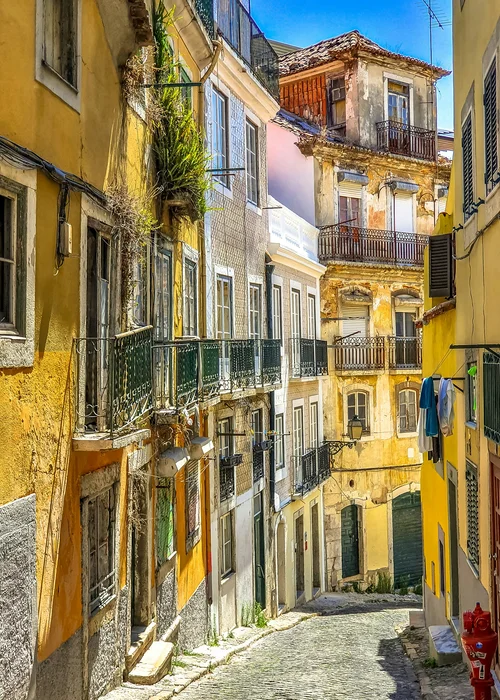
Most of the city’s incumbent galleries sit west of Baixa, the historic center, concentrated in or around Campo de Ourique, a comfortably bourgeois district that’s become an anchor of the commercial scene. Galeria São Mamede, founded in 1965, is among the city’s oldest commercial galleries and remains a fixture of the Portuguese scene.
Long-established gallerists Cristina Guerra (founded 2001) and Miguel Nabinho (opened 2003) also hold most of the Portuguese scene’s safest bets. Pedro Cera, another Campo de Ourique mainstay credited with real growth in recent years, marked its 25th anniversary by opening a Madrid space and increasingly works with internationally recognised artists. Newer arrivals broker a conversation between local and international markets: Consonni Radziszewski—the new name for Galeria Madragoa, following its 2026 merger with the Warsaw gallery Dawid Radziszewski—now represents artists across spaces in Lisbon, Warsaw, and Milan.
Jahn und Jahn, near Jardim da Estrela, opened its first outpost outside Munich here in 2022 and has helped validate Lisbon's scene for foreign collectors, curators, and artists. Just over the border in Rato, Belard has quickly built a reputation for rigorous, no-frills contemporary shows since opening in 2022.
Alvalade
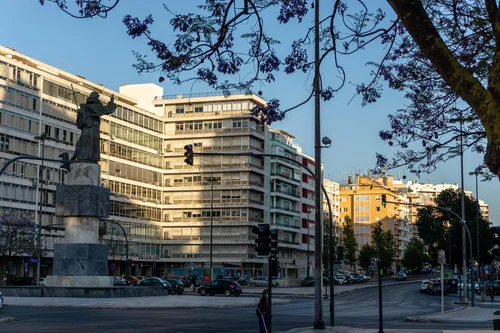

The tranquil north-central neighborhood was recently jolted by the announced closure of Galeria Vera Cortês, set for 19 December after 23 years in business. But the area still holds solid stalwarts: Quadrado Azul, Balcony, and the Coruchéus complex — a Lisbon City Council-run cluster of 50 artist studios dating to 1971.
Nearby is Quadrum gallery tucked into a recess within one of the neighborhood’s residential blocks and Appleton, an independent exhibition space. “We were quite isolated in the Alvalade neighborhood when we opened, and now we’re surrounded. All of this happened in the last 15 years. All these galleries and independent spaces have given the neighborhood strength and made it much more interesting,” Vera Appleton, founder of Appleton, told Artsy.
Marvila
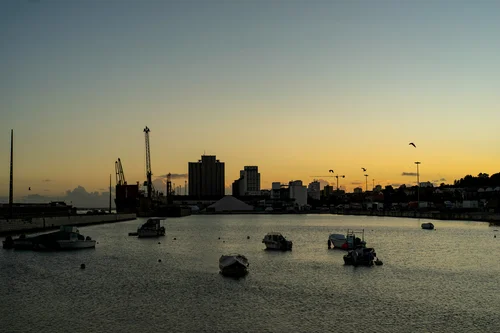
Further east along the Tagus, Marvila is frequently described as a neighborhood with potential: fewer spaces than Estrela or Alvalade, but well suited to contemporary art thanks to its warehouses and rooms with real scale.
dialogue has been singled out as the emerging gallery to watch, praised for establishing itself firmly and running a strong international programme since its first shows around 2023. Francisco Fino, settled since 2017 in a former olive-oil-and-wine warehouse after six itinerant years, has built a roster that has earned steady praise for its work with contemporary artists.
The museums and institutions to know in Lisbon
Musical chairs at the top of Lisbon’s major museums mean curatorial change has arrived at most of the capital’s key institutions. These reshuffles coincide with major renovations and new arrivals.
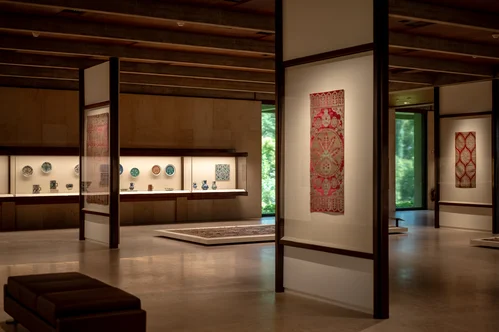

Calouste Gulbenkian Museum: One of the city’s most beloved institutions reopened in 2026 after 18 months of restoration, timed to coincide with the Gulbenkian Foundation's 70th anniversary. The museum holds the private art collection of oil magnate Calouste Gulbenkian, packed with Egyptian, Greek, and Armenian antiquities and many works from European medieval and Renaissance masters. An unmissable staple is the René Lalique jewelry collection: around 150 Art Nouveau pieces commissioned by Gulbenkian himself and made specifically for him.
Centro de Arte Moderna (CAM): Custodian of the largest and most complete collection of modern and contemporary Portuguese art—some 11,700 works by more than 1,300 artists—CAM, part of the Gulbenkian museum complex, inaugurated its Kengo Kuma–designed expansion in 2024, joined by a new 7,515-square-meter garden that gave the city a fresh green counterpart to the Foundation’s original grounds. A recent leadership reshuffle sees Portuguese curator Sergio Mah replacing outgoing director Benjamin Weil; the local expectation is that newer voices will follow.
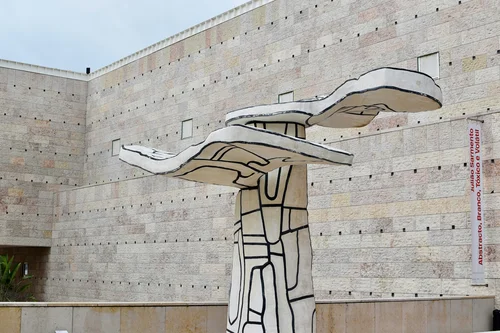
Museum of Contemporary Art and Architecture Centre (MAC/CCB): The leading museum for contemporary art and architecture in Portugal. Unburdened by the once-imposing specter of the collector Joe Berardo—whose sprawling collection is now in the hands of the Portuguese state—MAC/CCB is enjoying a renaissance of sorts. Under artistic director Nuria Enguita, the museum is freer to engage in a more ambitious conversation with Portugal’s recent past and the urgent themes of today.
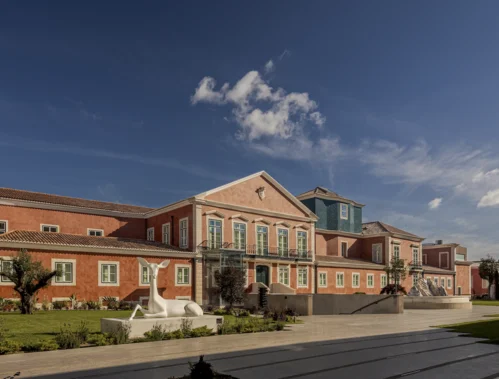
Museu de Arte Contemporânea Armando Martins (MACAM): A private museum attached to a hotel, opened in March 2025 in the restored eighteenth-century Palácio Condes da Ribeira Grande between Alcântara and Belém. Around 200 works from collector Armando Martins’s holdings are on view across some 20,000 square feet. The building’s tiled contemporary extension nods to Portugal’s ceramic tradition. Its programme has helped demystify private collections, and it prides itself on having opened them to public view. Works by the likes of Paula Rego, Amadeo de Souza-Cardoso, and Marina Abramović are among the highlights. Nearby in Alcântara, Ainori Contemporary Art is worth a detour for its emerging-artist programme.
Museu do Chiado (MNAC): The country’s first contemporary art museum. Curator Filipa Oliveira, appointed in early 2025, has spoken publicly of wanting Lisbon to fall back in love with the museum. Oliveira has centered her curatorial approach on fostering intergenerational dialogue between Portuguese canon, drawing on the Museum’s extensive collection and contemporary Portuguese art. Works by prominent Portuguese names such as de Souza-Cardoso, Columbano Bordalo Pinheiro, and José de Almada Negreiros are on view.
One independent space worth seeking out:
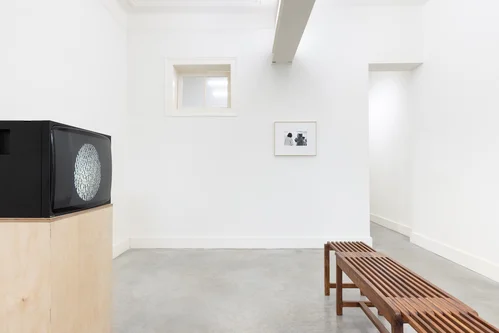
messieurs-dames, in the newly hip neighborhood of Penha de França. Founded in 2023, the project space has been singled out for stimulating exhibitions “made by artists for artists,” while keeping a discreet digital profile. Shows here often find dialogues between historical and contemporary art practices, with previous shows featuring artists such as Ana Jotta, Bruno Cidra, and António Palolo.
“One part that interests me is this historical and archival side. Projects that were abandoned, that were never shown or never had the conditions to be shown,” founder Eva Mendes told Artsy. A few minutes away in Arroios, Kolibri (formerly Casa Oxente) has built a name for itself with emerging, material-driven work.
Where the art world in Lisbon eats, drinks, and shops
The places where Lisbon’s art world actually gathers are less concentrated than in most European cities, spread between Bairro Alto, Campolide, and the outer neighborhoods. Click the Google Maps entries to save them to your itinerary.
For drinks
For drinks
The bar at Galeria Zé dos Bois (ZDB), a nonprofit art center founded in 1994 and a doyen of Bairro Alto, retains its capacity to draw a distinct crowd to a neighborhood under heavy pressure from overcrowding. Cosmos, running since 2020 in a building owned by the 96-year-old sports club Campolide Atlético Clube, is a magnet for everything creative in the city —and one of the few consensus picks among the local milieu. Initially a temporary project during the pandemic years, Casa Capitão will open a permanent space in September; an interdisciplinary venue in the neighborhood of Beato that is also an unmissable hangout.
For dinner
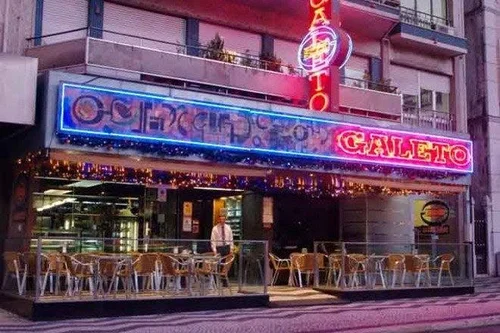
Near Belém’s museum cluster, and a stone’s throw from contemporary art museum MAAT, restaurant Canalha —with its open kitchen, fresh produce on display, and Iberian culinary influences—has become a local institution since opening in 2023. The tiny neo-tasca (tavern) O Velho Eurico, in Alfama, took on the singular project of reviving the tradition of the classic tasca in a modern setting (the Alfama area is also home to Perve Galeria, one of the city’s oldest spaces devoted to Global South contemporary art). Reservations are recommended; expect long waiting-lists but delicious, unassuming takes on Portuguese dishes. And Galeto, open since 1966, remains a comfort spot for Lisbon dwellers—1960s counter, traditional service, and night-owl-friendly hours.

For lunch
A few meters from Museu do Chiado/MNAC, in the heart of the Chiado neighborhood, Viennese café Kaffeehaus has been a stalwart of consistency in Lisbon’s center since 2008, keeping the same Austrian classicsf—Sachertorte, Schnitzel, sausages—on its menu. Midway between Belém and Marvila, on the riverfront, right by Santa Apolónia train station, lies Casanova, another Lisbon classic with an unbeatable view, extensive outside seating, and an unbeatable thin-crust truffle pizza.
For browsing
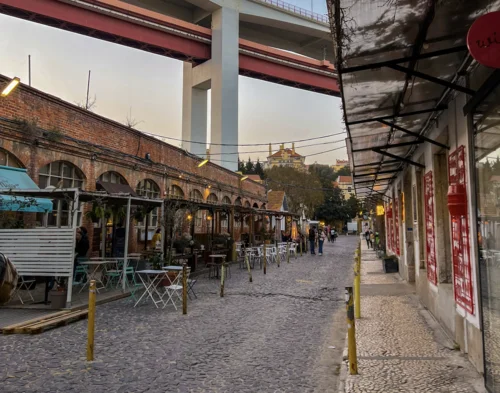
Tucked beneath the 25 de Abril Bridge, the art center LX Factory keeps its status intact as a Lisbon favorite 18 years after its opening, still bustling with galleries, cafés, restaurants, and shops. Among Lisbon bookshops, local favorites are Livraria da Travessa, a branch of the namesake bookshop in Rio de Janeiro, and Good Company, an independent bookshop with lots worth reading in the English language. Also much worth visiting is STET, a bookshop and cultural association in the Arroios neighborhood, specializing in photography books, artist’s books, and author editions, both Portuguese and international, with the odd piece from local designers also for sale.

Where to stay
An inevitable recommendation: MACAM Hotel, a 5-star, 64-room property in Lisbon. It’s the hospitality wing of this museum-and-hotel hybrid, allowing guests to enjoy the Armando Martins contemporary art collection up close.
Top tips for art lovers visiting Lisbon
- When to go: Summer is busier than it used to be, but the who’s who of Lisbon’s art world still tends to reserve July and August for holidays. Book a flight for April through June, when the scene is at full tilt.
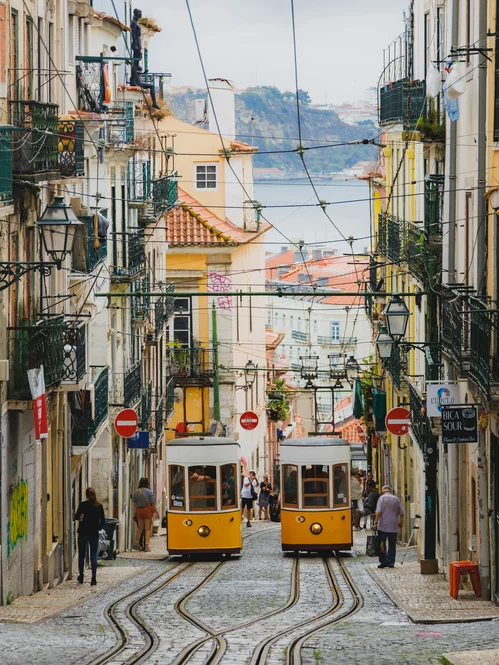
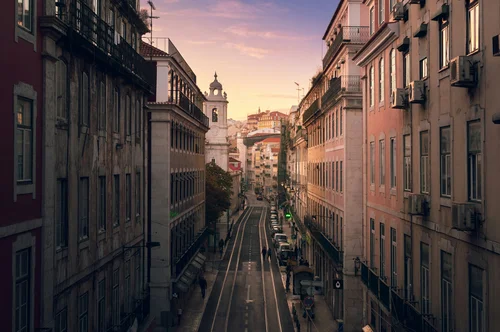
- How to navigate: Lisbon’s known for being a hilly city, but it’s very walkable in the flat areas by the river (Baixa, Belém, Marvila). Chiado, despite feeling central, actually sits on a hill above Baixa, not by the Tagus, and is better reached by metro or tram. The compact layout of Portugal’s capital makes reaching other areas, such as Alvalade, easier by metro or bus. Venturing into the steep Estrela neighborhood is best done with the help of trams 28E and 25E. Uber is cheap, plentiful, and often the easiest way to get around the city.
- What locals know: Galleries typically open Tuesday through Saturday. Openings, by convention, are usually held in the evening on weekdays, though scheduling—and the ambience of the openings themselves—tends to be fairly informal. Many start as early as late afternoon, often between 7 p.m. and 9 p.m., or sometimes on Saturday afternoons.


