






The Robert Mapplethorpe Foundation denied the use of a 1981 portrait by the artist of notorious New York lawyer Roy M. Cohn for the cover of a forthcoming biography, titled American Scoundrel: Roy Cohn’s Dark Journey from Joe McCarthy to Donald Trump, because of its negative affiliation with the sitting US president, according to the New York Times.
The portrait in question, simply titled Roy Cohn, captures the lawyer’s striking outward stare and scar-split nose head on, surrounded by a black backdrop, a signature of Mapplethorpe’s images during the final decade of his life.
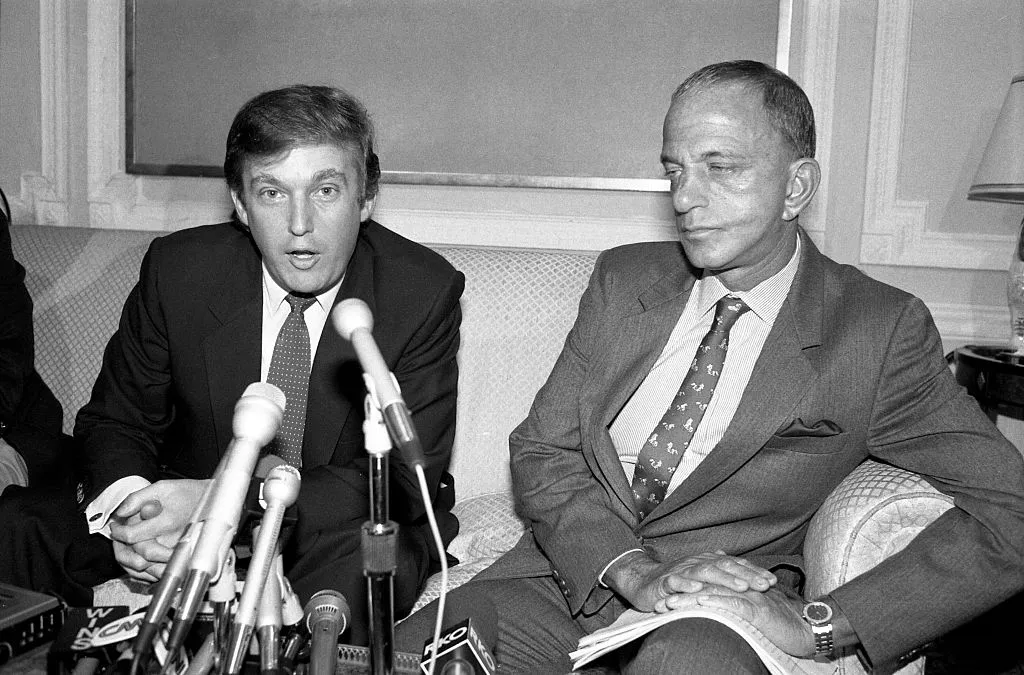
At the time it was made, Cohn was the subject of an interview for an issue of Andy Warhol’s Interview magazine. Writer and book editor Steven M.L. Aronson, who authored the piece, convinced Cohn to pose for Mapplethorpe, who was at the peak of his fame at the time. By then, Cohn was a major New York figure who, by day, represented mobsters, moguls, and media barons, including then real estate developer and protégé Donald Trump; by night, he partied at Studio.
The subject was unusual, yet notable for Mapplethorpe, who during the 1970s turned his lens on New York’s S&M scene, most notably in his “X Portfolio” (1978); in the early ’80s, he was just beginning to start photographing high-profile celebrities, collectors, and artists. Despite being publicly anti-gay, however, Cohn himself was secretly closeted. Before the end of the ’80s, both Cohn and Mapplethorpe died from AIDS-related complications.
A print of the photograph was acquired by the Los Angeles County Museum of Art and the J. Paul Getty Trust, via a gift from the Mapplethorpe foundation in 2011.
The Mapplethorpe Foundation, which oversees the artist’s estate and collection, reportedly decided against licensing the image’s use for American Scoundrel, co-authored by Kai Bird and Susan Goldmark, because of President Trump’s negative characterization in the book. As a registered 501(c)(3) nonprofit, the foundation is prohibited from engaging in certain political activities and was reportedly concerned that the image’s use on the book cover would be considered a political act. The artist started his eponymous foundation shortly before his death “to protect his work, to advance his creative vision and to promote the causes he cared about,” according to its website.
According to the Times, “the foundation’s board feared that Mr. Trump could retaliate, perhaps by threatening its nonprofit tax status,” if he took offense to his characterization in the book. For his part, Trump has been heavily involved in taking aim at cultural institutions during his second administration, including forcing changes at the Smithsonian Institution and taking control of the John F. Kennedy Center for the Performing Arts.
Bird told the Times he “thunderstruck” and “outraged” at the foundation’s decision, adding “It’s astonishing that these people are being so cowed, so easily.” The Mapplethorpe declined to comment to the Times about Bird’s comments. (A request for further comment from ARTnews was also not returned.)
Part of Mapplethorpe’s legacy is a controversy surrounding the censorship of his work. In 1989, months after his death, the now-defunct Corcoran Gallery of Art in Washington, D.C., canceled its presentation of a traveling retrospective because of the inclusion of the “X Portfolio.” The institution had received a grant from the National Endowment for the Arts to realize the exhibition, which conservative politicians took issue with, catapulting Mapplethorpe’s to the center of the era’s culture wars.
“The idea that a photograph of a dead mobster lawyer could somehow qualify as political activity, even under the Trump administration, is hard to fathom,” Suzanne Nossel, a former chief executive of the free expression group PEN America, told the Times of the foundation’s decision. “And yet, we’re in an environment where no one feels they can rule anything out.”


