






Art Basel opens its doors in Switzerland this week in an art market that has had an intriguing first half of 2026. The fair company hosted a successful first edition of Art Basel Qatar in February, and last November’s strong auction seasons, led by the blockbuster sales of trophy works, continued into May. What’s becoming clearer is that the current market looks increasingly bifurcated: the highest strata is performing well, as are safer categories like Old Masters and Impressionism, even as contemporary art’s middle and emerging markets continue to struggle. That gap was underlined earlier this month when the mega-gallery Pace announced that it was laying off 50 staff members and cutting 50 artists from its roster, and CEO Marc Glimcher said galleries need a “model correction.”
Against that backdrop, Art Basel has spent the last year retooling both its in-person fair experience and instituting support measures for its exhibitors. For the 2026 Swiss edition, the fair has instituted a price freeze on booth fees, expanded its step-up program for first- and second-year exhibitors, and introduced a sliding-scale pricing model in its main sector. It has also launched Basel Exclusive, a new opt-in program through which galleries agree to withhold select works from digital previews until the fair opens—a deliberate bet, in a market saturated with PDFs and Instagram reveals, on the value of seeing art in person.
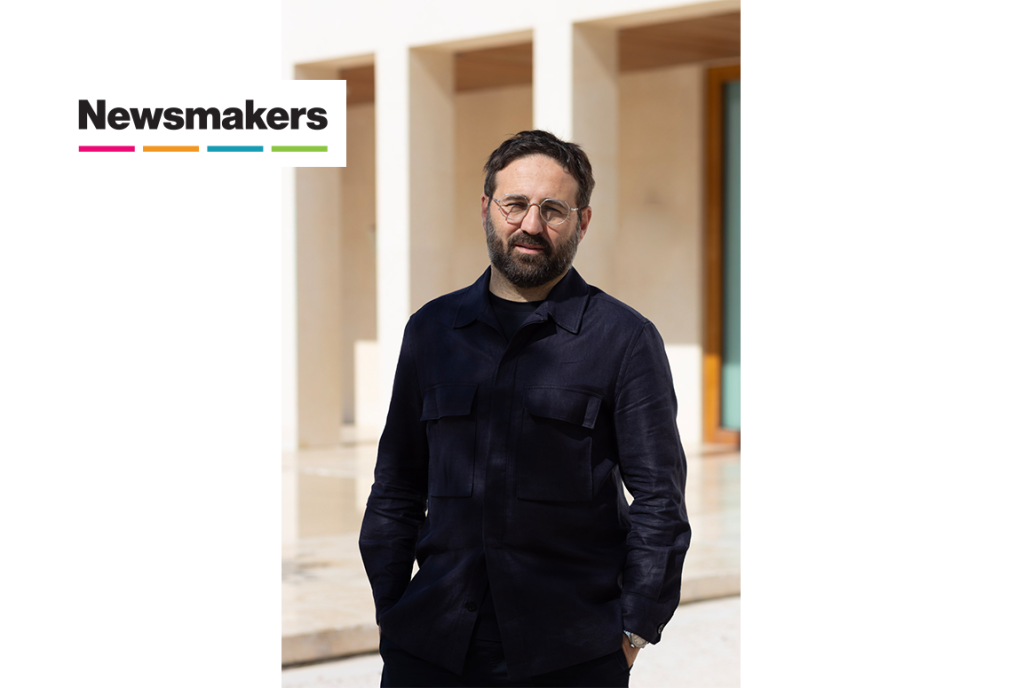
ARTnews sat down with Vincenzo De Bellis, Art Basel’s global director of fairs and chief artistic officer, ahead of the fair’s opening to discuss what Art Basel is trying to solve—and what it isn’t.
This interview has been lightly edited for clarity and concision.
ARTnews: The first thing I wanted to ask about was Basel Exclusive. What problem were you trying to solve? Why introduce this program now?
Vincenzo De Bellis: Let me start with the last question. We’ve been talking about this internally and with the galleries for quite some time. It’s part of how we keep evolving our fairs—always in discussion with our main protagonists, who are the galleries. The conversations around Avant Première [for Art Basel Paris] and Basel Exclusive were really two sides of the same coin.
Digital distribution of information is a massive thing, and it’s actually for the best. No one wants to deny that—you reach more people, more market potential. The digital tools have helped the art industry, definitely. At the same time, art is visual—it’s called visual art—and it’s meant to be seen in person. We all know it’s a different thing to see something in person than to see it through a PDF. No one disputes that either.
So Basel Exclusive doesn’t aim to solve a specific problem. It reiterates the importance of seeing things in person, and to use the fair as a platform where certain things are premiered and seen for the first time. This happens naturally anyway—even when galleries send out previews, the fair becomes the moment that you physically see those works in person, especially in the primary market, and in some cases the secondary market, where works haven’t been on view for a long time. We wanted to call that out and make a concerted effort to say: these things are happening anyway. Galleries are both sending and not sending previews, depending on how their business works, and we want to tell people, “By the way, there are certain things you’re not going to be able to see if you don’t make it to Basel.” The fact that over 80 percent of the galleries who were eligible decided to participate means it matters to them. It was not mandatory. As I said, it needs to work for their business. If it works for them, it works for us. If it doesn’t work, they don’t have to do it—but for many people it does. So we went for it.
You mentioned it’s opt-in, and that 80 percent did. For the 20 percent that didn’t, was there feedback you got from them about their thinking, and why they didn’t want to do it? Are you worried about creating a sort of two-tier fair—where everyone’s rushing to the exclusive stuff and maybe not toward the other galleries?
Not necessarily. I think we need to look at it after Wednesday [the second VIP day]. Certainly our goal is not to create two tiers, and I don’t think that’s what’s going to happen, but we need to wait and see. As the numbers stand today, 193 galleries out of 240 that were eligible participated. It was only eligible for those in the main sector, and there’s a reason for that: those are not project-based presentations. When you have a project-based presentation—in a special sector or Unlimited—you have to tell people what the project is about in order to communicate it and get them to come see it. So we intentionally only addressed it to the main sector.
For those who didn’t participate, it depends case by case. In some cases, people didn’t feel they had something that was necessarily working for this. Our request was: you need to put something that you feel represents the exclusivity of your gallery and that specific work. It doesn’t matter whether it’s a work on paper or a painting. Art Basel hasn’t given galleries any guidelines other than saying it needs to be important for you, and something you want to keep from public eyes before the fair opens.
In most cases—primary galleries, in particular—because we had deadlines to promote this and announce the artist names and the gallery names, in some cases galleries weren’t sure which artist to prioritize, and that’s their own decision. In other cases, they had ideas, but the consignment didn’t go through, and at that point they couldn’t make the deadline. So there were several reasons. In some cases, people said, “I have a lot of clients on the other side of the world, and I want them to know everything I’m bringing. This is important for me. I’ll just keep doing business as usual.” And we said, “Fair enough.”
My read of Basel Exclusive and Avant Première is that they’re about improving the in-person experience at each of these fairs. Is there a particular reason you’ve decided to only do Avant Première in Paris?
Every fair needs to be looked at in different ways. This is a global brand—or platform, for lack of a better word—but with five different contexts, and each of them needs to be taken very much into consideration. The fair in Basel is the largest. It’s the one where the breadth of the art is the widest, and where historically and still today there’s a museum-quality, museological approach to each of the booths. So the exclusivity—reserving something only for the eyes of those who go there—was specifically taking on that.
In Paris, we have a very prominent venue, which has some challenges because of its scale. Avant Première was a direct response to that. If you remember the previous years, everybody wanted to come at the same time, and we had to navigate that to give galleries and their clients the best experience possible. So each of the fairs requires a different approach.
On the point of Art Basel Paris and Basel, there’s been a large conversation over the last couple of years over whether collectors are now gravitating toward Paris. How do you see the flagship fair maintaining its importance on the calendar and its preeminence in Europe?
It’s been five years now, and I’m pretty confident saying that the two fairs have their own distinct presence. They’re separated in terms of timing—Basel is in June; the fall has historically been between Paris and London, the epicenter of the fall season. So for us the two fairs are complementary. It might be true that some people, especially from the US, have a tendency to gravitate toward Paris, but at the same time, the Basel show has become more global in its approach—more Asian, more collectors and galleries from the Global South. Basel itself has transformed into the most global of all five fairs, because of its scale and the way it’s built within the city.
Paris is very Paris-centric. It responds to a very specific context, which is a fantastic historical and contemporary one. The city of Paris is phenomenal in many ways and has been a center of the art world for centuries, but it also responds to a very specific French culture. We have many galleries coming from the French context that we don’t necessarily have at other fairs. So there’s enough distinction. They’re both in Europe, but after five years we can confidently say these two exist in their own right. Naturally, there are moments when people will choose to go to one or the other—or hopefully, that happens with good people, to both of them.
The fair in Basel is, as you mentioned, very well known for bringing museum-quality work and really high-end secondary market material. The last two sales seasons at the auction houses have seemingly driven home this desire for trophy works—A-plus material. Does that strengthen the continued argument for Basel? Does it change how you curate the fair, or the advice you’re giving to galleries about what to bring?
Certainly the recent sales—but also the recent fairs—confirm that there’s very much a polarization between the high end of the market and the more experimental, emerging scene. Everything in the middle is structurally a little squeezed, or has some kind of tension in that segment of the market. At the same time, when I say museum-quality works, I don’t necessarily refer only to the top end of the market. There’s a lot of amazing-quality art being produced at every level, and most of the Art Basel galleries sit in that mid-market. That’s the vast majority—not only of the Art Basel fairs, but of every fair in the world, or most of them. For us, that’s a very important part of what we do.
Some of the actions we’ve been taking in the last few months have been done in support of that mid-market. For the 2026 edition of Basel, we’ve instituted a price freeze and expanded our step-up program [which provides price reductions for first- and second-year galleries of 25 percent and 10 percent, respectively. The fair has also instituted lower flat rates for many of their special sectors like Statements and Feature and introduced a sliding scale pricing model for the main Galleries sector, where larger booths pay a higher square-meter rate than smaller booths.]
We instituted all of those measures to reiterate the importance of these players to our platform, and also to create a pipeline for the future of art history. Without these galleries, there’s no future for evolving into something established. That’s very much our intent, while also recognizing that the two parts of the market currently under more focus from collectors are very important to us as well. No one forgets that the top end of the market is something we need to keep nurturing and fostering at our fairs, as are the younger galleries. We have to mirror the different segments of the market we represent, but I also want to make a mention to the fact that, since the vast majority is that mid-market, we want to make sure these galleries—and the collectors we invite—respond to that specific need.
On a similar point, the most recent Art Basel & UBS Art Market Report noted major boosts to the Old Masters and Impressionism markets. Do you feel you have to respond to that collector interest? What does responding to that look like for the fair?
My predecessors used to say Art Basel is a reflection of the market and on the market. So the short answer is, we should absolutely be very responsive to what’s happening. It would be wrong for us not to. At the same time, we need to find the right thing that speaks to the Art Basel brand, speaks to Art Basel’s history, and doesn’t necessarily replicate what other people are magnificently doing. So we are vigilant. We are absolutely looking at every result, and through the art market report, we have great insight. There’s nothing specifically I can point out today, but make no mistake—we’re doing our own work.
Thinking back to Art Basel Qatar in February—that was a pretty deliberate departure from how the other fairs are structured, with the open layout, solo presentations, and a very strong central theme. Do you envision that approach evolving to change other editions of the fair, either in Basel or Paris or wherever else? Do you see the Qatar fair as a kind of R&D place to try new things?
The answer is yes and no. As I said earlier, every context needs a very specific approach. Starting from a blank white page is one thing; starting from 56 years of history that you have to respond to is another. There’s a certain legacy you have to acknowledge and respect.
If I may speak personally—because it’s also my own history—by having much more focused presentations, much more intentional choices of who we work with as curators for the fairs, for the sectors, or in some cases like Qatar for the whole fair, we are certainly working on something. The Art Basel Qatar model in that regard is helping us be a little more free to experiment, and to go into collaborations with much more confidence. When you decide to appoint someone like Wael Shawky in Qatar, or Trevor Paglen for Zero 10 in Basel, it’s intentional. Probably without the experience of Qatar, we would not have taken that route. So by having other platforms where we can explore different methodologies, it helps us think about how we can change a few things at the fairs. But to say that fair can be replicated in all four of our other contexts—I would be lying if I said that’s what we’re planning. We’re not. Certain aspects of it can certainly be instrumental for changes or additions to our platforms.
Last week, Pace very publicly had layoffs and cut 50 artists from its roster, and CEO Marc Glimcher said they were doing a “model correction.” One of the things he really called out was the cost burden of attending so many fairs. Pace is obviously one of your most prominent exhibitors. Does his criticism of the overall art market land with you? How do you see Art Basel’s place in that, and your role in terms of making this a sustainable market that these galleries can survive in?
I can’t comment on the gallery itself, of course, but I can comment on Marc’s call-out to the market—on “how the system is broken,” if I’m quoting him rightly. The overall concept was that there is a correction taking place. Generally, there’s been very steady growth that brought the entire art market to expand in many directions, and I think it’s fair for all of us to evaluate where this is now.
My conviction is that the fairs are definitely a part of the equation, but they are only part of the equation. There are many other parts that need to be considered altogether… What Art Basel can do is think about how its own fair model can be more in line with the current situation of the market, and how it can respond to market changes as quickly as possible. Now, what it means to respond quickly is not easy, because we plan a year in advance. So when something happens, you’re going to be able to apply some changes six months later or more. The step-up measures, the price freeze, launching a different fair with a different model—all of those are responses we’ve already applied. Are these the only things we should be doing? Certainly not. We have to continue looking at different measures. We’ve also expanded some sectors that help galleries—Premiere in Basel, for example, or Echoes in Hong Kong. Zero 10 is also, to some extent, an evolution of something we are testing and exploring. So we are doing things that respond to that. We’re looking at many others, but, yes, we’re working on it.
What do you see as the ideal relationship between Art Basel and the Venice Biennale, which opened last month?
That’s a very dear question to me, because I come from the museum world. To some extent, the biennial model is an evolution of what the museum system is—clearly with a very commercial take. I don’t think its any secret, but biennials have changed very much with the arrival of the digital tools we all use. Let’s speak specifically about the Venice Biennale, because I think we can take it as the metaphor for all the biennials. They’ve become much more like museum shows—much more retrospective—either rewriting history, as in the last two editions, or at least narrating a different history through a different lens. It’s a reflection on a much longer period of time. It used to be about what was fresh and new from the last couple of years.
In that regard, the fairs have taken on that role of presenting the new productions. What I’m trying to say is that we used to go to Venice to see the newest art being produced, and the fairs were a place where the market was happening. There were many fewer fairs, and at the fairs you would see new things, but also many things that weren’t necessarily new. More recently, pavilions aside, the main shows of the Biennale have been mainly retrospective. You see things you might not have come across, and artists who have been forgotten and need their position reestablished, to write new narratives. The fairs have become the place where—because they happen every quarter or every couple of months—the new artists are presented. As a curator, I would go to fairs to see what’s been produced by new artists, and I would go to the Biennale to see how this is being described and taken up by art history. So in many ways, they’re much more complementary now than they used to be, because of the pace each has.
I would still love—just thinking about my own pleasure, and maybe many of the Americans would agree with me—if the fair in Basel and the Biennale in Venice were closer in date, as they used to be, so you could do one trip and do both.


