






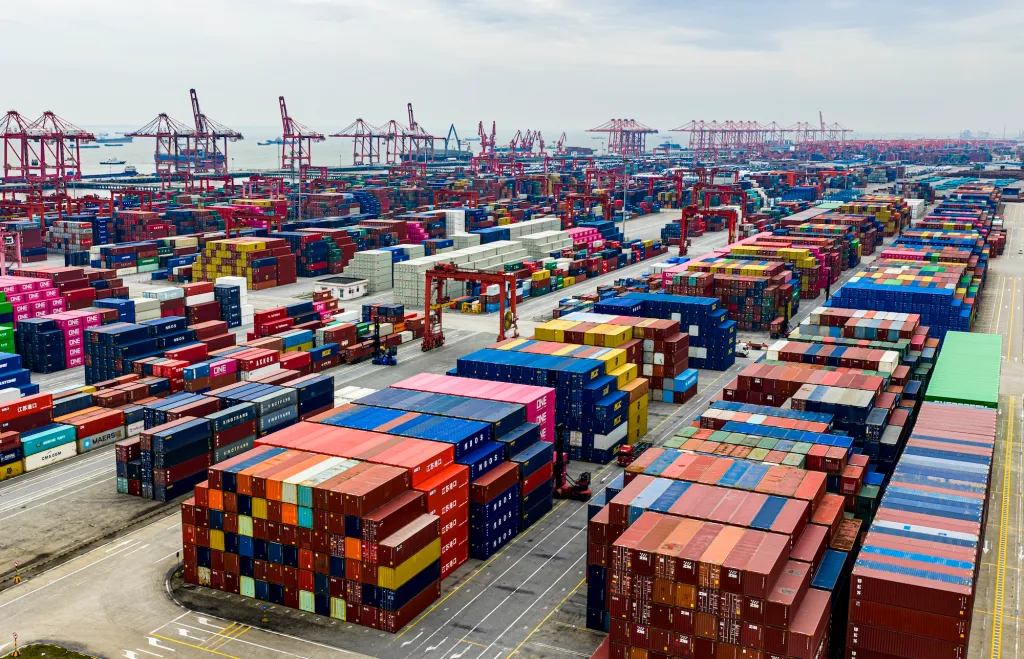
Art shippers are feeling stark impacts from the United States and Israel’s war in Iran, seeing costs rise and shipping routes severely disrupted, particularly in Asia, according to a new report in the Art Newspaper.
Oil prices have risen drastically since the conflict began in February, leading airlines to charge higher cargo fuel surcharges. Just in the war’s opening weeks, international air freight costs for fine art spiked as much as 300 percent, according to Wang Jianmin, founder of Chinese art logistics company Top Space Art Service. Within China, which has great oil reserves and where prices are more tightly controlled by the state, logistics costs have risen by a much lesser degree, topping out at 15 percent.
Some exhibitions have been modified due to shipping delays, reports the Art Newspaper. An exhibition by Danish artist Per Kirkeby opened at the He Art Museum in Shunde, China, with fewer works, owing to some of his pieces being grounded at Doha International Airport.
Art fairs are also impacted. Artworks that were planned to go on display at Art Basel Hong Kong ended up stuck at sea for more than a month en route from Abu Dhabi, according to Jerome Sozzi, general manager of Bonds Fine Art Logistics in Hong Kong, after the US sank an Iranian frigate in the waters off Sri Lanka on March 4. (The gallery and artist involved are not named in the report.)
Shippers may pivot to rail when possible. Asian galleries wishing to move freight to Europe, for example, might resort to the China-Europe Railway Express, a state-supported network that links 128 cities in China to 232 urban centers in 26 European countries. For the Chinese Pavilion at the upcoming Venice Biennale, for example, shippers could send a shipment from Xi’an to Venice via train with a surcharge of only $100, compared to a $600 surcharge and a delay of ten days or more on sea freight.
Organizers of projects in mainland China are already rethinking their plans, Wang tells the Art Newspaper, saying, “We had international clients eager to launch projects in China, but several either postponed or cancelled after learning that costs exceeded their budgets by more than 50%.”
Sozzi tells the Art Newspaper that Bond Fine Arts Logistics could see a drop of as much as 8 percent in its yearly turnover, while stressing that since the conflict has been in effect for such a short time, “It’s hard to predict the final numbers at this stage.”
Wang, meanwhile, says his company is taking on the additional costs. “We want to weather this storm together with our clients,” he tells the Art Newspaper. “It’s about survival and partnership right now, rather than just the bottom line.”


