





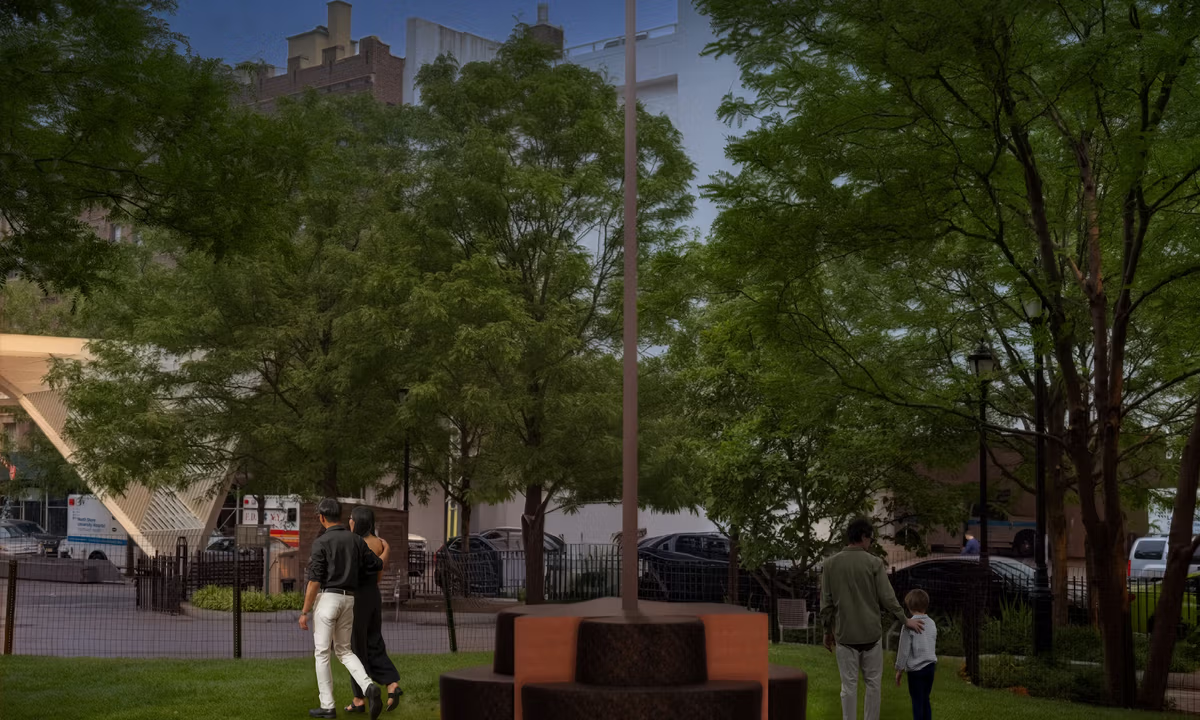
As the New York City Aids Memorial celebrates its tenth anniversary this year, the nonprofit established to honour those lost to the Aids epidemic is unveiling its latest public commission: Eternal Flame for Scott Burton (2026) by the American sculptor Oscar Tuazon. Installed at the memorial’s site in St Vincent’s Triangle in Manhattan’s West Village, the commission being unveiled on 20 June revisits the final public work of Scott Burton, the influential artist who died of Aids-related illness in 1989.
Tuazon, whose practice melds elements of architecture, social engagement and conceptual sculpture, first became interested in Burton’s work as an art student in New York in the 1990s. “The dual nature of his sculptures––at once publicly visible and deeply private––seemed like a secret hidden in plain sight,” Tuazon says. His commission for the Aids Memorial reimagines Burton’s landmark installation for the Sheepshead Bay fishing piers in Brooklyn, a work originally commissioned in 1987 and completed posthumously in 1994.
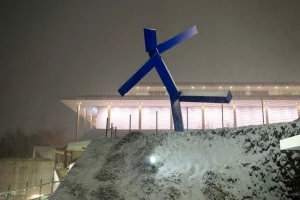
Scott Burton, Commission for Sheepshead Bay Fishing Piers, 1994 Photograph by Christopher Wesnofske. Collection of the Public Design Commission of the City of New York
The work became emblematic of Burton’s approach to public art, dissolving boundaries between sculpture, design and civic infrastructure. Comprising benches, lighting elements and other functional forms, Burton’s work encouraged public interaction while offering social and political commentary. Unfortunately, years of exposure to the environment, compounded by damage sustained during Superstorm Sandy, led to its decommissioning in 2022. Key components were subsequently preserved by Nicholas Olney and Eric Gleason of the gallery Olney Gleason. Tuazon used some of these salvaged elements for his new sculpture.
“I followed Burton’s intention as closely as possible,” Tuazon says. “Red Atlantic granite is a material that Burton often used. Terrazzo was an atypical choice for an outdoor sculpture at Sheepshead Bay—perhaps the only time he used this material—and the ottoman-style benches that form the core of the work were badly damaged by exposure to a marine environment for three decades. I tried to lovingly restore his work using original fragments and transform the damaged terrazzo into a new aggregate material.”
Tuazon’s sculpture takes the form of a functional circular bench with a pole that shines a beam of light.
“Eternal Flame for Scott Burton isn’t just a backward-looking monument,” says Dave Harper, the executive director of the Aids Memorial. “It is an act of direct preservation and sensitive reimagining that suggests a perpetual renewal of Burton’s work and the generation he represents. Ultimately, I want visitors to see that history is not fixed and must not be forgotten. Through thoughtful stewardship, the ideas and creative spirits of those we lost to the Aids crisis continue to live, breathe and evolve right here in the present.”

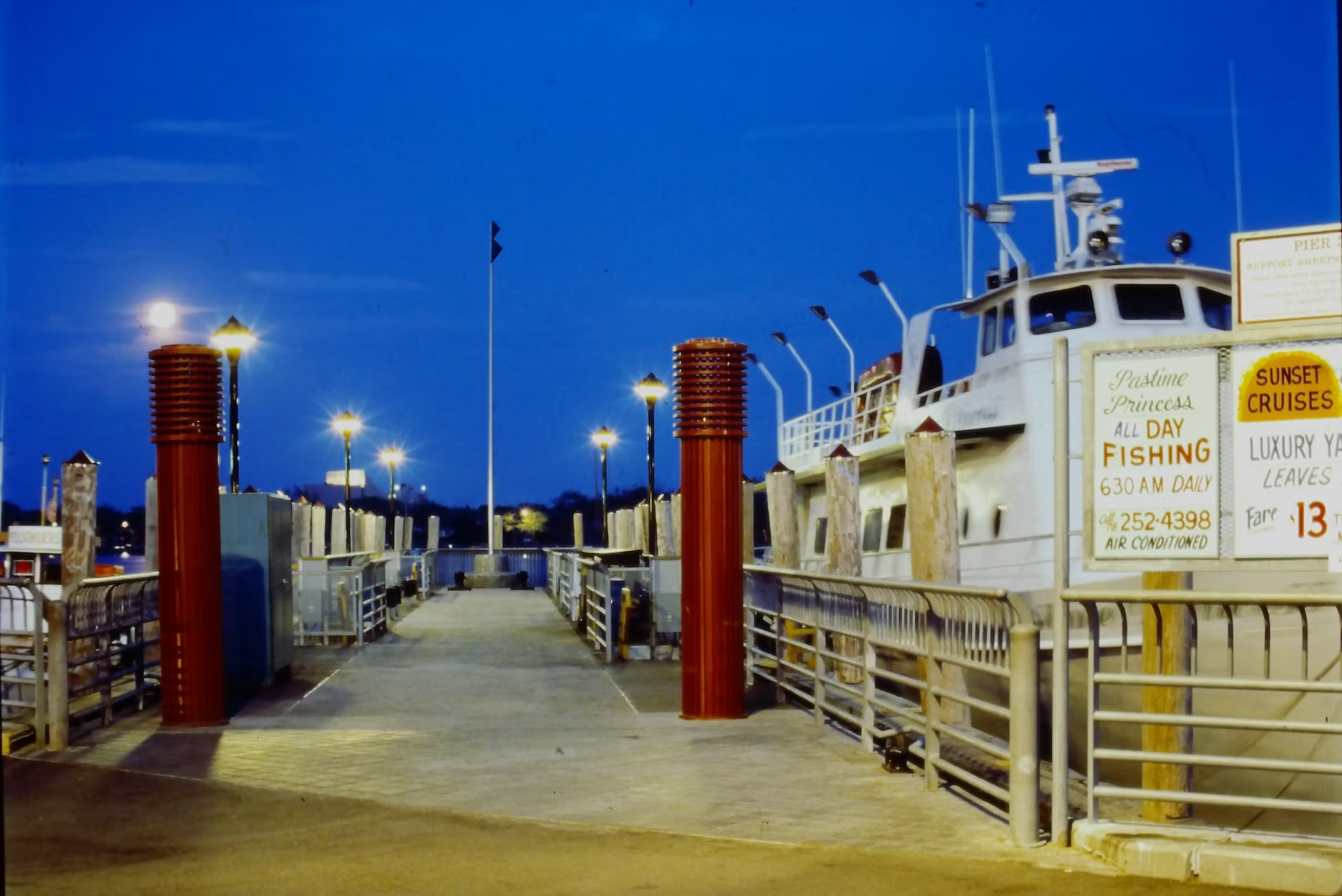
Scott Burton, Commission for Sheepshead Bay Fishing Piers, 1994 Photograph by Christopher Wesnofske. Collection of the Public Design Commission of the City of New York
Tuazon’s design reflects the Aids Memorial’s ongoing commitment to preserving the history of the Aids crisis while ensuring that its cultural and human legacies remain active within public life. The unveiling will include drag performances, live music and floral installations.
“I want visitors to understand that commemoration is an active, living verb,” Harper says. “I hope visitors leave understanding that the New York City Aids Memorial, as we celebrate our tenth anniversary this year, is not just a place of mourning, but a vibrant, enduring platform for creative energy, social connection and justice.”
Eternal Flame for Scott Burton suggests that memory is sustained through transformation. It stands as a testament to an artist lost during the Aids crisis and to the enduring capacity of public art to connect generations across time.
“Community is the strongest protection we have,” Tuazon says. “I wanted to put the pink triangle at the centre of this work, as a memorial to Burton and all the other artists lost to Aids, and to make this a tactile, loving, communal space where friends and strangers meet. I insist on the intimate nature of this, as something that you experience through touch. The HIV/Aids crisis was a failure of institutions (something we are seeing again right now), and the antidote is––and has always been––pride, visibility and community. In the words of Act Up, ‘Silence=Death’.”


