





Between accusations of being hypercommercialised, labourless, or worse, the current cultural landscape appears rather tilted against digital art. Visitors making their way to Venice between now and late November when the 61st edition of the floating city’s Biennale closes would do well to skip some of the shows that have been posted about on social media countless times, and explore a few palazzos off the beaten path that will renew their faith in the future of digital art.
Several collateral exhibitions, including those hosted by the Qatar campus of Virginia Commonwealth University’s School of the Arts (VCUarts), the Autotelic Foundation and the Berggruen Foundation, offer captivating takes on digital art’s past, present and future.
Boost Lab, Chrysalis, 2026 Courtesy VCUarts Qatar
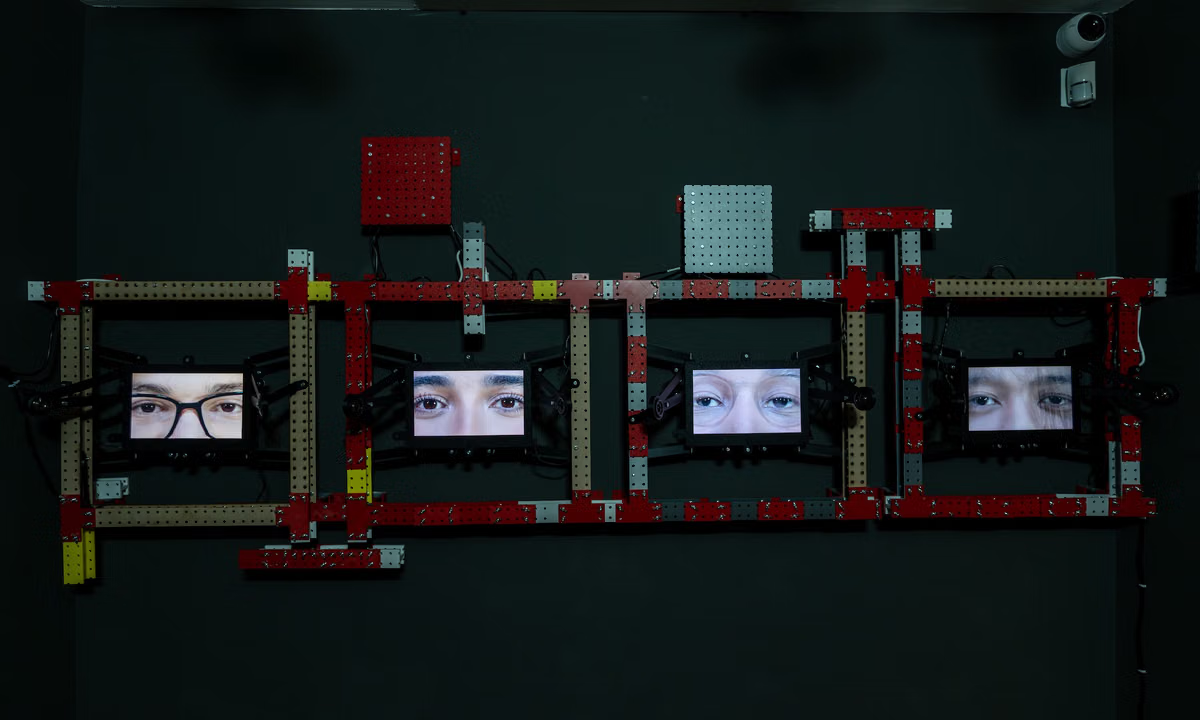
Aghrab Idrāk: Thresholds of Perception (until 22 November) features a refreshingly inventive range of digital works produced by members of the VCUarts faculty in Qatar. The exhibition includes a dystopian, cyclops of a robot by Mesh Lab that functions like a modern-day doomsayer, as well as a surprisingly utopian, large-scale air filtration sculpture that breathes like a giant synthetic lung, Chrysalis, created by Boost Lab and spearheaded by VCU alumnus Syed Erzum Naqvi.
My favorite work in Aghrab Idrāk, Preceding Emptiness by xLab, is a large-scale light installation that transforms the clicking noise a fluorescent bulb makes each time it turns on into an intentional acoustic component. Part haunting monument, part mesmerizing sign, the structure is akin to a typical alarm clock in which numbers are made up of small strips of LEDs, but on a much larger scale. Considering that, unlike Arabic numerals, Arabic script is inherently limited when this reductive technology attempts to display its calligraphic components, the work naturally inquires about the implications of modernising or digitising a culture that relied on manual ornamentation as a fundamental component of expression for millennia.

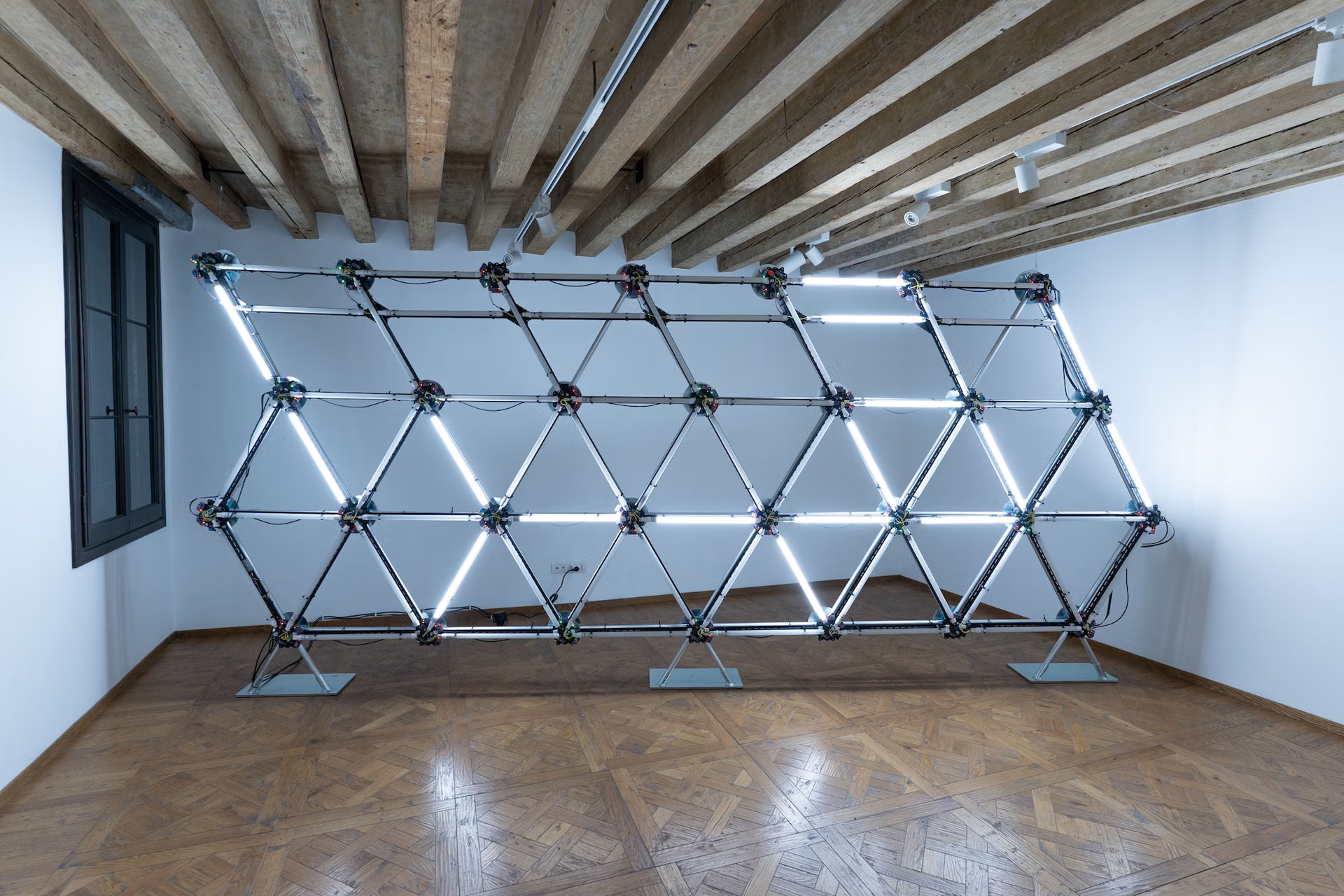
xLab, Preceding Emptiness, 2026 Courtesy VCUarts Qatar
That so many of the research labs within VCUarts Qatar are engaging in different applications of technology, as well as the overall utopian inventiveness of the exhibition, can be attributed to the lateral structure of the campus, according to the school’s dean Amir Berbić. He says that in light of the number of faculty and students in VCUarts Qatar working in tech, it was inevitable that the presentations would focus on technology. Referring to the integration of faculty, students and alumni working on research and creative projects together, he says that this “horizontal structure lends itself, or connects to technology in interesting ways”.
One of the recurring features of the projects in Aghrab Idrāk that resonated with me most was the earnestness with which these works were presented. The exhibition’s inquisitive and welcoming tone stands in sharp contrast to the majority of digital art presentations today that tend to choke their audiences with pre-emptive conceptual defenses, commercial aspirations, and declarative statements.
Cursed cats and online rage

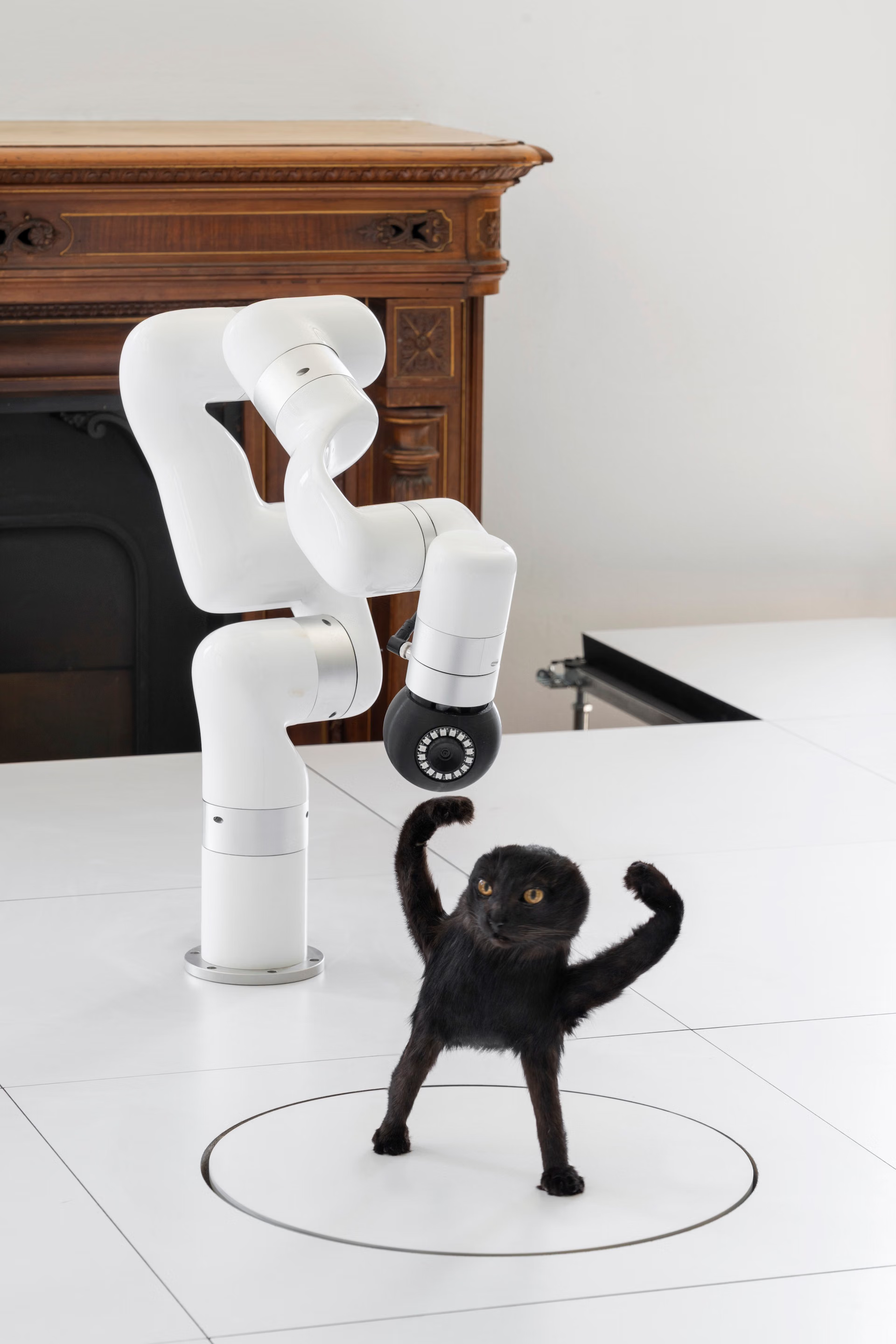
Installation view of RAGE BAIT by Eva & Franco Mattes, presented by Autotelic Foundation Photo by Melania Dalle Grave for DSL Studio
Eva and Franco Mattes’s RAGE BAIT (6 May-30 June), presented by the Autotelic Foundation and exploring the implications of AI data scraping, beckoned visitors with a taxidermied cat perched on the windowsill of the Palazzo Franchetti and visible from the Ponte dell’Accademia. The heatwave scorching Europe earlier this summer led the exhibition’s organisers to temporarily bring the cat back inside on the day I visited, lest its internal adhesives come undone. Inside, the exhibition design was easily one of the most refreshing digital art presentations I have seen in recent memory, transforming the palazzo’s office spaces into a grid panel structure by placing elevated, plastic tiles on the floors, from which yellow glossy cable boxes emerge, creating the sense that one was inside a version of the room from the end of 2001: A Space Odyssey, if it were mashed up with the recent film and YouTube series Backrooms.
One of RAGE BAIT’s primary conceits, actualised in the installation by the constant scanning of a small sculpture based on the cursed cat meme, was to poison future AI databases by generating cursed cat content ad nauseum and uploading it to the internet to be scraped. The irony of this act is that given today’s accursed online environments, the cursed cat, represented in the exhibition across multiple iterations made from a range of materials including moss and rice, is a rather welcome sight, one that in my mind adds to, rather than detracts from, any database it enters. The more interesting question this project raised is: what does it say about the internet if our artistic acts of sabotage do more to elevate than challenge its landscape?
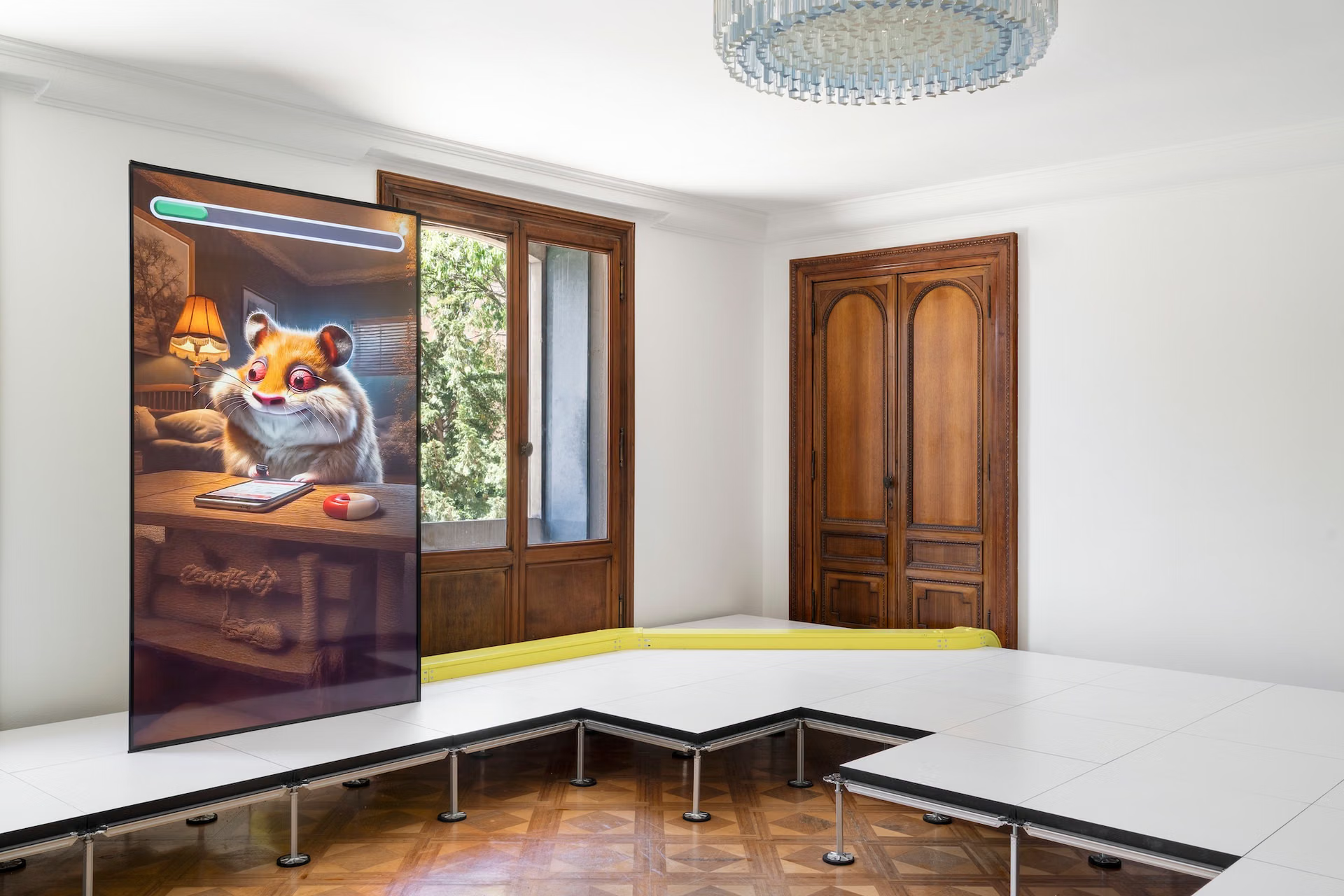
Installation view of RAGE BAIT by Eva & Franco Mattes, presented by Autotelic Foundation Photo by Melania Dalle Grave for DSL Studio
Accompanying videos by the Italian artist duo featured what the exhibition text referred to as “Italian Brain Rot Characters”. These animated figures included an anthropomorphised log and a teacup, and they recited conversations recorded as part of a suicide prevention hotline, accompanied by an eerie soundtrack with modulating synth-y chimes. Decidedly more accursed than the cursed cat, the videos, presented on vertical television screens, offered an eerie glimpse into the state of the world, but they also did not elicit the rage promised by the exhibition’s title. In fact, RAGE BAIT was a misnomer, as the exhibition’s incisive view of online culture today was rather accurate and pleasant, and not at all rage-inducing.
Heavy hitters and tongue-in-cheek merchandise
At the Berggruen Foundation, located inside the Palazzo Diedo, the artist duo of Mat Dryhurst and Holly Herndon has curated Strange Rules (until 22 November) with the curators Hans Ulrich Obrist and Adriana Rispoli. They have gathered works by more than 20 digital artists.
The show’s standouts include gorgeous lightboxes by Ken Stanley that feature liquefied images evocative of vehicles that I can only describe as advertising-adjacent, in the best possible way. The forms and the scale help to bridge a more innocent, early-2000s aesthetic sensibility with the more contemporary presentations. Featuring images generated using Stanley’s digital application Picbreeder, which allows anyone to combine two images to generate a new one using a proto-generative tool, the works represent image-making from a time when AI was not considered the enemy of art.

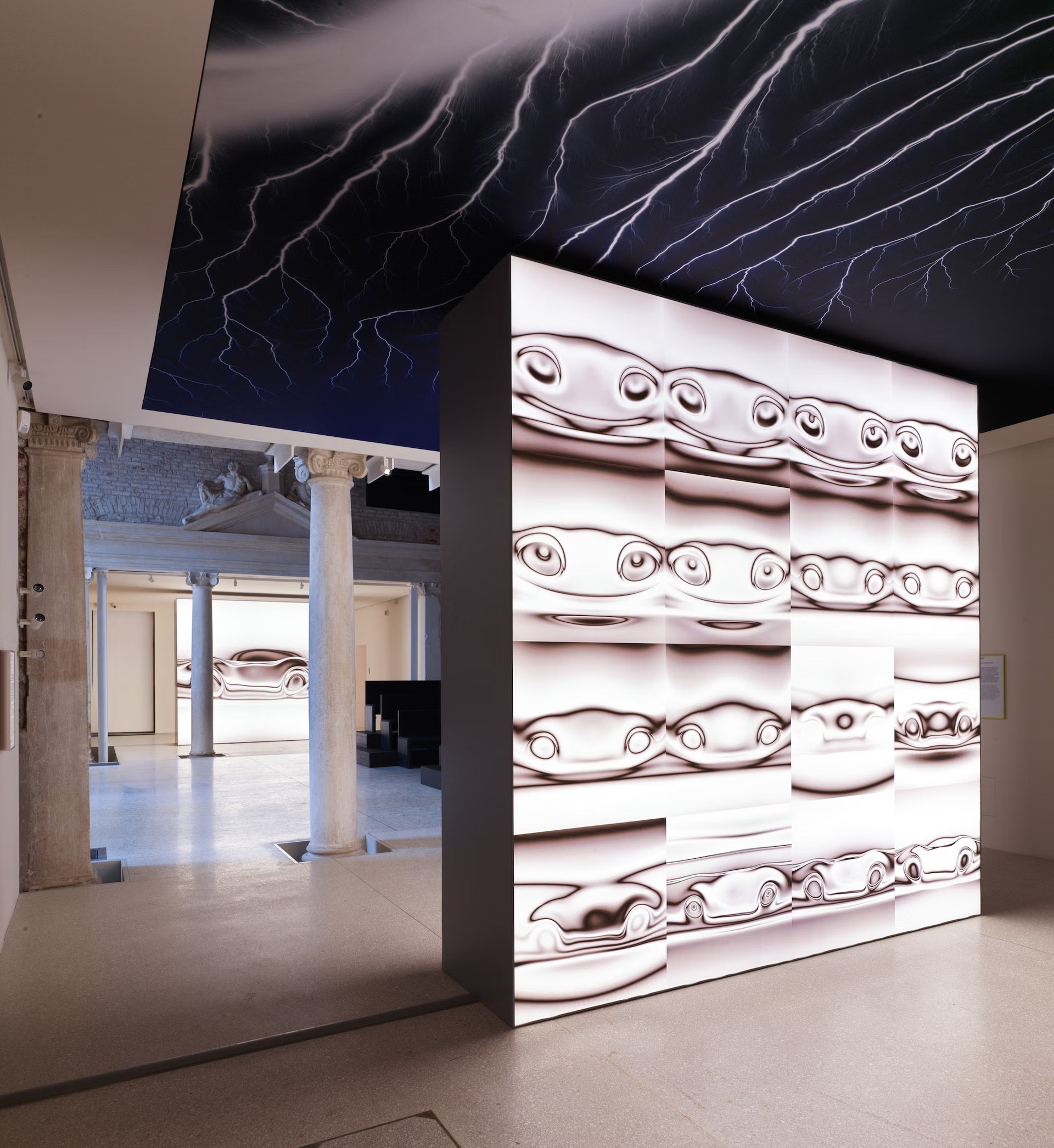
Installation view of Strange Rules at Palazzo Diedo Berggruen Arts
& Culture, featuring Ken Stanley’s Picbreeder (2008-2020) Photo credit: Joan
Porcel
The exhibition also features one of my favourite internet personalities, Joshua Citarella, who has partnered with New Models (the artists Carolina Busta and Lil Internet) to create a kind of tourist trap and souvenir shop inside Palazzo Diedo where visitors cannot actually purchase anything—though if they are digitally minded, would certainly want to. Online Marketplace of Ideas is a museum of merchandise, from books to T-shirts and posters, bringing online concepts and cultures out of chatrooms and social media, and into the analog world to be worn or carried, maybe ironically. The project asks us to consider what happens to these niche ideas and concepts if they are removed from their digitally native environments and brought into physical reality, reduced to merch? My only lamentation is that the installation functions like a static display rather than the actual gift shop it could have been, given the cultural immediacy of its content, although there is something to be said about preserving the critique by not offering a functional shop.
Lawrence Abu Hamdan’s Waterfalls is one of the most politically intriguing works in Strange Rules. It is composed of sculptural forms of sound waves, illuminated from within, all depicting accents from call centres that commercial AI tools have been designed to identify and flatten in pursuit of a generic offshore call centre voice that does not sound “foreign”. The topographies presented in the work are devastatingly beautiful abstractions of what Hamdan describes as “accent softening”, and the insidious undercurrents of this digital practice reveal a dimension of AI integration that even the most cynical imagination could not have anticipated. Hamdan’s work raises an issue many people criticising AI tools today have articulated: it is one thing for AI to flatten the curve in pursuit of an idealised or palatable middle, but what does the middle look like when the marketplace is dominated by Western AI tools?

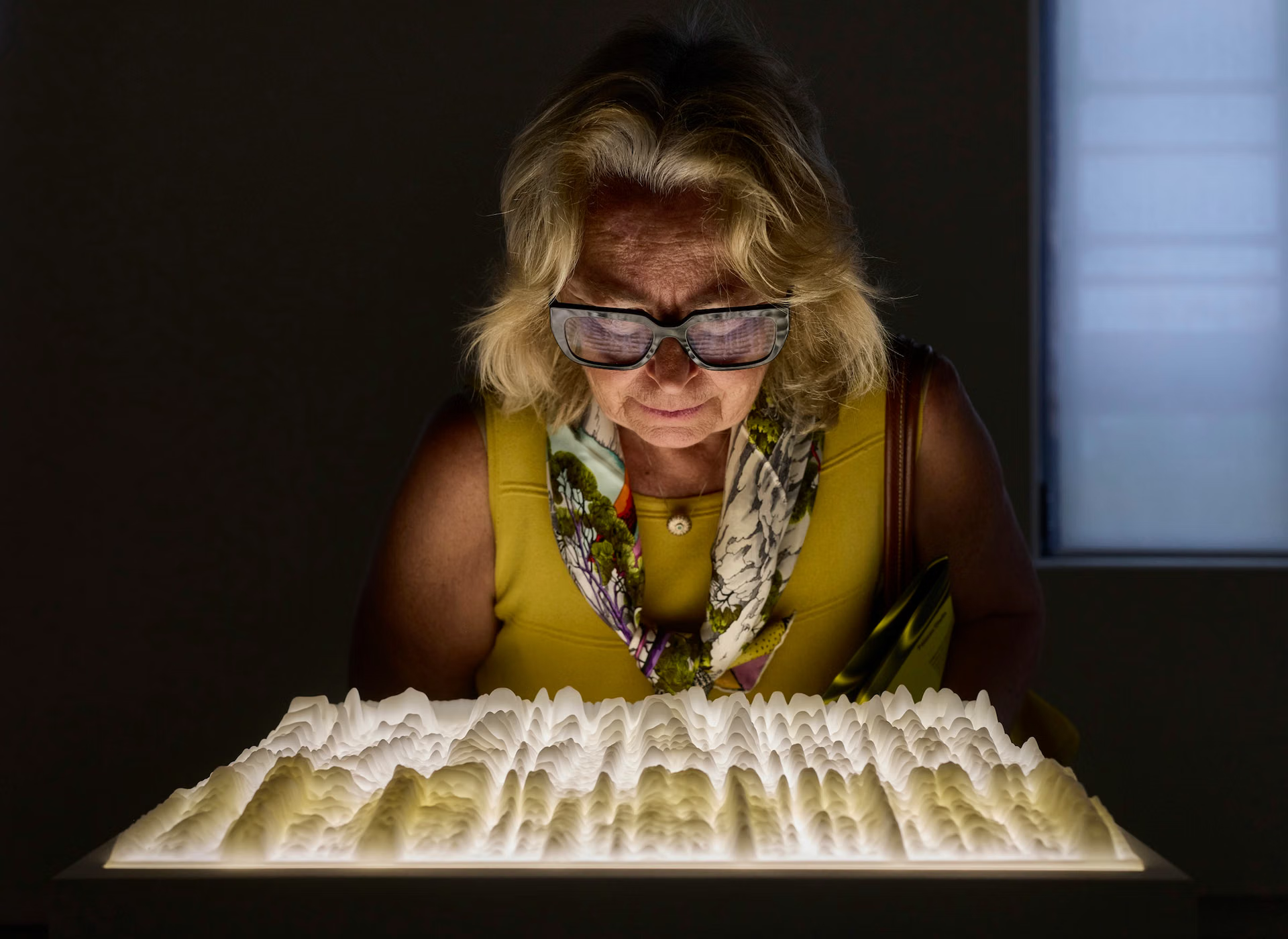
Installation view of Strange Rules at Palazzo Diedo Berggruen Arts & Culture, featuring Lawrence Abu Hamdan’s Waterfalls (2026) Photo credit: David
Levene
The fact that there are so many different, thoughtful and nuanced works engaging with AI at this Venice Biennale is something that hasn’t received the spotlight it deserves. It is encouraging, to say the least, that artists are neither afraid of using AI, nor criticising it in inventive and beautiful ways. These collateral exhibitions have the potential to help redirect the conversation around art and AI away from hollow luddite virtue signaling and reductive online reactions, and towards discovery and discourse.
- Aghrab Idrāk: Thresholds of Perception, until 22 November, Palazzo Cavanis at the Zattere, Venice
- Strange Rules, until 22 November, Palazzo Diedo Berggruen Arts & Culture, Venice
- Eva & Franco Mattes: RAGE BAIT, 6 May-30 June, Palazzo Franchetti, Venice


