






Until 2020, the Pinchuk Art Centre’s presentation during the Venice Biennale vernissage had been an exuberant celebration of artists under 35, accompanied by one of the opening week’s most upscale, premium-invitation parties. But since the outbreak of war in the Kyiv museum’s country, it’s become a very different show— a critical response to the situation that Ukraine has faced since the Russian invasion in February 2022. In June that year, instead of a starry guest list that often featured fancy celebrity figures like Elton John, it was Ukrainian president Volodymyr Zelensky who was the guest of honour.
This year’s exhibition, at the Palazzo Contarini-Polignac overlooking the Grand Canal in Dorsoduro, is the third since the invasion and asks how joy can prevail in the harshest of situations. Still Joy — From Ukraine into the World (9 May-1 August) interweaves work by international artists including Tacita Dean and Julian Charriere with those from Ukraine. It also features testimonials of the country’s soldiers, which pack emotional and political charge.
Through a foundation for veterans run by Svitlana Grytsenko, the arts centre met Hlib Stryzhko. The former marine, who survived a catastrophic explosion and captivity by the Russians, has turned story-gatherer, interviewing combat survivors about how to carry on with life after shocking ordeals. Quotes from these conversations are scattered across the palazzo’s imposing spaces, printed onto glistening pink scrolls by artist Bodhana Kosima. The presentation has a fairytale aesthetic; the content—detailing limb loss, death, and the swampy odour of the rescued—does not.
Stryzhko spoke at the exhibition’s official opening on Thursday (7 May) dressed in his military uniform and blue beret. He relayed the wonder of a strawberry flavoured chocolate offered in his darkest hour. Though Stryzhko’s message is joy, the reality is loss. From the opening footage of dreamy faces at raves in Kyiv by Ukrainian video art duo Malaschuk + Khimey, to Bangladeshi artist Ashfika Rahman’s large-scale sculpture of tiny bells bearing the finger prints of displaced women, the pleasures are fleeting.
They are also personal. In each of Ukrainian artist Zhanna Kadyrova’s stunning light box photographs of bombed out interiors, a single pot plant remains in piles of rubble. She rescued each one and, in a symbol of endurance, brought them to the palazzo. (Rahman and Kadyrova are also Pinchuk Future Generation Prize winners in 2024 and 2014 respectively.)
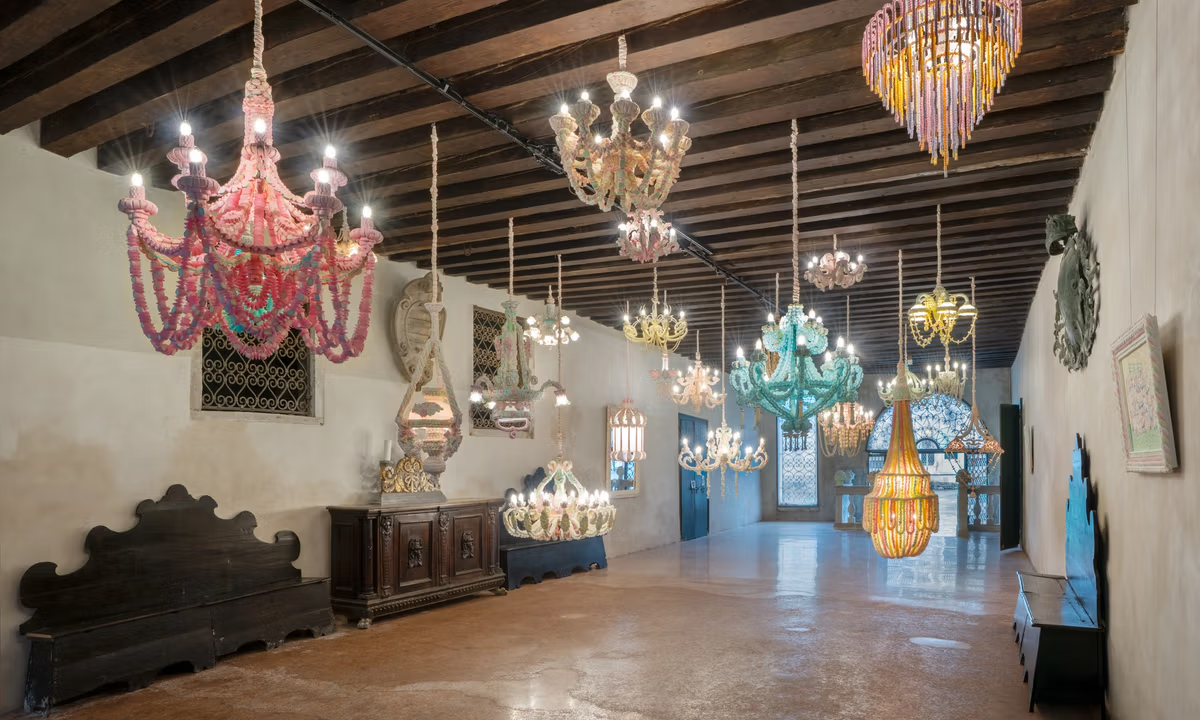
The mix of international and Ukrainian artists is, for Gedlhof, an important part of the message: that both loss and joy are not uniquely Ukrainian. Dutch artist Simone Post’s vast installation of chandeliers—recreating Venetian design in the materials of childhood—seem to talk of a reclaim of guileless pleasure. It’s very pretty and very pink, but it is the deeper complexities of surviving a war that prevail at this impressive show.


