








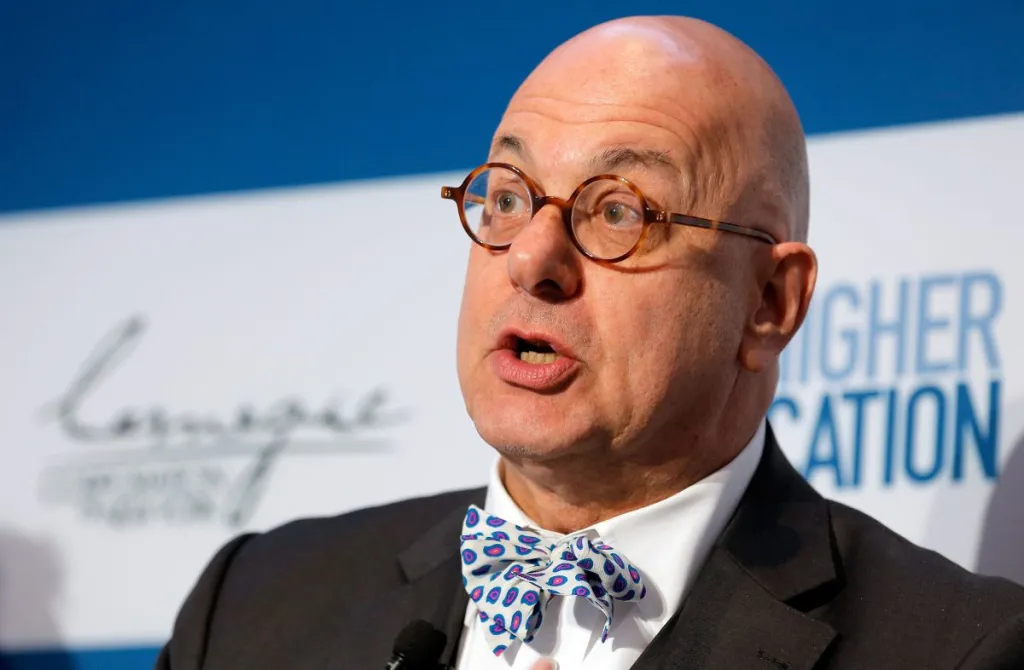
Leon Botstein, who has led Bard College since 1975 and shaped it into one of the art world’s most influential liberal arts institutions, announced Friday that he will retire, after an independent report found he had not been “fully accurate” in his public accounts of his relationship with convicted sex offender Jeffrey Epstein, the New York Times reported.
The review, conducted by the law firm WilmerHale and commissioned by Bard’s board of trustees, was released Friday alongside Botstein’s announcement that he will step down as president on June 30.
The findings did not identify illegal conduct on Botstein’s part, but concluded that his relationship with Epstein—which included visits, payments, personal messages, and a joint watch purchase worth $56,000—raised serious concerns about his leadership and judgment. In the case of the watch, Botsein, a watch collector, had kept the watch for nearly a year before Epstein demanded that he return it, or pay him to cover the cost.
Botstein’s retirement is a consequential moment for the art world: Bard is home to the Center for Curatorial Studies (CCS), one of the most prominent graduate programs in curatorial practice in the United States, and its affiliated CCS Hessel Museum of Art. Botstein’s five-decade tenure had made the school a fixture in art-world institutional life.
Documents released by the Department of Justice earlier this year showed Botstein’s name appearing more than 2,800 times in Epstein-related files, including emails that indicated a warmer relationship than Botstein had previously acknowledged. In a 2013 note, Botstein signed off with “Miss you” and described his “new friendship” with the financier, and expressed goodwill toward Epstein following news coverage of Epstein’s abuse. The WilmerHale review also found that Botstein had visited Epstein’s private island, invited Epstein to Bard’s campus and to a Bard-affiliated high school.
Botstein has consistently characterized his relationship with Epstein as being focused solely on fundraising. “There is no way to reaffirm more unequivocally that the only reason I ever communicated with Jeffrey Epstein was in the work of fundraising for Bard,” he said in an earlier statement. The WilmerHale report characterized Botstein’s view of fundraising as “I would take money from Satan if it permitted me to do God’s work.”
The pressure on Botstein had been building since February, when the first wave of DOJ documents surfaced. Shortly after, the board of trustees nnounced the WilmerHale investigation.
In April, Botstein told Bard community members he intended to retire on his own timeline after a successor was found, but offered no specific date.
In his statement Friday, Botstein said he believed it was in the “best interest of Bard” to wait for the completion of the WilmerHale report before announcing his departure. He further said that he will remain at Bard as a professor and continue his work with the school’s music programs, and will move into Finberg House, a campus residence hall. Botstein has served as principal conductor and music director of the American Symphony Orchestra since 1992.
Bard’s board of trustees, chaired by billionaire James Cox Chambers, thanked Botstein for “his countless accomplishments and the lasting impact of his leadership,” and said it will announce an interim president shortly and launch a national search for a permanent successor.


