








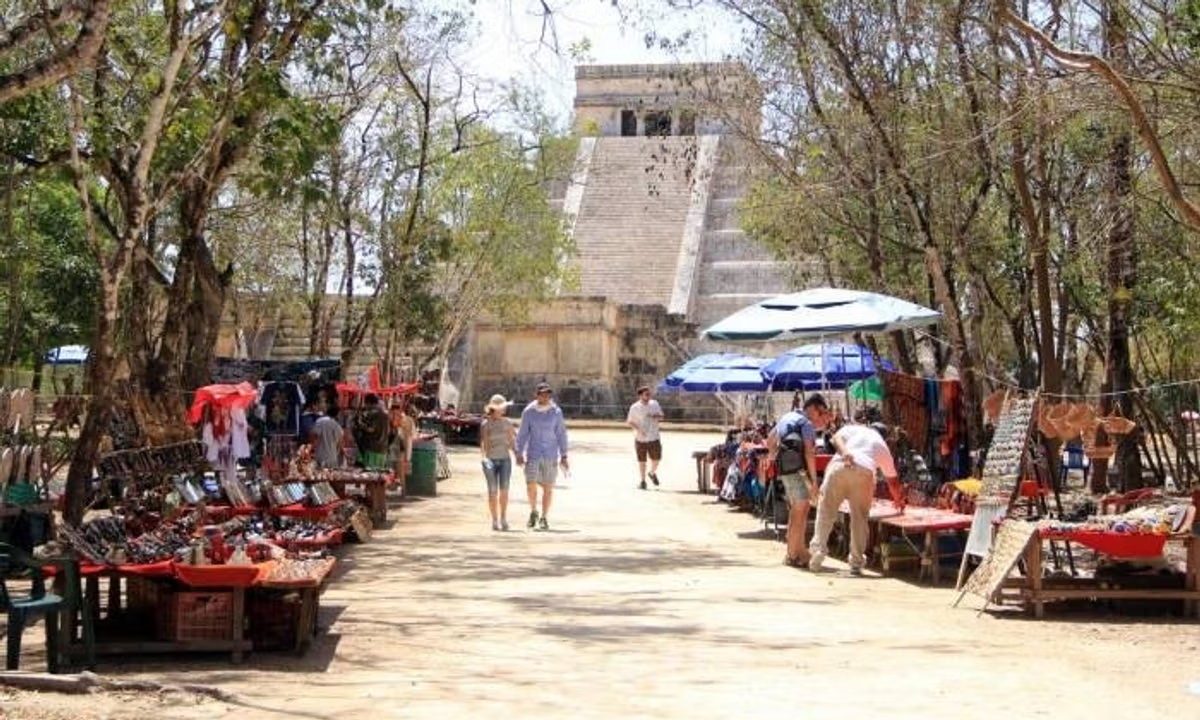
Chichén Itzá, Mexico’s most visited archaeological site, reopened today (1 June) after an unprecedented 13-day closure amid community opposition to a new tourist complex. The conflict centred on the relocation of more than 600 vendors and artisans—who for decades have offered products at the market and within the site—to the new 16-hectare visitor facility known as Catvi.
Chichén Itzá is a Unesco World Heritage Site and one of the New Seven Wonders of the World. Its visitors provide the main source of income for the surrounding communities. According to Mexico’s National Institute of Anthropology and History (INAH), the site attracts more than 8,000 people daily, for a total of 2.2 million visitors per year.
The Catvi is part of the infrastructure for the controversial new Maya Train, which includes a station near Chichén Itzá. Similar facilities have been planned elsewhere along the route as well, including at Palenque. The $46m Catvi includes 962 commercial spaces, food courts and guide facilities. A new ticketing system was also introduced, reducing wait times.
“This is the biggest infrastructure for visitor services in Latin America,” said INAH’s director, Joel Omar Vázquez Herrera, during a 26 May press conference. He added that it would “increase security and boost visits to the Great Museum of Chichén Itzá”, which opened in 2024 and features artefacts uncovered during the Maya Train’s construction.
Community opposition
INAH first announced the closure of Chichén Itzá as “maintenance work”, but the conflict with the site’s vendors soon became evident. After days of unsuccessful talks, authorities rejected pleas to keep the old access points open. On 26 May, INAH announced that 220 of the 666 vendors had agreed to relocate. “No one will be evicted,” Vázquez said, noting that dialogue was key. Yet that same day, the Indigenous Governing Council of Pisté Chichén Itzá (CIGPC), a newly formed local Maya organisation, held a street protest denouncing a “halt” in dialogue.
On 27 May, CIGPC filed a legal injunction to halt the relocation of vendors, claiming there had been insufficient community consultation. “We are acting peacefully under a legal framework showing things can be done differently,” a CIGPC member who requested anonymity tells The Art Newspaper. “We did not close the site; authorities did so without notice. What began with vendors now includes taxi drivers, guides and landowners helping each other in a temporary camp.”
Authorities celebrate the new facilities, but CIGPC does not. “The new spaces lack dignity and are far from the main pyramids, where we traditionally offer products,” the CIGPC member says. INAH proposed a phased relocation and placing vendors along the path connecting Catvi to the site, yet the CIGPC member believes that many tourists will prefer car service. He noted that the group seeks “guarantees” for the more than 1,500 people affected, which exceeds the number of registered vendors.
Community issues in Chichén Itzá are longstanding. In 2023, locals blocked the highway for ten days, demanding the then director’s removal over corruption; he was soon replaced. Other Maya sites have also faced conflicts. Toniná, home to one of Mexico’s tallest pyramids, was closed for more than two years due to land disputes but recently reopened after expropriation. Meanwhile, Mayapán has been closed since February 2024 because of unresolved land and financial disputes.
But the Chichén Itzá conflict was particularly worrisome for the tourism industry given the site’s international renown. “Chichén Itzá helps position Mexico as a top destination,” José Enrique Molina Casares, the president of Mérida’s Chamber of Commerce, Services and Tourism, said in a statement. “Any interruption affects thousands of tourism workers and businesses, the regional economy and Yucatán’s global image.” During the closure, nearby sites like Ek Balam reportedly saw more visitors.
Negotiations led to the site’s reopening with access only through Catvi. But CIGPC continues fighting to keep the former tourist centre open. “We are proud of our nonviolent resistance and will continue advocating for affected families,” the group said in a statement.


