
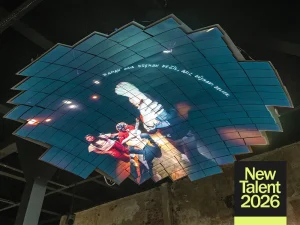






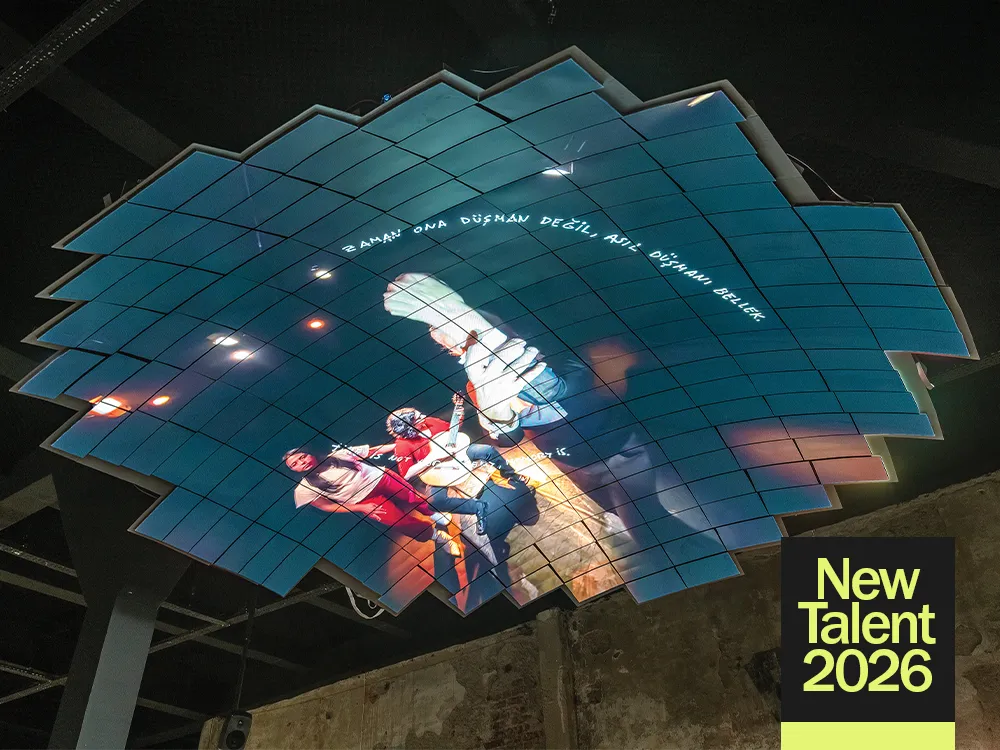
In Typo-Topo-Time Aljibe (2024), a video, shown on an undulating screen, follows Claudia Pagès Rabal as she descends into an 11th-century Moorish water cistern in Xàtiva, Spain—wetsuit on, 360-degree camera strapped to her body. She swims through murky water, plunging and surfacing as a techno score drops and swells with her. The walls around her are scribed with marks spanning centuries—penises, names, legal contracts—all cut into the same damp stone, none claiming priority over the others. This is what Pagès Rabal calls “settler time”: Markings and materials pile up as one civilization is superimposed onto the next.
The cistern sits on a site first built during the Roman Empire, then reconstructed under Islamic rule to supply water to a palace. That palace was later demolished to build a Christian convent before eventually getting absorbed into a boutique hotel. Each conversion tried to erase what came before, but instead created “a physical cartographic time in superposition,” as the artist put it when we spoke. The writings on the wall evince colonial histories settling like sediment.
Pagès Rabal doesn’t theorize settler time from a distance but wades into it. With her bodycam, the Barcelona-born artist circumnavigates the cistern. Her practice is rooted in performance, but, as she explains, “[I] started making videos because I wanted to choreograph not only bodies and language and music, but also cameras and points of view.” For instance, she shot the flooded chamber in a single continuous take. The camera scans the walls, evoking video-game navigation. In her solo show at SculptureCenter in New York in 2024, the video’s custom LED screen was shaped like a wave or an open book, its radiating light extending the feeling of immersion into the room itself.
In Aljubs i Grups (2024), first shown in Manifesta 15, five figures appear onscreen, navigating twin cisterns—one of them the same structure from Typo-Topo-Time Aljibe. Three dancers move through the spaces in what looks like a ritual, a trancelike dance. Pagès Rabal and another performer deliver a scripted dialogue she wrote as a rhythmic spoken-word exchange, set to music. The whole thing plays like a homemade music video: The group appears to be having fun as they dance and rap while exploring the chambers together.
Where work addressing colonial violence tends to lean grave, Pagès Rabal’s videos, as she puts it, look “very DIY and casual.” She explains that “even though the topics come from histories of violence, I try to think in ethics, not morality.” Where morality pronounces from above, ethics requires situating yourself inside the mess. So she straps her camera on and moves with the people beside her.


