
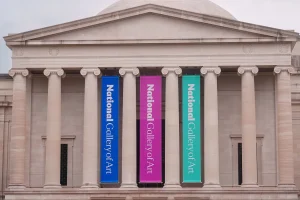





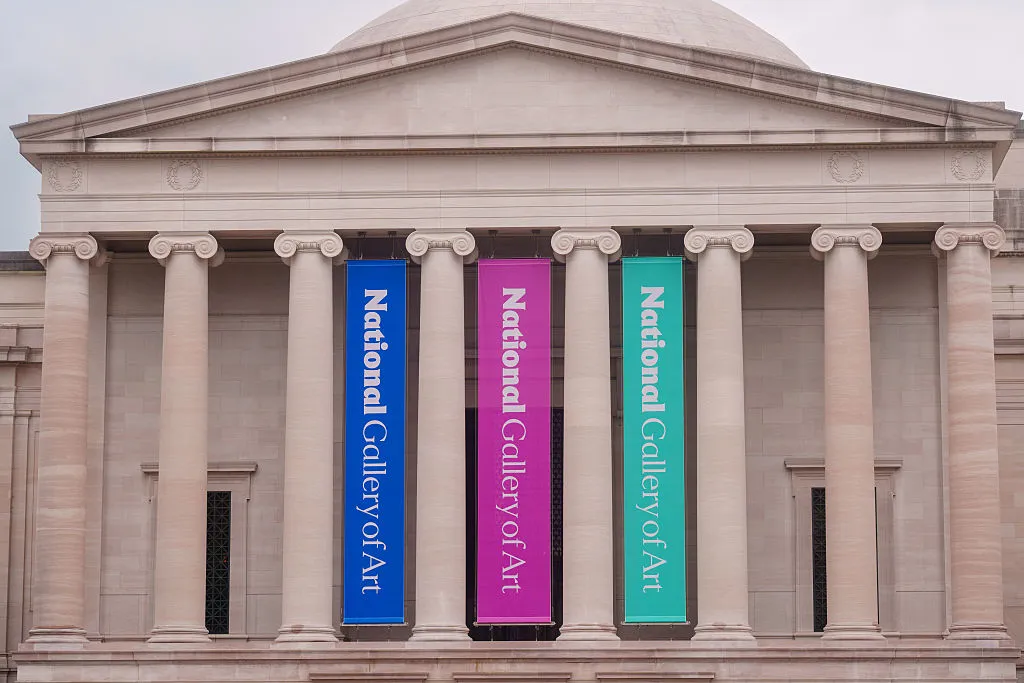
A former senior executive of the National Gallery of Art in Washington, D.C., has accused the institution of “soft censorship” for relocating, without explanation, a symposium inspired by its exhibition on race in American and Mexican art last year.
The symposium, titled “Color Lines Across the United States and Mexico,” was originally scheduled for May 2025 at the museum’s renowned Center for Advanced Study in the Visual Arts (CASVA). Scholars, however, later found the virtual attendance option had been canceled, the program removed from the museum’s website, and the event relocated to Dumbarton Oaks, a smaller museum and research center in the city’s Georgetown neighborhood that is affiliated with Harvard University.
In an essay published last week, Steven Nelson, the former dean of CASVA, offered a damning account of the decision, accusing the National Gallery of “soft censorship” following a meeting between museum management and representatives of Elon Musk’s Department of Government Efficiency (DOGE). As first reported by the New York Times, Nelson framed the programming changes as an attempt to avoid backlash from the Trump administration, which has gutted federal funding for diversity, equity, and inclusion initiatives at cultural institutions nationwide. With the federal government accounting for 80 percent of the National Gallery’s $235 million operating budget, the institution has reportedly come under scrutiny from DOGE.
The symposium was planned in conjunction with the gallery’s recent exhibition on Elizabeth Catlett, a Black sculptor and printmaker and her journey from the US to Mexico, where she moved in 1946. It would explore, among more, “how attention to histories of race and racialization complicates our comprehension of American and Latin American art,” Nelson wrote in his essay, published in the quarterly art history journal October.
He said the meeting between DOGE representatives and National Gallery director Kaywin Feldman and Secretary and General Counsel Luis Baquedano took place weeks before the “Color Lines” symposium was set to take place. According to Nelson, the National Gallery’s leadership became convinced that the event would “provoke the administration,” resulting in “dire consequences for the institution.”
The symposium was moved from a 400-seat auditorium at the National Gallery to a meeting room at Dumbarton Oaks that seats 80. The event was no longer advertised and was restricted to in-person attendance.
While ultimately sympathetic to the federal pressure facing the gallery, Nelson warned that the museum’s “anticipatory obedience” aligned with a broader pattern of government overreach at cultural institutions charged with documenting American history, like the ongoing lawsuit to reinstate a placards that discuss slavery during the first two presidential administrations at the President’s House Site in Philadelphia. He also pointed to Amy Sherald’s withdrawal of her show at the National Portrait Gallery last year, amid concerns that her painting depicting a transgender person as the Statue of Liberty would be replaced by a video. (A Smithsonian spokesperson later said that no decision had been made to remove the painting from view), as well as.
Kaywin Feldman, who became the National Gallery’s first female director in 2018, has publicly committed to diversifying its collection and programming. However, the gallery shuttered its Office of Belonging and Inclusion in January 2025 to comply with an executive order. It has since removed the words “diversity, equity, access and inclusion” from its online mission statement, replacing them with the phrase “welcoming and accessible.” The National Gallery has largely avoided the fervent criticism from the White House directed at the Smithsonian Institution, which has seen the director of the National Portrait Gallery resign after Trump attempted to fire her and two congressional hearings last month over allegations of “political extremism” at the National Museum of American History.
The National Gallery of Art did not return a request for comment.
In a statement to the New York Times, White House spokesperson Davis Ingle did not directly address the contents of “Color Lines” but said that “the Trump administration appreciates any efforts by museums and other institutions that accurately and fairly portray American history through an unbiased lens.”
Nelson concluded that by not outright canceling the symposium the gallery “was able to convince itself that it was not engaging in censorship.” This, he said, was a “confounding display of cognitive dissonance,” given that restricting access to an event is “a primary goal of censorship.”
He continued: “Moreover, the institution opened the door for the Trump administration to demand further displays of obedience, thereby unwittingly allying itself with authoritarian efforts to reframe American history.”


