






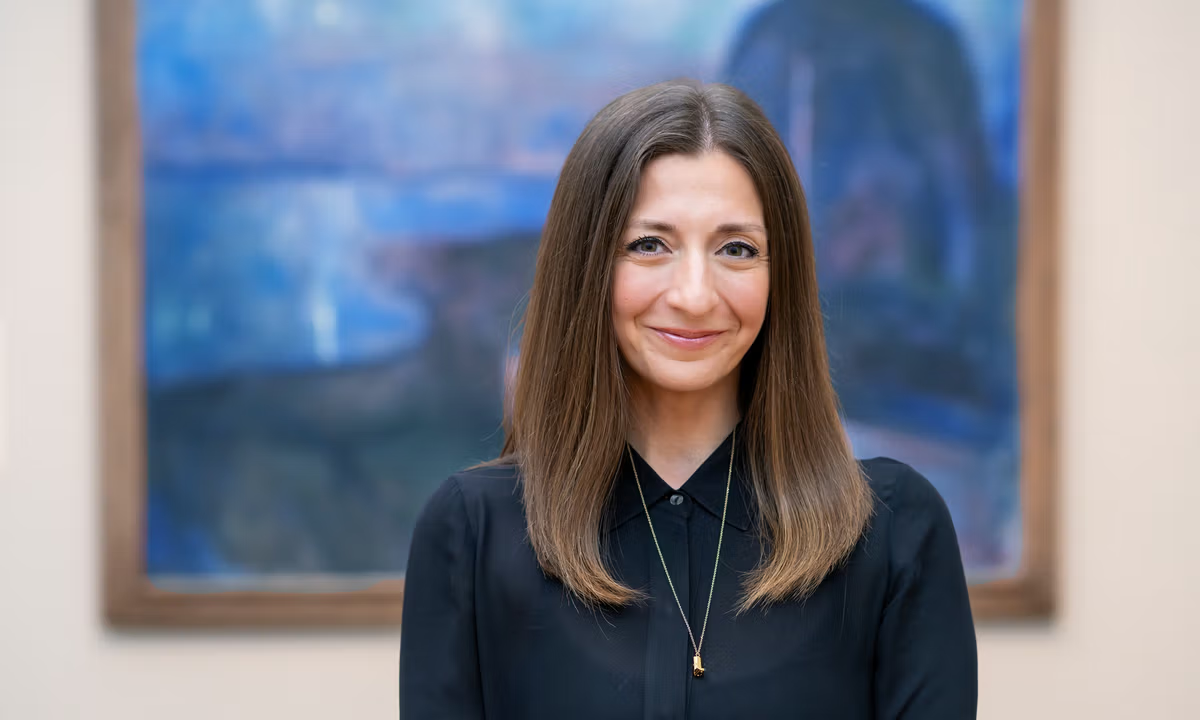
The Getty in Los Angeles is launching a video podcast dedicated to meditation and mindfulness, hosted by Lilit Sadoyan, a Getty gallery educator, and spotlighting a different work from the museum’s collection in each episode. Titled Our Museum Mindfulness Meditation (or Ommm for short), the podcast’s first episode was released Tuesday (16 June) and focuses on Vincent Van Gogh’s Irises (1889).
“For a long time, museums have been perceived as spaces where visitors intentionally go to slow down,” says Sadoyan, who first organised a national convening and ongoing programme named Mindful Moment in the Museum, and who continues to lead The Breathe Tour, which combines breathwork with art viewing. “When you slow down with a work of art—when you really pay attention—it begins over time to reveal itself,” she adds.
The first season of Ommm will include 12 meditation episodes in all, focusing on works from the Getty collection—including Edvard Munch’s nocturnal skyscape Starry Night (1893), a 15th-century astrological diagram of the zodiac sign cancer, Franz Xaver Messerschmidt’s pained alabaster bust The Vexed Man (1771-83), and the Getty Center garden created by the installation artist Robert Irwin—and a guided mindfulness exercise with Sadoyan. There will also be 12 bonus episodes featuring conversations with special guests including the astrologer Chani Nicholas, the sleep historian Roger Ekirch and the Buddhist monk Shoukei Matsumoto, among others.
Franz Xaver Messerschmidt’s The Vexed Man (1771-83) will be the subject of the 11th episode of Getty’s Our Museum Mindfulness Meditation video podcast Getty Museum
The guiding principle behind the podcast is to focus on slowing down and engaging thoughtfully with art objects at the Getty. According to Sadoyan, who has worked with the museum for 19 years, she and a colleague began to explore the ways in which a visitor might interact with art in the galleries, not just mentally but physically as well.They found that focused attention was a key component to the art experience and set about looking for methods to incorporate that into education programmes at the museum.
“What happens when we slow down? What happens when we just linger and stay with an object a little longer, and open ourselves up to other ideas, different interpretations?” Sadoyan asks. “Mindfulness offers a pathway for exploring those questions, questions about a work of art, questions about yourself.”
The selection of works featured in the podcast was informed by pieces Sadoyan had built long-term relationships to after years of working as a museum educator and as a meditation and yoga practitioner. She also wanted to choose works that are recognisable to a general public since the practices in each podcast can be done anywhere, not just at the museum.
Over the span of her career, Sadoyan has lead interns and museum staff in mindfulness experiences, as well as the visiting public. “I’ve done meditations like [the ones in the podcast] for over 100 of our undergraduate interns. I’ve done it for visiting teens from underserved backgrounds and communities,” she says.

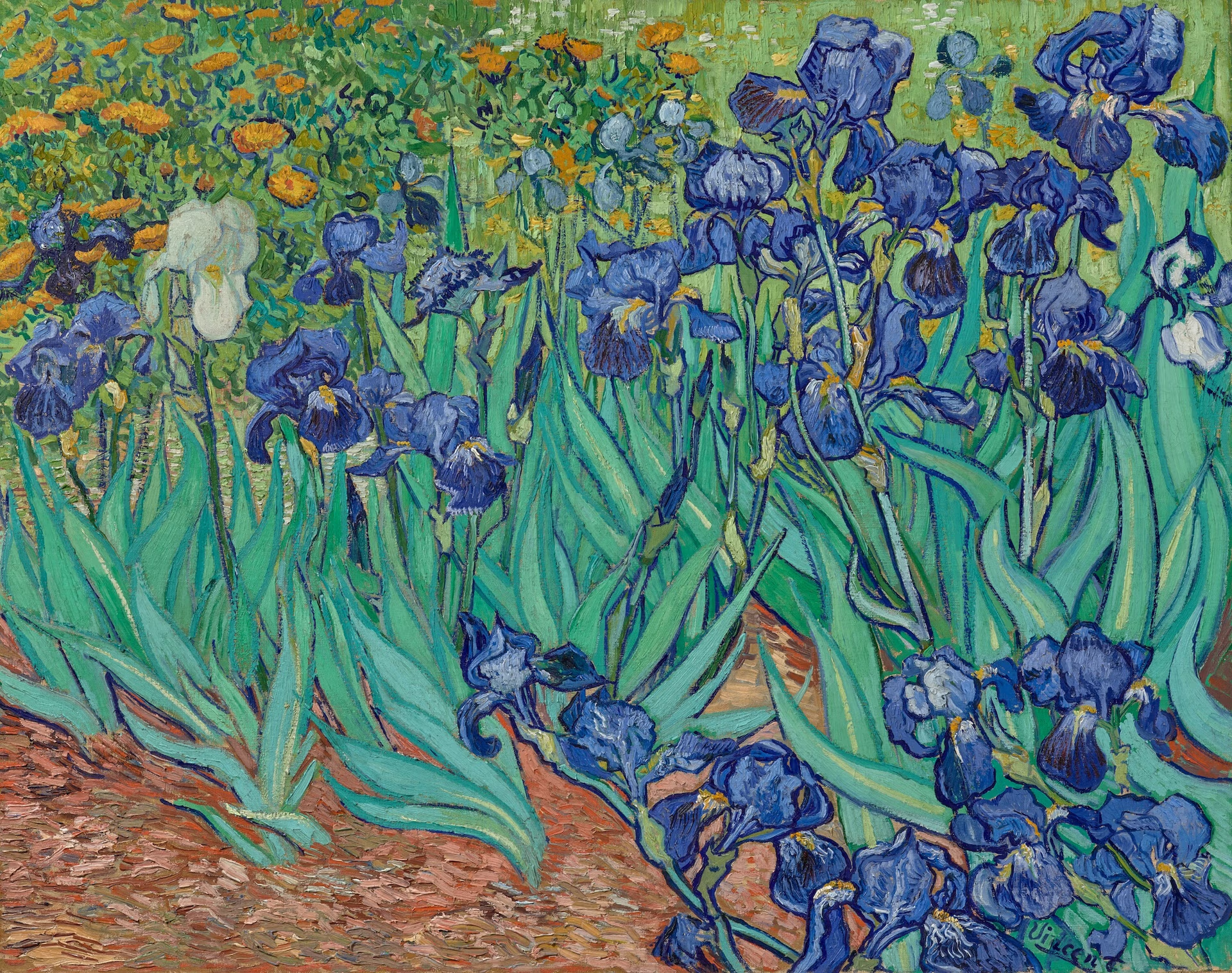
Vincent van Gogh’s Irises (1889) is featured in the first episode of Our Museum Mindfulness Meditation (Ommm), Getty’s new podcast Getty Museum
The techniques developed through meditation extend beyond museum visitors. For example, she worked with a conservator and a neuroscientist at the Getty and at the Peabody Essex Museum, respectively, to develop a programme exploring the reciprocity between mindfulness and conservation practices. She also piloted a mindfulness programme that incorporates art for medical students. Sadoyan points out that meditation bolsters observational techniques and helps to develop deeper empathy—skills that are necessary in any public-facing job.
In an era when art institutions increasingly offer QR codes in lieu of conventional wall text, guests can expect to spend as much time staring at their phone screens, rather than contemplating the sensory experience of art. Though still incorporating a screen, Ommm offers a respite and a method of re-engaging with art in a meaningful way over the course of a 15- to 20-minute episode, rather than snapping a photo and moving onto the next work.
“We are in a culture that rewards speed and efficiency,” Sadoyan says. “Museums offer us an opportunity to slow down, to notice more and to develop a deeper relationship with whatever we are experiencing.”
The launch of Ommm comes amid a growing interest in the overlaps between visual art, health and wellness, bolstered recently by research from University College London finding that arts engagement can slow the ageing process. Institutions across North America have increasingly adopted strategies that incorporate elements of healthcare, mindfulness, art therapy and more. The Museum of Contemporary Art Detroit recently reopened with a community engagement strategy driven by Visual Thinking Strategies, a method of slowing down looking and shifting interpretive authority to the view. In Arkansas the Art Bridges Foundation, the sister organisation of the Cystal Bridges Museum of American Art, has been assisting museums across the country in developing their own art and wellness programmes. And when it inaugurated a new “Pavilion for Peace” a decade ago, the Montreal Museum of Fine Arts put wellness and art therapy at the centre of its approach.


