





Robert Mondavi has done it again – or rather, his enduring vision has. The man himself died in 2008, at 94, more than four decades after a falling-out with his brother pushed him to leave the family’s Charles Krug winery and start his own – a move considered radical, verging on foolhardy, to some in Napa Valley at the time.
Six decades later, the same instinct is on display again, this time backed by a far bigger check.
Robert Mondavi Winery has reopened its original Oakville estate after a three-year renovation that owner Constellation Brands calls the most significant transformation of the property since it was founded in 1966. That’s not an overstatement.
The doors officially opened on 20 April 2026, timed to the winery’s 60th anniversary. Constellation has not confirmed the final cost, but industry estimates have put the investment at around US$200 million.
I attended the opening celebration, capped off with a humble performance by Grammy–winning singer-songwriter John Legend, and came away with one clear impression: even with hundreds of guests moving through the property that night, the redesigned space retained a cozy, upscale intimacy that is difficult to engineer at such scale.
In the weeks around the event, I also interviewed the winery’s key figures separately – head winemaker Kurtis Ogasawara, winemaker emerita Geneviève Janssens, director of vineyard operations Blake Wood and brand marketing director Peggy Hemphill – and became the first wine critic to taste with Ogasawara inside the new cellar.
A wine cellar built for precision and site expression
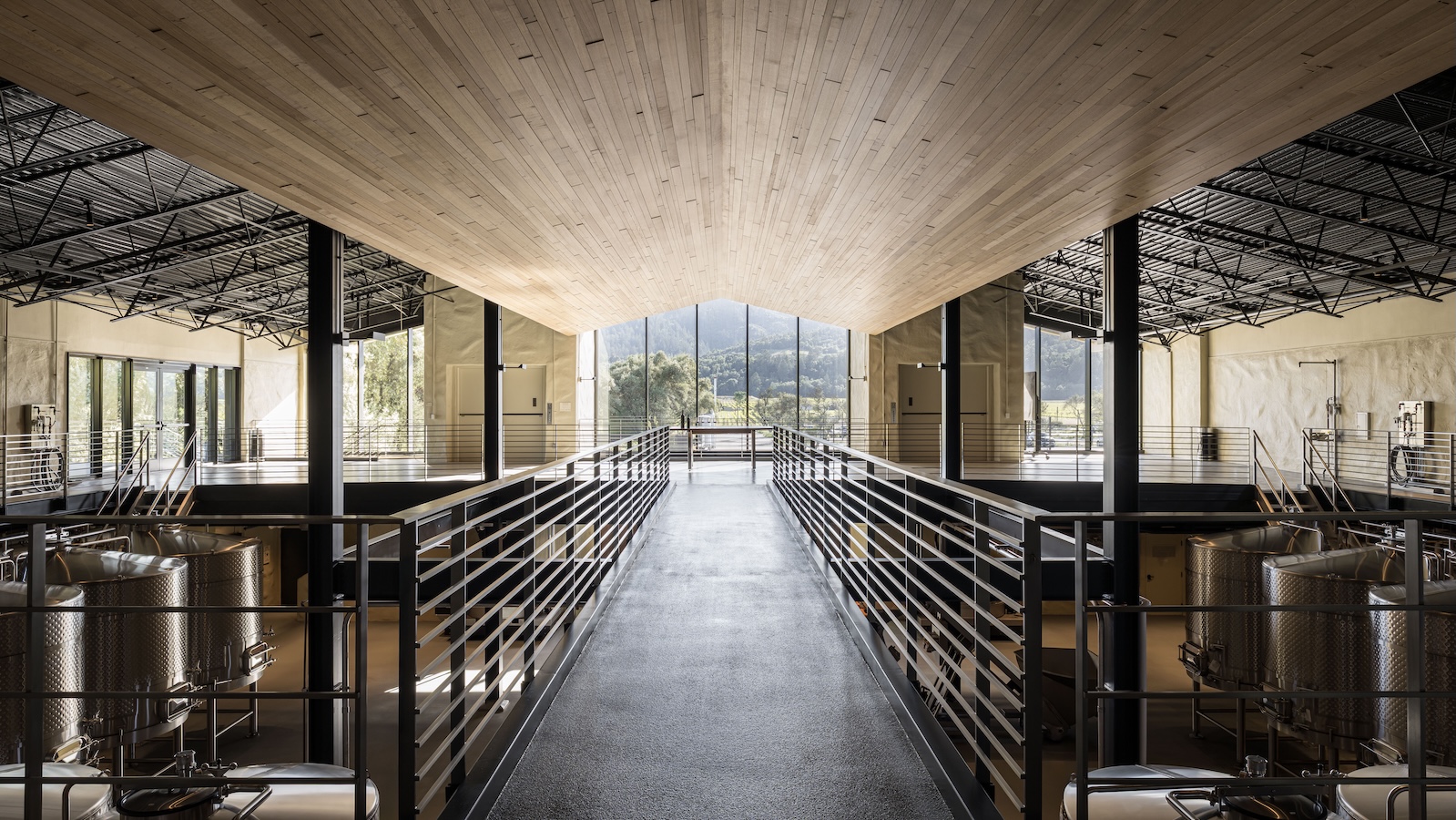
The new To Kalon Cellar introduces optical sorting, gravity-flow systems, temperature-controlled fermentation vessels and rooms for warming or cooling barrels, allowing for smaller, more precise lots from the estate’s 178-hectare portion of To Kalon Vineyard, which gained CCOF organic certification in 2023.
This fancy new winery is missing one big thing (well, a few big things): the 16-ton oak vats that were used for more than three decades to ferment and age Mondavi’s top Cabernets, including lots from To Kalon.
They were repurposed into the wooden ceilings throughout the facility.
‘We’ve added smaller stainless steel and concrete tanks to be able to isolate vineyard blocks and sections at ideal ripeness’, Ogasawara said. ‘Our goal is to push ourselves every vintage and continue to make wines that stand beside the greatest in the world’.
The cellar also puts production on display for visitors, he added, and has floor-to-ceiling windows overlooking the vineyard: ‘Guests can see harvest activities firsthand and get a better understanding of what it takes to craft wines.’
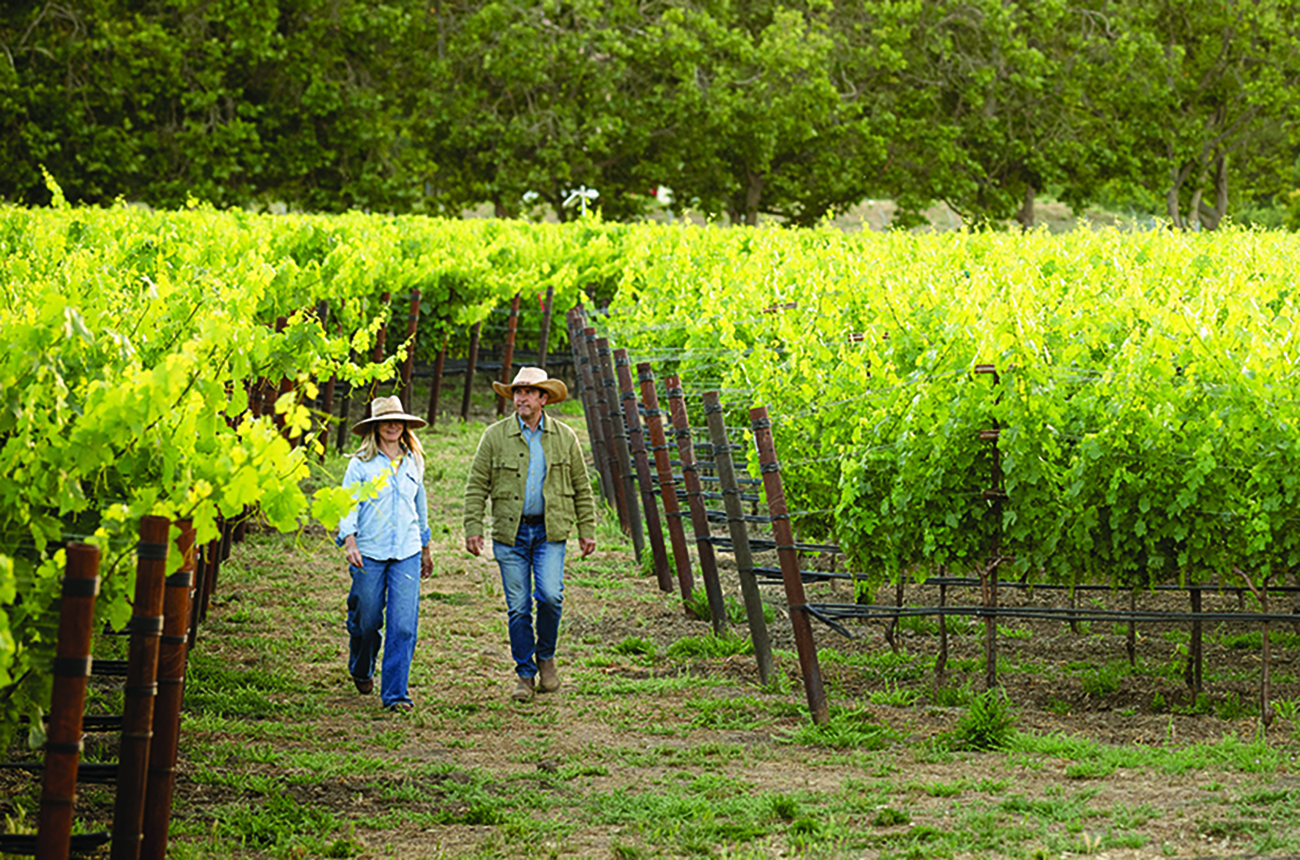
To Kalon Vineyard itself is undergoing a renovation of sorts. ‘We are replanting a portion of the vineyard this year, about four percent’, said Blake Wood, director of vineyard operations.
‘We’ve replanted a bit more than one-third of the vineyard in the past decade now, focusing on highlighting the various micro-terroirs’.
Individual stars

The To Kalon grapes are now split across four labels under the Constellation umbrella: Robert Mondavi Winery, Schrader Cellars and Double Diamond (both led by winemaker Thomas Rivers Brown), and To Kalon Vineyard Company (Tony Biagi).
Each operates independently, with its own picking decisions.
‘There are blocks that are exclusive to one another and some blocks that we share’, Ogasawara said. ‘We taste each other’s wines and share different perspectives to ensure we are staying on top of our game’.
Janssens, who trained under Robert Mondavi himself, still sits in on blending. ‘Geneviève joins blending sessions to give her thoughts and holds us accountable’, Ogasawara said.
‘It’s amazing to have her experience and palate in the room to ensure we are following what Robert Mondavi had intended’.
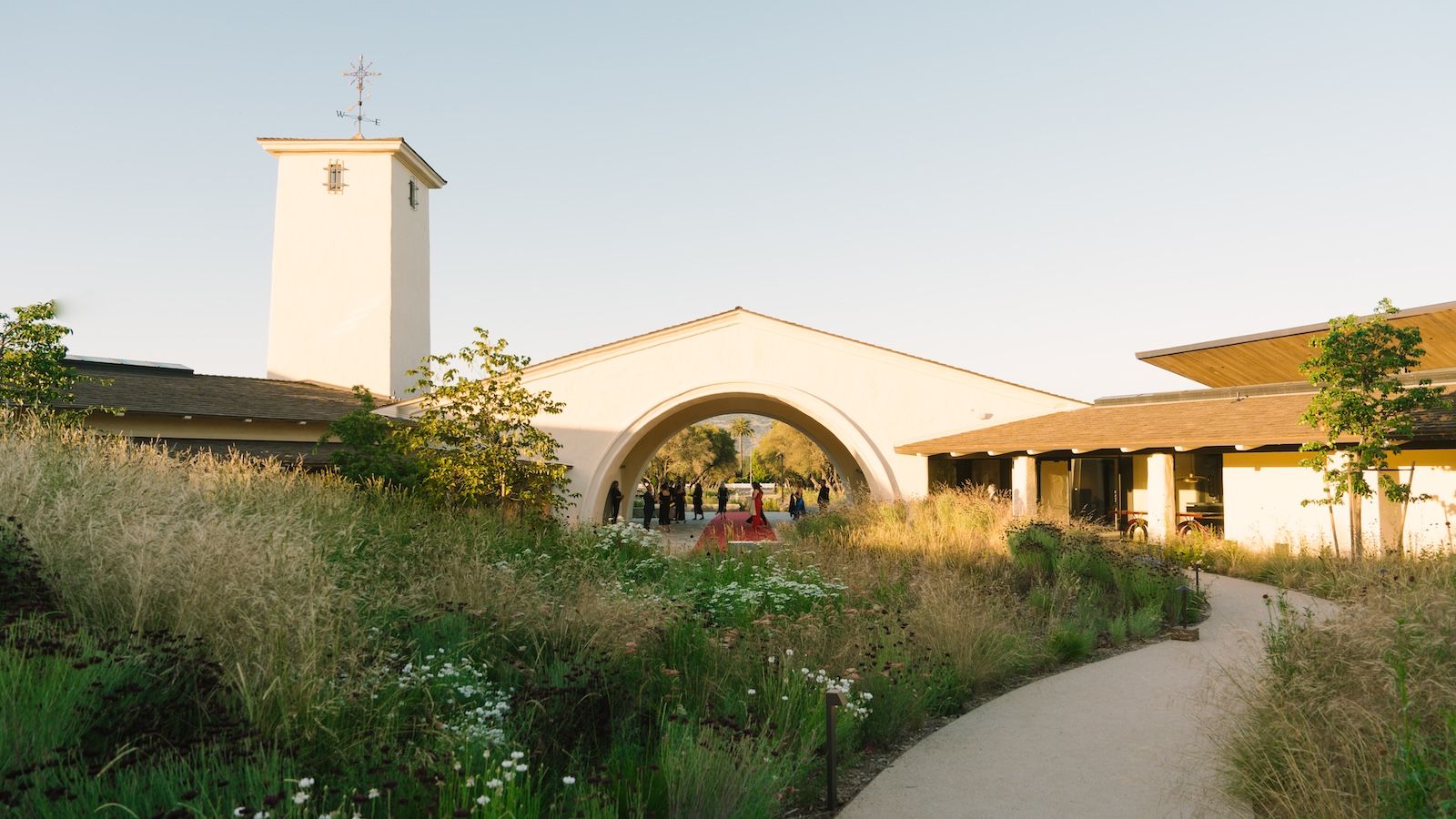
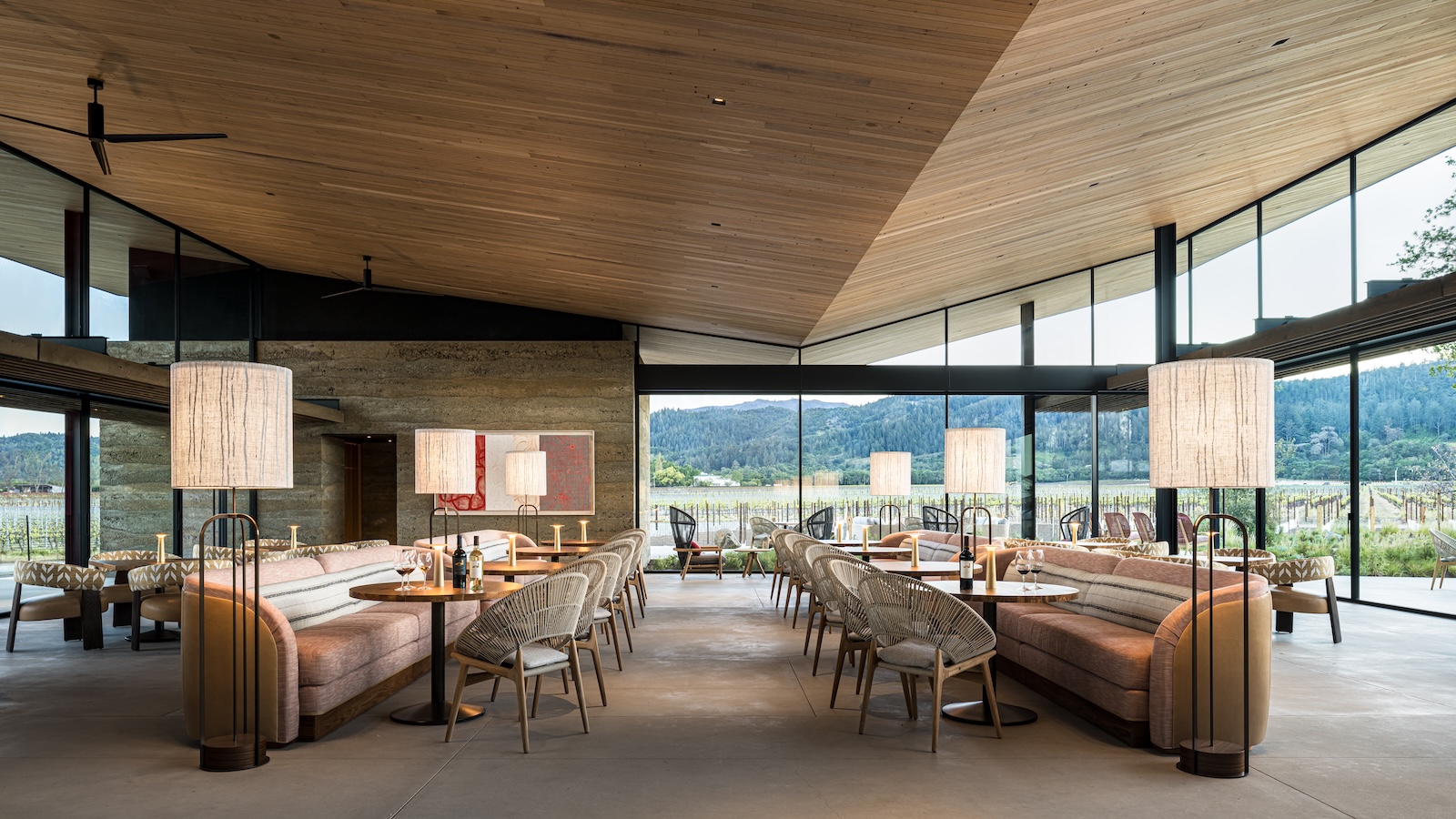
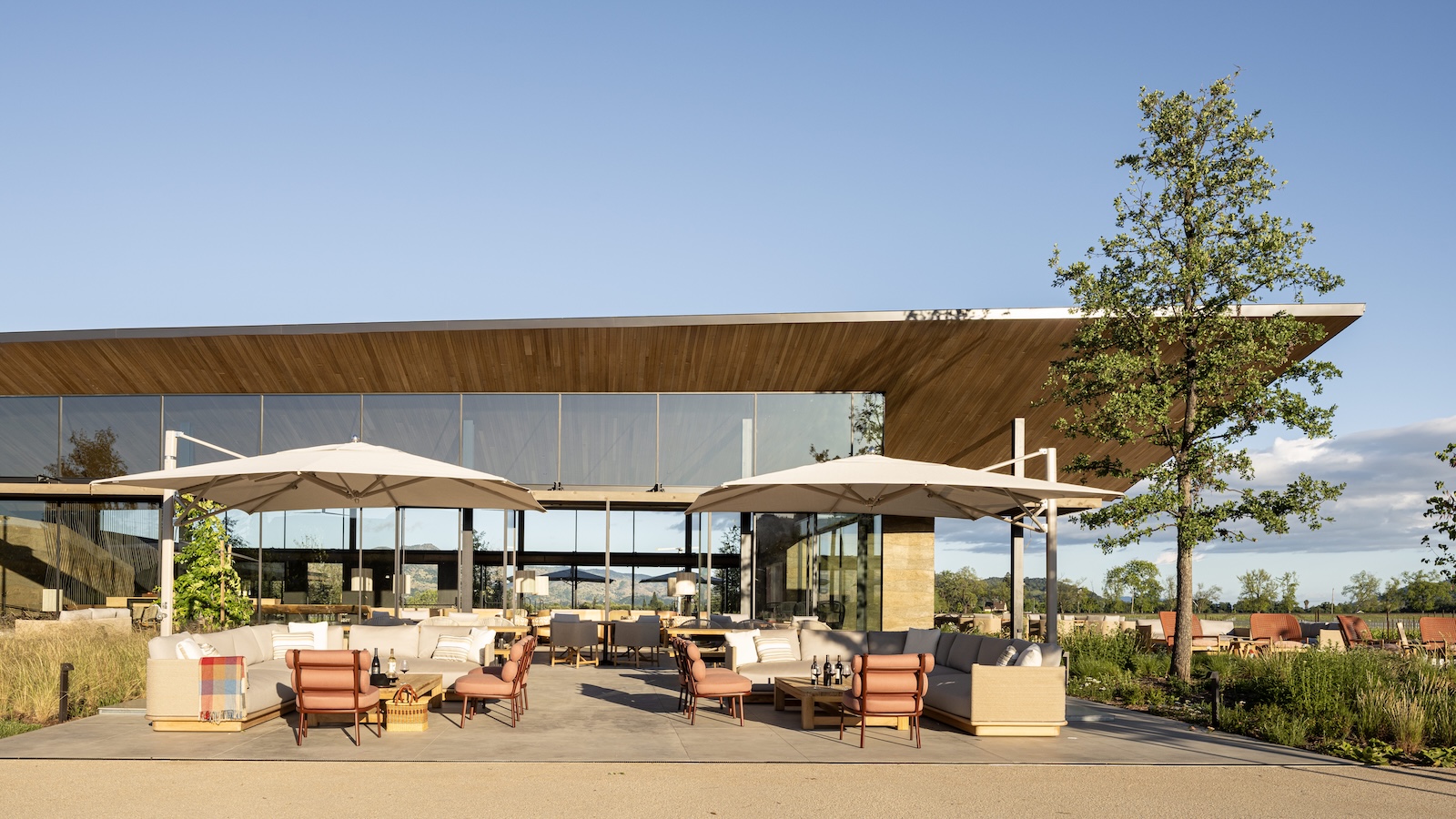
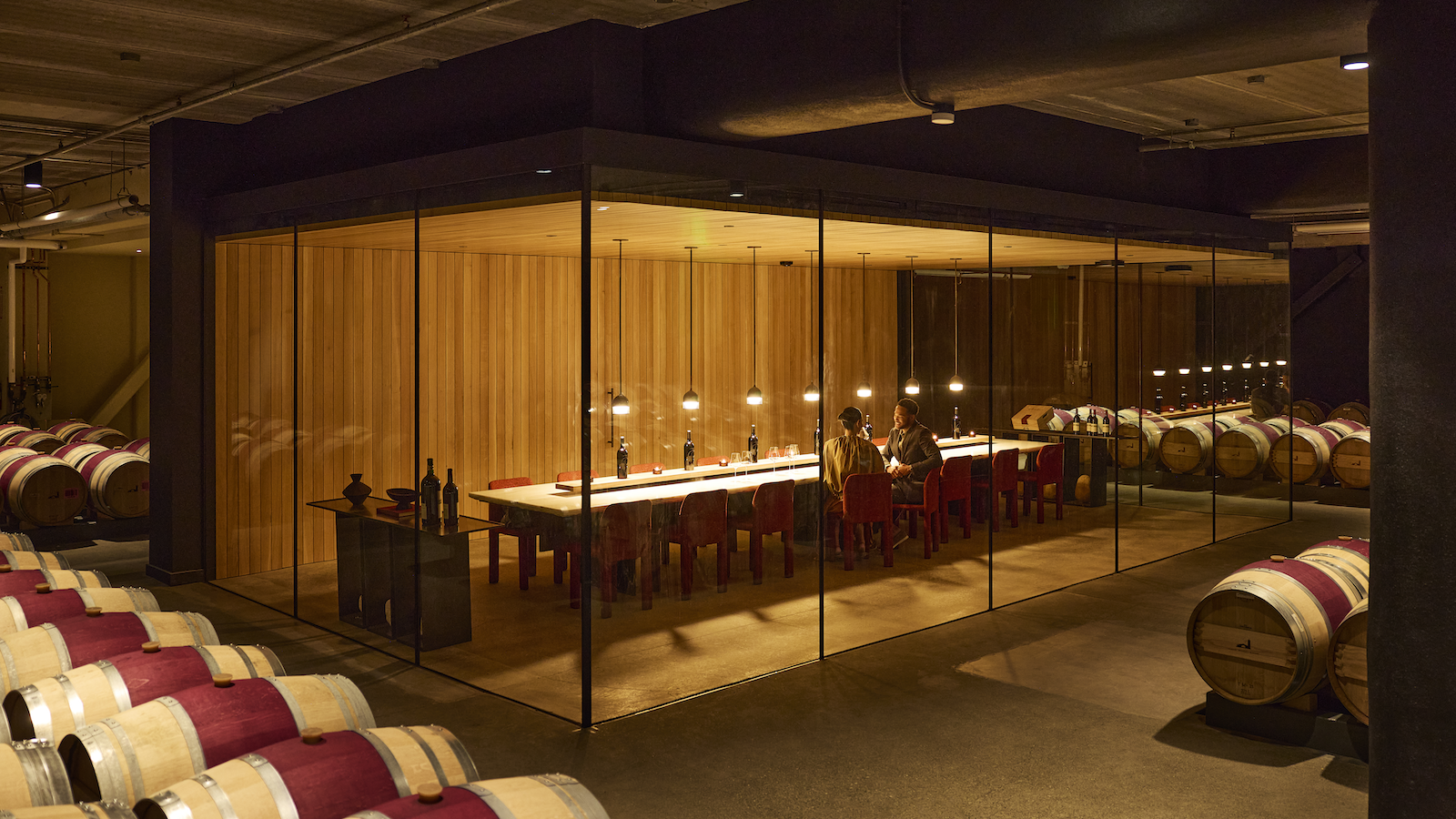
Architecturally, the project, led by Aidlin Darling Design with interiors by BAMO, preserves architect Cliff May’s original arch and tower while adding a new hospitality wing: the light-filled Vineyard Room and terraces for most guests, the restored Tower Library and Barrel Room for private tastings, and the new To Kalon Collective tasting room.
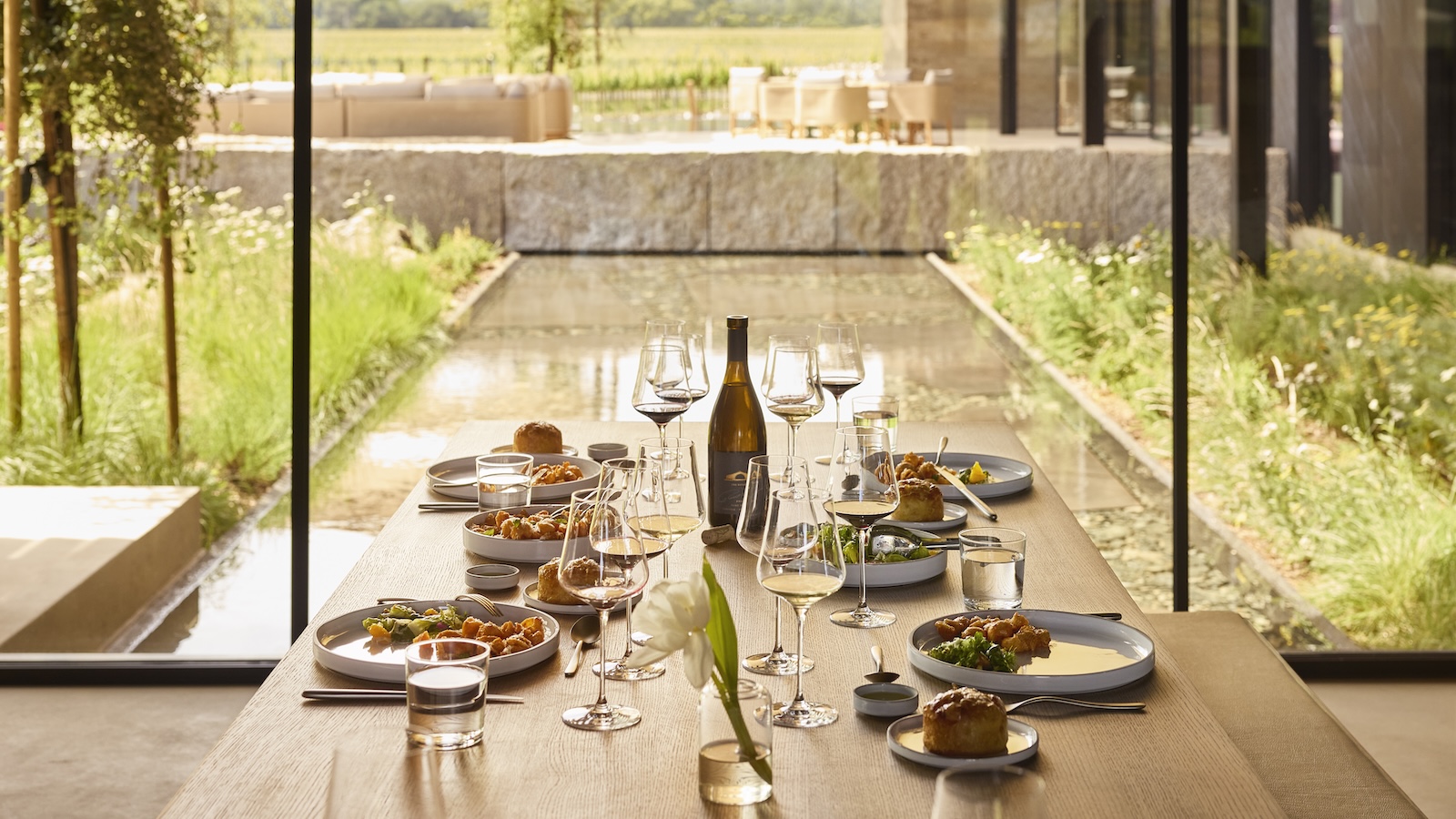
Outside, a linear water feature echoes the valley’s old agricultural aqueducts, and landscaping by Surfacedesign folds the property into its surroundings so thoroughly that indoors and outdoors barely feel separate.
Tasting fees don’t break the bank
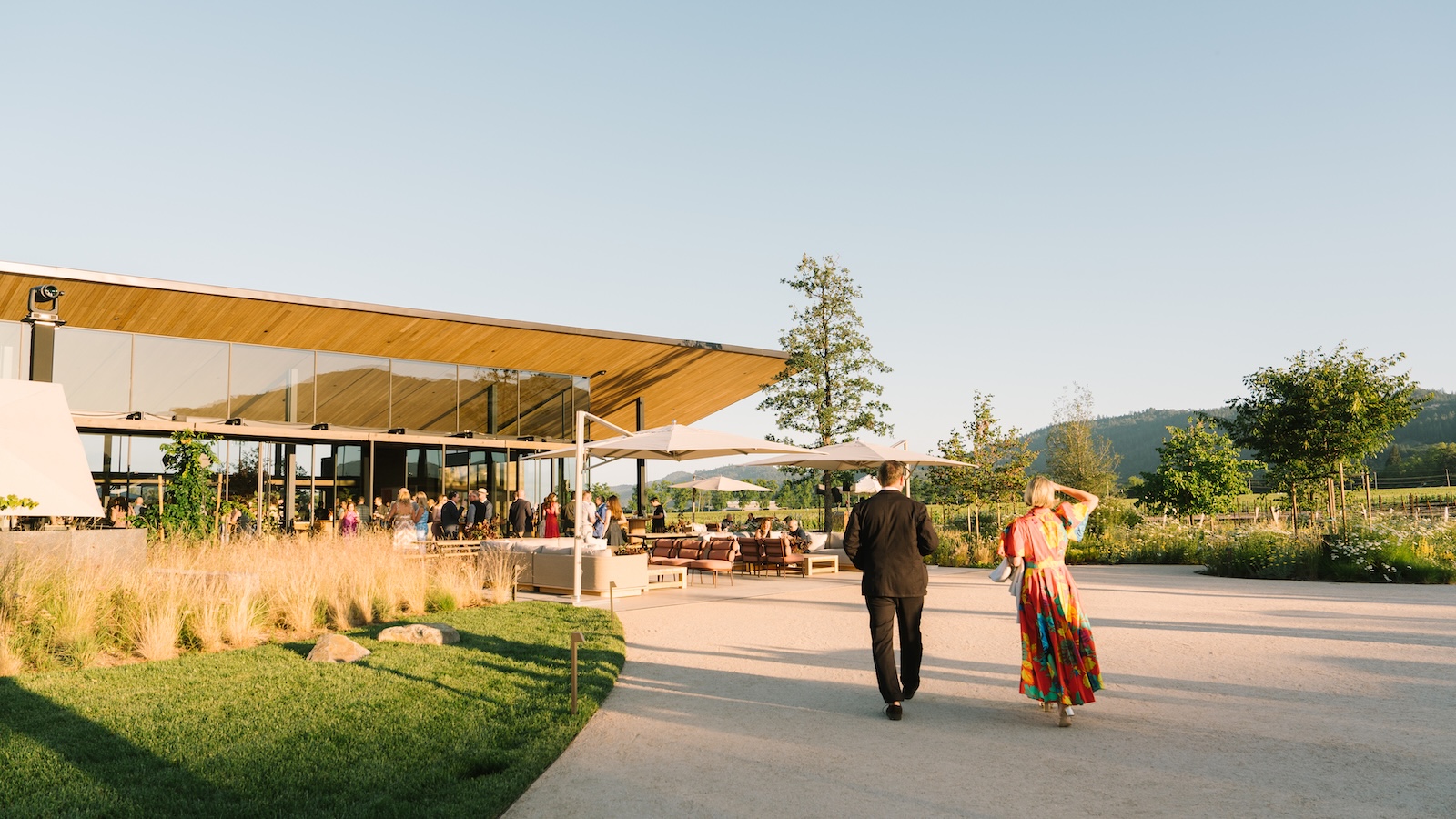

Perhaps the smartest innovation is in the decision not to charge extortionist fees to visitors in a region where entry-level tastings often carry luxury price tags and fees can range from $85 to $300.
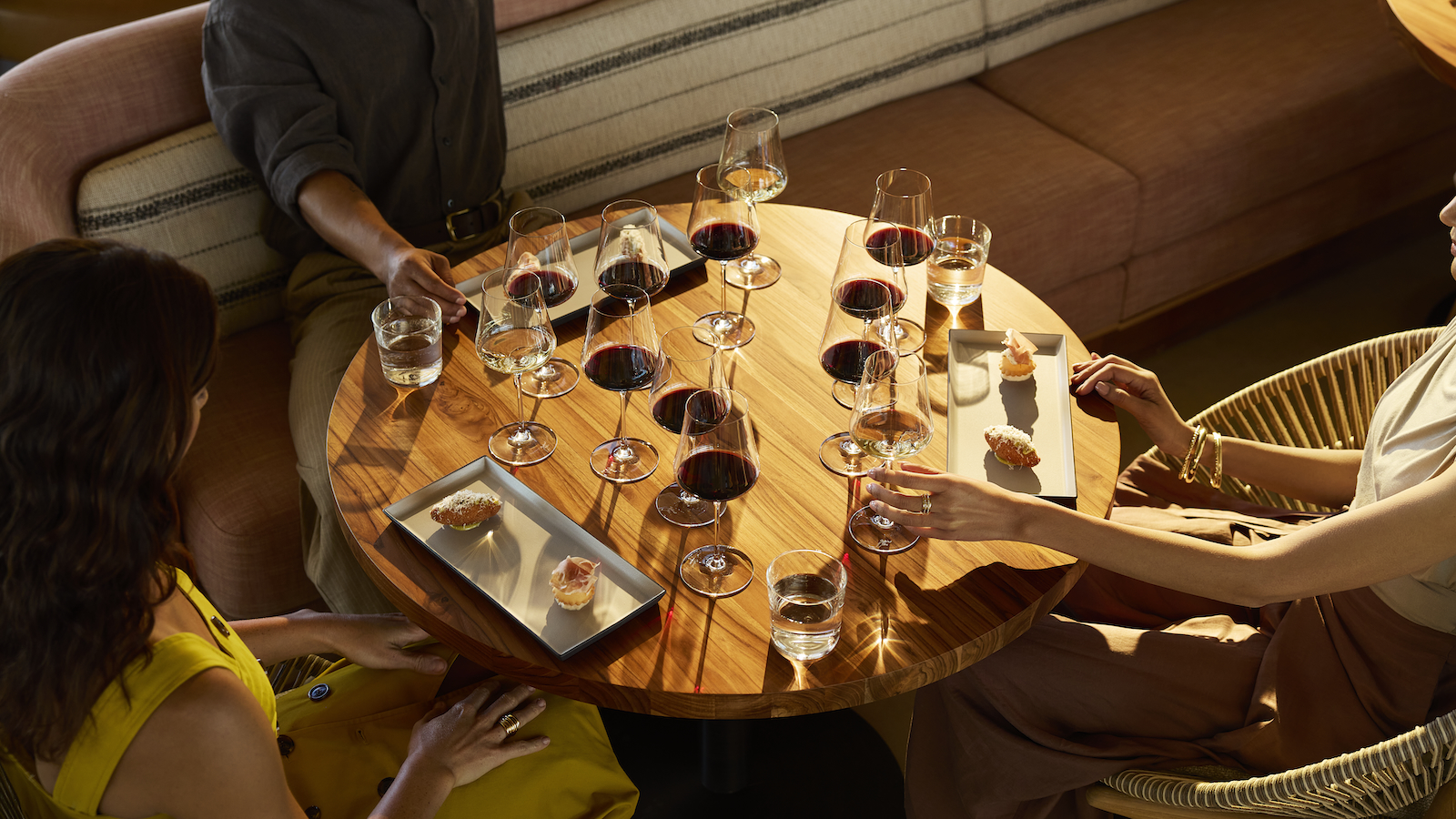
For the Mondavi wines, Hemphill explained: ‘Our tasting experiences range from $60 to $150 per person. We also welcome walk-in guests for any of our experiences, as availability allows’.
The signature culinary offering, The Mondavi Table, is a three-course, family-style, wine-and-food pairing for $95 per person – notably affordable for a chef-driven, estate menu in Napa Valley today.
‘We believe true luxury is defined by the quality of the experience, not by exclusivity’, Hemphill said.
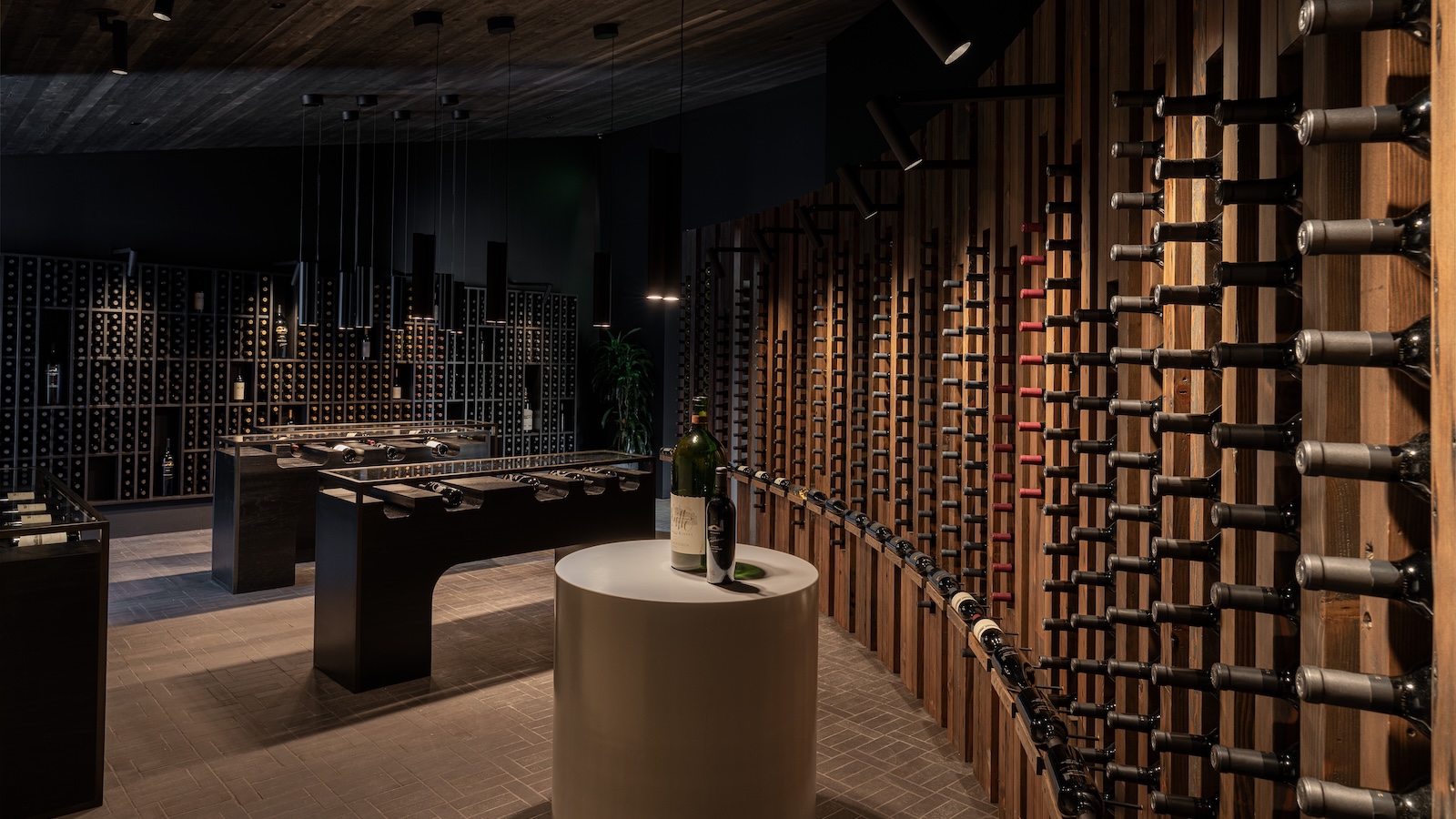
The To Kalon Collective is the newest experiential room, where the focus is entirely on the iconic vineyard rather than a single producer and private tastings cost $180 to $195.
‘Most people only ever experience [To Kalon Vineyard] through a single producer or a single wine,’ Hemphill said.
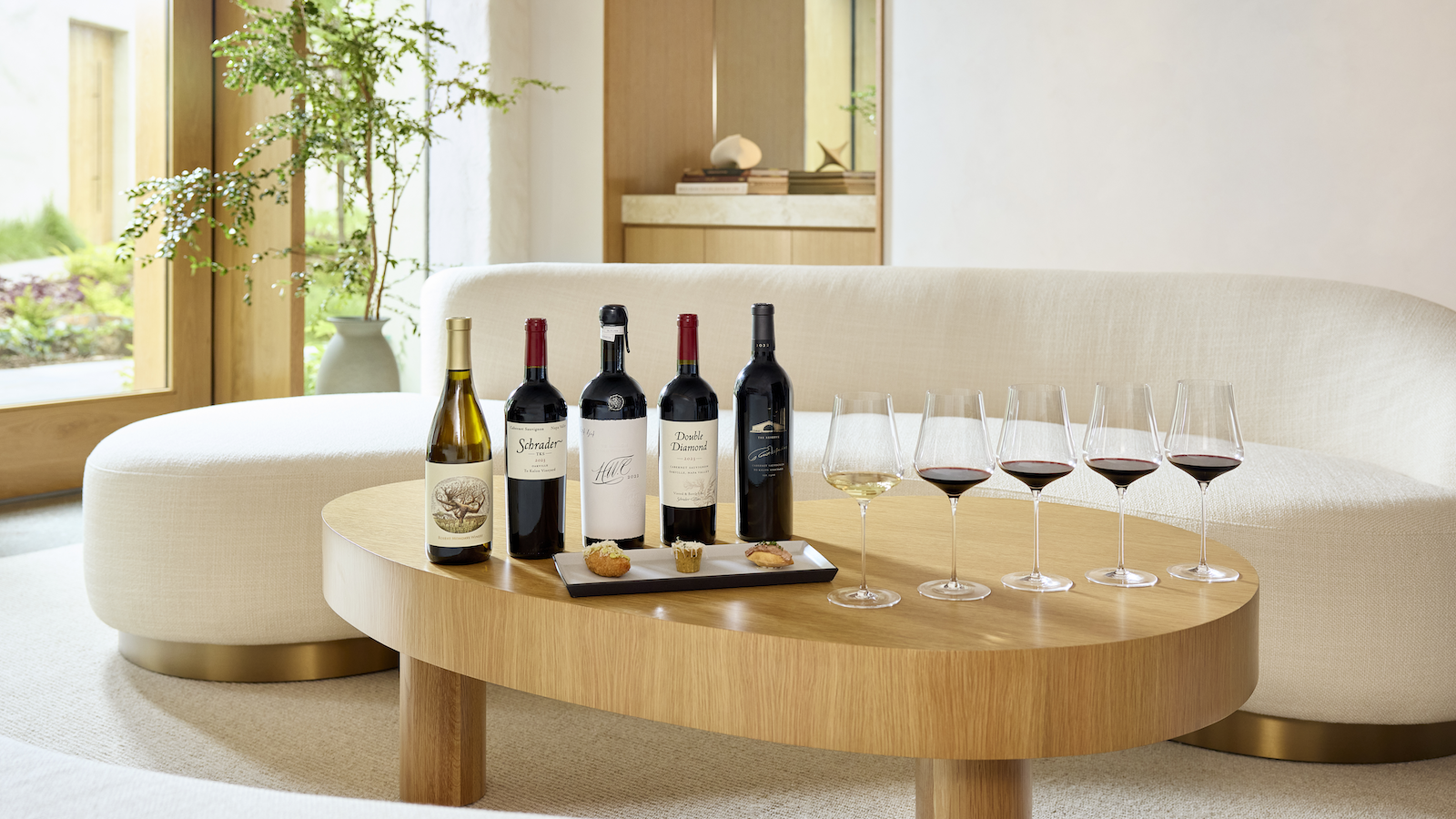
‘The To Kalon Collective brings together wines sourced from To Kalon Vineyard, including Robert Mondavi Winery alongside Schrader Cellars, Double Diamond and the To Kalon Vineyard Company, to tell a broader story about place’.
The idea, she explained, is to provide context – showing how vineyard blocks, farming and winemaking philosophy shape different wines from one renowned vineyard.
Blending winemaking and culture
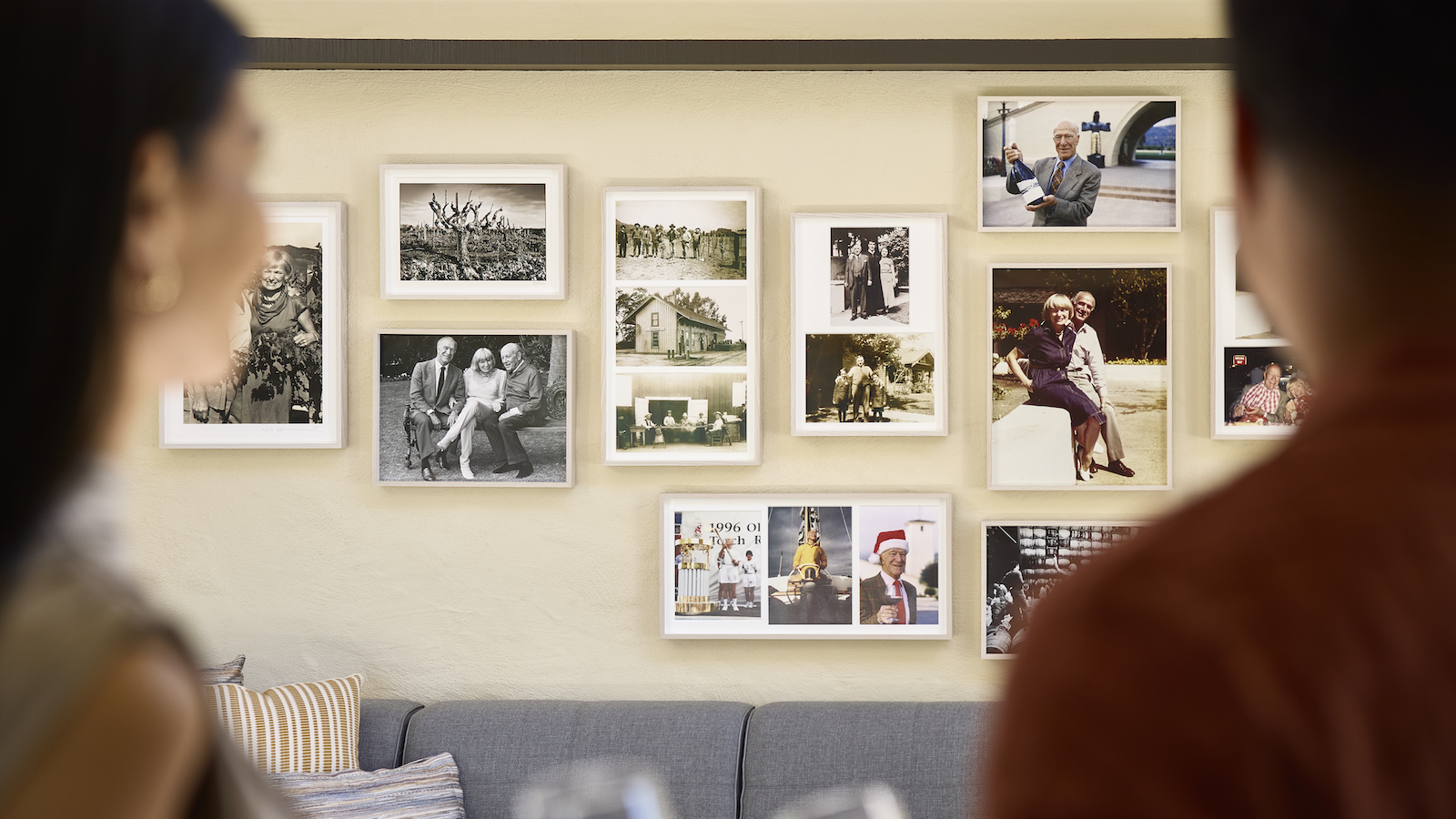
When pressed again about the renovation costs, Hemphill shifts the focus of the question: ‘For us, it’s about creating an exceptional experience for our guests that can continue to raise the bar for hospitality here in Napa, much the way Robert Mondavi did when he first opened this winery’.
That’s the point. Yes, they ‘want this winery to continue to stand the test of time’, and yes, they want to ‘honour our legacy’, and yes, they want to ‘deliver against the values and vision under which the winery was founded’, and all that marketing speak.
But the real reason – even if they can’t express it themselves – is that they want people to come back to Napa and have an experience that creates real memories, without walking away wondering if they spent too much money.
Pointedly, the reopening comes during a challenging moment for the wine world, with an ongoing barrage of reports about falling consumption and industry layoffs, amplified by anecdotal conversations re-hashing those doom-and-gloom stories.
‘I flatly reject the idea that wine culture is heading for extinction’, said Hemphill. ‘What we are witnessing right now isn’t a funeral; it’s a massive cultural evolution. The next generation of consumers doesn’t want the stuffy, velvet-rope exclusivity of the past. They want authenticity, values that align with their own, and incredible, unpretentious experiences’.
The reopening is meant to make Mondavi ‘that loudspeaker for Napa’ again, she said, by ‘blending world-class winemaking with contemporary [wine] culture.’
Passing the winemaking baton
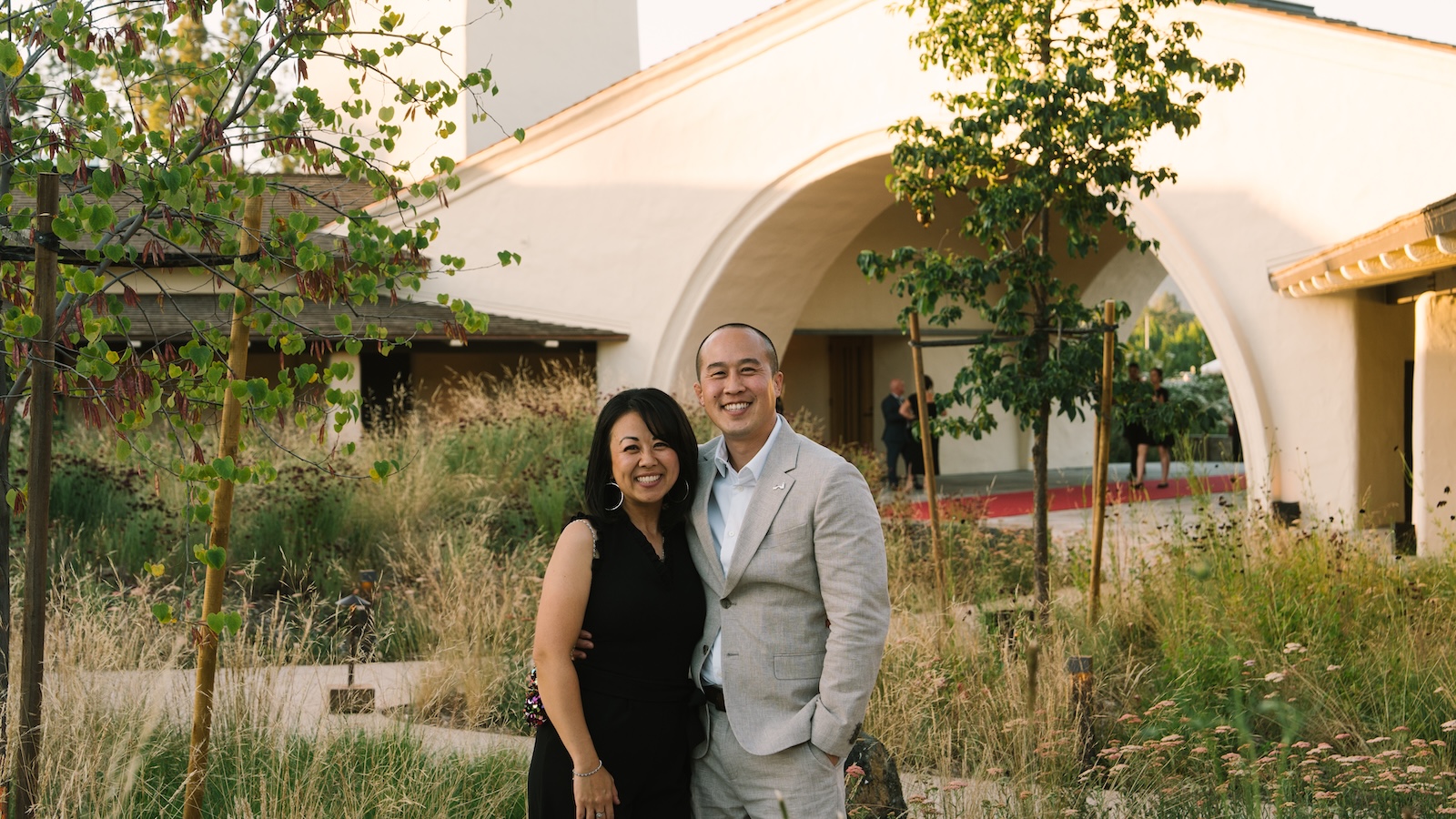
Another momentous shift for Robert Mondavi Winery is the passing of the torch to winemaker Kurtis Ogasawara, who is not only one of the nicest people you’ll meet in Napa Valley, but one of the most humble.
Ogasawara has spent more than a decade working in the cellars alongside Janssens, who was named director of production at Opus One in 1989 and director of winemaking at Mondavi in 1997.
‘He understands that a great winemaker doesn’t try to force their own signature onto a legendary terroir’, Janssens says of Ogasawara, ‘but rather listens to the land to bring out its purest elegance and power. There is no one more deeply rooted in our winemaking philosophy than Kurtis to lead us forward’.
Tasting with Ogasawara in the new cellar gave me a front-row seat to his frame of mind. Yes, he has big shoes to fill. Huge shoes, in fact. But he’s more than ready – confident and sure of himself.
And, to extract a new era of wines from Mondavi’s grape sources, he has a new cellar full of shiny new tanks and concrete vats designed to emphasise fruit – or, more fittingly, place.
‘I see it as continuing the mission to create wines that stand beside the greatest in the world’, Ogasawara said.
‘I have worked with and learned from some of Napa Valley’s best winemakers, from Geneviève Janssens and Andy Erickson to Thomas Brown and Tony Biagi. I promise to never settle and keep pushing to see what else we can accomplish’.

American Vintage: A 250 year history of how wine shaped – and was shaped by – the USA

Decanter Fine Wine Index: A 100-point Opus One among the wines offering value to collectors