





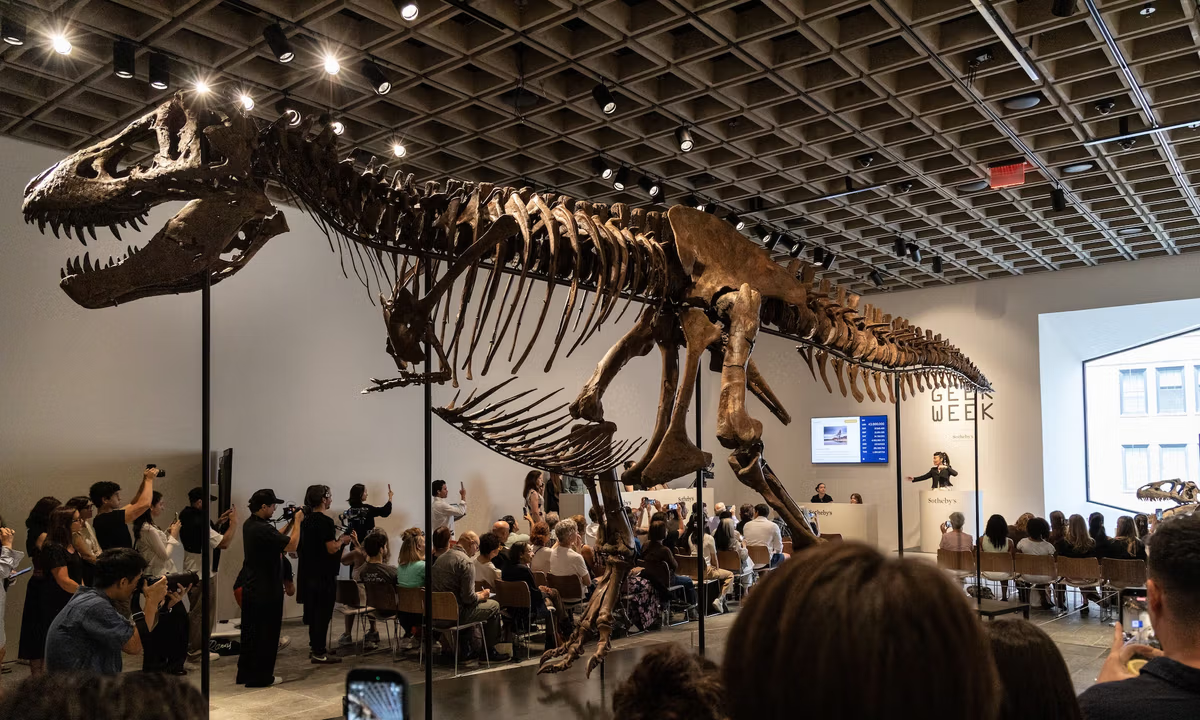
A fossilised Tyrannosaurus rex skeleton sold for a record $50.1m this morning (14 July) at Sotheby’s New York in a much-anticipated auction. One of the largest and most complete fossils of its kind, the 67-million-year-old “Gus” hammered at $43m, well above its pre-sale estimate, selling to an anonymous phone bidder.
The bidding for Gus quickly went to its upper estimate of $30m, then slowed. During deliberate pauses, the auctioneer reminded bidders of the “once in a lifetime opportunity” to own this 38-ft-long specimen mounted on a steel armature in a threatening predatory pose. The bidding lasted approximately ten minutes, with the mysterious winner outbidding six others.
The previous record-holder for the most expensive dinosaur fossil was a Stegosaurus skeleton nicknamed “Apex”. It sold in 2024 for $44.6m (also at Sotheby’s) to the hedge-fund billionaire Ken Griffin, who has loaned it to New York’s American Museum of Natural History Museum for four years.
Gus’s remains were found over three years of excavation at a cattle ranch in South Dakota. The skeleton, named for the ranch’s owner, comprises 183 fossilised bones and is 61% complete by bone count (75% to 80% by mass). It took several years to clean and prepare the fossils, including fabrication of fill-in segments—some of which were created using 3D printing.
Gus’s formidable head Photo: Matthew Sherman, courtesy Sotheby’s
The 12.5-ft-tall Gus was on public display at Sotheby’s Breuer Building for the first two weeks of July. The dinosaur’s formidable head was displayed in the lobby, while a replica was placed atop the skeleton upstairs. The skull is particularly fragile, according to the wall text, and the auction house did not want to risk placing it atop the body. This gave visitors a chance to look closely at the massive skull and those mean, flesh-ripping teeth.
Gus lived in a rough, dino-eat-dino era. As Sotheby’s writes in its description: “The skeleton displays a number of pathologies, including signs of tyrannosaurid bite marks to the skull bones and right dentary, as well as to several postcranial elements, all sustained by either combat or post-mortem scavenging, in addition to injuries which occurred during the life of the individual, with fractured and healed bones discernable in several ribs and gastralia.”
There has been some controversy around the sale of such extraordinary specimens to private individuals, which could potentially deprive scientists of further access to them for research purposes. As the vertebrate palaeontologist Richard Butler recently told The Guardian: “A fossil not in a recognised museum collection cannot be studied and is therefore lost to research. Fossils have been bought and sold for hundreds of years, but prices are increasingly out of the reach of museums, much to the detriment of science.”


