








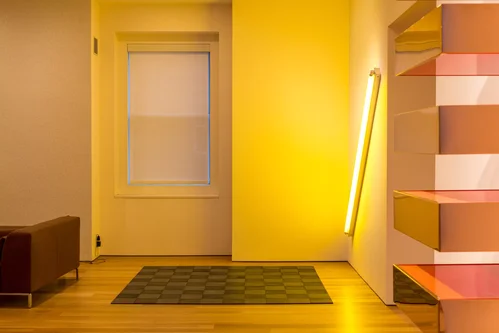
Geometric shapes. Limited color palettes. Repetition. Although the principles of Minimalist art are rooted in reduction, the broader movement encompasses a rich collection of works—from the austere brick sculptures of Carl Andre to the vibrant velvet floor installations of Polly Apfelbaum—that continues to resonate with art lovers.
At its heart, Minimalism involves stripping a work down to its material essence. “It’s less about the artist’s talent, but rather the idea behind it and how these forms take up space,” explained Isabella Lauria, senior vice president and specialist in the post-war and contemporary art department at Christie’s. “It’s a departure from putting all the onus on the artist’s hand and more so on putting the onus on the viewer and how they inhabit the space these works take up.”
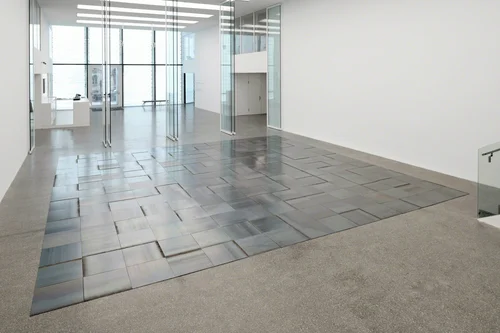

15 x 15 napoli square, 2010
Carl Andre
Alfonso Artiaco
In a world of information overload, and where the very phrase “minimalism” has been commercialized to sell everything from fashion trends to holidays, Minimalist art offers collectors a unique prospect: an object that strips away distraction, inviting the viewer to reconsider how they engage with the world around them.
Indeed, the power of Minimalist artworks can make them deceptively demanding to collect and display. The impact of Minimalism often depends on space, restraint, and precision. That means that scale, sightlines, lighting, installation, and surrounding objects can all affect whether the work feels powerful or merely plain.
For collectors curious about the movement, here’s Artsy’s guide to buying minimalist art.
What is Minimalist art?
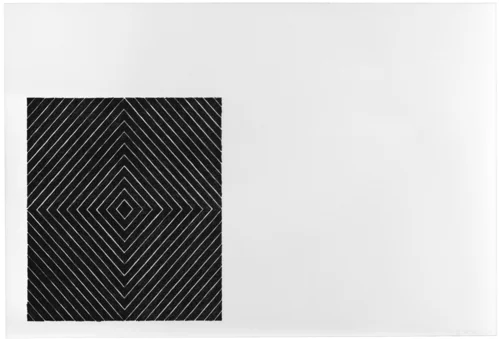

Jill, 1967
Frank Stella
Gemini G.E.L.
Minimalism first emerged in 1950s New York in reaction to the gestural art of the previous generation. It rejected the emotionally expressive work of Abstract Expressionist artists such as Jackson Pollock and Willem de Kooning in favor of a radical simplification of forms. “What you see is what you see,” explained the painter Frank Stella, whose black stripe paintings, which began in 1958, became among the first works associated with the movement.
Although the artists who pioneered the movement in the 1960s—Donald Judd, Carl Andre, Robert Morris, Dan Flavin, Agnes Martin, Anne Truitt, and Sol LeWitt—distanced themselves from labels, they were unified in their intentions. To create these “specific objects,” as Judd described them in a 1965 essay, they sought to erase traces of the “artist’s hand” from their work. Some did this by replacing the brushstrokes of painting with printing and industrial materials such as fiberglass and aluminium. Others employed mathematical systems to determine the composition of their works.
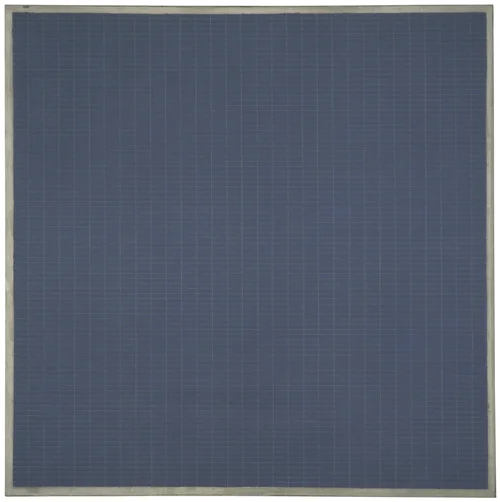

Night Sea, 1963
Agnes Martin
San Francisco Museum of Modern Art (SFMOMA)
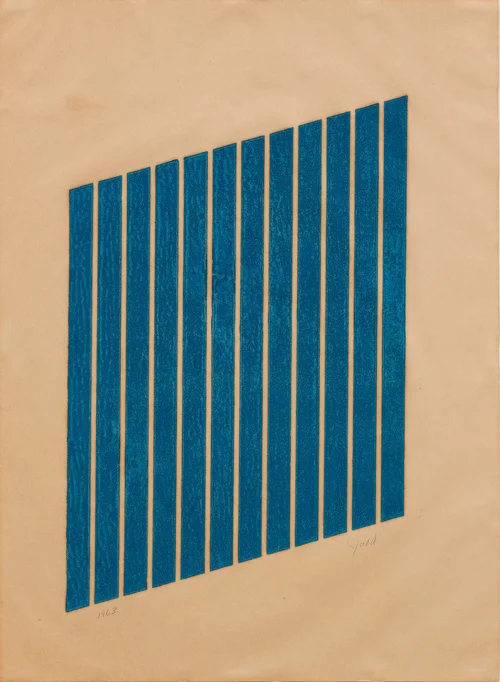

Untitled, 1961-1963
Donald Judd
Susan Sheehan Gallery
This group of artists was consolidated as the “canon” of Minimal art by the art philosopher Richard Wollheim’s eponymous essay in 1965 and the “Primary Structures” exhibition the following year at the Jewish Museum in New York. However, this show set out a narrow definition: almost all the artists were from the U.S. or the U.K., working in sculpture, and men.
In the years since, the movement has undergone a sweeping re-evaluation, and in 2014 the follow-up exhibition “Other Primary Structures” at the Jewish Museum retrospectively acknowledged women, a greater diversity of mediums, and global artists including Alejandro Puente, Noemi Escandell, and Edward Krasinski as pioneers of the movement.
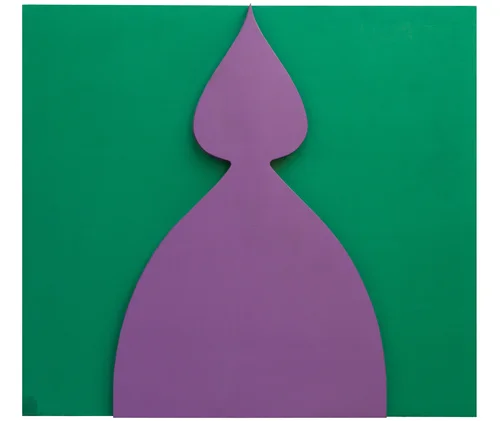

Vector, 1966
Noemi Escandell
Herlitzka & Co.
Today, a new generation of artists is making the tenets of Minimalism their own. Virginia Overton puts a sensual spin on the stark geometries of Flavin’s neon sculptures by wrapping them with translucent scans of her hair; Michelle Grabner and Katja Strunz are experimenting with more organic forms; and artists including Eric Butcher, Lydia Okumura, and Cordy Ryman are branching out into materials including graphite, recycled textiles, and industrial glass.
But with this broad range, where should collectors looking to get into Minimalism start?
Back to basics: Where new collectors should start with Minimalism
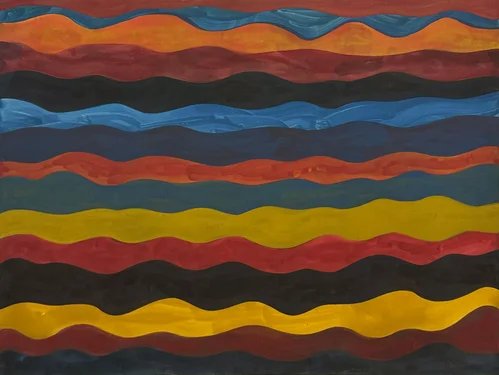

Irregular Wavy Horizontal Color Bands, 1992
Sol LeWitt
Hollis Taggart
Emily Chun of New York’s Hollis Taggart gallery recommends hitting the books: “It’s important to educate yourself historically and ask a lot of questions.” She singles out chapter seven, “The Double Negative: A New Syntax for Sculpture,” in Rosalind Krauss’s book Passages in Modern Sculpture as a thought-provoking primer on the philosophical context of Minimalism and how the movement upended traditional sculpture.
The next logical step is to “anchor your expectations,” she said, by visiting great examples of Minimalist work in museums. The Guggenheim Museum and the National Gallery of Art in Washington, D.C., the Kunstmuseum Den Haag in the Netherlands, and Tate Modern in London are strong starting points for the “canon.”
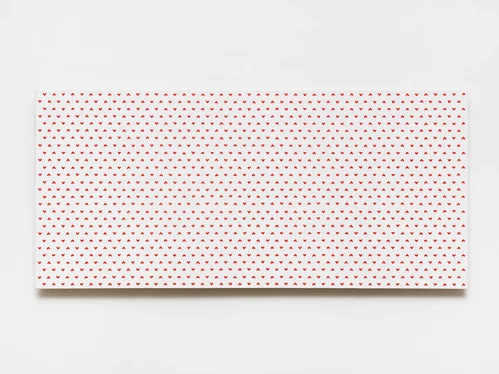

Horatio Heart, 2021
Gregor Hildebrandt
Saenger Galería
Visiting the work in person is particularly important when it comes to Minimalism. “It’s more silent. It may not have as much information as a figurative artwork where you can see something and understand the work better,” said Bernardo Saenger, founder of Saenger Galería. “I would say it is more about the feelings. How does that work move you?”
Once you’ve identified your personal tastes, there’s a world of opportunity.
At the highest level, works by the “founding fathers” of Minimalism come to market consistently and regularly command blue-chip price tags. An upcoming Christie’s sale of the late Henry S. McNeil Jr.’s groundbreaking Minimalism collection is expected to exceed $30 million, led by a Judd copper and red fluorescent Plexiglas stack estimated at $10 to $15 million.
These works demonstrate everything that makes a minimalist work valuable: provenance, scarcity, pristine conservation, and history. But even within this collection, there are more accessible price points in the day sales.
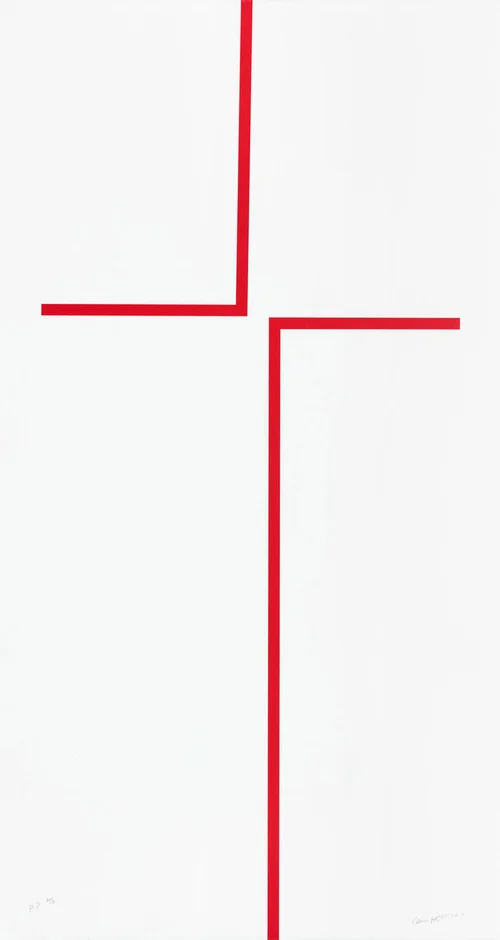

The Way, 2018
Carmen Herrera
Baldwin
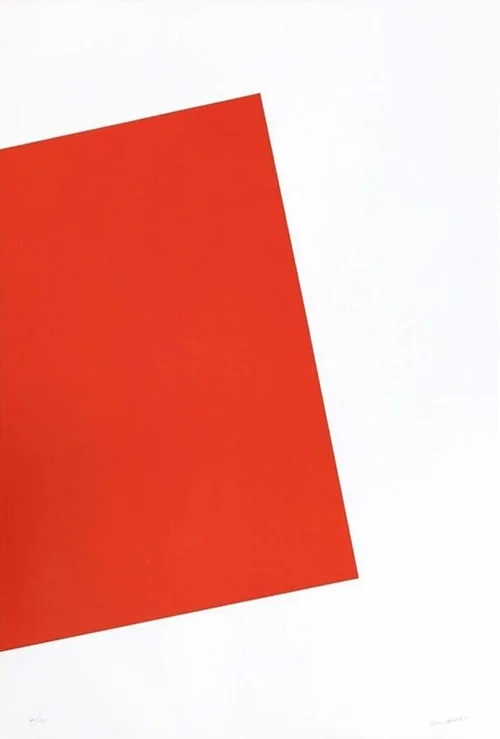

Untitled NRW, 2017
Carmen Herrera
Baldwin
Saenger suggests that new collectors ease themselves in with multiples. “A lot of people who cannot buy fine art or unique works can buy an edition, and that’s their stepping stone.”
For example, while the Cuban artist Carmen Herrera’s auction record is $2.9 million, achieved for her painting Blanco y Verde at a Sotheby’s auction in 2019, editions of her work on fine bone china are available from around $1,000.
Key practical considerations for buying Minimalist artworks
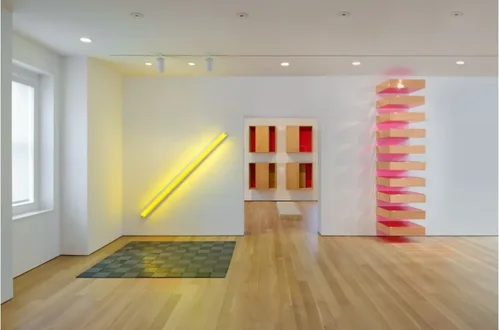

“With Minimalism, we always think of white-box gallery spaces and cement floors,” said Lauria. But displays don’t have to be cold and detached.
The Christie’s sale is a perfect example of this. “He curated this collection in a way that felt very domestic, very warm, almost very cozy, which is a weird word to use alongside Minimalism,” she explained.
One of the things to consider is the lighting. McNeil’s placement of a Fred Sandback orange-thread work on a sunlit wooden staircase in his Philadelphia home imbued a warmth to the work, while placing a reflective Judd stack opposite one of Tuttle’s wood slats at the top of the staircase put the works in conversation with one another. “It really is this balance between not letting the design overpower the fine art, and rather having them work in tandem,” said Lauria.
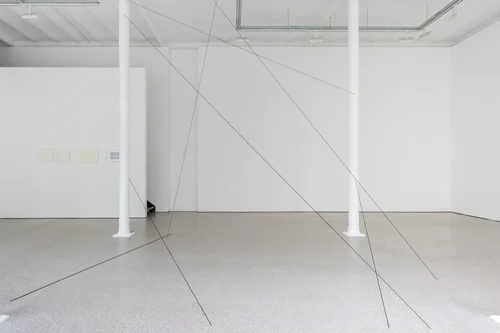
Untitled ( Sculptural Study, Mikado), 1999
Fred Sandback
Galerie Greta Meert
Scale is also important. While pieces like the larger Judd stacks and bullnoses might be better suited to a gallery, there are plenty of smaller formats that work well in a domestic space—it just takes a little planning.
“It’s important to think about what happens after the purchase,” Saenger said. “Many times, collectors stay just on the very edge of the purchase. The second layer of it is: ‘How am I going to move that home?’ ‘Who’s going to install it?’ or ‘Do I have the space?’”
When looking to buy a Minimalist artwork, consider the space, lighting, installation support, and architectural restraint that it will be around.
Embrace conservation
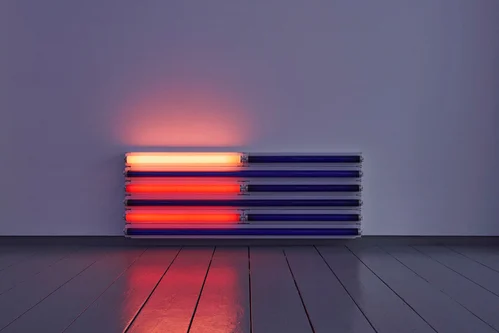
Untitled (for Ad Reinhardt) 2e, 1990
Dan Flavin
Paul Stolper Gallery
Many of the objects are delicate and require great attention to detail when it comes to installation and aftercare. Flavin’s neon sculptures need to have the fluorescent tubes replaced by a conservator; the Judd stacks need to be repolished; and LeWitt’s wall paintings require the estate’s input every time they are installed.
“There is a real long-term commitment surrounding the way these works are brought to life, and that’s what’s so exciting about them,” Lauria said.
“Every so often, you do address the works and continue to—as the future custodian—make sure they are exhibited in the artist’s intent.”
If you’re unsure, it’s always wise to ask.
Three tips for first-time buyers of Minimalist art
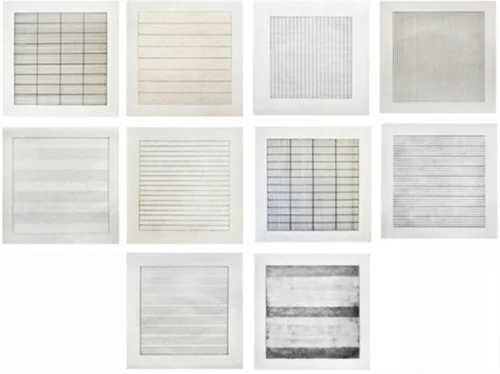
Untitled (from Paintings and Drawings: 1974-1990), 1991
Agnes Martin
Composition.Gallery
- Look beyond the canon. If you want to collect works from the first wave of Minimalism, your options are far broader than Flavin or Morris. “There are so many lesser-known artists who were working in the Minimalist tradition in the 1960s and 1970s whose approaches provide a fuller picture of the movement,” said Chun. “I’m thinking of artists like Karen Carson who builds Minimalist geometric compositions out of fabric bound together by zippers, allowing the viewer to open and close zippers, and thus change the composition itself.”
- Don’t dismiss design. McNeil’s engagement with Minimalism extended beyond fine art, and Lauria encourages new collectors to follow suit. His selection of George Nakashima furniture brought balance to his home collection and will be on the block at the Christie’s design auction in June.
- Seek inspiration. The best way to figure out how Minimalism might work in your own home, Lauria said, is to observe how different institutions and collectors live with these objects and juxtapose them with the rest of their art. “The works take on a different life every time that they’re installed, which is really quite special.”
Ultimately, collecting Minimalist art is not about living with less, but looking closely. These works ask for patience, precision, and a willingness to consider the object in relation to the space, light, architecture, and care that allow it to come alive. For collectors, that can make Minimalism both challenging and deeply rewarding: a field where restraint opens up feeling, and where the simplest forms can transform the way we inhabit a room.


