








Good Morning!
- An expert claims the iconic image of JMW Turner printed on British banknotes was never his self-portrait.
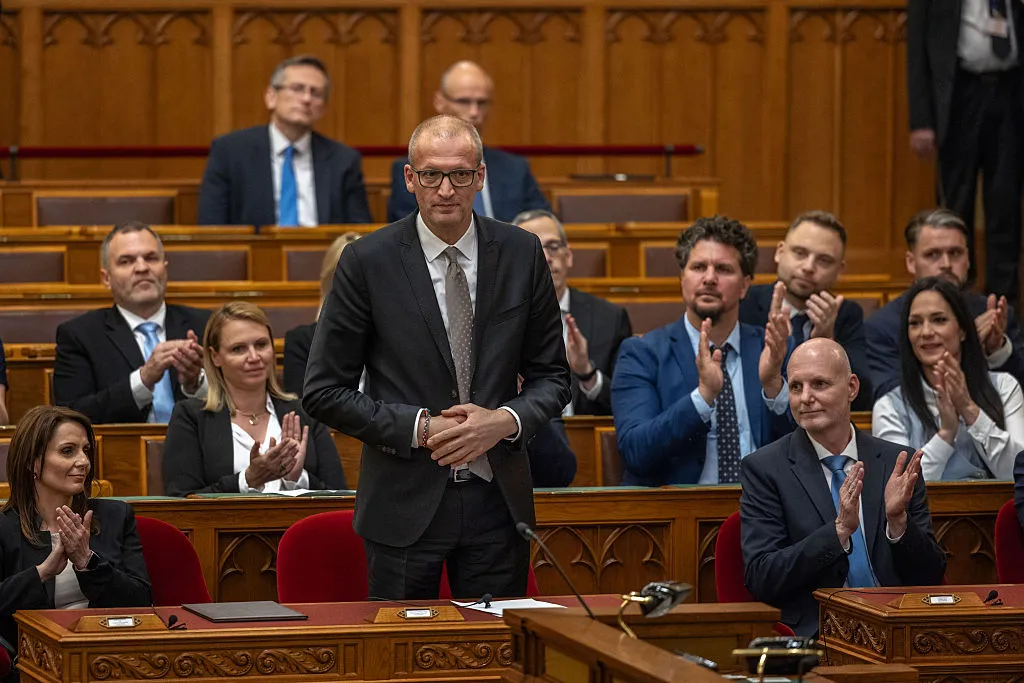
- Hungary’s new minister of culture, Zoltán Tarr, shares his vision for fostering freedom of expression in a liberated local art scene.
- The Trump administration is charging ahead with the building of a contested Triumphal Arch and a White House ballroom.
The Headlines
AN ABOUT-TURNER. Most will immediately recognize the famous and rare self-portrait of a young J.M.W. Turner, in which he appears to lock his steady gaze with the viewer. It hangs in Tate Britain and is printed on £20 notes. But a Turner expert now claims the Romantic artist never painted it, reports the Guardian. James Hamilton, who has written books and curated exhibitions about Turner, says the painting was misattributed when it was “lumped in” with all the artworks in the Turner Bequest to UK national museums, following his 1851 death. “But it was never, even on early lists, a ‘self-portrait.’ It was always a ‘portrait of Turner.’ Gradually, over the years, it became an assumption that it was by him,” said Hamilton. Instead, the expert believes that the gifted portraitist and Turner contemporary John Opie painted the 24-year-old artist in circa 1799. Not everyone agrees. Some believe there’s a good case that the artwork is not a self-portrait, but are less convinced Opie made it. Others maintain it bears the hallmarks of Turner’s own masterful hand. There’s another complicating factor: if the attributed self-portrait is in fact a portrait by someone else, the Tate may lose its legal claim on the artwork.
HOPE IN HUNGARY. Hungary’s new Minister of Culture, Zoltán Tarr, says he aims to restore freedom of expression and promote the Hungarian art scene, according to Artribune. Tarr was appointed to join the government of the newly elected Prime Minister Peter Magyar, who has promised pro-European, democratic changes to the country following the historic defeat of Viktor Orbán. “The outgoing government’s greatest sin was to knowingly kill dialogue. They deliberately wanted to create a vulnerable, unthinking society, and the country has become a desperate and unhappy place,” Tarr said, in reference to Orbán’s political grip on cultural institutions and its silencing of dissent. “We will free culture from the prison of politics so that it can once again be a vital force for our nation and the main driver of Hungary’s renewal,” Tarr added. “We will dismantle the web of favoritism and make cultural funding transparent and balanced, so that talent and quality, not political affiliation, determine results.”
The Digest
The Trump administration appeared to bypass a public bidding process by planning to begin work on a controversial Triumphal Arch using an existing, unrelated contract for services at the White House, over a mile away. Meanwhile, the building of a legally threatened White House ballroom has progressed aboveground. [The Washington Post]
Yesterday, a former Louvre employee was charged with crimes in connection with a ticket fraud scandal that cost the museum over 10 million euros, and has already led to charges against nine other people. [AFP and Le Monde]
A lost, miniature painting of the Saxon patriarch Friedrich III, by Lucas Cranach the Elder, not seen since World War II, has been returned to the State Art Collections of Dresden, Germany. [Artnet News]
Take a photographic tour of portraits of artists and creative misfits, such as Patti Smith and Robert Mapplethorpe, posing in their Chelsea Hotel apartments for photographer Albert Scopin between 1969 and 1971, and published in a book released in April by Kerber Verlag. [New York Magazine, Curbed]
With summer approaching fast, here’s a list of five art novels that you can start reading, even before hitting the beach. [Art in America]
The Kicker
MUST GO-YA. Spain is preparing for a vast bicentenary commemorating Francisco de Goya, and one must-see stop among the festivities is the newly restored San Antonio de la Florida neoclassical church in Madrid, where the artist is buried. There, surrounding his tomb, visitors will find walls covered in some of Goya’s finest frescoes, restored to their vivid, original pigment tones, along with the church interior and building structure itself, reports the Times of London. “People are going to see the real colors at last,” said lead architect for the restoration, Andrea San Valentin. The Goya frescoes depicting the miracle of Saint Anthony of Padua, painted in 1789, are a prime example of the artist’s revolutionary style. In these works, “he paints in such a loose and brilliant way that in some sense he is searching for impression,” said Angel Balao, a historian and restoration specialist working on the project. “From below, everything looks perfect, but close up, it is completely free.” However, the mausoleum remains incomplete: it is missing Goya’s skull, which vanished before his remains were repatriated to Madrid. That mystery endures.


