







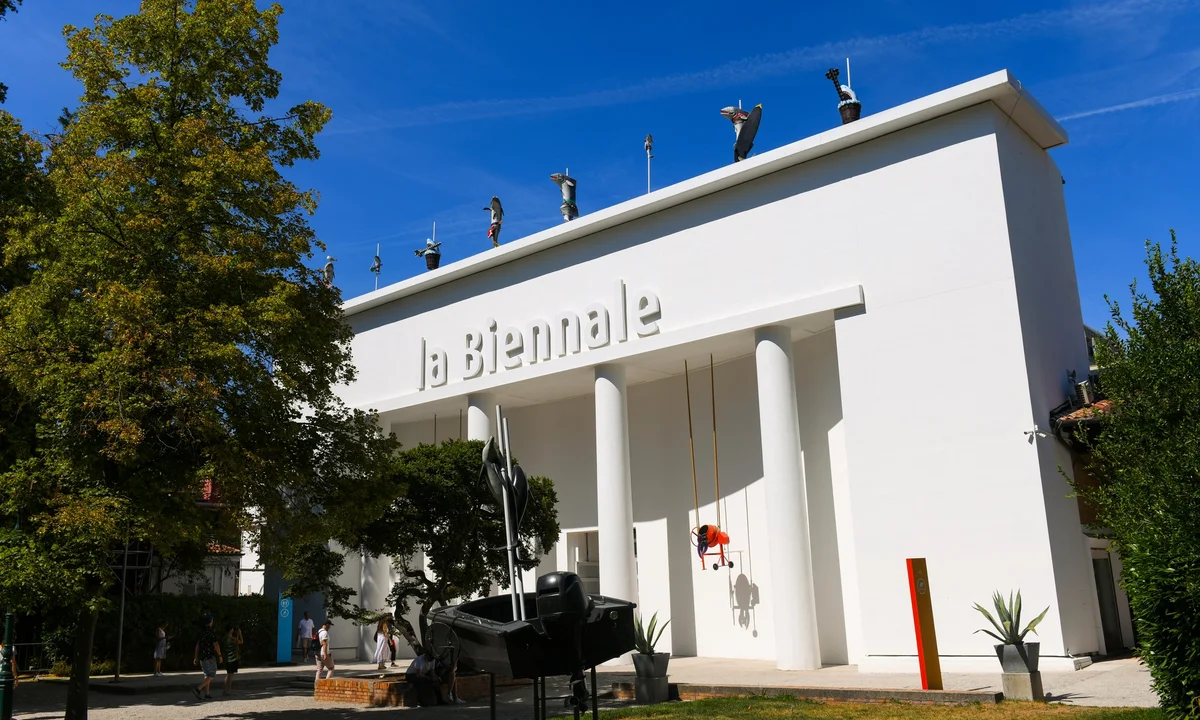
Iran has cancelled its participation in this year’s Venice Biennale just days before the opening on 9 May, the exhibition’s organisers announced on Monday (4 May) in a brief statement.
“With regard to the National Participations in the 61st International Art Exhibition, In Minor Keys by Koyo Kouoh (9 May – 22 November 2026), it has been announced that the Islamic Republic of Iran will not participate,” the statement said, without providing a reason.
Although Iran had been expected to take part, it had not announced any details about its selected artist or its pavilion, listing only Aydin Mahdizadeh Tehrani, the director general of visual arts at the ministry of culture and Islamic guidance (MCIG), as the commissioner.
The news that the country would not take part came as tensions rise in the Middle East, threatening a fragile ceasefire between the US and Iran that has been in place since 8 April. Both sides said they had attacked each other’s naval fleets on Monday—with each side denying the other’s claims—while President Donald Trump warned in an interview with Fox News that Iran will be “blown off the face of the earth” if it targeted US ships.
A person with extensive experience of Iran’s art world and knowledge of the country’s Biennale selection process, who asked to remain anonymous, tells The Art Newspaper they were not surprised at the cancellation, given the lack of an announced artist and the ongoing political and economic crisis. “Even the logistics of getting any artworks to Venice would have been extremely complicated with the current situation. There are no flights, no postage,” he says.
He adds that participation has typically been organised by the MCIG, often in collaboration with Tehran’s Museum of Contemporary Art. He describes Iran’s presence at the Biennale in recent years as largely low-key, with its recognised artists barely represented. “Iran’s participation in the Venice Biennale since 2015 has not really reflected what is happening in Iran or its independent art scene,” he says.
Iran made its debut at the Biennale in 1956, under the Pahlavi regime (1925-1975), but its attendance until the 1979 Islamic Revolution was sporadic. After decades of absence, Iran returned in 2003, with participation remaining intermittent until 2015, when it became more consistent.
The cancellation contributes to a chaotic build-up to the Biennale’s 61st edition. Last week, the Biennale’s entire five-person prize jury resigned amid an escalating dispute over the participation of Israel and Russia at this year’s event. The jury had said it would exclude artists from countries whose leaders are subject to arrest warrants for crimes against humanity—a decision that was understood to be aimed at Russia and Israel. In the absence of a jury, the two Golden Lion prizes, awarded for best national participation and best artist in the main exhibition, will now be decided via a popular vote, with the ceremony pushed back from May to November. Ticket holders who have visited both of the Biennale’s main venues, the Giardini and the Arsenale, will be eligible to vote.
The Art Newspaper has contacted the Venice Biennale and the MCIG for comment.


