







The UK government’s decision to end the Listed Places of Worship Grant Scheme has triggered fresh concern among heritage experts, who warn that irreplaceable works of art housed in churches across the country are now at risk.
For 25 years, the scheme allowed listed places of worship to reclaim value-added tax (VAT) on repair and maintenance work—effectively removing a 20% surcharge on conservation projects. Its quiet expiration means that churches undertaking restoration must now absorb those costs, often amounting to tens of thousands of pounds.
The policy change is having immediate consequences. Projects that were planned under the assumption of VAT relief are being reassessed, delayed or, in some cases, abandoned altogether. Campaigners say the policy shift risks undermining decades of conservation work and threatens the survival of fragile artworks embedded within historic buildings.
Claire Walker, the chief executive of the National Churches Trust, describes the impact as both sudden and far-reaching. “In ending the Listed Places of Worship Grant Scheme—which had been renewed by six successive prime ministers—21,000 churches in the UK have been subject to VAT costs overnight,” she tells The Art Newspaper.
Heritage at risk
The stakes extend beyond the buildings themselves. England’s churches collectively house one of the country’s most significant yet under-recognised collections of art and material culture. “Priceless wall paintings, stained glass, monuments, woodwork and carvings—centuries of history and unique craftsmanship—could be damaged beyond repair and lost forever, all because of this new tax,” Walker warns.
“The Government Review of the Listed Places of Worship Grant Scheme found that repairs were carried out two years faster and to a higher standard when churches could claim back all their VAT costs,” she says. “In ending the scheme, we now face the risk of delayed repairs, substandard materials or repairs not going ahead at all. This puts the buildings at risk—but also the important heritage inside.”
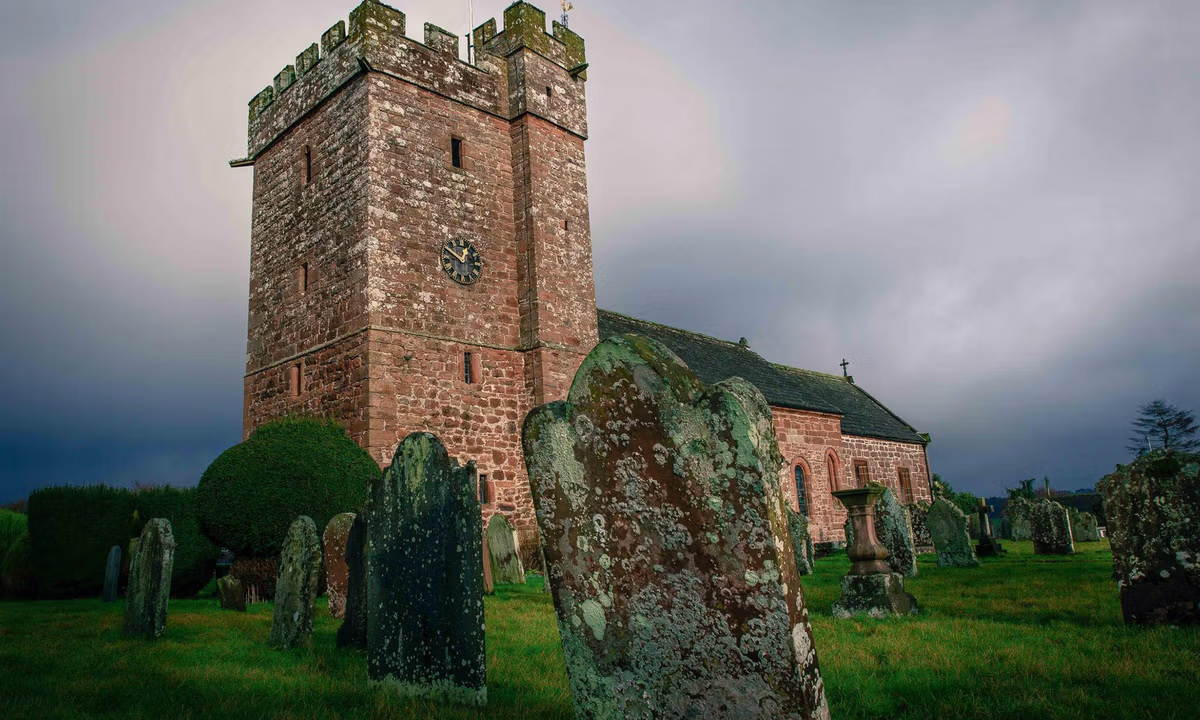
One immediate casualty may be the restoration of the Peel Tower at St Cuthbert’s Church in Cumbria, a Grade II*-listed structure considered among the best-preserved examples of its kind. The parish had recently embarked on a long-delayed project to repoint the tower, with estimated costs of around £95,000.
Phoebe Anna Traquair’s 1905 murals at St Peter’s Church, Nottinghamshire, are in urgent need of restoration
Photo: Martin Fowkes and Davina Gull
Peter Pickthall, the church warden, says the addition of VAT could push the project beyond reach. “If we now have to find £19,000 in VAT on top of this, that is likely to take the overall cost way out of our price range,” he says. “We are just a small rural parish church with a regular congregation of 15 people. The cost to the church, on top of an already huge cost for general maintenance, means that sadly this is probably a project that is going to have to be shelved yet again.”
St Peter’s Church in Retford, Nottinghamshire, is decorated with spectacular murals painted by Phoebe Anna Traquair, one of England’s first professional female artists. The murals, completed in 1905, adorn all four walls of the chancel but are suffering from damp and water ingress, which require urgent specialist restoration. The church is now facing the prospect of having to raise an extra £50,000 to complete the project. Church warden Sarah Elliott says it would be a “tragedy” if the murals are lost. “They are unique, and they should be saved for future generations, because there’s nothing like this in England. This is the largest piece of Traquair work,” she says.
Heritage organisations argue that the government’s decision creates an inconsistency in the way cultural assets are treated. While museums and galleries with free admission can reclaim VAT on repairs, churches—many of which also offer free access to historically significant interiors—will no longer benefit from similar support. “To make things fair across the board the government should ensure that listed places of worship across the UK can reclaim all VAT costs on repairs and maintenance of their buildings,” Walker says.
New scheme is inadequate
The policy shift comes despite longstanding recognition of the role churches play as custodians of national heritage, particularly in rural areas, where they often serve as the primary repository of local history and art. Many are maintained almost entirely by volunteers and small congregations, with limited access to alternative funding streams.
While both the Conservatives and Reform UK have pledged to reinstate the VAT scheme, the government has announced a new initiative, the Places of Worship Renewal Fund, with an annual budget of £23m a year for the next four years. But the budget for the previous scheme in 2024/25 was £42m and the new funding will be a drop in real terms, as it will not rise with inflation. The new fund will only apply to England, leaving buildings in Scotland, Wales and Northern Ireland out in the cold.
Historic England, which will be delivering the new scheme, says on its website: “Detailed guidance, including the remit of the fund and all eligibility criteria, is currently being prepared and will be published here in due course. This will include information on how to apply.” However, this will offer no help to churches now facing unexpected VAT bills nor the artwork contained within them.


