





Good Morning!
- Jessica Morgan has been named director of the Tate museum network.
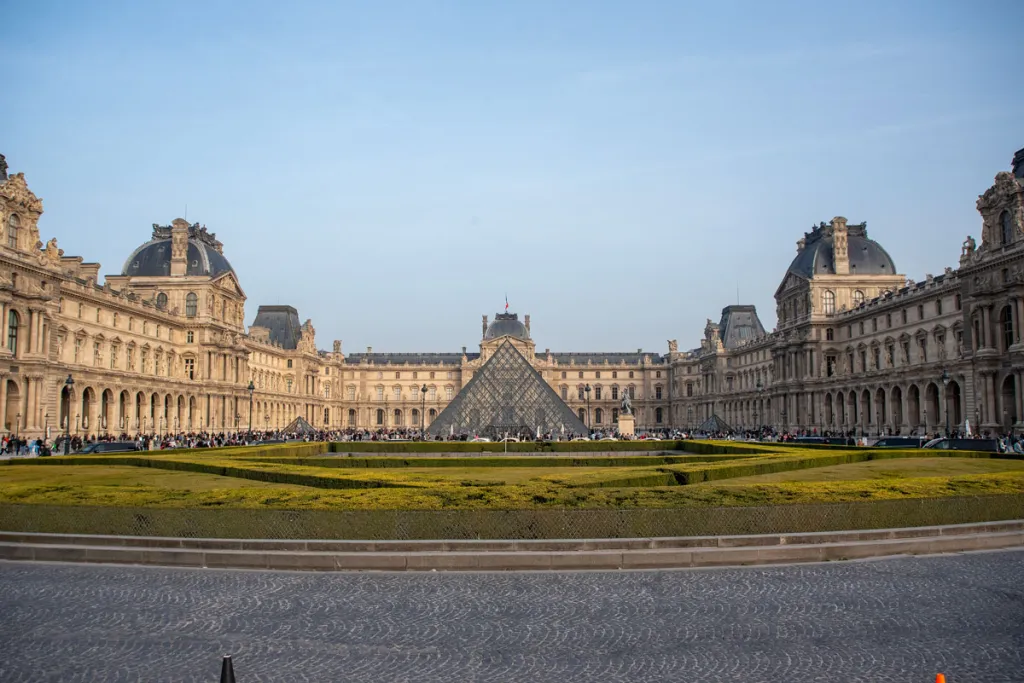
- The Louvre’s Apollo Gallery has reopened nine months after the infamous crown jewels heist exposed major security weaknesses.
- British artist Lucy Sparrow’s first US museum exhibition has transformed a 1980s supermarket into a felt-filled wonderland.
The Headlines
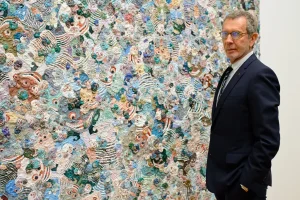
COMING HOME. After more than a decade building a more expansive and globally minded Dia Art Foundation, Jessica Morgan is returning to the institution that made her—this time as its top boss. Tate announced this morning that Morgan will become the network’s new director beginning January 1, 2027, succeeding Maria Balshaw, who stepped down at the end of 2025 amid mounting financial pressures. The appointment is a homecoming in the truest sense: Morgan served as a curator of international art at Tate Modern before taking the Dia helm in 2015, where she oversaw a marquee expansion in Chelsea, introduced free admission, and broadened the foundation’s historically narrow canon to include artists like Sam Gilliam, Senga Nengudi, and Tehching Hsieh. She now inherits a network under strain—Tate recently reported operating at a loss and saw 150 staff go on strike—but one that Tate chairman Roland Rudd says will benefit from her “visionary” stewardship.
DIAMONDS IN EXILE. The Louvre’s Apollo Gallery has reopened nine months after the infamous crown jewels heist exposed major security weaknesses at the world’s most-visited museum, Reuters reported. The stolen goods totaled $102 million and have not been recovered. Visitors can once again see the gallery’s lavish 17th-century interiors, but the jewels that weren’t nabbed will be exhibited elsewhere in the Paris museum in a more secure location, Louvre director Christophe Leribault said. During the smash-and-grab, the thieves used a movers’ lift to reach the gallery before escaping by scooter in under seven minutes. French officials described the reopening as a new beginning while pledging stronger security measures across the country’s museums.
The Digest
Recent major museum acquisitions include a rare Wassily Kandinsky titled Improvisation 21 heading to Liechtenstein’s Hilti Art Foundation and an Agnes Martin painting joining Canada’s Remai Modern. [The Art Newspaper]
British sculptor Ray Exworth spent decades hiding his unique sculptures inside locked Cornish sheds, but after his death, the artist’s mysterious private collection has finally been revealed. [The Guardian]
The annual “Secret 7” fundraising auction returns on August 18, with 700 artist-designed vinyl sleeves created for tracks by artists including John Lennon up for grabs. All proceeds will support War Child’s humanitarian work in conflict zones including Sudan, Yemen, and Ukraine. [FT]
British artist Lucy Sparrow’s first US museum exhibition has transformed a 1980s supermarket into a felt-filled wonderland, with more than 20,000 hand-stitched soft sculptures taking two years to create. [ARTnews]
The Kicker
As ARTnews’s Harrison Jacobs reported Wednesday, Christopher Nolan’s new film, The Odyssey, has sparked online debate over its historical accuracy, from anachronistic armor to the wrong kind of ship, but classicists argue the criticism misunderstands Homer’s epic tradition. Scholars say there was never one fixed version of the ancient world. The poem itself blended Bronze Age memories with the culture of later audiences, and every era has reimagined its heroes. Nolan’s gritty, desaturated vision may not recreate Mycenaean Greece exactly, but experts argue that adapting Homer has always meant reflecting the concerns of the present. The bigger question, they say, is what this version of antiquity reveals about our own moment.


