





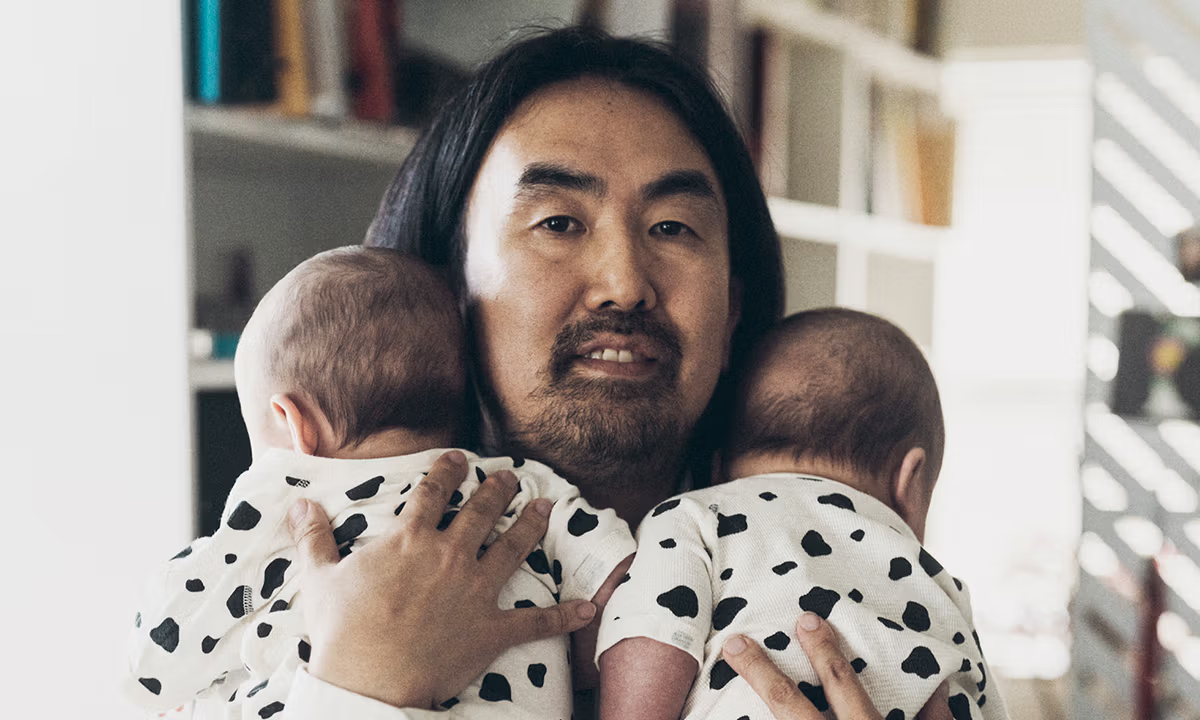
For Ei Arakawa-Nash, representing Japan carries particular significance. Born in Fukushima Prefecture but now working internationally and no longer holding Japanese citizenship, the artist occupies a position rarely foregrounded at the pavilion. “The Japan Pavilion hasn’t really addressed diaspora before,” the artist says. “So I feel a responsibility to represent minority voices.”
The project also emerges from personal experience. In 2024, Arakawa-Nash and their partner became parents to twins through surrogacy, shaping the exhibition’s central focus on care. More than 100 baby dolls will populate the pavilion, inviting visitors to adopt and carry them through the space.
“Care is a social and political structure,” Arakawa-Nash says. “It is labour, and often it is carried out by women, people of colour, or both. I’m hoping to create a platform where people can engage with care collectively.”
Intimate acts of care
Each doll weighs roughly the same as a newborn baby, emphasising the physical dimension of caregiving. Participants who carry the dolls encounter a series of interactions—including changing a nappy—through which they receive a short “oracular” poem generated from the doll’s assigned birthday. Each birthday corresponds to a historically significant date linked to minority communities in and beyond Japan. In this way, intimate acts of care are connected to broader historical narratives.
The work also builds on the artist’s longstanding engagement with performance traditions that question institutional frameworks. Arakawa-Nash cites precedents including Yayoi Kusama’s Narcissus Garden (1966), Rei Naito’s One Place on the Earth (1997) and Arata Isozaki’s architecture exhibition in Venice in 1996. “Those projects were important references,” the artist says, noting how they used the pavilion to explore participation and collective experience.
Blurring boundaries
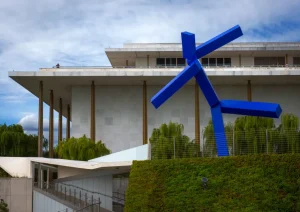
In Grass Babies, Moon Babies, architecture also becomes part of the work. Rather than treating the pavilion as a closed container, Arakawa-Nash extends the project into the surrounding garden and beyond. “My baby dolls will expand beyond the idea of an institution as a simple box,” they say. The title refers to the relationship between the pavilion’s architecture and its garden: “grass” symbolises the outdoor landscape, while “moon” evokes time and emotion. Arakawa-Nash describes the work as emphasising the “circulation” between the building and garden—an idea embedded in architect Takamasa Yoshizaka’s original design.
Beyond the exhibition, the project extends through artist-led crowdfunding, collaborations with designers and writers, and community partnerships in Venice. It will also include a collaboration with the Korean Pavilion—marking the first such partnership between the two national pavilions in the Biennale’s history.
Polyphony
For the exhibition’s curators, Lisa Horikawa and Mizuki Takahashi, the project’s collaborative nature is central. They emphasise how Arakawa-Nash’s practice brings together multiple voices and perspectives. In developing the pavilion, they drew on Yoshizaka’s architectural philosophy of “DISCONT”, which imagines a collective whole shaped by individual agency. “Ei’s practice is inherently collaborative,” the curators say. “The polyphony that emerges from this process—together with a strong awareness of history and histories—can form a resilient and collectively grounded response to contemporary political pressures.”
The work emerges against a complex political backdrop. Japan is relatively conservative regarding LGBTQ+ rights, with same-sex marriage still not legally recognised, and conservative political forces have gained renewed influence in recent years. Within this context, questions around identity, belonging and social norms have become more pronounced. “As a queer parent, my work becomes radicalised in the context of the Japan Pavilion,” Arakawa-Nash says.
Comparing Japan with neighbouring countries, the artist notes that “if you
look at Taiwan or Thailand, they are much more advanced when it comes to queer rights”. They add: “I do feel frustrated. But that frustration became part of the motivation to create this installation—to think about nurturing a new generation and a different future.”


