







The Museum of Modern Art (MoMA) will present “Freedom and Futures: Emancipatory Art in Africa, 1956–1982,” an exhibition tracing the history of modern art during Africa’s independence era, on view May 2–August 14, 2027. The show brings together roughly 250 objects from collections around the world, including some 40 works from MoMA’s own holdings. The show is organized by curator Ugochukwu-Smooth C. Nzewi with former curatorial associate Erica DiBenedetto.
The exhibition proposes “emancipatory art” as a framework for understanding how artists across the continent gave aesthetic form to decolonization. The show describes these works as a form of “emancipatory modernism.” It is organized around two foundational Pan-African gatherings held in Europe— the First Congress of Black Writers and Artists (Paris, 1956) and the Second Congress of Black Writers and Artists (Rome, 1959). These seminal gatherings were followed by five subsequent festivals held in Zimbabwe, Senegal, Algeria, Nigeria, and Botswana between 1962 and 1982. Works from each of these festivals will appear sequentially across six thematic sections spanning painting, sculpture, photography, film, tapestry, and printmaking.
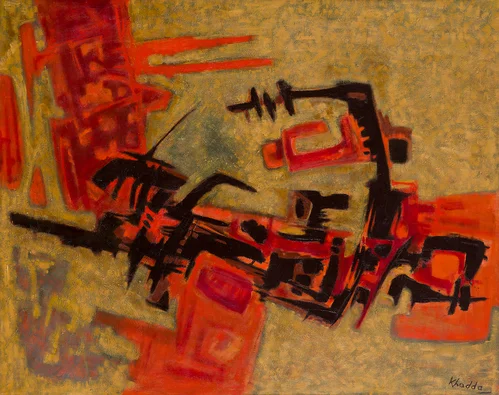
Highlights from the show include the Algerian artist Mohammed Khadda’s Africa Before One (1963), which draws on Tassili cave petroglyphs and Amazigh and Arabic scripts; Nigerian artist Uche Okeke’s Women Riot (1965), depicting the 1929 women’s tax revolt in eastern Nigeria; Mozambican artist Valente Malangatana’s surrealist Cry of Freedom (1973), made during the final years of Portuguese colonial rule; and Senegalese artist Iba N'Diaye’s Juan de Pareja Menaced by Dogs (1982), which reworks a 1650 Diego Velázquez’ portrait into a statement on neocolonialism.
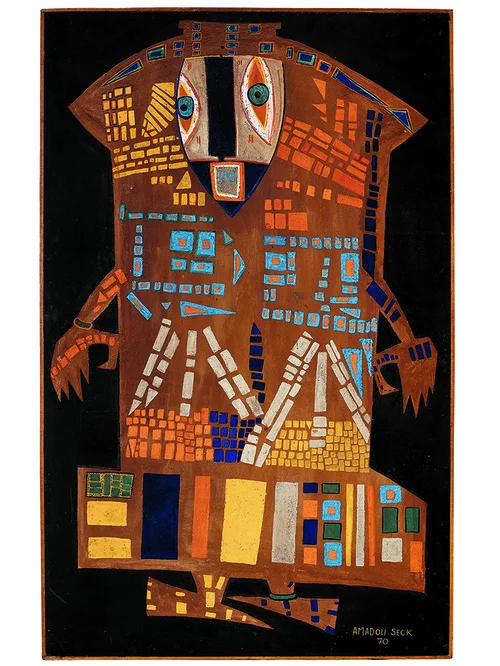

Ahead of the exhibition, MoMA made several significant acquisitions, including works by Khadda, Malangatana, Okeke, Mahjoub Ben Bella, Gavin Jantjes, Gazbia Sirry, and Ibrahim El Salahi. Nzewi sees these acquisitions in the lineage of the museum’s founding director Alfred H. Barr Jr.'s 1960 acquisition of Tanzanian artist Sam Joseph Ntiro's painting Men Taking Banana Beer to Bride by Night (1956), one of the first acquisitions of a modern work by an African-born artist by a major Western institution, made the same year 17 African nations gained independence.
“Freedom and Futures” caps a three-part series on mid-century Africa at MoMA, growing out of the museum’s Contemporary and Modern Art Perspectives (C-MAP) Africa research group, which Nzewi leads. It follows “Ideas of Africa: Portraiture and Political” (on view December 2025–July 2026), which examined Pan-African photographic portraiture drawn largely from collector Jean Pigozzi’s 2019 gift to the museum, and “Architects of Liberation.” Modernism in Western”(on view July 2026–January 2027), which surveyed independence-era architecture across seven West African nations.


