





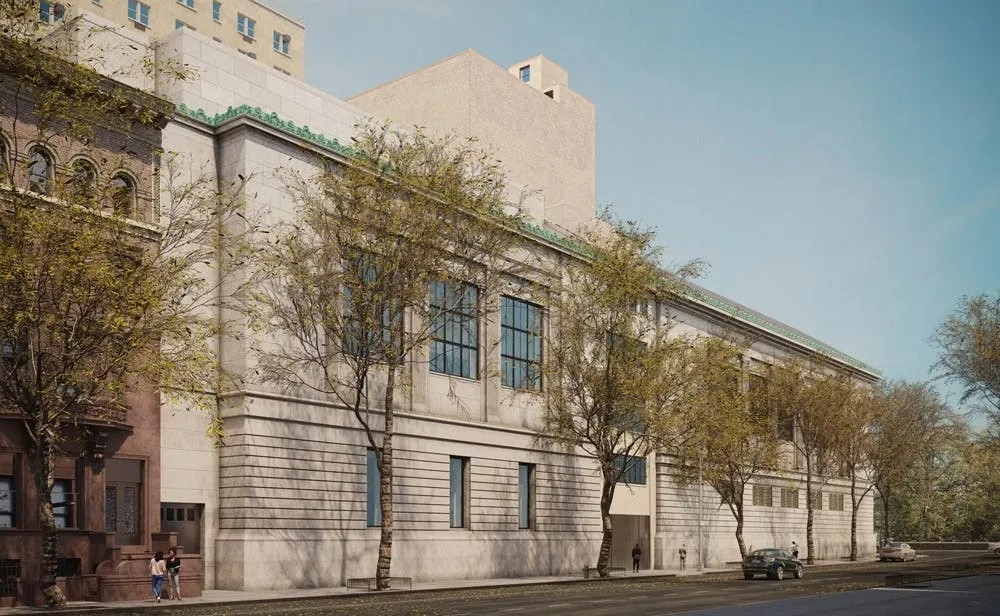
Less than two months after opening its $175 million Tang Wing for American Democracy, the New York Historical has replaced 17 objects in its inaugural exhibition with reproductions. Another three objects have been removed entirely.
The problem is natural light, reportedly. The new wing’s main exhibition gallery has large windows that flood the space with sunlight, but some of the objects selected for “Democracy Matters,” which opened June 18, are light-sensitive and could be damaged by overexposure, according to the New York Times. Museum officials initially lowered blackout shades over the windows, which solved the conservation problem but created another one. Louise Mirrer, the museum’s director, felt the shades compromised architect Robert A.M. Stern’s vision for the space and ordered them raised again.
“I felt it was disrespectful of the architect’s final museum project,” Mirrer told the Times. “We had to find a means that could accommodate both the architecture and the exhibition narrative — which we did.”
The solution was to swap out the vulnerable objects. Seventeen were replaced with reproductions or facsimiles, while three were taken off view.
Some swaps were easier to spot than others. Reproductions of Norman Rockwell’s 1943 “Buy War Bonds” posters look remarkably similar to the originals, according to the Times, while the late Betye Saar’s Extreme Times Call for Extreme Heroines presented more of a problem.
The three-dimensional assemblage, made from a clock, washboard, and figure, was replaced with a digital photograph. After the Times began asking questions about the reproductions, the museum decided to remove the photograph as well, saying it did not adequately represent Saar’s work.
Also dissapeared was the hand-lettered gown that former New York congresswoman Carolyn Maloney wore to the 2021 Met Gala to call for passage of the Equal Rights Amendment. A mannequin covered in crocheted pink camouflage by the artist Olek, commemorating the 2017 Women’s March, was taken down too.
The last-minute changes have frustrated some former museum staffers, who say the potential conflict between the windows and the exhibition was known well before the show opened.
Gerhard Schlanzky, who worked at the New York Historical for 19 years before stepping down as creative director and director of exhibitions last month, said the assumption during planning was that the windows would be covered.
“The dialogue was always that if we were going to do an exhibition in that space, the windows had to be covered,” Schlanzky told the Times. “We never would have proposed light-sensitive objects if we knew the shades would be up.”
Mirrer said that she hadn’t paid enough attention to the light issue beforehand. She said she had been occupied with fundraising for the $175 million expansion and was focused on realizing Stern’s vision of a “soaring, sweeping space that would invite the city in.”
The show’s curator, Wendy Nalani E. Ikemoto, also distanced herself from the decision. Ikemoto, who left the museum last month, said she had “no involvement in or advance knowledge of” the choice to raise the shades and replace the vulnerable objects. She added that she had documentation showing the decision was made after her departure.
The episode leaves the museum with an awkward trade-off: preserve the objects, preserve the architecture, or find a way to do both. For Schlanzky, at least, reproductions aren’t much of a solution.
“You come to see real things,” he said. “Otherwise people might just view them on their devices at home.”


