






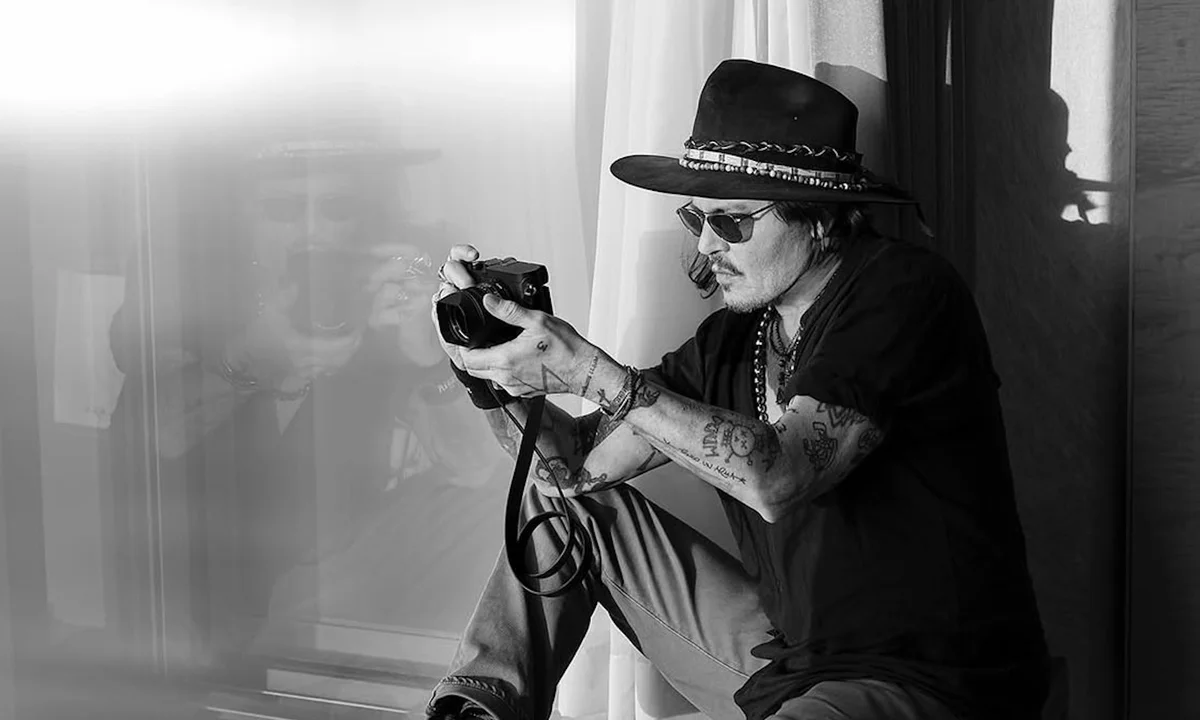
You may have seen a post in your social media feed this summer from an artist you know, probably one not represented by a gallery, asking for you to vote for them to be named “The People’s Artist”. Or perhaps you saw the video starring actor Johnny Depp, inviting artists to join the competition for a chance to win $25,000, appear in Artforum magazine, and have their work displayed by The Art of Elysium, a Los Angeles-based charity that provides art and design opportunities to people in need. You may have even seen the online backlash against the contest and Colossal, the company that runs it and other online competitions, with a number of artists withdrawing their involvement. So what is the story behind The People’s Artist?
Colossal Management was founded in Arizona in 2022, but its business model first started in 2015. That was when its chief executive Mary Hagen, then working at Jetset magazine, helped run a competition to select a “Miss Jetset” cover model. By 2017, she was also involved in a “Favorite Chef” contest and Jetset’s founder, Darrin Austin, soon created a separate company, Crow Vote, to run the competitions, which by 2021 included ”America’s Favorite Pet”, “The Greatest Baker” and “Mr & Ms Health & Fitness”. Each campaign features a celebrity spokesperson, a cash prize for the winner and the promise of a profile-boosting magazine feature or other promotional opportunity.
The format pits contestants against each other based on “votes” they receive from the public, through multiple rounds that whittle tens or hundreds of thousands of contestants down to fewer than 20 finalists. Supporters can place one free vote daily, by logging in using their Facebook accounts, and additional votes can be purchased at $1 per vote, although votes reset to zero at the start of each round. A percentage of the contest proceeds are donated to a major charity, such as the James Beard Foundation, the National Breast Cancer Foundation and the Andrew McDonough B+ Foundation. However, unlike traditional juried competitions, a contestant’s talents are only assessed based on the images and videos they post online when asking for votes. As the number of contests has grown, so has scrutiny of them, with critics comparing them to popularity contests or worse. In 2021, a class action lawsuit filed in a California district court by the family members of a contestant for “Favorite Chef” alleged the contest amounted to an illegal lottery. The judge dismissed the case.

When Colossal was created in 2022, one key change was made. Instead of operating as a standard business, Colossal is registered as a professional fundraiser, which allows it to receive a cut of the donations for its efforts in organising and running the campaigns. And instead of giving directly to the big-name charities that are cited in the contests as the final beneficiaries, Colossal works with two smaller non-profits that collect the competition proceeds and distribute a lump donation to the larger charities as grants.
These smaller non-profits are the Pennsylvania-based DTCare, established in 2019 by Marco Gruelle, a businessman who runs a freight company that has worked with the US Department of Defense, and the Arizona-based Action Initiative Team (AIT), created in 2024 by Elmer and Andrew Brown, who are father and son. Gruelle has recently worked with Ukrainian authorities to provide aid and weapons to the country in its war with Russia, including a controversial shipment of unclaimed firearms from Arizona in 2023. Andrew Brown was also listed as a director of DTCare for several years.
Before it started working with Colossal, DTCare’s operations were modest, according to its 990 tax filings, with its revenue and expenses running under $500,000. In 2022, the first year it started managing donations from Colossal’s campaigns, it took in over $18m through four competitions. The grants it issued to benefitting charities that year totalled around $11m—around 60% of the proceeds—and DTCare paid Colossal more than $5m. The following year, it handled more than $48m through ten competitions, and distributed more than $27m to charities, or around 57%, paying Colossal nearly $13m. In 2024, it pulled in more than $129m through 12 competitions, sending more than $67m to charities, or around 52%, and paying Colossal nearly $46m. And while its 990 tax filings are not yet available for 2025, according to the California Attorney General’s office, which oversees charities and professional fundraisers operating in the state, last year DTCare had more than $201m in revenue made from 17 competitions and sent $107m to charities, or 53%. AIT’s tax filings are not yet available, but it has been involved in several competitions already, including The People’s Artist, “Super Mom” and “America’s Favorite Couple”.
The donations that charities receive through Colossal competitions are substantial, although the overall percentage going to non-profits has dropped over the years while the number of contests and revenue has risen. They are still around the average found in the New York Attorney General’s 2025 Pennies for Charity report, which analyses the work of professional fundraisers. Excluding contributions made through donor advised funds, which are run by major investment firms like Morgan Stanley as a direct tax write-off for wealthy clients, 54% of the revenue made with the help of professional fundraisers last year went to charities. When taking donor advised funds into account, the average percentage going to charities rises to 75%. “We don’t have to give 50%, but we do,” Hagen recently told CBS News.
For The Art of Elysium, the money raised through The People’s Artist competition could be transformational. By the end of its two-month run, more than $6.8m was raised for the charity—which if the percentages remain consistent, means around $13m was donated through voting. Its half of the proceeds is still more revenue than the charity has raised in a single year for the past decade, according to tax filings, and will easily erase the deficit it has operated under since the 2020 pandemic.
“When Colossal came to us with this opportunity, we felt it was too good to be true,” the charity’s founder Jennifer Howell wrote in an email to The Art Newspaper. “It turned out, they were an answer to our prayers.” She adds that she “would be honoured” to work with Colossal again, and that through their competitive model, “they are raising more money for non-profits than any other platform I am aware of”.
Artist Gregory Bedford, the winner of The People’s Artist Photo courtesy Colossal
The winner of The People’s Artist contest is Gregory Bedford, a mixed-media artist who also runs an auto-body shop in Mountain View, California and has acted in theatre and films. According to the press release announcing his success, “every weekend for eight consecutive weeks, he created new videos and social media content to engage supporters and build community around his work”. In one post, Bedford urged his followers to donate $25 to keep him in first place. His work is due to go on view at The Art of Elysium’s Salon space, on the eighth floor of the Talmadge Apartment building in Los Angeles. According to Artforum’s editors, Bedford’s appearance in the magazine will be a paid advertisement, “which does not involve the editorial team in any way”. The advertisement may also include at least one of the runners-up, the painter Helen Curran, who posted on social media that she was “being flown out to LA next month to celebrate and be featured in Artforum magazine”.
Even with the changes to their structure, the controversy over these competitions lingers. Colossal has posted several videos explaining why its campaigns are not a scam and, perhaps more confusingly, not a “contest or raffle”. The company has also sent a cease and desist letter to at least one contestant who criticised its operations. When asked for comment, a spokesperson for Colossal shared a recent report published by CBS News saying that “people who had concerns failed to read the rules (which is required to compete)”.

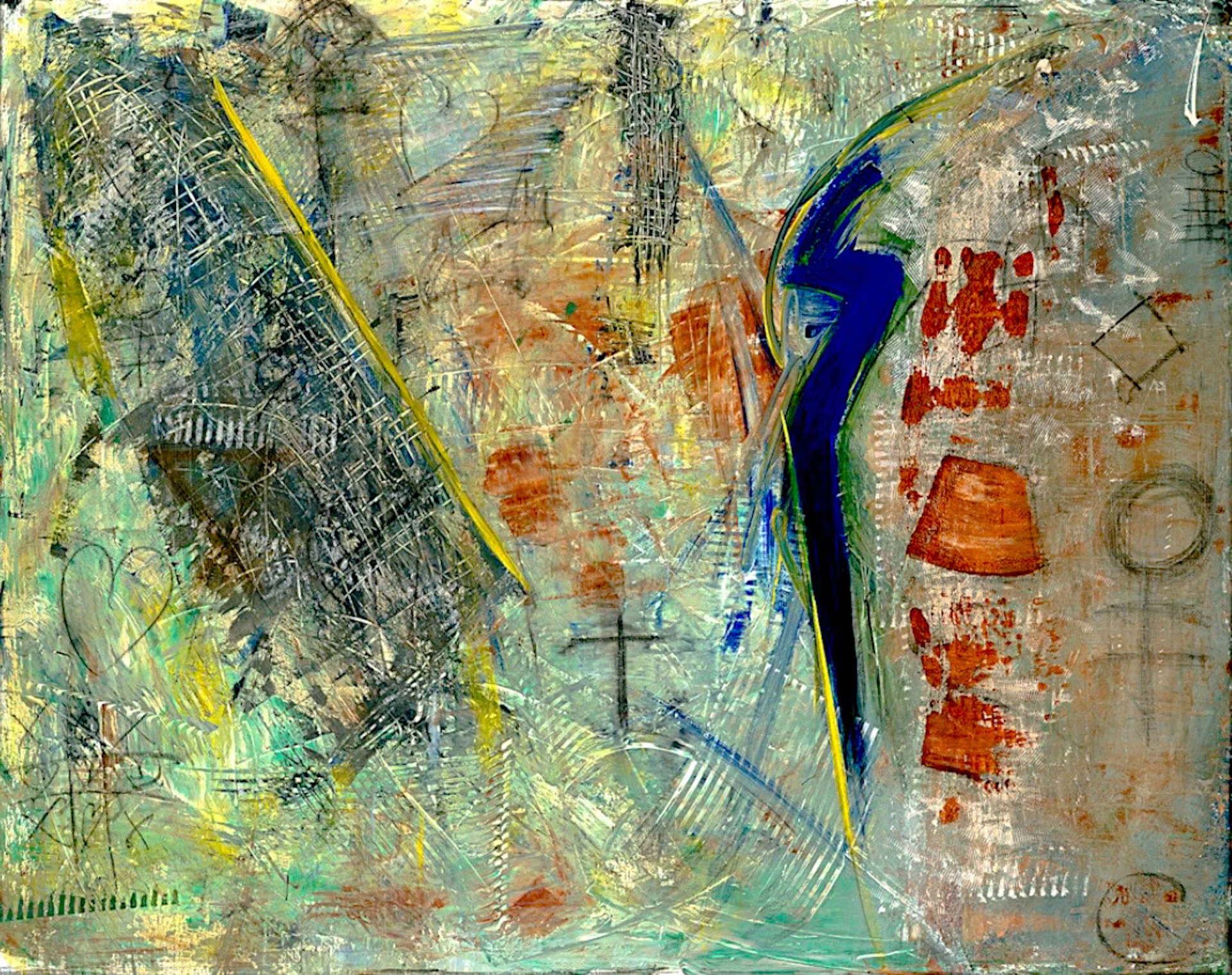
Gregory Bedford, Shaman Spirit Courtesy the artist
The fact that there is no jury of experts deciding the winner of The People’s Artist, as with most art competitions, is a boon according to Colossal’s chief executive, Mary Hagen. “One of the coolest things about this competition and the way that Colossal operates is that our champions are chosen through public voting,” she says in a video posted on the contest’s Instagram page, around the time the backlash started growing. “That means no stuffy judging panel, and no one is subjectively deciding that someone’s work is better than the others.”
In the end, as with any transaction involving money, the best advice is a twist on the old Latin adage: caveat donator. Or, as the New York Attorney General’s report warns: “Be cautious and do your homework to ensure that your donations are going where you want. There are not only scams, phishing, and other fraudulent practices but also fees taken by fundraising platforms may be completely legitimate but still take part of your hard-earned donation.”


