






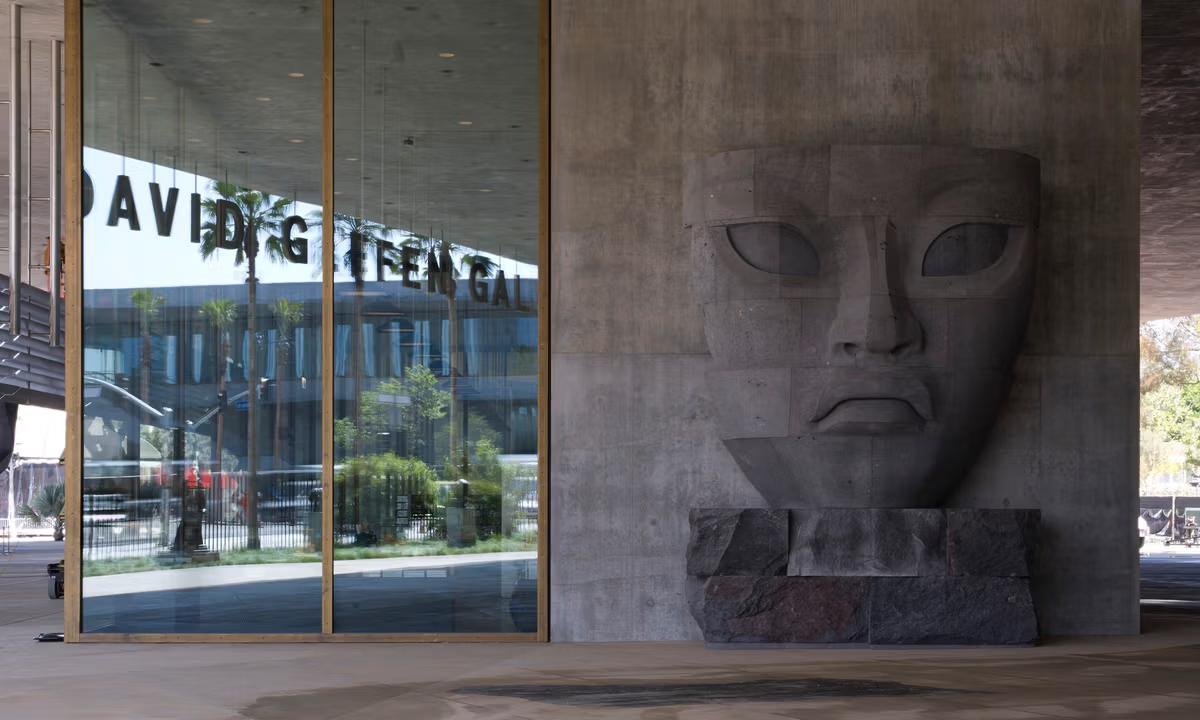
The Mexican artist Pedro Reyes recently unveiled Tlali (2026), a four-metre-tall Olmec-inspired volcanic-stone sculpture of a female face, installed on the exterior of the new David Geffen Galleries building at the Los Angeles County Museum of Art (Lacma). But the work, now part of the museum’s permanent collection, has drawn backlash in Mexico. An open letter addressed to Lacma and signed by nearly 80 cultural figures, claims that it is a new version of a piece that was scrapped in 2021 from a project to replace the 1877 statue of Christopher Columbus on Mexico City’s Paseo de la Reforma.
“In art, memory is one of the most valuable assets, and it is striking that its absence would lead a respected museum to include, in its new building, a work that in another country was the subject of well-founded condemnation,” reads the 23 April letter published by the Spanish-language art criticism site Cubo Blanco.
The preceding project, Tlalli (Nahuatl for “Earth”), is tied to debates in Mexico over public monuments. In 2021, authorities decided not to reinstall the Columbus monument—a symbol of colonisation—and announced that it would be replaced with an Olmec-inspired sculpture by Reyes representing Indigenous women. But opposition from more than 300 cultural figures and collectives led to the project’s cancelation.
“It is inadmissible to appoint Reyes, a male artist who does not identify as Indigenous, to represent ‘the Indigenous woman’,” a 2021 petition against his commission reads in part, adding that such a monument would negate “the diversity of Indigenous women” and “reproduces the silencing and invisibilisation of women’s struggles and their Indigenous communities”.
Critics of the new work allege that the Lacma commission is guilty of many of the same missteps as the 2021 commission for Mexico City. “Rather than repairing a historical rupture, the proposal sought to place on a pedestal a vagueness typical of 19th-century national statuary, with neo-indigenist overtones,” reads the 23 April letter. It also notes the removal of an “l” from the title to “appeal to anglophones” and the use of a Nahuatl word for an Olmec-inspired work. After the previous project’s cancellation, Reyes told Hyperallergic he supported the open call that followed.
Ultimately, in 2022, feminist activists transformed the former site of the Columbus statue into the Glorieta de las Mujeres que Luchan (Roundabout of the Women Who Fight), an “anti-monument”—featuring a figure of a girl with a raised fist—against gender violence in a country with alarming femicide rates. Authorities have repeatedly threatened to remove it without success.
Signatories of the 23 April object to Reyes’s new commission on many of the same grounds that ultimately led to the project’s cancellation in 2021. “The context and possible interpretations may differ, but this commission is the same one denounced in Mexico for Indigenous stereotypes and perpetuating colonialism,” María Minera, an art critic and signatory of both the 23 April letter and the 2021 petition, tells The Art Newspaper. “Most concerning is that its original site has become a symbol of feminist vindication: relocating this folklorising figure disrespects that struggle and the lives lost.” She adds: “Dialogue is part of art, but Reyes’s sculpture is a decorative gesture from a past era: nationalistic proposals are obsolete.”
Other issues with the Lacma commission have also been raised. “I find it deeply disappointing when a major museum renovation does not consider critical museology and how museums shape social identity, heritage and knowledge through power dynamics,” says Karen Cordero Reiman, art historian and curator who signed the recent letter. “It would have been important to consider the piece’s social and political context and its problematic role in narratives about the representation of women and Indigenous cultures through public sculpture.”
In a statement to The Art Newspaper, a Lacma spokesperson describes the workas “entirely different in purpose and meaning” from the work proposed for Mexico City in 2021, noting that it offers the reimagined sculpture “a new location, context and opportunity for discussion”. The spokesperson adds that the face’s features were reshaped, “emphasising the fragmentary qualities of the face and lava blocks”.
“Poignant, androgynous, fragmentary and mask-like, the work echoes ancient American fragments in our collection, particularly avian and jaguar motifs characterising Olmec masks,” Michael Govan, Lacma’s chief executive and director, said in a statement. He also emphasised the added that the commission’s visible armature was central to discussions with the artist: “Museums are a kind of armature for history, as the past must be interpreted carefully and thoughtfully in a museum.”
Reyes did not respond to requests for comment through his galleries.


