






A new painting by Renaissance master Gian Lorenzo Bernini has been discovered and will be unveiled in December at Vienna’s Kunsthistorisches Museum, according to The Art Newspaper.
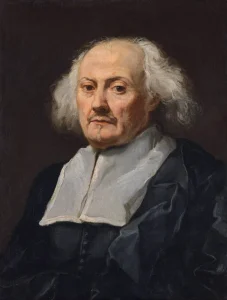
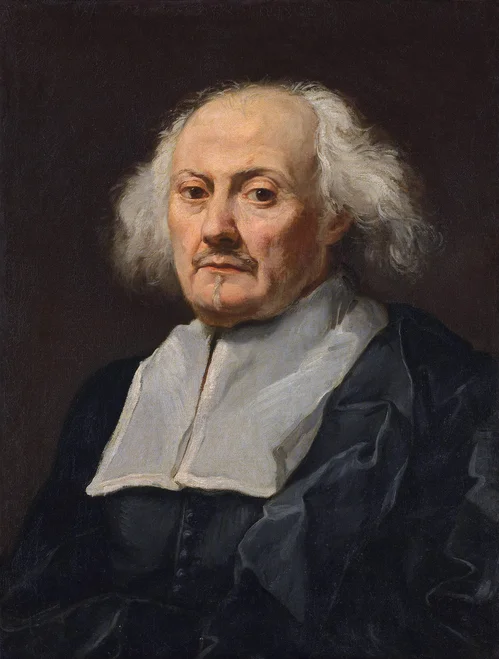
The painting, titled Portrait of an Old Man, a nearly life-size depiction of an elderly man with disheveled white hair and an intense, direct gaze, had been attributed to an anonymous 17th-century Roman artist and was moved into storage in 1989 for lack of a firm attribution. Bernini, primarily known as a sculptor and architect, never signed his paintings, and fewer than 20 are widely accepted as authentic.
The portrait entered the museum‘s collection in 1920 as a work attributed to Philippe de Champaigne, bequeathed by Viennese collector Richard Lieben, who had purchased it in 1900; nothing is known of its earlier provenance. Over the following century it was reattributed multiple times, to an anonymous Italian painter, to the French artists de Champaigne or Jean Jouvenet, to the Flemish artists Jacob Ferdinand Voet or Erasmus Quellinus the Younger, and more recently to Bernini‘s collaborator Baciccio.
Kunsthistorisches Museum curator Gudrun Swoboda now argues the work is Bernini‘s, dating it to around 1670 based on the sitter‘s clothing, collar, and hairstyle, which reflect Roman fashions of the period.
She points to the painting‘s sense of space and anatomical precision, along with parallels to Bernini‘s bust of Louis XIV, particularly around the mouth. Swoboda describes the paint handling in the face as sculptural, “building up and modelling a face in clay” with short, bristled brushstrokes, and sees further stylistic echoes in a Bernini self-portrait drawing in the U.K.’s Royal Collection dated 1675–80.
She believes the finely painted head and collar are Bernini’s work, while the more weakly rendered black garment and shoulder were completed by another hand, possibly one of his sons—a division a recent scientific examination has corroborated. Swoboda speculates the sitter may be Mario Chigi, a brother of Pope Alexander VII and Bernini’s most important late patron.
The attribution is contentious in part because Bernini is generally thought to have stopped painting around 1650, two decades before the Vienna work’s proposed date. Of the roughly 16 paintings currently accepted as his, only one dates from after 1640. If confirmed, the new attribution would substantially revise the timeline of Bernini‘s painting career.
Portrait of an Old Man will anchor “Bernini: Painter and Sculptor” at Vienna‘s Palais Lobkowitz, running December 2nd through April 4th, 2027, alongside loans including the Uffizi’s Bernini self-portrait and the Royal Collection drawing.


