






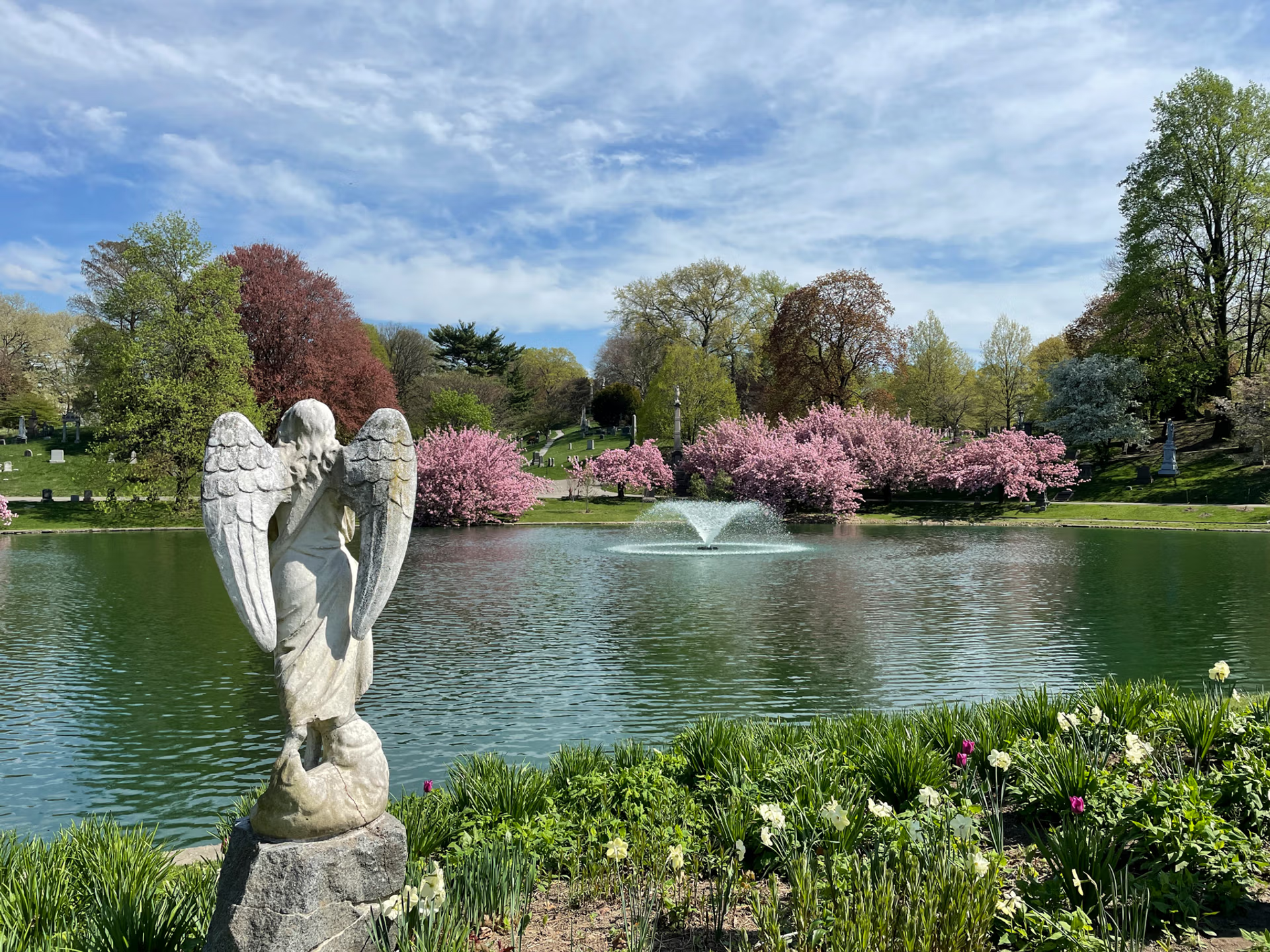
When Brooklyn’s Green-Wood Cemetery opened in 1838, it was one of the first in what is known as the American rural cemetery movement, emerging at a time when cities were growing and their burial grounds had become overcrowded. These new sprawling landscapes allowed the living to remember the dead amid nature and statuary. Established before major civic projects like Central Park and the Metropolitan Museum of Art, Green-Wood became a popular place to escape the bustle of the city on the rolling hills overlooking New York Harbor.
Nearly 190 years later, the city has grown around Green-Wood, with businesses and apartment buildings bordering it on all sides. Its 478 acres still serve as an urban escape; although burials continue, many people come just to walk, birdwatch or even see a concert or film. Now, a new welcome and education centre is extending the cemetery into the neighbourhood.
“Having a part of Green-Wood outside of our gates meets people in the community where they are,” says Meera Joshi, the cemetery’s president. “And it allows them to feel more comfortable and learn to love Green-Wood the way so many of us who wander these paths already do.”
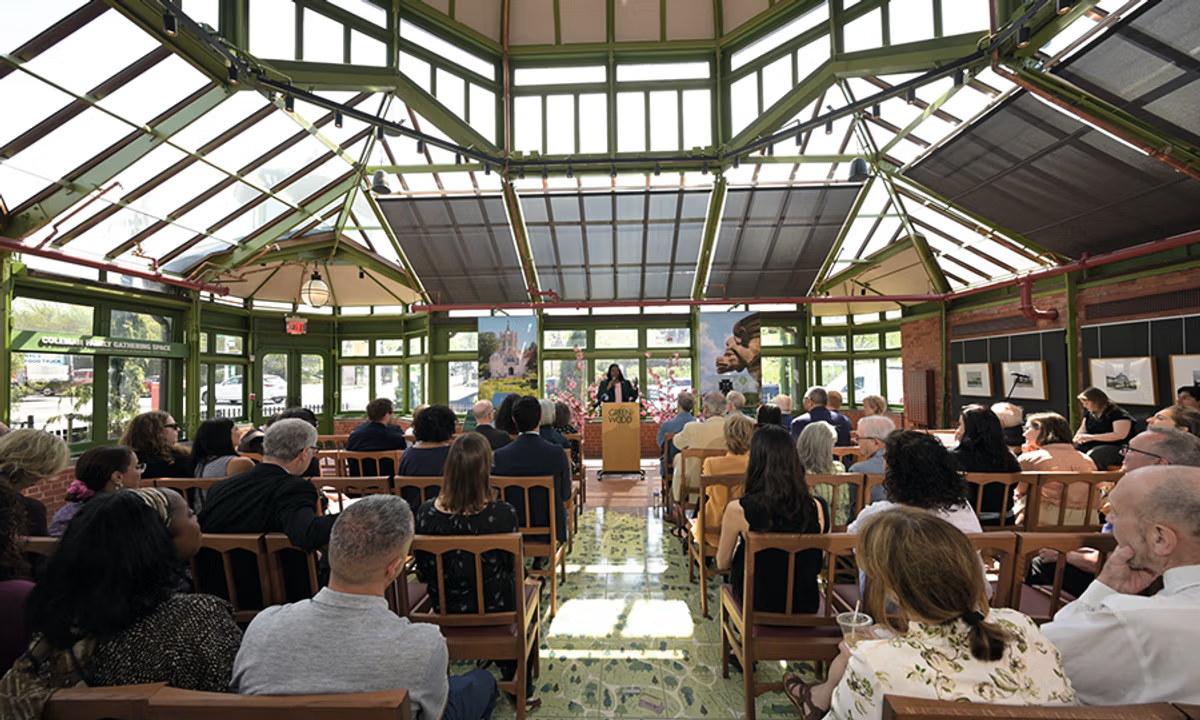
The Green-House, as the new centre is called, is located across the street from the cemetery’s main entrance and has its public opening this weekend (18 and 19 April). Its focal point is a restored cast-iron and glass structure, the city’s only surviving Victorian commercial greenhouse. Built in 1895, it was formerly the Weir Greenhouse (its historic wire screen sign still tops its copper-clad dome). Both the greenhouse and Green-Wood Cemetery are listed on the National Register of Historic Places—the former since 1984 and the latter since 1997.
Green-Wood Cemetery’s new Green-House welcome centre Photo: Maike Schulz, courtesy of Green-Wood Cemetery
A sense of arrival
Green-Wood acquired the landmarked greenhouse from McGovern Florists in 2012 for $1.6m. At the time, it was in a deteriorated condition, with damage to the glass and its wooden frames rotting. While restoration progressed over the years, breaking ground for the new centre that wraps around it in an L shape did not take place until 2023. Where once mourners stopped in to buy flowers on their way to visit graves, visitors can now orient themselves with the new tile map of the cemetery covering the greenhouse’s floor.
“Something that Green-Wood and many cemeteries experience is that there is a natural human fear or tendency to avoid matters of death and being in places that remind us of our own mortality,” Joshi says. Many locals may also remember being turned away when the cemetery was closed to the public from the 1980s until 2000.
The Green-House is a less intimidating way of accessing the cemetery, as opposed to what has been standard for decades: climbing up a steep hill to an imposing 1860s neo-Gothic brownstone arch and being met with a labyrinthine choice of paths. “By adding a new front door, you ease the transition and provide better context for the cemetery,” Joshi says.

Courtesy of Green-Wood Cemetery
The Brooklyn-based Architecture Research Office (ARO) designed the new addition that joins the greenhouse at the centre. (The project cost $34m in total.) The terracotta-clad building holds classrooms for school programmes, offices, a reading room for researchers, environmentally controlled storage for archives and two galleries for rotating exhibitions. The Green-Wood Historic Fund has an extensive collection of art and objects related to the cemetery’s “eternal residents”, including George Bellows, George Catlin, William Merritt Chase, Leon Golub, Nancy Spero and Louis Comfort Tiffany. However, these pieces have rarely been on public view.
“The building serves almost as a backdrop and, by adding in the glazed terracotta, we felt like this was a way to do a modern interpretation of the brownstone that you see on the 1860s arch, which has a hint of red,” says Stephen Cassell, a principal at ARO. An entry courtyard with benches and landscaping by Michael Van Valkenburgh Associates also brings out some of the nature of the cemetery into the semi-industrial neighbourhood. “This is really speaking to the next evolution of Green-Wood, as it becomes as much an arts and cultural organisation with a deep history and connection to nature,” Cassell says.
ARO has regularly worked on projects that sensitively engage with historic architecture, from the factory interiors of Dia Chelsea to the restoration of the Manhattan home and studio of the artist Donald Judd. But the cemetery project may be closest to the firm’s work on the restoration and campus expansion of the Rothko Chapel in Houston. It involved a welcome centre that likewise oriented visitors to what can be an uncommon experience: the Rothko Chapel with its heavy silence and the cemetery with its closeness to mortality.
“In many of these projects with historic fabric, there’s a tremendous opportunity to save, reveal, celebrate and utilise those materials or those structures in ways that are embedded in the experience and the understanding of the history of the place,” says Kim Yao, another ARO principal. She emphasises that throughout the Green-House, the firm wanted to create a “sense of arrival” for the visitor. “There’s this constant orientation of the body towards that view of the cemetery with the transparency of the terracotta-clad façade, as well as the greenhouse itself being a glass jewel on the corner,” she says.

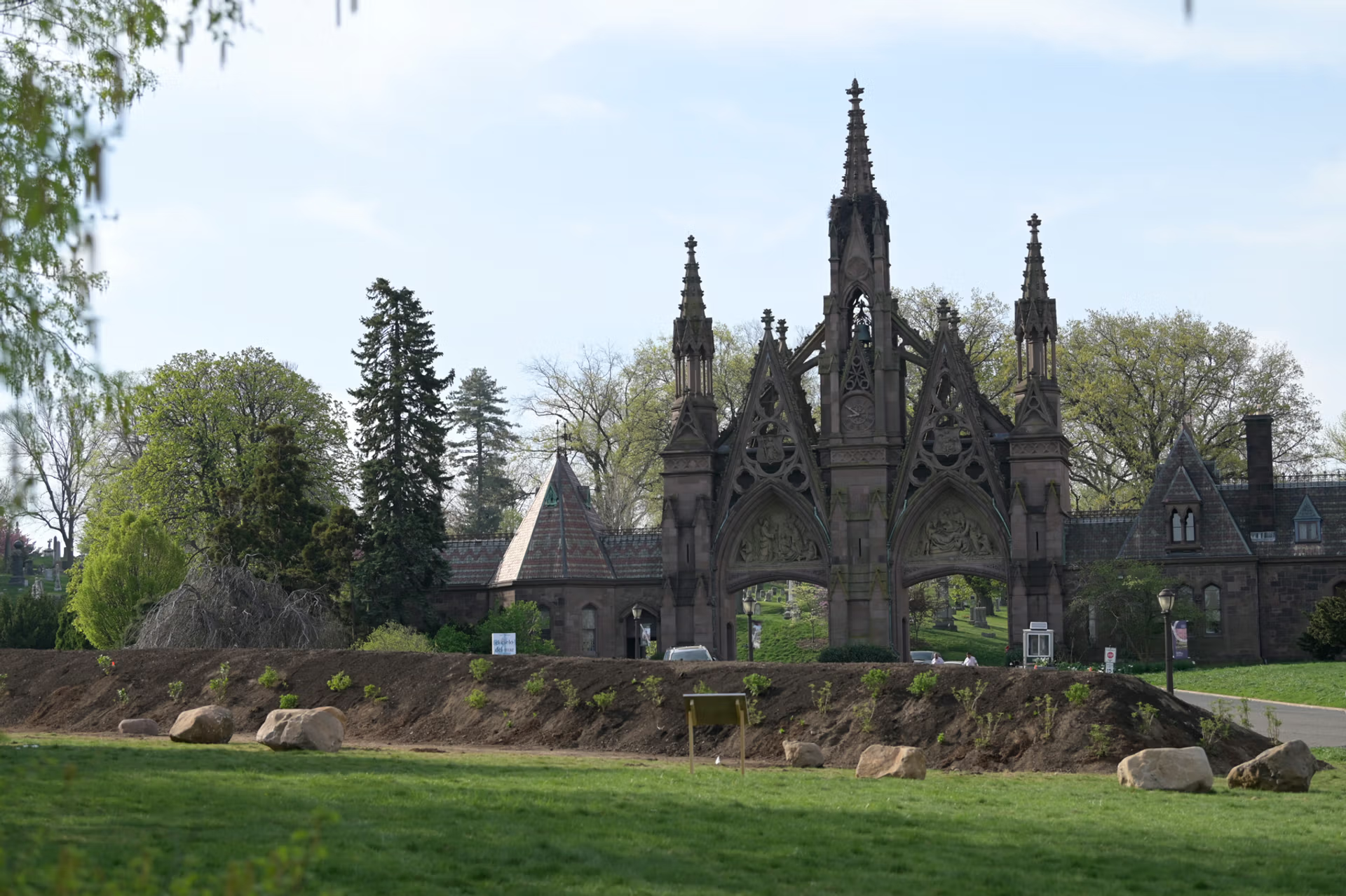
Jean Shin’s Offering (2026), an earthwork just inside the cemetery’s neo-Gothic brownstone gates Photo: Maike Schulz, courtesy of Green-Wood Cemetery
As burial rates decline in the US in favour of cremation, and as the little available room for interment is being filled, cemeteries across the country are at risk of becoming disused space. By focusing outward on the community, they can cultivate new audiences and involve them in caring for the cemeteries’ future.
Endurance and remembrance
The first contemporary-art exhibition in the Green-House galleries is titled Celadon Landscape, an installation by the local artist Jean Shin, involving shards of Korean ceramics in a meditation on cultural diaspora. It coincides with the planting of native wildflowers on a long-term Shin earthwork informed by Korean mourning rituals. Called Offering, the piece is located just inside the cemetery gates. Interred within its mound are elder trees from Green-Wood, which have been felled because of disease or age, and material excavated during burials. Volunteer gardeners will participate in its year-round care.
“I love that my work will be in conversation with those who come here to grieve, as well as those who seek solace in the extraordinary landscape,” Shin says. “Whether mourning fallen trees or rescuing discarded artefacts, my practice is a journey towards healing—honouring and repurposing what has been lost, both ecologically and culturally. The cemetery’s context invites us to consider death not as an ending but as a beginning: what endures, and what is remembered.”


