





Editor’s Note: This story originally appeared in On Balance, the ARTnews newsletter about the art market and beyond. Sign up here to receive it every Wednesday.
Happy Wednesday! Here’s a round-up of who’s moving and shaking in the art trade this week.
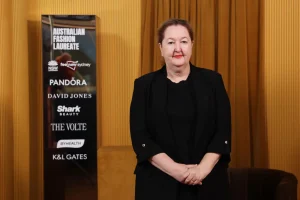
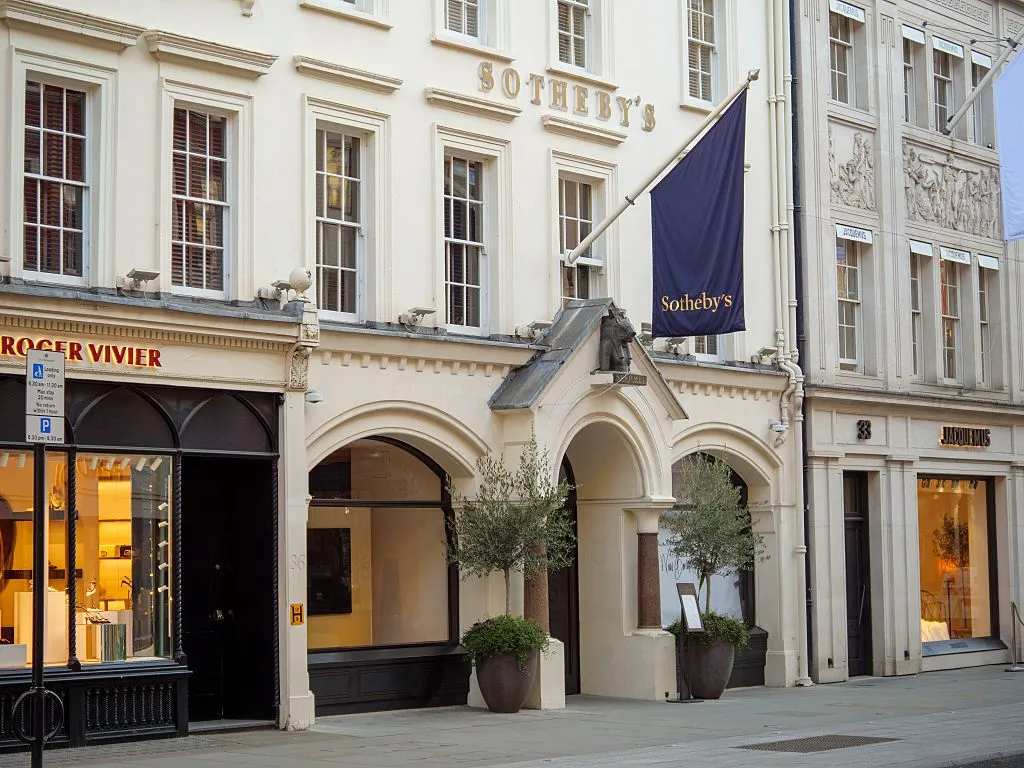
- Sotheby’s Taps Christie’s Veteran as Communications Chief: Natasha Le Bel, formerly global head of communications at Christie’s, has been named Sotheby’s chief communications officer, while outgoing communications chief Karina Sokolovsky will move into a new leadership role focused on the auction house’s strategic growth plan.
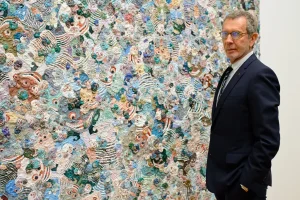
- Fairfield University Names Inaugural Arts and Culture VP: Matt Malone, former president and editor-in-chief of America Media, has been appointed Fairfield University’s first vice president for arts and culture and will oversee the school’s new Division of Arts and Culture.
- German Historical Museum Gets Funding for WWII Digital Project: Berlin’s Deutsches Historisches Museum has received funding for “Reverse Shot: Images of German Crimes in Europe,” a nearly two-year project that will work with young adults to develop a bilingual web application examining photographs of crimes committed under German occupation during World War II.
- Vermelho Takes on George Love Archive: São Paulo gallery Vermelho now represents the archive of photographer George Love, an important figure in the development of photography as an artistic practice in Brazil and the United States during the 1960s and ’70s.
- Freeman’s Names Jelena James Head of Old Masters Sale: The Philadelphia auction house has appointed Jelena James senior specialist and head of sale for Old Masters and 19th-Century European Art, bringing more than two decades of international auction experience to the role.
- Art Bridges Names 2026 Bridgemaker Prize Winners: The San Diego Museum of Art and the Westmoreland Museum of American Art have each won the second annual Bridgemaker Prize for expanding access and community engagement, receiving $75,000 apiece.
Big Number: ?
No one knows how much Ken Griffin paid for the Madonna of the Yarnwinder, the “Leonardo da Vinci and studio” picture that appeared on the walls of the Metropolitan Museum of Art this week, on long-term loan from the billionaire collector. Other Leonardos might give some sense of the territory: the National Gallery of Art in 1967 paid a then-record $5 million for Ginevra de’ Benci, about $50.8 million today, while another version of the Madonna of the Yarnwinder was estimated at £40 million when it was stolen in 2003. And then, of course, there is Salvator Mundi, which sold at Christie’s in 2017 for $450.3 million, still the auction record for a painting and very possibly the highest price ever paid for an artwork. Griffin’s picture, now hanging rather inconspicuously in Gallery 609, is currently the only Leonardo on view at the Met.
Read This.
We’ve heard plenty about the Great Wealth Transfer. Hell, if you’ve made it this far down in the newsletter, you know I wrote about it—and the nearly $1 trillion worth of art expected to change hands over the next decade. But Felix Salmon has an interesting wrinkle on it in Bloomberg: What happens to all that art? Salmon argues there simply won’t be enough collectors or museums willing to absorb it. The problem is particularly keen outside the tiny sliver of trophy collections that auction houses will fight to sell: many heirs don’t want their parents’ art, while museums already own more than they can display. The result could have consequences beyond prices and market reporting. Some works will find new collectors or museums, but quite a bit of the coming flood may end up in storage, deteriorate, or disappear altogether. As Salmon puts it, “The art we keep will stay in the canon; the art we discard will be lost to history.” Grim.


