







It is now standard practice for public institutions to consider the environment within their buildings and across their programmes. But two of the UK’s leading galleries—Tate Britain in London and Turner Contemporary in Margate—are extending their eco-diligence beyond their walls. Turner Contemporary is considering its watery surroundings with a new weekend conference devoted to all things marine, while Tate Britain is developing an expanded permanent garden that, when it is completed early next year, will give London a new and sustainable green space.
Taking over the tarmac
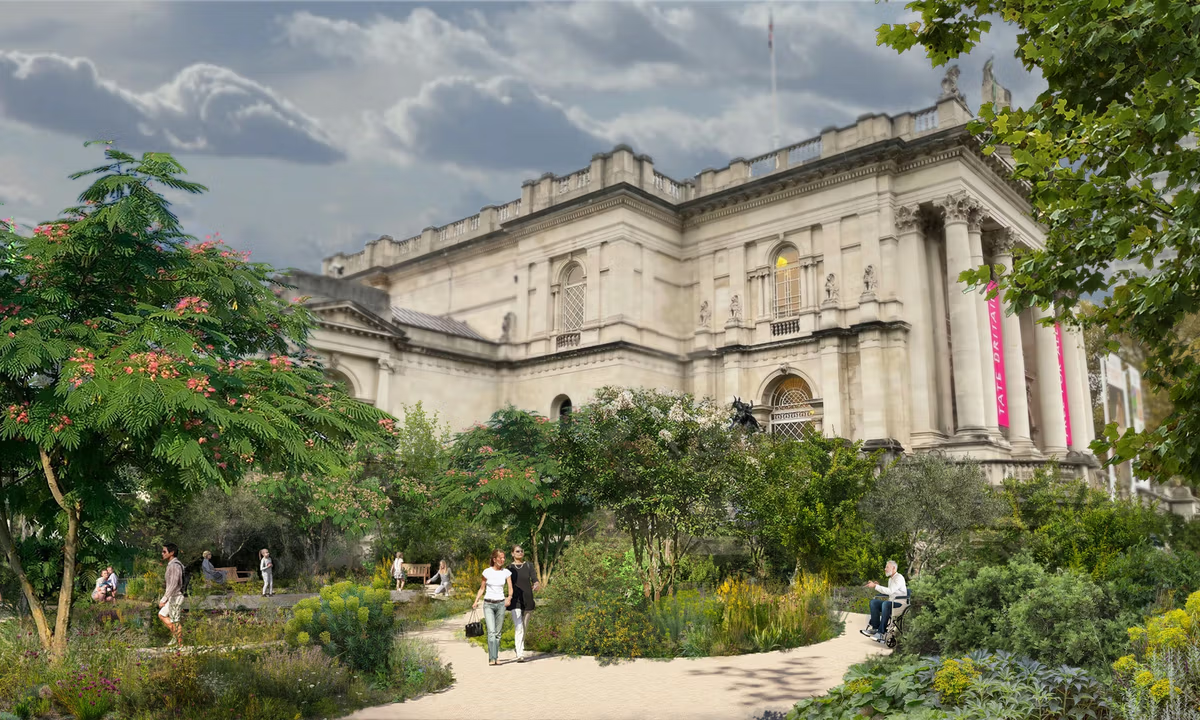
The Clore Garden is a joint gift to Tate and the Royal Horticultural Society (RHS) from the Clore Duffield Foundation. The planting has been specially chosen to offer biodiversity in an urban setting as well as taking climate change into account with drought resistant plants that can thrive in central London’s rising temperatures. These resilient specimens range from Mediterranean figs and Japanese sago palms to Persian lilac and the glossy evergreen Schefflera shweliensis, native to the Eastern Himalayas.
Tom Stuart-Smith Photo: James Runcie
“It’s amazing, there’s an acre and a half of land between the Tate Gallery and Millbank but because it’s currently so dull and dreary people don’t notice it’s there”, says the garden’s multiple award winning designer Tom Stuart-Smith. He is transforming what was 75% hard surface—and a taxi rank—into what he describes as “a biodiverse exotic garden”. “We’re using all these plants you don’t usually see so much in Britain—which we can do because Tate’s extraordinary site by the Thames is virtually frost free,” he explains.

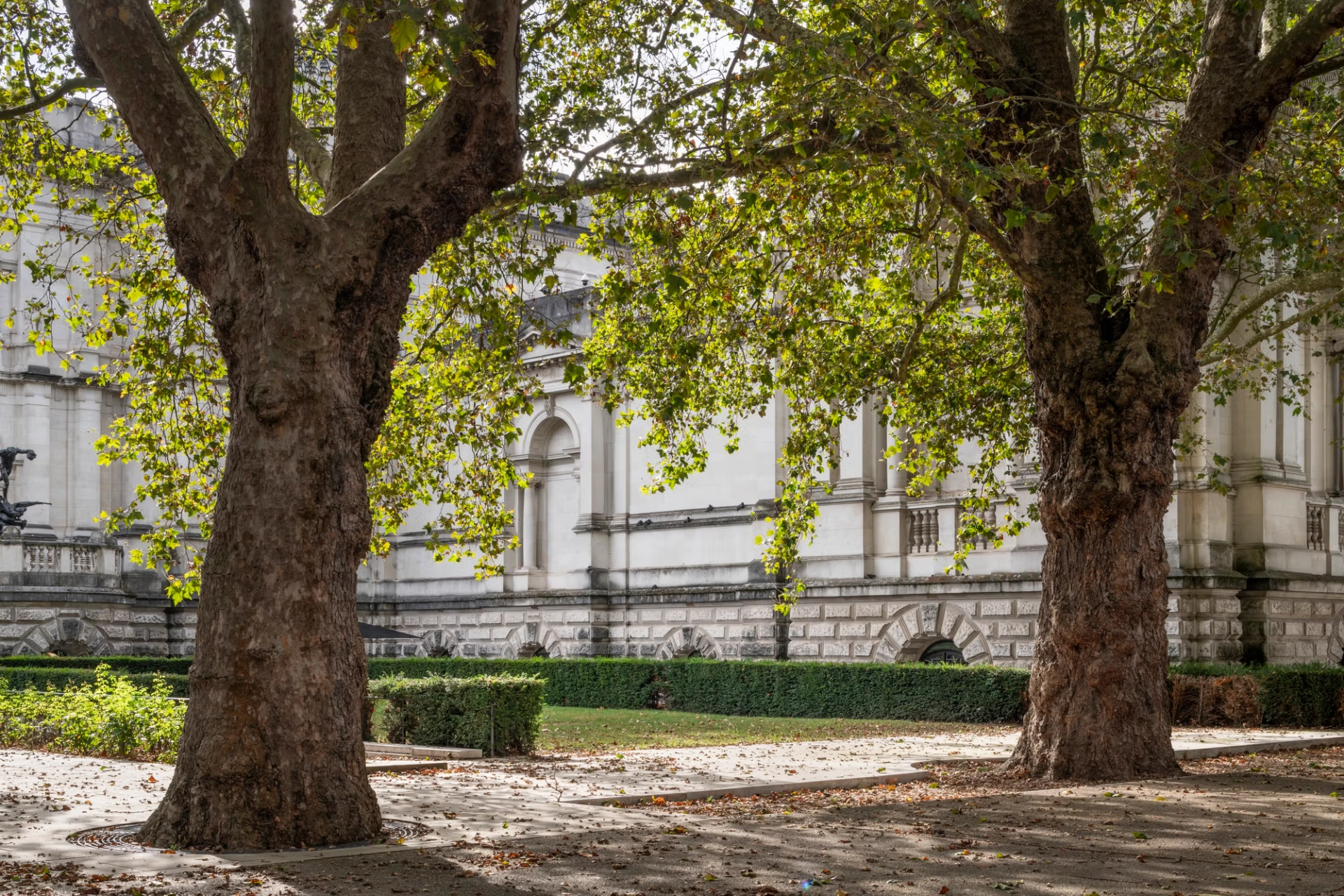
Tate Britain garden in 2023 Photo: © Tate
Recently there was a sneak preview of the Clore garden when a condensed version was shown at the Royal Horticultural Society’s (RHS) annual Chelsea Flower Show, in May. Here, under the moniker of The Tate Britain Garden, it was awarded a gold medal, to add to the other nine Stuart-Smith has already picked up at Chelsea over the years. Sitting at the heart of the Tate Britain Garden was Barbara Hepworth’s 1949 limestone sculpture Bicentric Form, the first time that a work of art from the national collection has been exhibited within a garden at the Chelsea Flower show. This work, along with other modern and contemporary pieces from Tate’s collection, will also be a key part of the Clore Garden back in Millbank. Stuart Smith describes it as “in some ways a sculpture garden” while admitting that he’s “not a great one for sculpture and flowers, so I’m using foliage and plant forms to calm things down—the sculptures will be more like incidental things that you discover”.

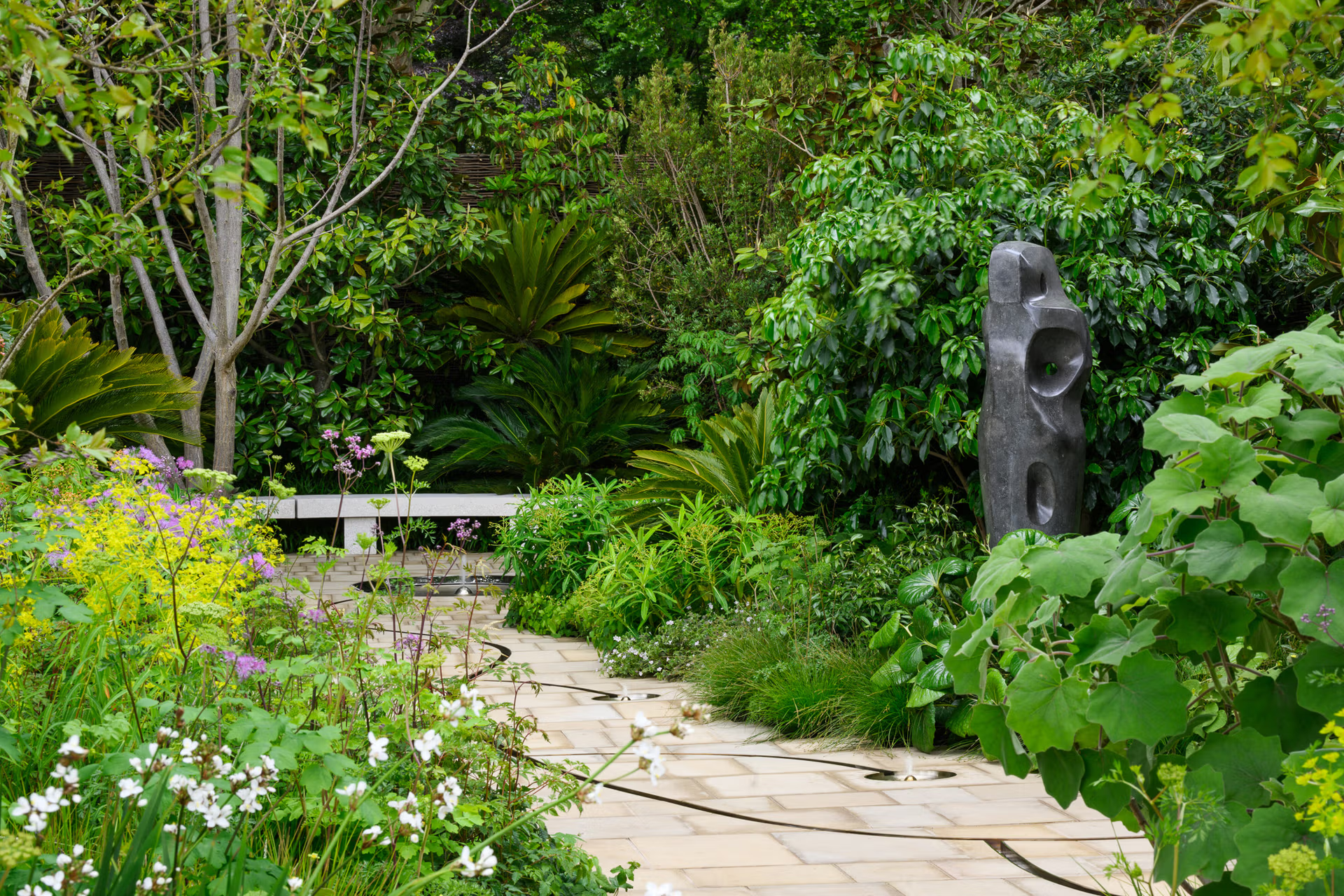
The Tate Britain Garden at the RHS Chelsea Flower Show 2026 Photo: Jason Ingram
Stuart-Smith—who has designed gardens for the Hepworth Wakefield and Chatsworth House as well as the Queen Elizabeth Jubilee Garden at Windsor Castle, amongst many others—also looked to the Tate’s collection for inspiration. In early presentations to Tate he cited The Green Earth (1979–80), a painting by Victor Pasmore that depicts a series of cellular green forms linked by the occasional black line, which informed the informal, organic ethos of the landscape architect’s final design.
Another key influence was Merlin Sheldrake’s book Entangled Life (2020), which explores how networks of fungal mycelia connect and hold together much of our world. This fed into Stuart-Smith’s scheme for a network of narrow waterways punctuated by small bubbling circular dishes which will flow around the garden’s green spaces and ultimately feed into a bowl-shaped water feature on a terrace outside the Tate Britain café. “I started looking at microscopic images of mycelium and quite a lot of them have little bacterial nodules on the end, so these branching rills are my little bacterial nodules—it’s a nice metaphor for the garden bringing everyone together,” he says.

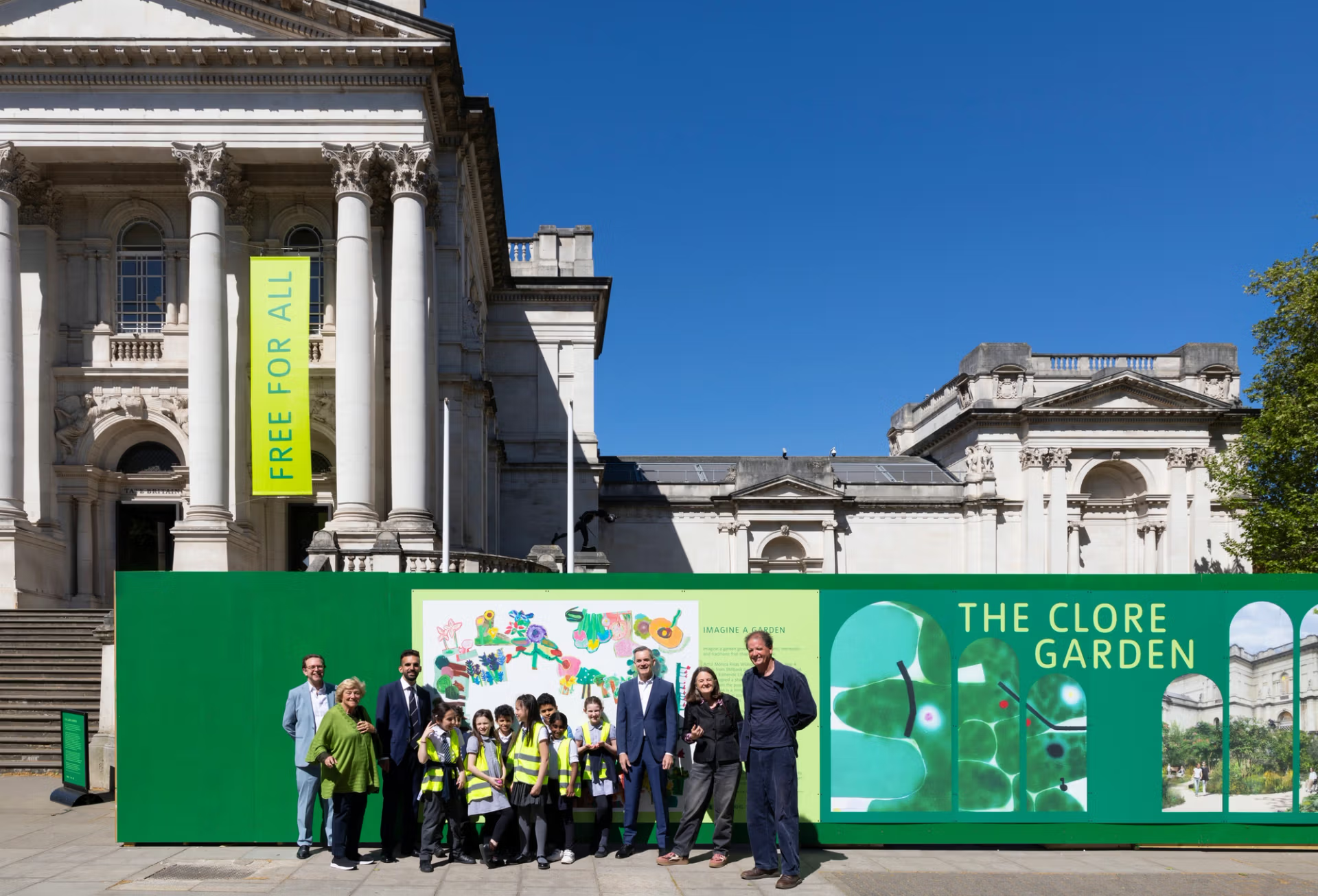
Year 4 pupils with their artwork on the hoardings surrounding Tate Britain’s Clore Garden, currently under construction and due to open in 2027 Photo © Tate Photography (Sonal Bakrania)
This social role of the Clore garden is echoed by Tate Britain’s director Alex Farquharson who sees it as a crucial means to make the museum’s neoclassical, 19th-century building more welcoming to a wider community. “We want to make our façade as porous as possible,” he states. “The environmental aspect of the garden is key, but so is the dialogue between the garden and a building which, when you arrive, can seem quite intimidating and doesn’t exactly signal contemporaneity.”
As well as making the garden more sustainable as London’s climate heats and dries, Farquharson also hopes the worldwide scope of its planting will mean that this new green space will engage with many more people: “It opens up the garden to a global population as well as Tate’s increasingly global programme,” he says.

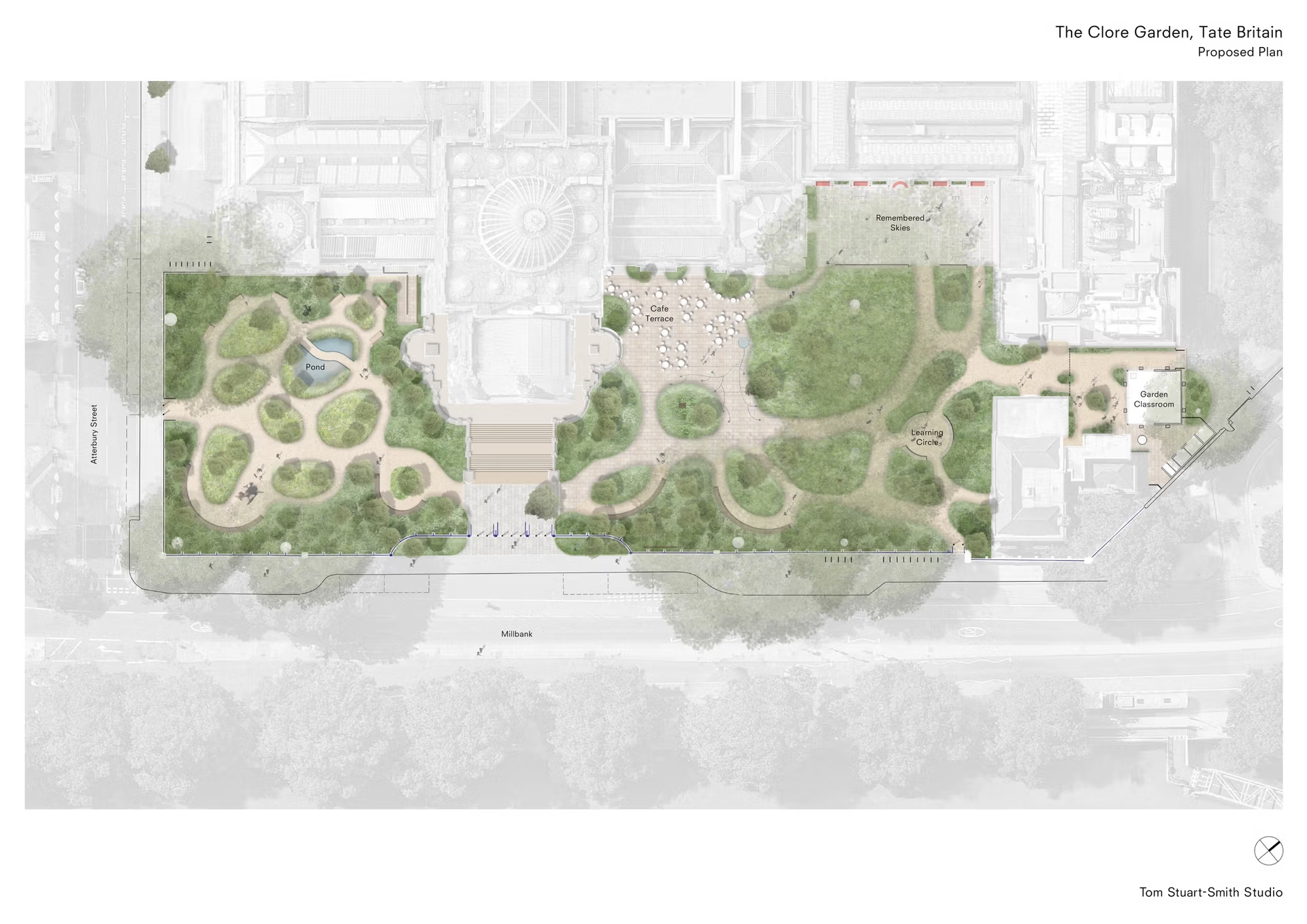
An aerial view of the designs for the Tate Britain Clore Garden Image courtesy of Tom Stuart-Smith Studio
A key expression of Clore Garden’s aim to attract new audiences is a specially designated outdoor classroom—furnished with a ‘learning circle’ of benches cast from reused materials including Tate’s existing paving and locally sourced shells from the nearby Thames foreshore. This learning space is conceived to fit a class of 30 schoolchildren.
There are also plans for a single-storey, lightweight garden classroom designed by the architecture studio Feilden Fowles, which will host an extensive education programme and workshops for school groups and adult learners devised in association with the Royal Horticultural Society. “We’ll be emphasising the links between nature and art all the time,” Farquharson says, adding that he is “looking forward to people going round the collection and naming plants”. He also hopes that the garden will point to “the long ecological theme in British art going back to the landscape tradition and beyond, and also forward to the eco-critical practices of Richard Long and Cooking Sections. Henry Moore and Barbara Hepworth wouldn’t have used these forms without looking closely at nature.”
Turning to the sea
Meanwhile, on England’s south coast, Turner Contemporary has been looking out to sea. Situated on Margate’s waterfront—on almost exactly the same site of the boarding house from where JMW Turner admired the North Sea views a couple of centuries earlier—Turner Contemporary is on the frontline of environmental change, directly experiencing the challenges of rising seas and coastal erosion.

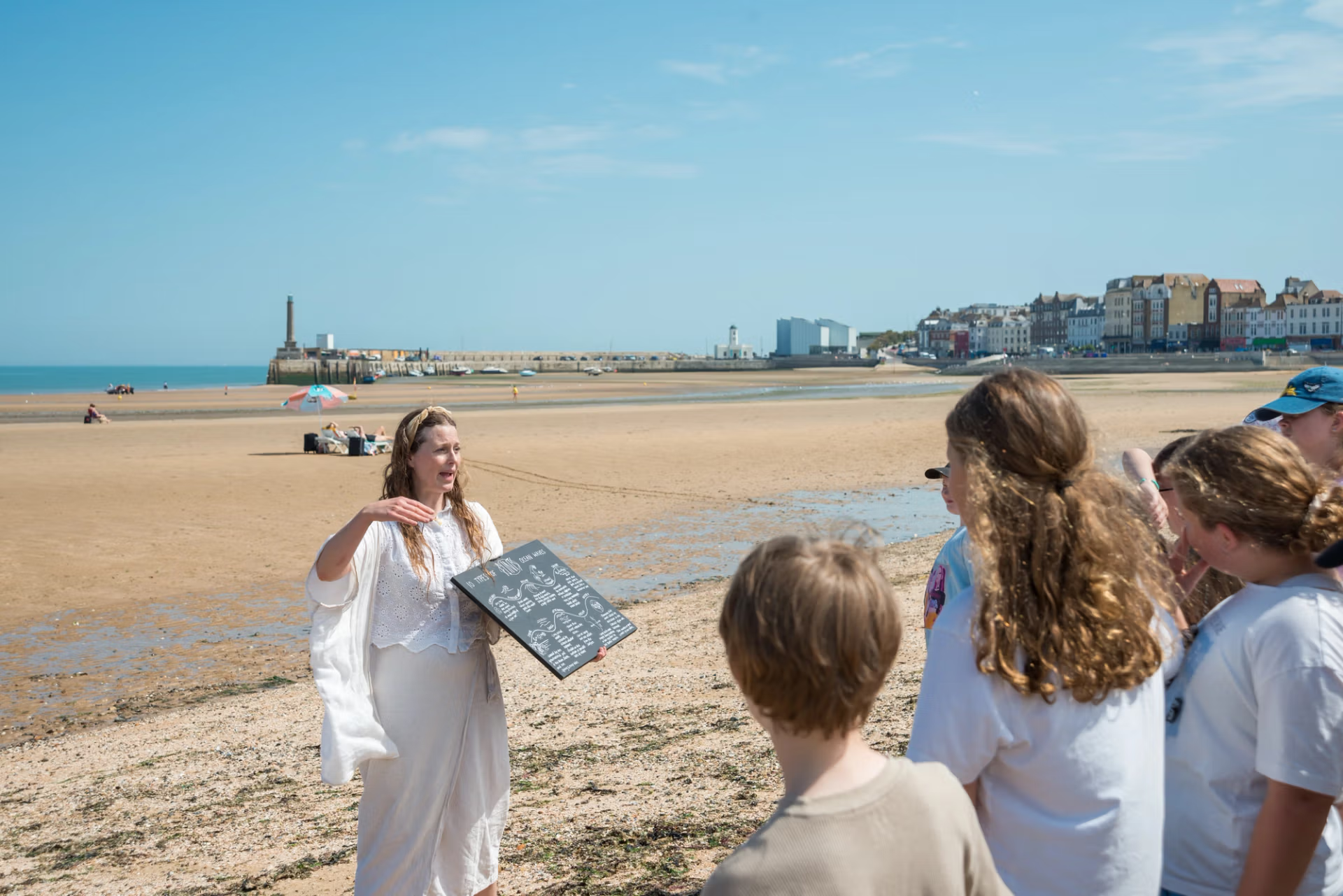
On Friday 19 June, 150 pupils from five local primary schools gathered at Turner Contemporary for the One Ocean 2026 Schools Day, the opening event of this year’s One Ocean programme Courtesy of Turner Contemporary; photo:John Sainsburyl © Turner Contemporary
Last weekend (19-21 June) the gallery joined forces with the UK National Commission for Unesco to host One Ocean 2026, a programme of free public talks, workshops, artist and documentary film screenings and more, all devoted to exploring humanity’s relationship with the ocean and addressing the urgent challenges facing marine environments in Margate and beyond. Bringing together a network of international and regional collaborators spanning artists, scientists, policymakers, activists, campaigners and local leaders, One Ocean—in the words of Toby Parkin, Turner Contemporary’s head of learning and participation—created “a space for hope and collaboration […] empowering people (especially young people) to see themselves as part of the solution.”
This year’s inaugural gathering was a pilot, but the plan is to develop One Ocean into a biennial programme of international significance. This would establish Turner Contemporary as a global ‘ideas hub’ devoted to ocean health, biodiversity and climate resilience, alongside its existing role as a beacon of artistic excellence.
As with Tate’s Clore Garden, both of these excellent and long term initiatives underline yet again the fact that environmental and cultural considerations should not be viewed as mutually exclusive but complementary, intertwined and symbiotic. And it seems to be our institutions rather than our governments that are leading the way.


