






The 2026 Whitney Biennial (until 23 August) opened at a particularly volatile time—only a week after the US and Israel began their coordinated attack on Iran. And while the biennial’s 82nd edition lacks an official theme, the red threads of what “American” means and the lasting effects of US power abroad are so palpable that they succeed in uniting many of the works of the 56 artists, duos and collectives that populate the exhibition.
It comes to no surprise that the curators, Marcela Guerrero and Drew Sawyer, cite the historian Daniel Immerwahr’s 2019 book How to Hide an Empire: A History of the Greater United States in one of biennial’s catalogue essays. “Immerwahr calls the United States a ‘pointillist empire’: a web of some 800 military bases and territories that have enabled not only wars and coups but also communication networks and supply chains,” Sawyer writes. “Thinking about this type of infrastructure, Marcela and I brought another question into our research: what would it mean to foreground artists whose practices were developed in locations entangled with the tentacles of US empire—without reducing their perspectives to identity or moral accounting? Could these voices be held within the context of a survey of American art?”
With these questions in mind, Guerrero and Sawyer invited artists from Afghanistan, Chile, Iraq, Okinawa, Palestine, the Philippines and Vietnam to display their works alongside those of their American peers. Even among the artists featured who live in the US, many were born abroad. Several have Indigenous heritage or hail from Hawaii or Puerto Rico. And just as the US has—at least historically—sought to hide its own imperial ambitions, the artists in this year’s biennial often subtly hint at politics rather than displaying them overtly.
Aziz Hazara, from Moon Sightings, 2024 Courtesy the artist and Experimenter Kolkata/Bomba
“They engage the residues of empire abstractly, poetically or ambivalently,” Sawyer writes, “making space for forms of relation that are intimate, strained and unresolved.” There are certainly more questions than answers to be found in their projects, giving audiences a lot to think about long after they have left the museum grounds.
This is the fifth biennial since the Whitney Museum of American Art opened in the Meatpacking District in 2014. Located on the fifth and sixth floors, with additional projects scattered in other parts of the museum—including the stairwell—the exhibition is largely organised into groups of works that relate to each other in some way. But the display does not feel at all crowded. In fact, each artist is given ample space to display several pieces, with room to take a breath before moving onto the next.
Within the larger context of US identity and influence, several subtopics emerge among the works on display. The most obvious unites projects that relate directly to specific moments in history—the colonisation of Hawaii, the aftermath of the Second World War, the Marcos regime in the Philippines, the Aids epidemic in the US—while others deal more specifically with the inner workings of cities, surveillance or unique ways of viewing the world. Their topics are global or deeply personal, often both at once. Many of the pieces involve reflections on family (biological and chosen). Several even explore interspecies communication.
“To recognise the present for what it is creates an opportunity to give up any pretenses of exceptionalism,” Guerrero writes in her catalogue essay, “and to imagine what might be conjured with other kinds of kin—animal, plant and otherwise—facing the same or worse prognoses of extinction.”
Connections between species
Guerrero and Sawyer cite “interspecies kinships” as a thematic strand of their biennial in the introductory wall text, and though it is not quite as present in the galleries as that shoutout might lead visitors to expect, it is front and centre on the fifth floor just outside the elevators.

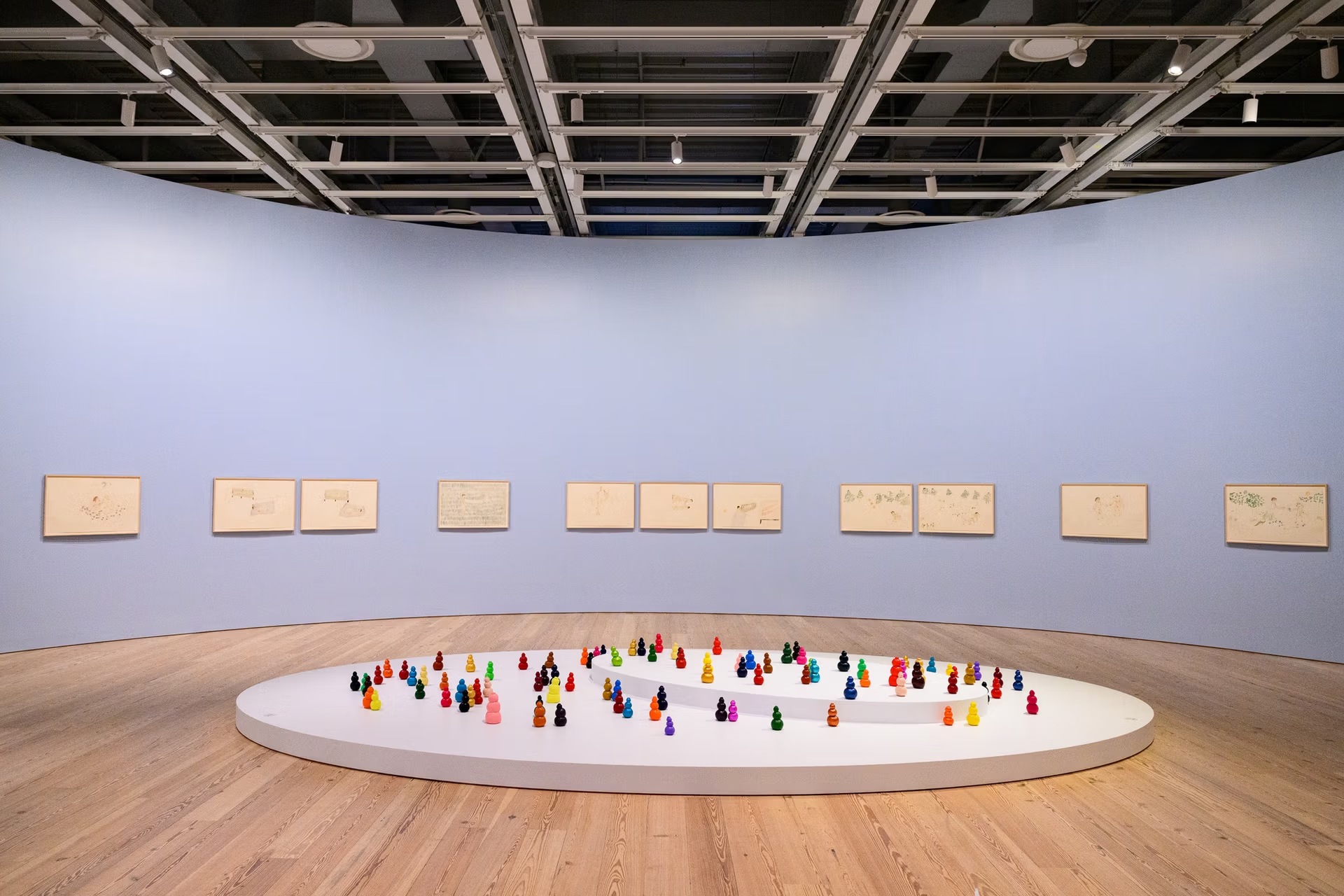
Installation view of Whitney Biennial 2026 featuring sculptures and works on paper by Emilie Louise Gossiaux Photograph by Darian DiCanno/BFA.com. © BFA 2026
The first works in this year’s biennial that many visitors see are the ceramic sculptures and drawings by the New Orleans-born, New York-based artist Emilie Louise Gossiaux, which they made in tribute to their late guide dog London. The artist started creating the 100 ceramic replicas of London’s favourite chew toy, each one painted a different hue, when their canine companion’s health began to falter. The adjoining drawings feature Gossiaux, who is blind, in alternatingly everyday and fantastical scenes with London.
In an interview for the biennial’s catalogue, Gossiaux says: “It’s about trying to create this language to explain who my dog is to me, because I think of her in a way as my daughter, my spouse, my mother, and sometimes those roles reverse. Again, it’s about blurring the hierarchy, and also recognising that I’m an animal, too. I find my own animalistic qualities very freeing.” The overall effect of Gossiaux’s installation is something like a shrine to London, envisioning an afterlife of play and connection.
Another artist trying to blur anthropocentric hierarchies in this Whitney Biennial is the Colombia-born artist Oswaldo Maciá, who is now based in London and New Mexico. His installation on the fifth floor, Requiem for the Insects (2026), spans sound, smell, sculpture and painting. Two enormous canvases—rendering a grasshopper and moth in the style of 18th-century scientific sketches—loom in one corner, while dozens of speakers enclosed in cones of hand-blown glass near the ceiling play a soundtrack mixing sounds of insects and glass breaking. The artist’s intent is to prompt reflection on the ongoing mass extinction of insects, though how exactly viewers are expected to arrive at that solemn awareness—or how the room’s indeterminately sweet scent contributes to it—is a bit unclear. To hear Maciá tell it, that might be at least partially intentional.
“It’s difficult to engage; we’re so arrogant about knowing everything,” he says in a catalogue interview. “I started to go through the acoustic and olfactory as a way to engage with the language of the natural world. I found that if I can bring in the calls of animals, perhaps I can make people stop and think, instead of this ‘I know that, next… I know that, next…’”

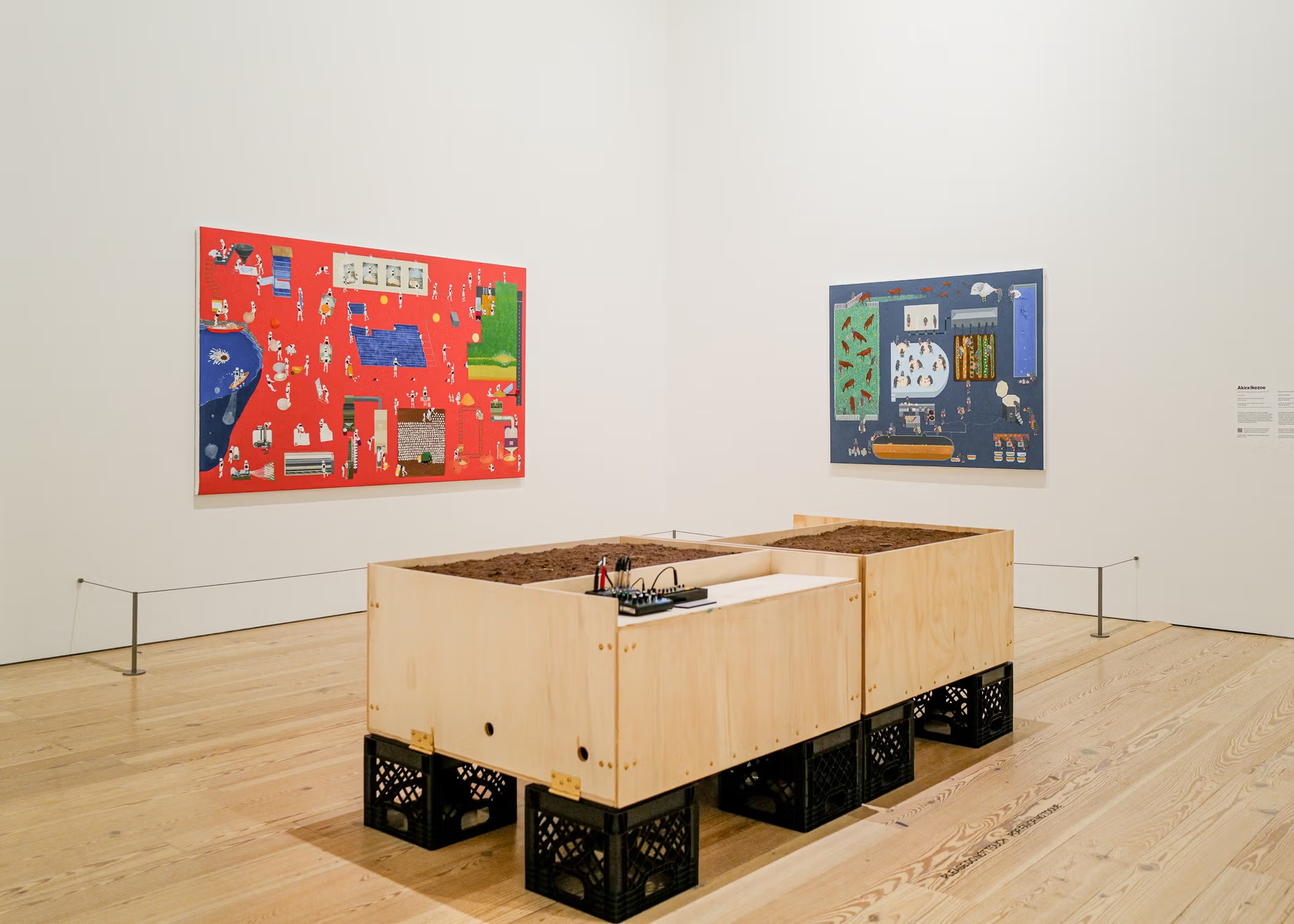
Installation view of Whitney Biennial 2026 featuring paintings by Akira Ikezoe and a sonic, sculptural installation by Ash Arder Photograph by Jason Lowrie/BFA.com. © BFA 2026
A less obtuse, more playful attempt at forging interspecies connections is on display in paintings by the Japan-born, New York-based artist Akira Ikezoe on the sixth floor. Each canvas revolves around a somewhat fantastical circular system for generating energy, including moles harnessing the methane gas from cow faeces and frogs operating a nuclear power plant (a third features robots running a solar power plant). The diagrammatic compositions show legions of the chosen creatures industriously going about mysterious business that does include the burning of gas and use of cooling towers, but also imaginative details like moles creating new cows by blowing them out of giant seashells.
In an interview for the exhibition catalogue, Ikezoe explains that his interest in illustrating systems and the language of scientific diagrams was partly inspired by witnessing the 2011 earthquake, tsunami and nuclear disaster in Japan from afar, having moved to New York the previous year. The experience “made me think about our relationship to nature, about nature and our culture always invading each other”, he says. “Is it possible for us to draw a clear borderline between nature and culture? They meet within our body.”
Complicating history
As in every Whitney Biennial, there are several projects that have been around for decades, but presented in this environment they provide a context for the newer pieces at the same time as a novel interpretation for themselves. With Sawyer’s specialty in photography, some of the best examples in this category are lens-based works.

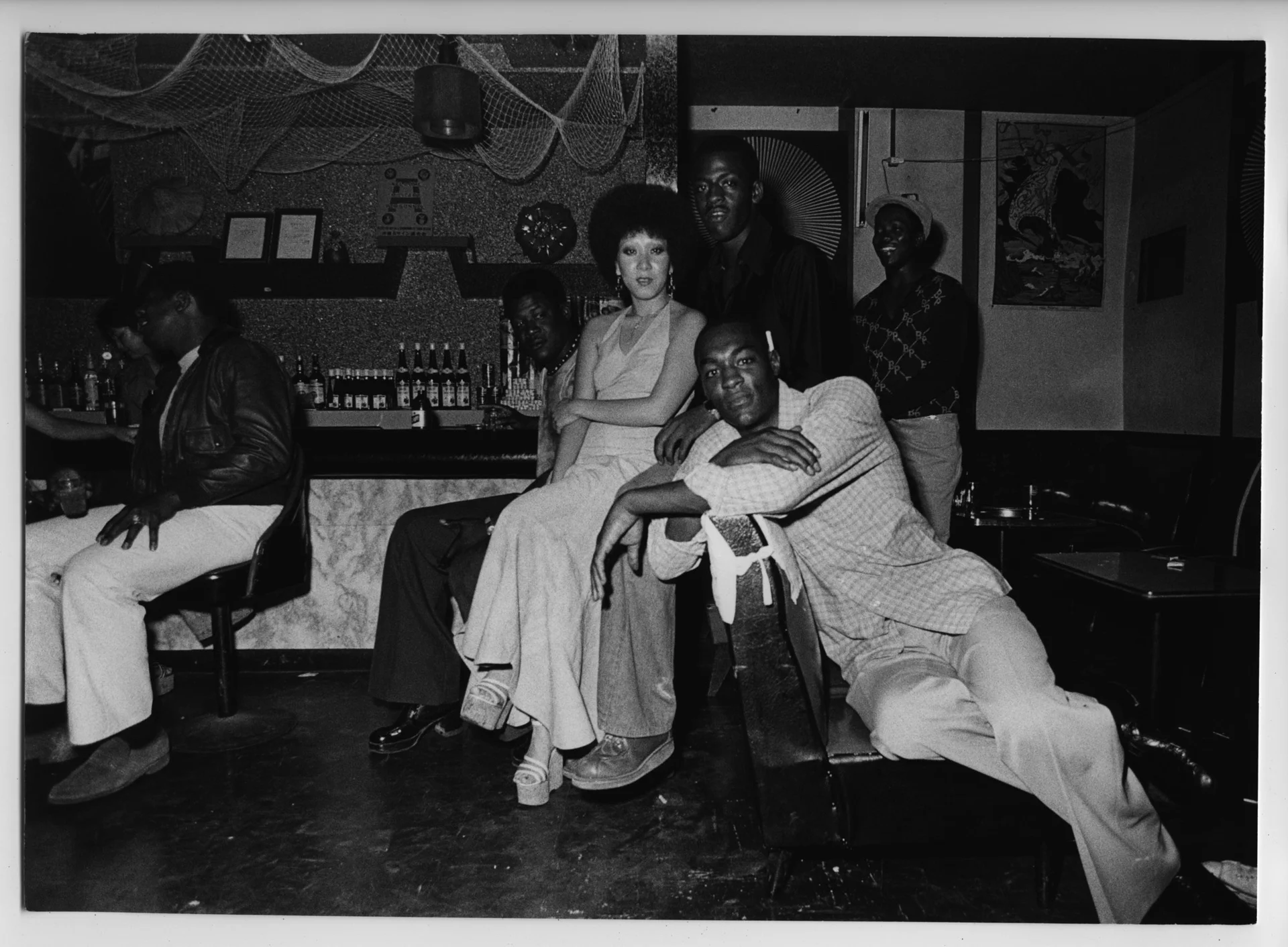
Mao Ishikawa, Untitled, from the series Akabanaa (Red Flowers), 1975-77 Courtesy of the artist
On the sixth floor, for example, photographs by the Okinawan artist Mao Ishikawa explore the perhaps surprising effects of a prolonged US military presence in her homeland. One series from the 1970s shows Black soldiers spending time with the locals in Okinawa, while another from the 80s focuses on the photographer’s trip to Philadelphia to visit a Black American soldier she had befriended at home. In her subtle and poetic way, Ishikawa draws a parallel between discrimination in the US and in Okinawa (under Japanese control since the US ceded the territory in 1972)—and the relationships that develop between marginalised people worlds apart who are brought together by war and geopolitics.
Nearby, the New York-based artist Agosto Machado used personal experience (and a touch of photography) to celebrate another marginalised group: the queer community. Machado, a self-styled “street queen”, devoted himself to caring for his chosen family at the height of the Aids epidemic. He created shrines and altars with mementos and found materials for years as an act of both love and remembrance. (Tragically, Machaco died two weeks after the biennial’s opening.)
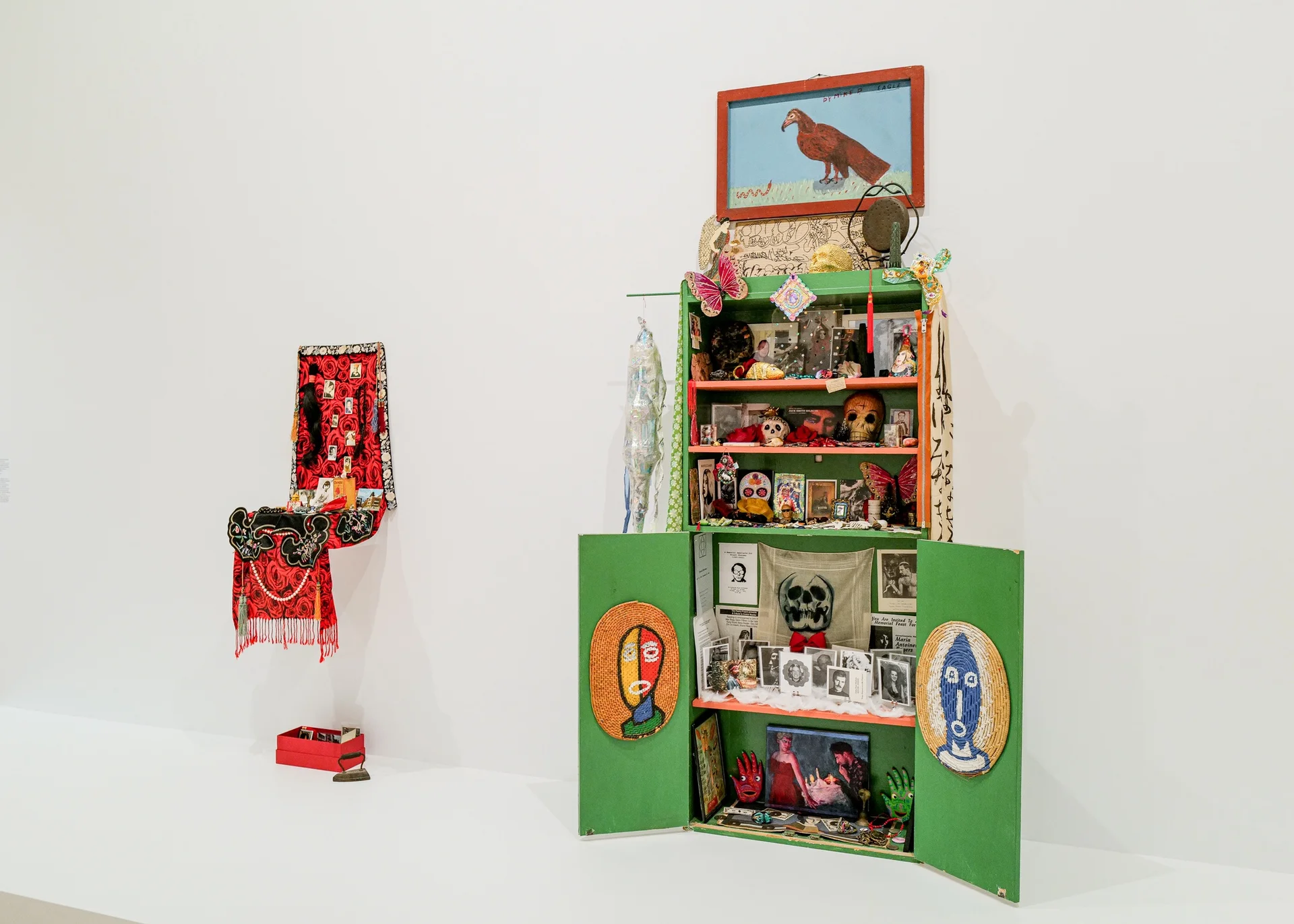
Installation view of Whitney Biennial 2026 featuring works by Agosto Machado: at left, Shine (Green) (2022); at right, Anna May Wong (Altar) (2025) Photograph by Jason Lowrie/BFA.com. © BFA 2026
Another act of love and remembrance comes in the shape of a painting by the Los Angeles-based artist Ali Eyal. The Baghdad-born Eyal’s Look Where I Took You (2026) is a sinister and surrealist take on a Ferris wheel at a theme park. He created the scene based on a childhood memory from 2003, when his mother took a young Eyal and his siblings to the biggest amusement park in Iraq’s capital. She wanted to provide her children with one last look at their hometown from up high before the Iraq War was destined to destroy it.
One of the more arresting works in the biennial this year is an installation of 20 radios playing simultaneously near the sixth-floor terrace. The Japanese artist and curator Aki Onda has re-created a piece from the 1970s by the late Filipino composer José Maceda (1917-2004). Maceda wrote a composition of 20 separate parts for voice and Indigenous instruments, recorded them on 20 reels and sent each reel to one of 20 radio stations in Manila to play simultaneously. When the city’s residents tuned in to the premiere of Ugnayan (1974) on 1 January 1974, an orchestra of radios created a unique sonic landscape. Although Maceda composed the experimental work on his own, it was co-opted by the Marcos regime—specifically Imelda Marcos, who liked to use avant-garde art as political propaganda and was particularly fond of Indigenous instruments symbolically bringing the nation together.
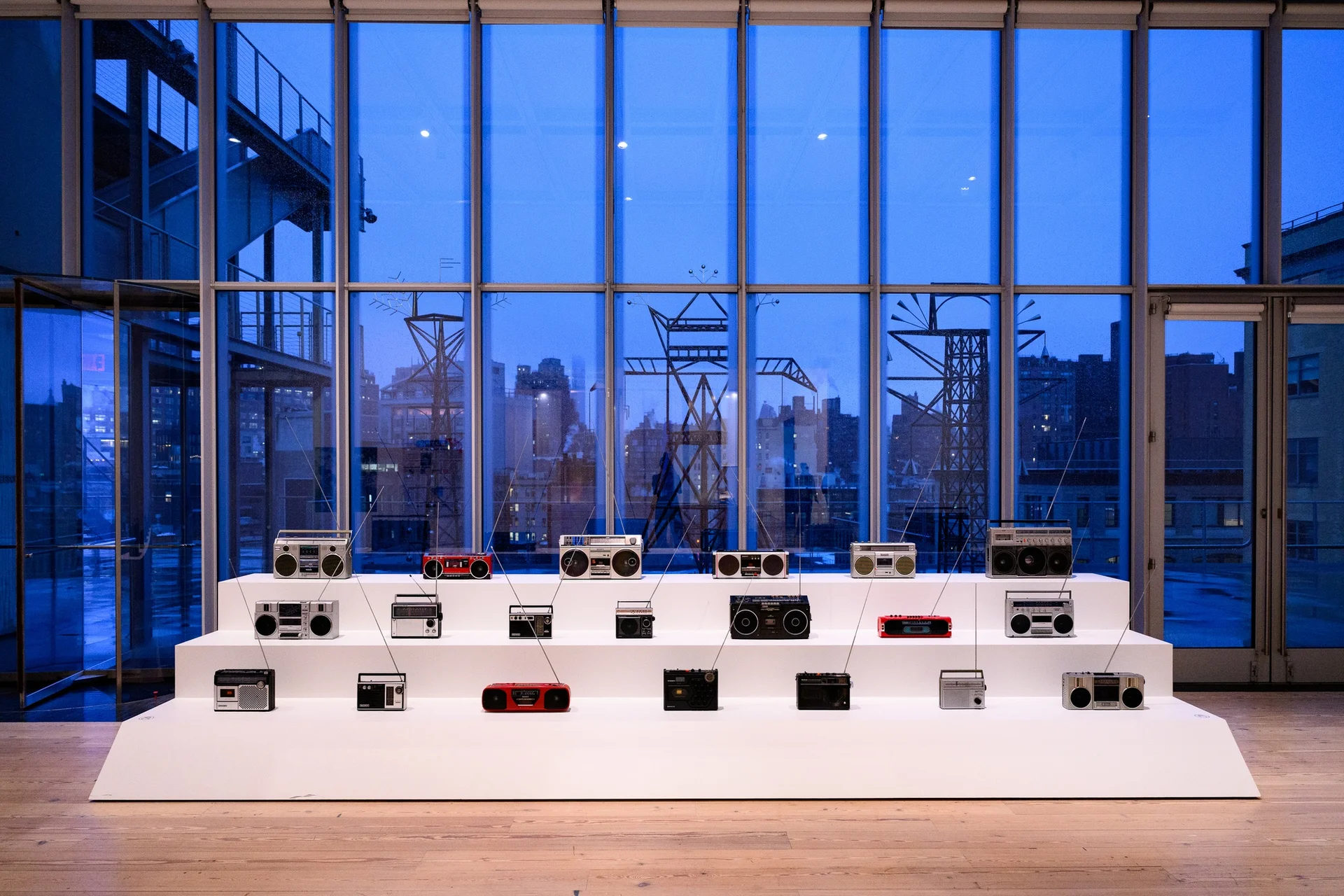
Installation view of Whitney Biennial 2026 featuring José Maceda and Aki Onda’s Ugnayan (1974/2026) Photograph by Darian DiCanno/BFA.com. © BFA 2026
Onda’s presentation of the 50-year-old piece, alongside documentation of its promotion by Marcos, amplifies questions about whether art can ever truly be divorced from politics and how a decades-old work in a new context morphs in its meaning. (As always, US power lurks in the air—despite the kleptocratic Marcos regime’s authoritarianism, it remained an important anti-communist ally during the Cold War.)
Cities and systems
On the terrace behind Maceda and Onda’s radios, large sculptures that look like electrical towers rise up as Diné (Navajo) deities. The New Mexico-based artist Nani Chacon’s work often incorporates Diné iconography in her visual storytelling. Her three sculptures point to the visual similarities between sand paintings of Diné gods and electrical towers, which appear all over the Navajo Nation’s land in connection to the area’s coal refineries. The project is a unique take on the aesthetics of capitalism and how its many complex systems have taken over the American landscape.
Meanwhile, on the fifth-floor terrace, the Los Angeles-born artist Kelly Akashi has created a replica of her fireplace and chimney in Altadena—the only part of her house that was left after the Eaton fire ravaged her neighbourhood in January 2025. Made of glass bricks, Monument (Altadena) (2026) also includes the path to her front door. Other Akashi works on display reference her grandmother’s doilies, precious mementos that burned up along with her home and studio.
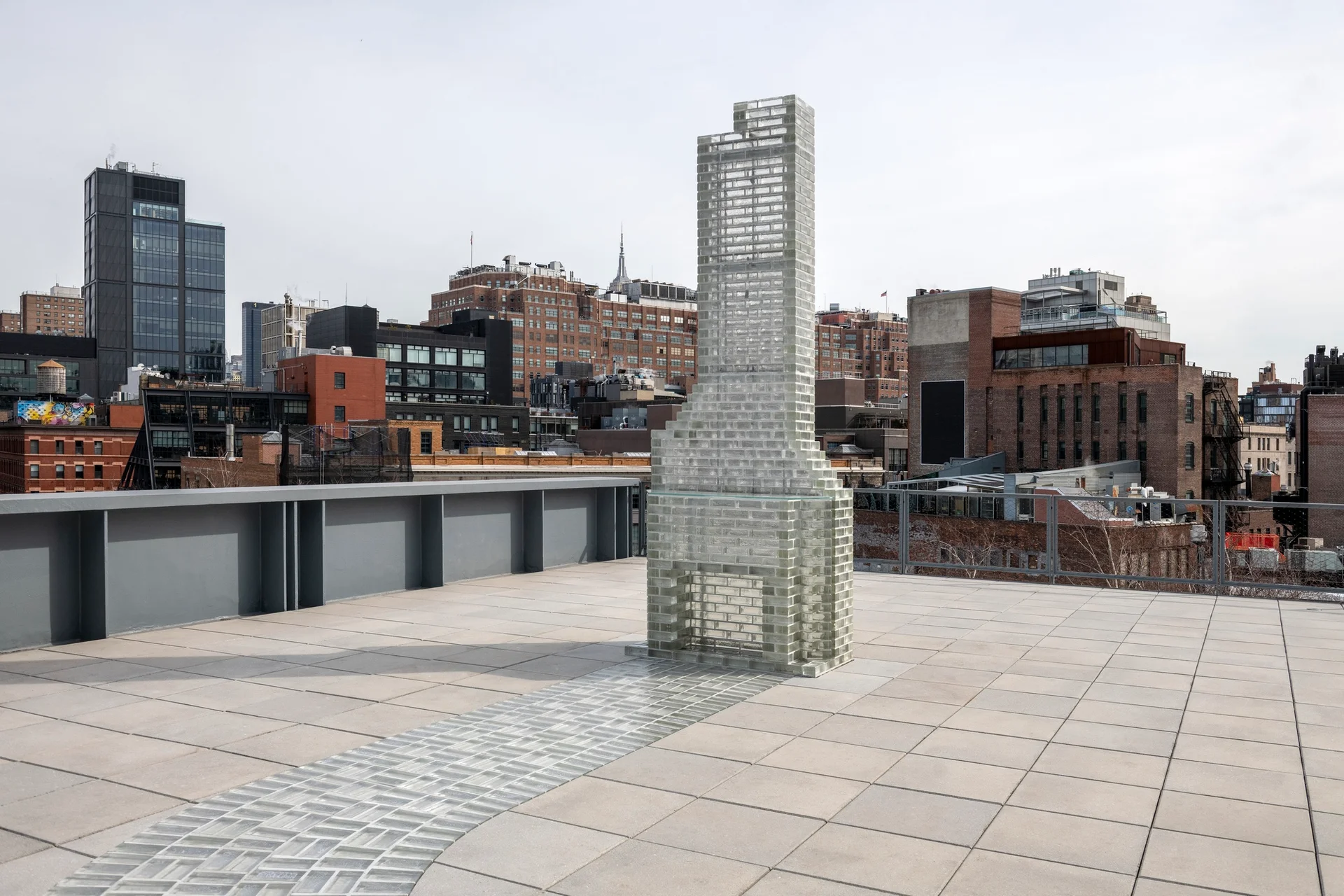
Installation view of Whitney Biennial 2026, featuring the Hyundai Terrace
Commission by Kelly Akashi, Monument (Altadena) (2026) Photograph by Timothy Schenck
Next-door from Akashi’s works on paper, the Chilean artist Ignacio Gatica explores the cityscape of Santiago’s financial district. Colloquially dubbed “Sanhattan”, the area features an eerie collection of skyscrapers based on famous buildings in Manhattan—there is one that resembles the Chrysler Building, a pair of Twin Towers that are comically close together and even a miniature Statue of Liberty. Built in the 1990s, after the fall of Augusto Pinochet (another dictator backed by the US during the Cold War), the skyscrapers were created as a visual glorification of free-market capitalism. In Gatica’s 18-minute video, Sanhattan (2025), he shows the strange landscape and interviews architects and people who work in the area. Interspersed throughout, a tranquil voiceover provides a more poetic interpretation.
Works engaging with the strangeness of cities are present on the sixth floor, too, in a space where adjacent projects by the New York-based artists Emilio Martínez Poppe and David L. Johnson dive deep into systems created by local governments. In the middle of the gallery, four large photographs with text on the back come from Poppe’s series Civic Views (2025). To create these works, the artist visited and interviewed more than 20 people who work for local government agencies in Philadelphia. The images are the views out their office windows; their quoted text on the back muses on how the city and their jobs have changed over the years. Poppe’s inspiration for the project came from the country’s oldest surviving photograph—a worker’s 1839 view out their office window at Philadelphia’s US Mint.

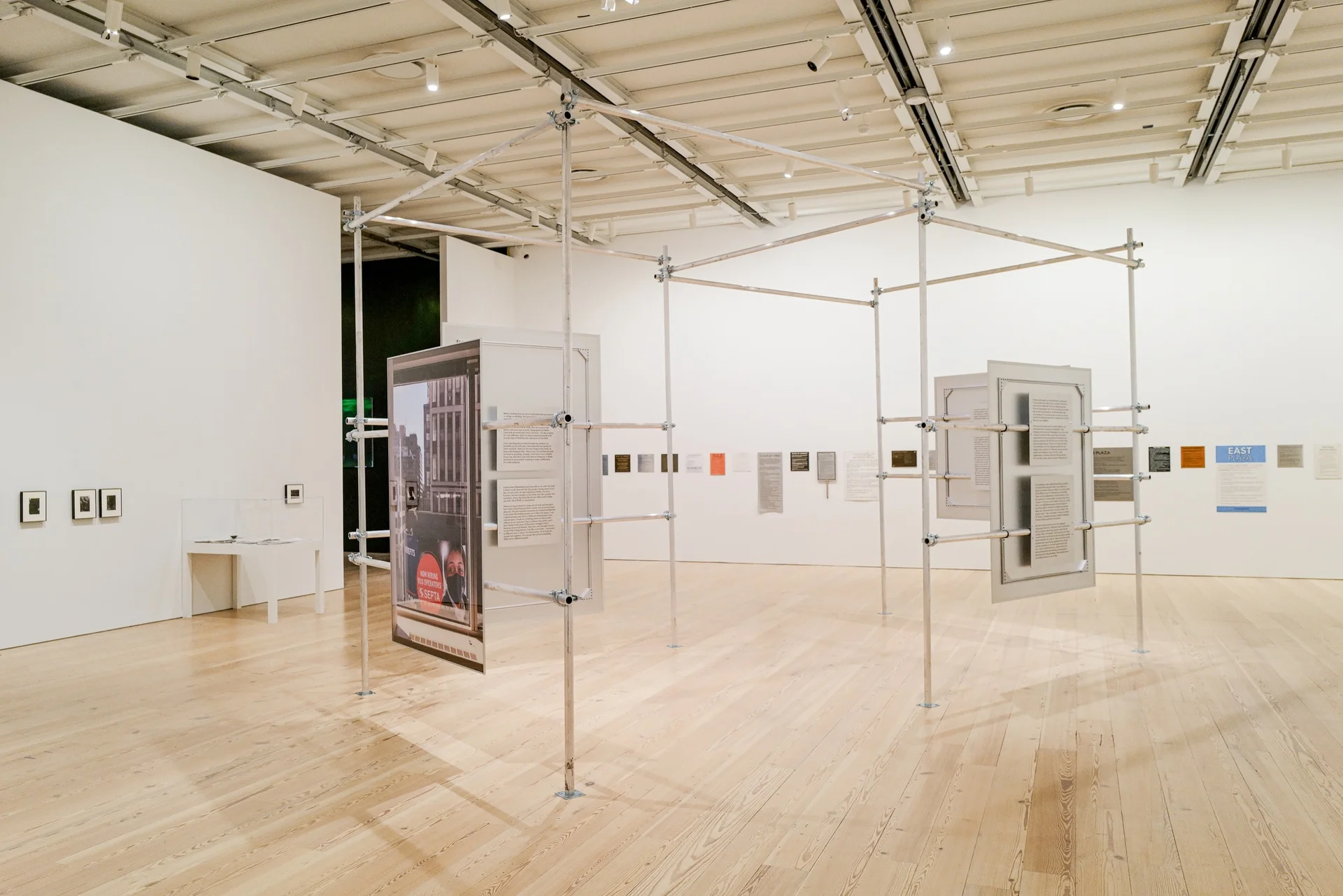
Installation view of Whitney Biennial 2026 featuring works by Emilio Martínez Poppe (centre) and David L. Johnson (far wall) Photograph by Jason Lowrie/BFA.com. © BFA 2026
On the wall behind Poppe’s photographs, Johnson’s series Rule (2024-ongoing) consists of a collection of signs taken from some of New York’s many privately owned public spaces—an unusual phenomenon that started in the 1960s as a requirement for private buildings built beyond a certain height. The owners often post restrictive rules for these park-like, street-level spaces on metal placards, prohibiting things like music, bicycles and sitting on the ground. Johnson’s signs, an ever-growing collection, include examples from the plazas of Wall Street skyscrapers, high-end shopping centres, Hudson Yards and even Zuccotti Park, the homebase of the 2011 Occupy Wall Street movement.
Seeing and being seen
Struggles to control public spaces, narratives and images recur through this year’s Whitney Biennial, so it is not surprising that more than a half-dozen participating artists explore alternative visual systems, some of them centuries-old, others shaped by the latest technology.

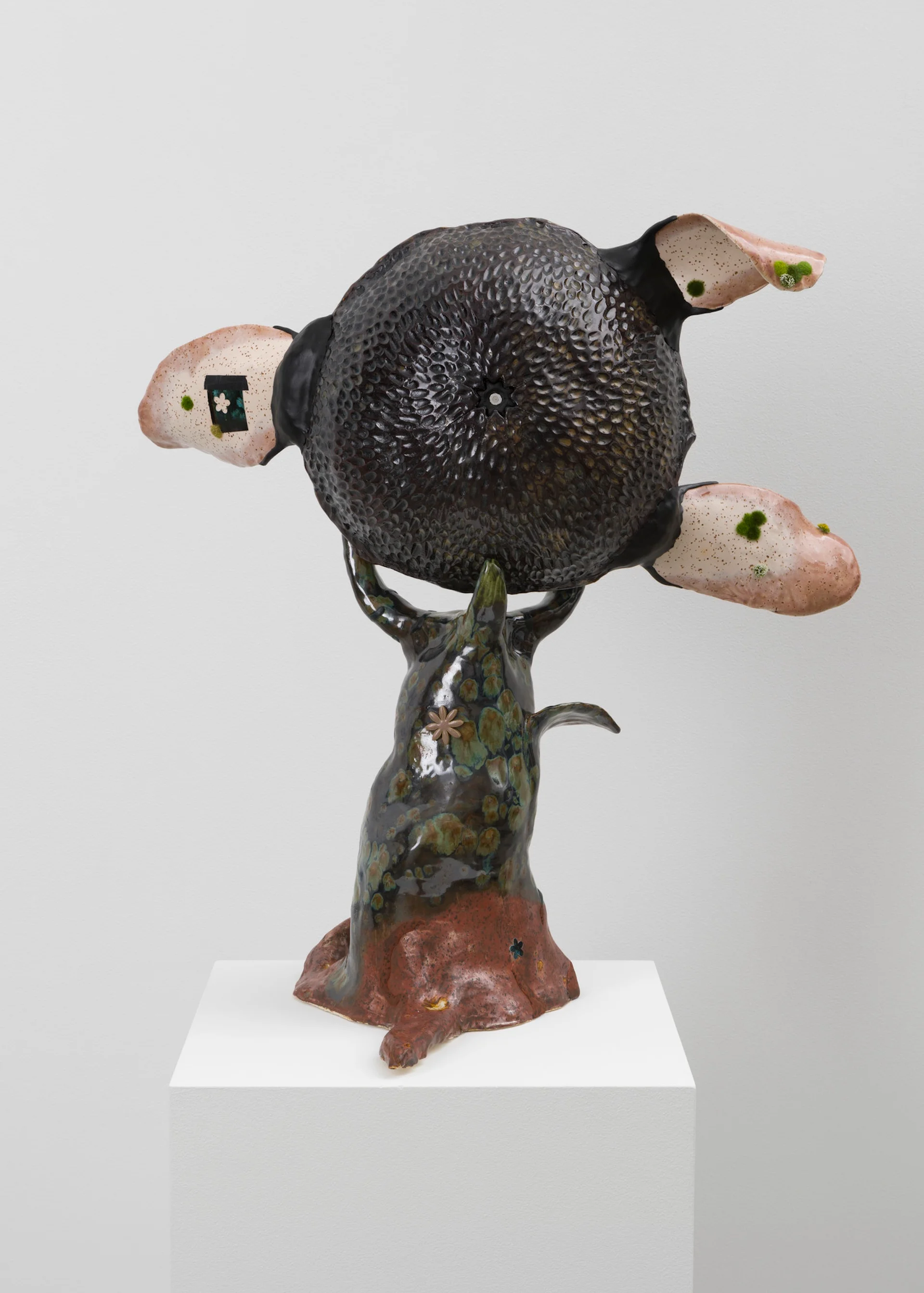
Erin Jane Nelson, Sunflower Cam, 2026 Courtesy the artist, Chapter NY, New York, and Document, Chicago and Lisbon
The New Mexico-based artist Erin Jane Nelson, for instance, is known for ceramic sculptures resembling amoebas or sea anemones, in which she embeds photographic prints. Her group of freestanding and wall-mounted sculptures on the fifth floor represents a new evolution in her practice that taps into the earliest form of photography: she has created a series of freestanding ceramic sculptures fitted with tiny apertures that allow them to function as pinhole cameras. She positioned several of them in the New Mexico desert, and some of the resulting images are featured in her wall-based works. The resulting, quasi-abstract images are a stark contrast to the often-sinister precision of photographs in the 21st century, and also draw out surprising connections between ceramic and photographic processes. “Both are very alchemical, where there is a state-change that, as the maker, I am not witness to,” Nelson says in a catalogue interview.
Another kind of plein-air photography, explicitly related to the medium’s more sinister applications in warfare, is on display in the Afghanistan-born, Berlin-based artist Aziz Hazara’s sixth-floor installation Moon Sightings (2024). The images, mounted on a wall covered in thermal blankets, are based on scans and data from discarded night-vision goggles frequently sourced from war zones. Each image in the cluster of frames features dark expanses streaked with neon green and, in one case, bright purple. Conceptually compelling—and, with wars raging in Europe and the Middle East, incredibly timely—the work nonetheless falls flat visually. (The installation appears all the more underwhelming due to its juxtaposition with the dazzling computer-programmed digital “paintings” from the 1980s on the opposite wall, by the Palestine-born, New York-based artist Samia Halaby.)

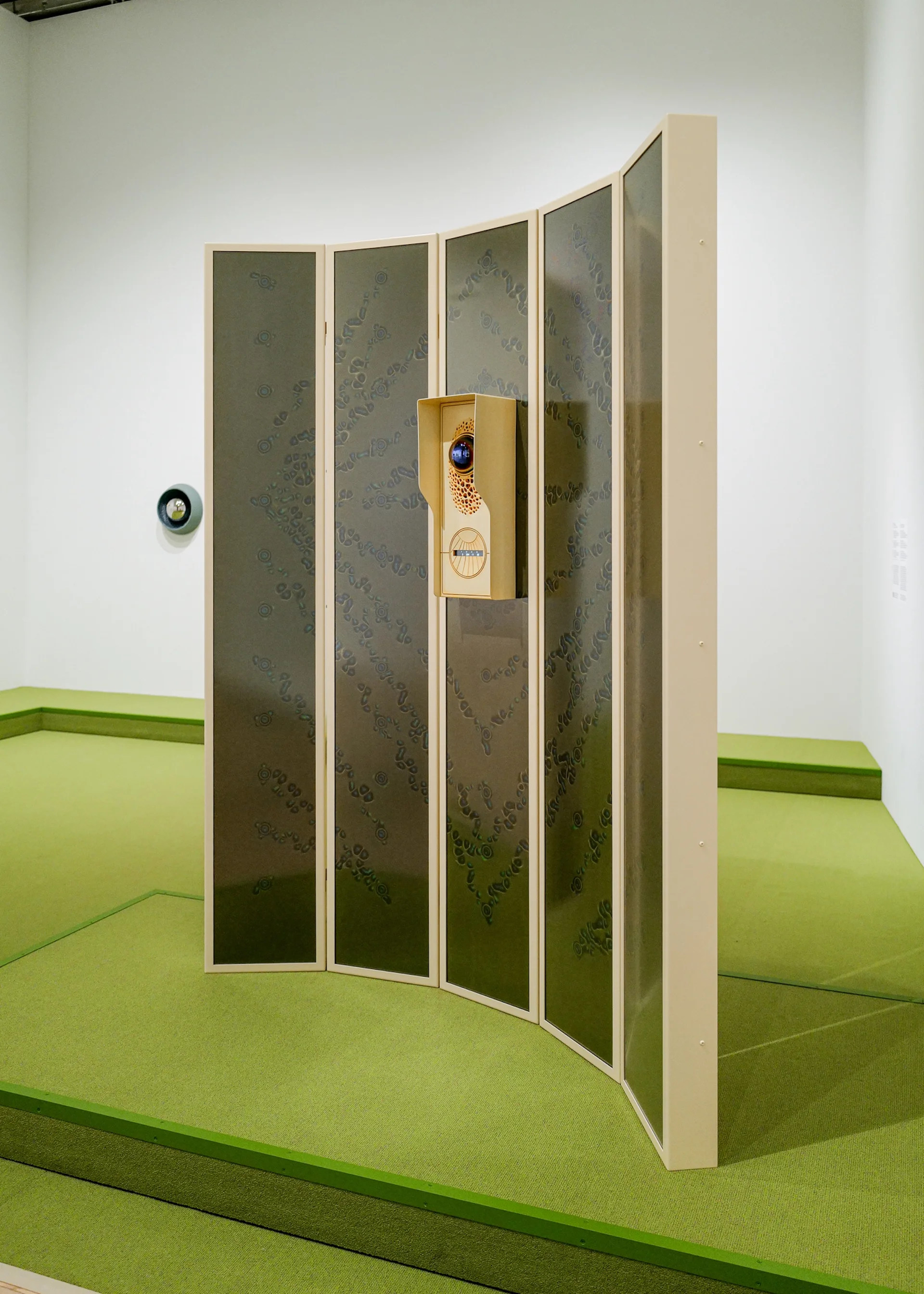
Installation view of Whitney Biennial 2026 featuring works by Cooper Jacoby Photograph by Jason Lowrie/BFA.com. © BFA 2026
In an adjacent sixth-floor gallery, the New Jersey-born artist Cooper Jacoby, who now splits his time between Miami and Paris, has gone all in on surveillance capitalism. Anchoring the installation are two sculptures from the artist’s Estate series, in which doorbell intercom cameras peer out at museumgoers from behind mirrored casings. Both pieces feature artificial intelligence (AI) models trained on the social-media posts of dead creative people, who “talk” from the sculptures’ speakers—an experience all the more discomforting given the recent news that Meta has secured a patent for such AI “deadbots”. An adjacent trio of futuristic clocks with actual teeth for minute and second hands, came about after Jacoby’s health-insurance company offered him a discounted rate in exchange for taking a genetic test to determine his “biological age”. The clocks track the biological time of three other test-takers.
“I’m curious how life is increasingly assetised in different forms, whether it’s a data training set or actuarial,” Cooper says in a catalogue interview, “whether it’s your social-media residue or better calibrating the window in which you’re likely to die.”
The Los Angeles-based artist Gabriela Ruiz deploys surveillance technology in significantly funnier and more maximalist form on the fifth floor with the neon-green, wall-mounted sculpture Homo Machina (Human Machine, a.k.a. Gay Machine) (2026). The flashing, pulsing work, embedded with cameras and tiny surveillance screens, speakers and a spinning ouroboros figure, is a kind of retrofuturist self-portrait. For Ruiz, who can access the cameras in some of her sculptures remotely, that impersonal power to observe is a meaningful reversal of the typical dynamic in a thoroughly surveilled society such as the US in the 21st century.

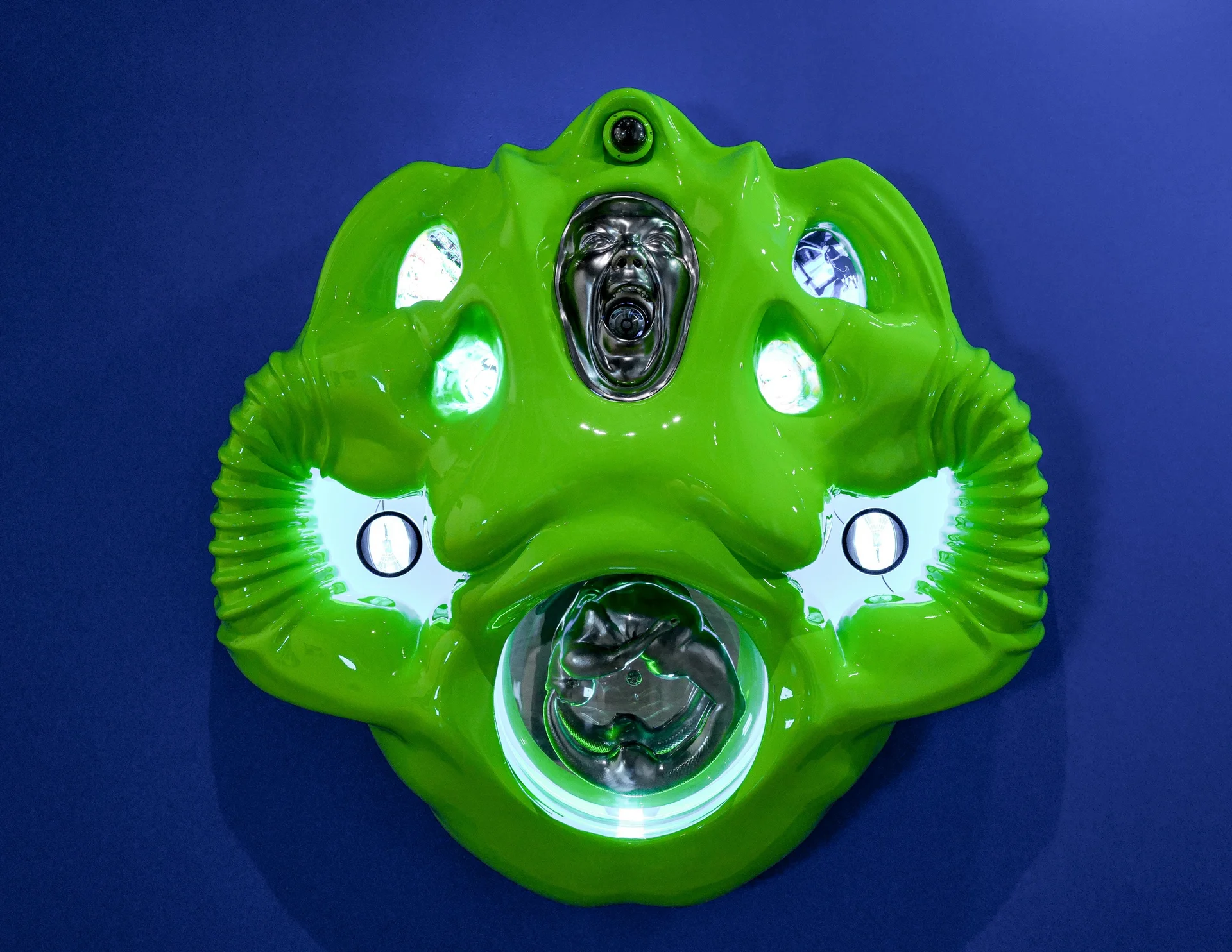
Installation view of Whitney Biennial 2026 featuring Gabriela Ruiz’s Homo Machina (Human Machine, a.k.a. Gay Machine) (2026) Artwork courtesy the artist, support for this artwork is provided by Forum of Fountainhead Arts. Photograph by Jason Lowrie/BFA.com. © BFA 2026
“It’s so invasive that I don’t like to do it, even when there’s two-way communication built in,” Ruiz says in a catalogue interview. “I don’t store any of the live footage. But I also think it’s, like, taking back the power of surveillance, putting it back in the hands of people who aren’t normally in that position.”
Another artist trying to invert the usual dynamics of visibility and power in this year’s biennial, in fact in the same gallery as Ruiz’s work, is the Colombia-born, Miami-based artist and video-game designer Leo Castañeda. His intervention features custom furniture, an interactive video, wallpaper and a gaming station where visitors can play a version of his surrealist game Camoflux: Levels & Bosses. It is partly based on the imagery in his grandmother Maria Thereza Negreiros’s fantastical paintings of Colombian and Brazilian landscapes, but is also designed as a responsive digital environment for players and gallery-goers to explore and shape.
“The game has a spectrum of interactivity where it encourages sustainable interactions, but it also allows for destructive interactions,” Castañeda says in a catalogue interview. “So if you’re kind to the landscape and calmly address its needs, then the boss cares for you and lets you pass through. But if you’re destructive, confrontational and aggressive, the boss throws the entire landscape towards you.”

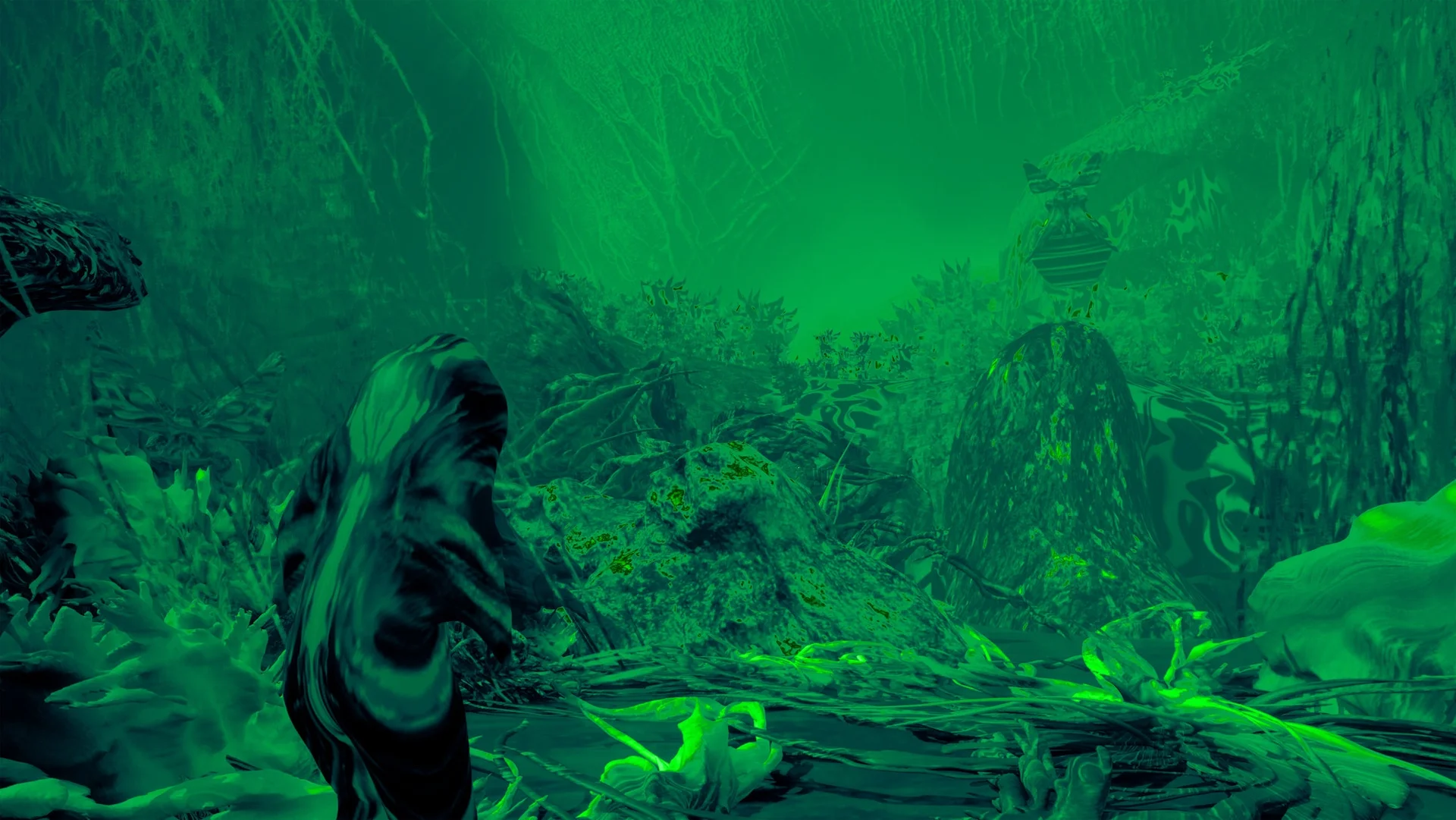
Leo Castañeda, still from Camoflux: Levels & Bosses (Igapó), 2023-25 Courtesy the artist
For a more analogue approach to seeing the landscape and reality differently, visit the stairwell on the west side of the Whitney, overlooking the Hudson River, where the Los Angeles-based artist Margaret Honda has made a subtle window intervention. Her installation Film (Whitney Museum of American Art) (2026) consists of 22 cinematography lighting gels applied to the stairwell windows; it is the latest iteration in Honda’s Film series, which she began in 2016. At the Whitney, the gels are installed in sequence corresponding to the manufacturer’s numerical classifications, creating a subtle gradient of light and colour as visitors climb and descend the stairs, while also reflecting shifts in sunlight and ambient lighting.
Referring to an earlier installation in the series, Honda says in the biennial catalogue that “the sun functions like the lamp in a projector, and you’re the projector motor. As you walk through the space, you’re essentially activating the work.”
A family affair
One of the 2026 Whitney Biennial’s most thematically unified sequences, on the museum’s fifth floor, features works wrestling with experiences of families (both biological and chosen) and bodies.
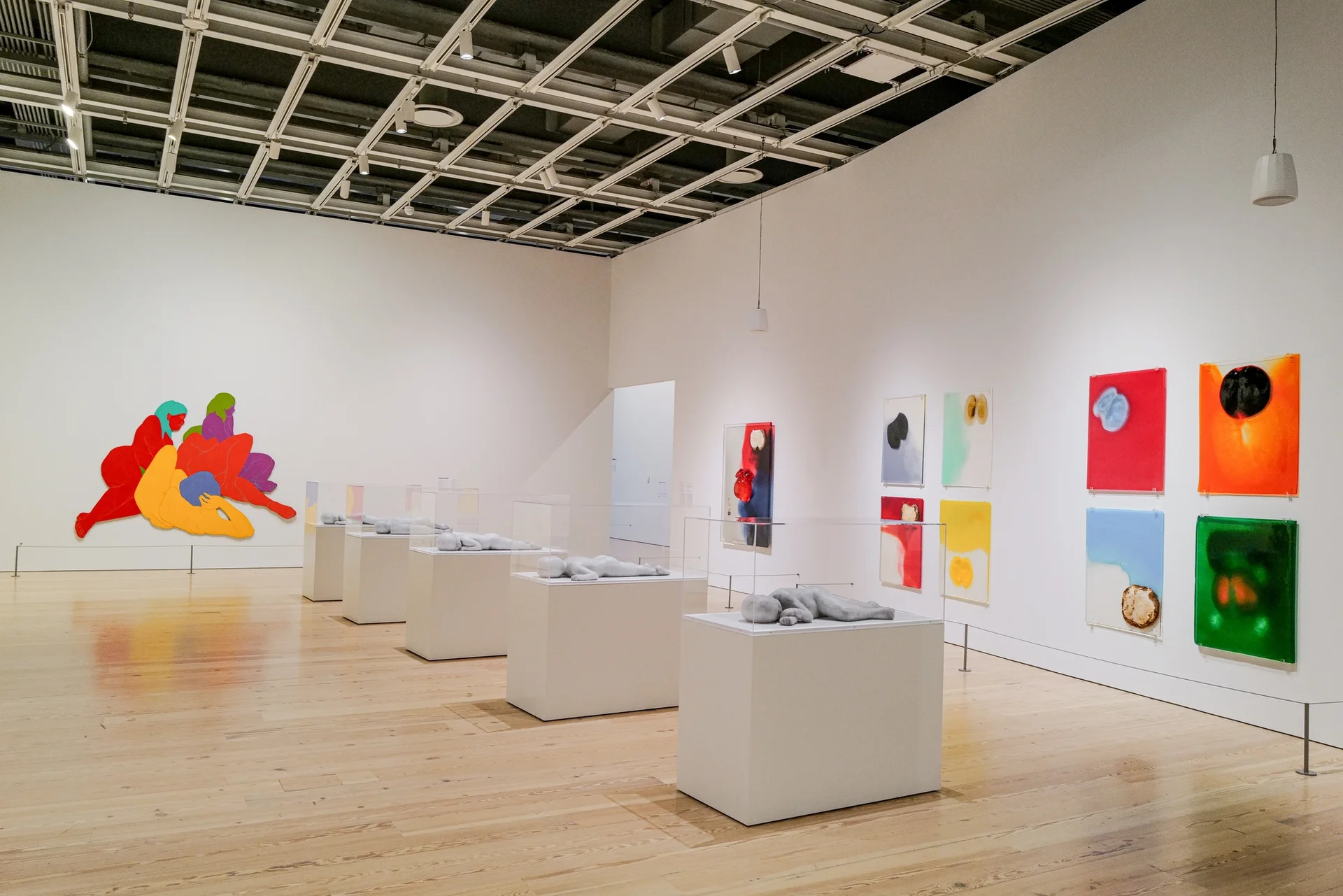
Installation view of Whitney Biennial 2026 featuring works by Carmen de Monteflores (left), Andrea Fraser (centre) and Nour Mobarak (right) Photograph by Jason Lowrie/BFA.com. © BFA 2026
These subjects are most overtly addressed in the pairing of three boldly colourful, shaped canvases from the 1960s by Carmen de Monteflores with five hyperrealist wax sculptures of sleeping toddlers by her daughter, the conceptual artist Andrea Fraser. De Monteflores’s paintings of intertwined nude couples and groups, rendered in warm, saturated hues, speak of sensuality and familiarity. Or, as Fraser tells her mother in an interview for the catalogue: “You know, Mom, some of those paintings are really sexy. I look at them, and I think, wow, there must have been a lot of sex happening!”
De Monteflores responds: “I think it was my longing for sex after years of having kids. I mean, you were just teeny-tiny. A lot of my sensual life had gone into kids. I think there was a longing for a fuller sexual life.”
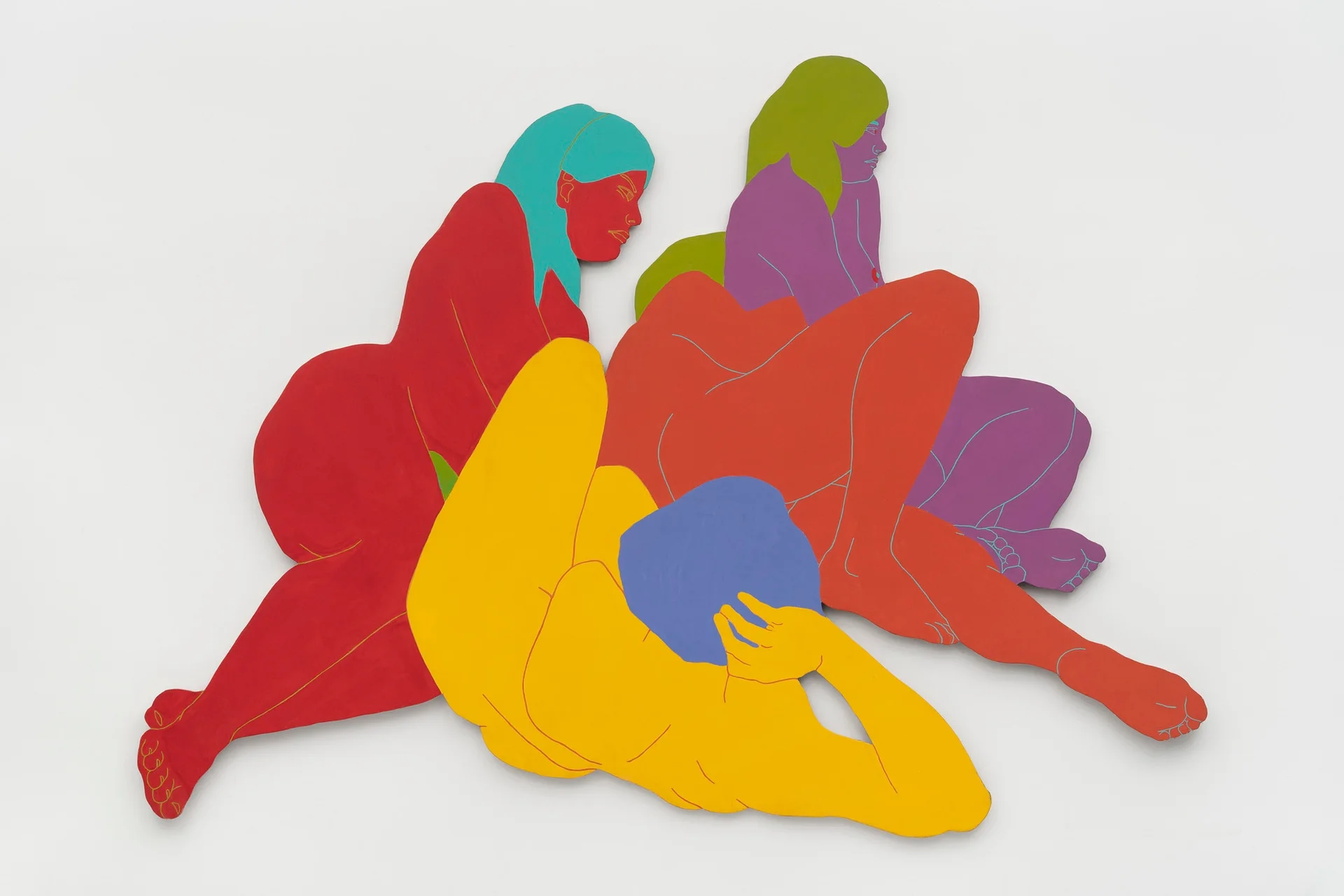
Carmen de Monteflores, Four Women, 1969 Courtesy of the artist
The curators have cleverly juxtaposed the bright vitality of De Monteflores’s paintings and the uncanny vulnerability of Fraser’s 2024 sculptures of toddlers in nearby display cases, with a group of works about pregnancy by the Cairo-born artist Nour Mobarak. The works use the artist’s own body as a vessel for addressing the experience of being pregnant through visual, material and sonic means. Her Recto Verso series consists of casts of her own body in brightly pigmented resin, sometimes embedded with mycelium. Also included is the audio piece Broad’s Cast (Montage) (2024-26), which Mobarak created by inserting a microphone into her vaginal canal before, during and after her pregnancy, creating a kind of internal field recording of human life.
“It was interesting listening to things from this other perspective—the way the body’s mechanics work inside as we go about our day and how it filters the sounds around us,” Moubarak says in an interview for the catalogue. “I made a recording while I was at the OB/GYN, listening to my baby’s heart. And then I placed that speaker on my belly, so there’s a recording of the inside of my body being broadcast back into the inside of my body, being recorded from inside my body. It was an uncanny feeling listening to that.”
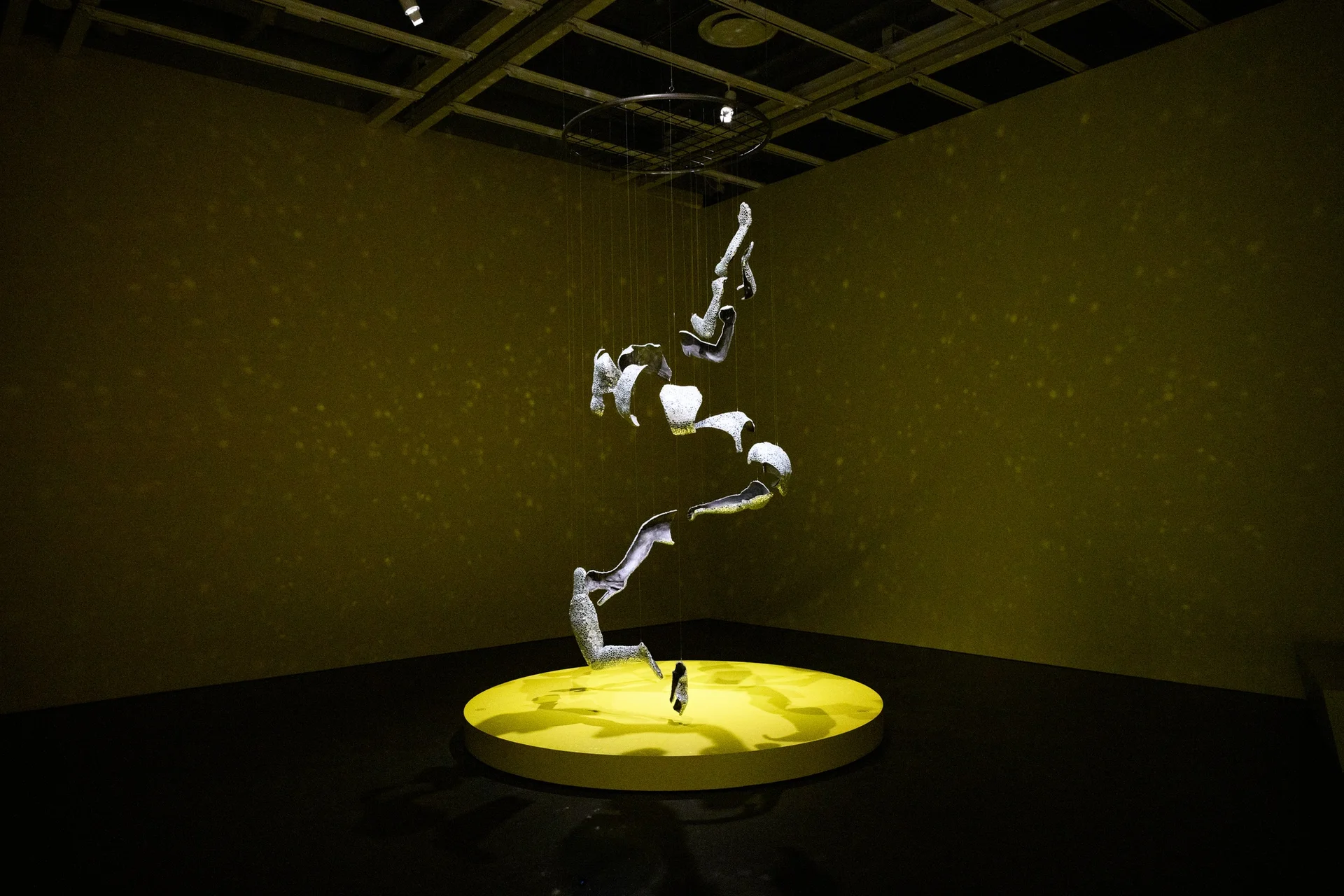
Installation view of Whitney Biennial 2026 featuring Young Joon Kwak’s Divine Dance of Soft Revolt (Anna, Travis, Me) (2024) Artwork courtesy the artist and Commonwealth and Council, Los Angeles. Photograph by Darian DiCanno/BFA.com. © BFA 2026
Around the corner in a dimly lit room, the Queens-based, Los Angeles-based artist Young Joon Kwak is also pairing sculptural and sonic works to foreground ideas about bodies, belonging and intimacy. Their suspended sculpture Divine Dance of Soft Revolt (Anna, Travis, Me) (2024) features casts of the limbs of members of Los Angeles’s queer and trans communities, with exteriors tiled in brilliant mirror mosaics like a disco ball. The installation’s audio component, a collaboration with Marvin Astorga, features recordings of musicians from the artist’s community. The combination of hybrid forms, dramatic lighting and atmospheric sound amounts to a celebration of shifting identities and the families we find and form.
“I make sculptures that work with fragmentation, ephemerality, movement, light, shimmer,” the artist says in a catalogue interview. “I want to subvert the traditions of sculpture and be with my community.” They add: “Especially given sculpture’s entanglement with monumentality, nationalism, white-supremacist patronage.”
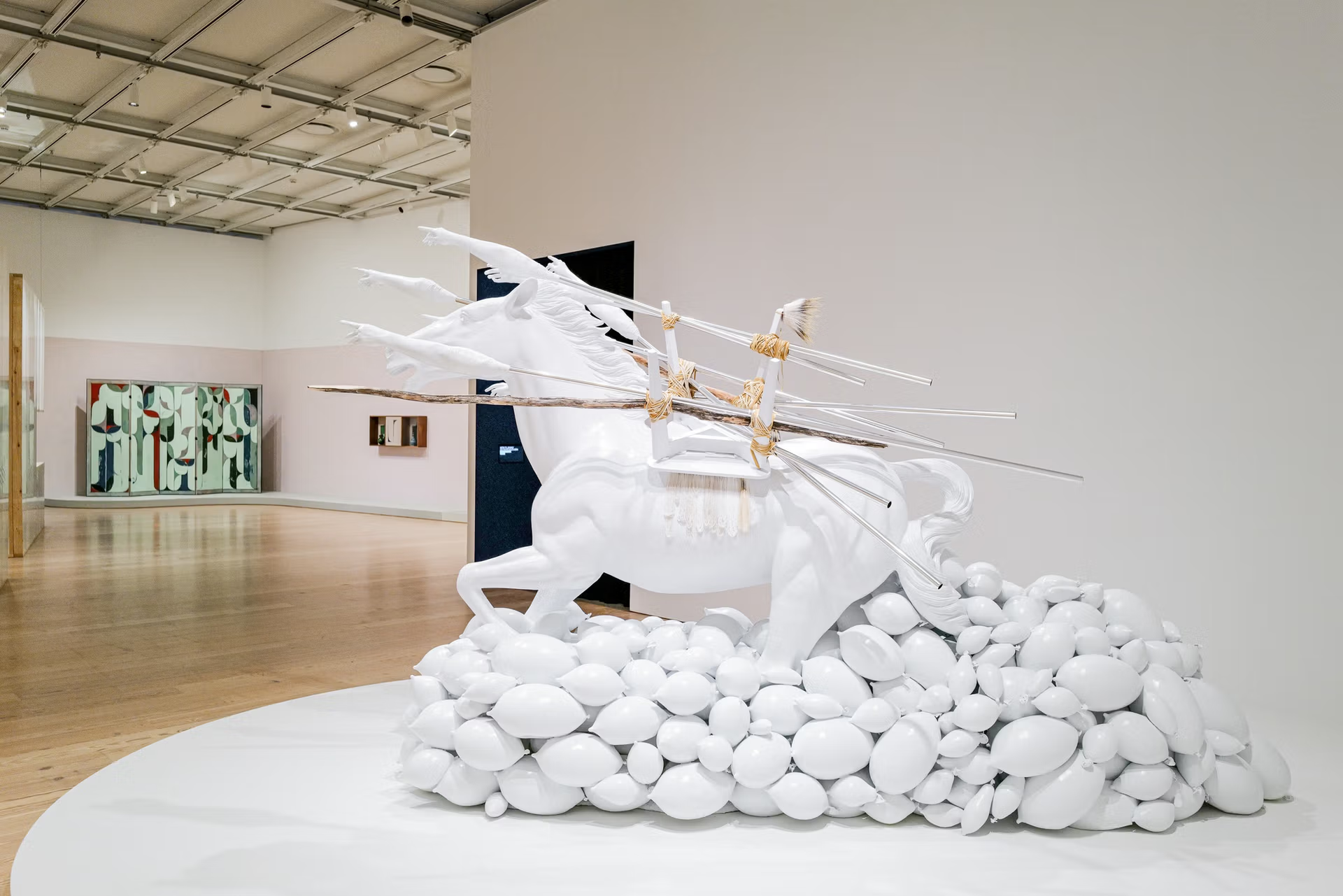
Installation view of Whitney Biennial 2026 featuring works by Kamrooz Aram (left) and Anna Tsouhlarakis (right) Photograph by Jason Lowrie/BFA.com. © BFA 2026
Throughout the 2026 Whitney Biennial there are many more engagements with these themes. Some are quite overt, like Anna Tsouhlarakis’s stridently subversive equestrian monument SHE MUST BE A MATRIARCH (2023), Raven Halfmoon’s colossal ceramic sentinels and Pat Oleszko’s giant inflatable jester Blowhard (1995). Others take a more understated line of attack, as seen in Jasmin Sian’s miniature cut-out scenes made from plastic trash and Kamrooz Aram’s evocative abstract compositions. But throughout, the featured artists are wrestling in unexpected, playful and often deeply personal ways with the ripple effects of US interventionism and political culture.
- Whitney Biennial 2026, until 23 August, Whitney Museum of American Art, New York


