







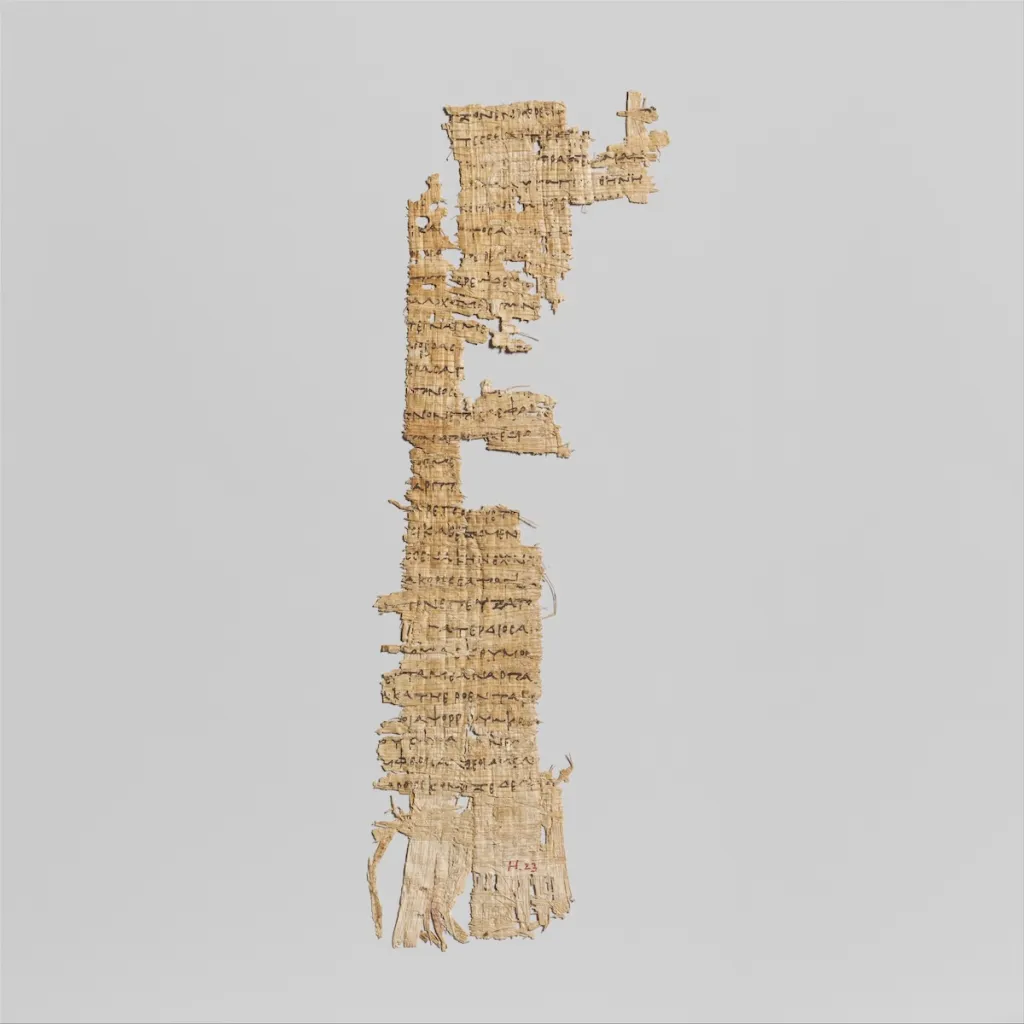
Likely prompted by the runaway success of a certain classically oriented movie in theaters this summer, the Metropolitan Museum of Art has returned the oldest preserved fragment of The Odyssey to one of its galleries, where it can be seen and appreciated after a long time out of view. The relic is now on display in Gallery 162 in the museum’s section devoted to Greek and Roman Art.
In a round-up of Odyssey-related collection treasures on its website, the Met describes the relic as the first early Ptolemaic fragment of the text ever discovered and notes: “Dating from around 285–250 BCE and made in Egypt, this fragment is beautifully inscribed using a combination of charcoal and water via a stylus on papyrus—one of the most popular materials for writing in antiquity—and contains three lines that do not exist in today’s standard text.”
In a new video on the Met’s Instagram page, Sean Hemmingway, the curator in charge of the Met’s Department of Greek and Roman Art, attributes those three lines to oral recitations by disparate bards who were known to “occasionally embellish and have different versions of these stories.” He also shows how the papyrus fragment is viewable in frontal and back views.
Comparing the story to the legacy of Odysseus himself, the Met’s round-up reads: “Like the Greek warrior, this object reminds us that the telling of The Odyssey itself has taken its own distinct journey through history.”


