





In May 1968, when French students, then workers, took to the streets of Paris in a revolutionary cloud of protest, they dug up cobblestones and demanded the world be remade. They did not mean better infrastructure; they meant a fairer, freer society. They dreamed of knowledge and emancipation for everyone. “Be realistic,” they chanted, “demand the impossible.”
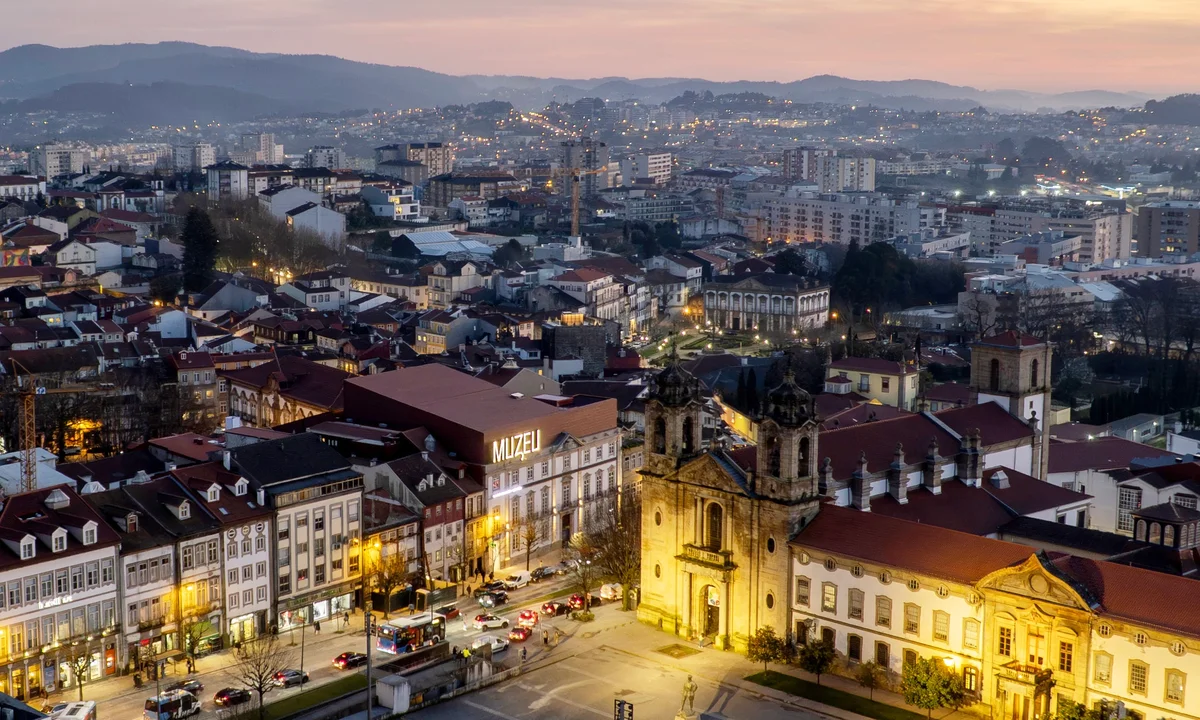
This month, that exact sentiment takes centre stage in northern Portugal. In the city of Braga, an hour north east of Porto, a new museum dubbed Muzeu—Thought and Contemporary Art DST will open its doors. It is home to one of the country’s most significant private art collections, that of the DST Group.
The museum’s director, Helena Mendes Pereira, says the project is about much more than simply showcasing the 1,500-plus works in the company’s holdings: the space aims to be a civic forum for cultural, philosophical and political discussion. The Braga-based architect José Manuel Carvalho Araújo has transformed the site—a former courthouse in the historic centre of the city—into a storied exhibition space rising over four floors. An auditorium at the top will host a rolling programme of live events.
Prioritising workers
With more than 100 works by 96 Portuguese and international artists, from Alex Katz and Francesco Clemente to Franz West and Nan Goldin, the inaugural exhibition reprises as its title a version of that erstwhile French slogan, Let Us Be Realistic, Let Us Demand the Impossible. “It’s a political statement,” Pereira says. On 24 April, the museum will open for the company’s workers only, and from the day after—Freedom Day, the anniversary of the revolution—for the general public. Entrance will be free for everyone during that first week. And on 1 May, the museum will close to mark International Workers’ Day.
We believe culture is a way that we can make workers happier
Helena Mendes Pereira, director, Muzeu
DST Group is no ordinary industrial conglomerate. It was founded in the 1940s by Domingos da Silva Teixeira, father of the current chairman José Teixeira, and supplied materials for local construction projects during the oppressive years of the Estado Novo fascist dictatorship. In 1974, the Carnation Revolution—so called because civilians put flowers in soldiers’ guns—brought the regime down with remarkably little bloodshed. This ushered in a new, tumultuous era of leftist reform, economic struggle, decolonisation and cultural revival.
DST Group chairman José Teixeira’s leftist principles are reflected in the museum’s commitment to community involvement Hugo Delgado
In the decades since, DST has branched out into businesses including property, infrastructure, water, telecoms and renewables. The family has also, from the outset, prioritised cultural investment, setting up a biennial, a photography award, three literary awards and an art in public space and sustainability award. It also boasts an art gallery, which exists not to sell but to buy works for the collection from the artists it supports. It is actively engaged in education, funding scholarships and a professorship, collaborating with universities and serving as industry affiliate for the MIT Portugal education and research programme.
Peireira describes these multi-layered activities not just as philanthropic endeavours but as a kind of human resources toolkit. The collection, she says, is for everyone who works there. Pieces are displayed throughout the company’s factories and offices, and the museum, once opened, will be free to enter for employees. Ahead of the opening, they are also being offered training, if they would like it, to act as educational exhibition guides.
“The museum is not a space for the elite,” Pereira says. “Any worker can participate. We really believe that everyone deserves a good life. We pay better and we also manage human resources with philosophy lessons, reading books together, with conference talks given by international authors and philosophers—for our workers, that is, not for the outside but for the inside. We believe culture is a way that we can make workers happier and also more productive.”
An industrial aesthetic
Muzeu now offers the opportunity to share these values with the wider community, not least because, as a building company, its employees have literally built it themselves. “It’s poetic,” Pereira says. “We have built our own house.”
The 3,000 sq. m of exhibition space inside is simply designed to look like a factory, she says: “It’s very industrial, very structuralist, everything in white, very simple.” This area will host a rotating selection of works from the collection, as well as a room dedicated to Anselm Kiefer, a key artist in the collection.
A central staircase leads up to the auditorium, where children will take part in philosophy workshops and jazz fans will engage in collective listening sessions. This has been intentionally placed at the top of the building. From the work ambience of the “factory” below, visitors move up into a space where dreaming, as Pereira puts it, is always possible: “It’s a never-ending story.”
Teixeira, Pereira says, is a leftist. And his museum will not be a neutral space. “We’re going to have a political vision and create influence. In Europe, in the United States, we are living in very strange times. Our idea is very clear: it’s to inform and to foster discussion with the community and try to create a better situation for democracy.”


