






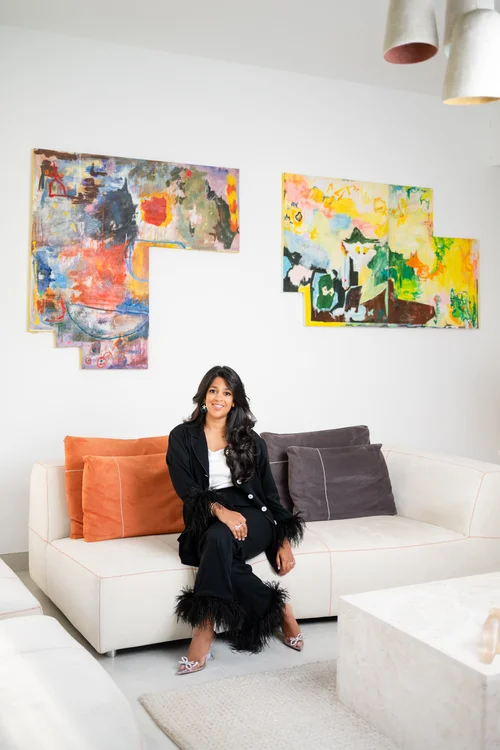

Kamila Rangoonwala Ahmed grew up around art, but her collection has become distinctly her own. Based in Dubai with deep ties to London and the South Asian subcontinent, she has spent the last decade building a collection rooted in patronage, personal instinct, and a belief in artists at pivotal moments in their careers.
Ahmed’s collection moves fluidly between generations of South Asian art. Works by established figures such as Zarina sit alongside those of younger practitioners such as Aiza Ahmed. In its totality, the collection is rooted in history and animated by discovery.
How Ahmed’s collection is shaped by her upbringing and instinct
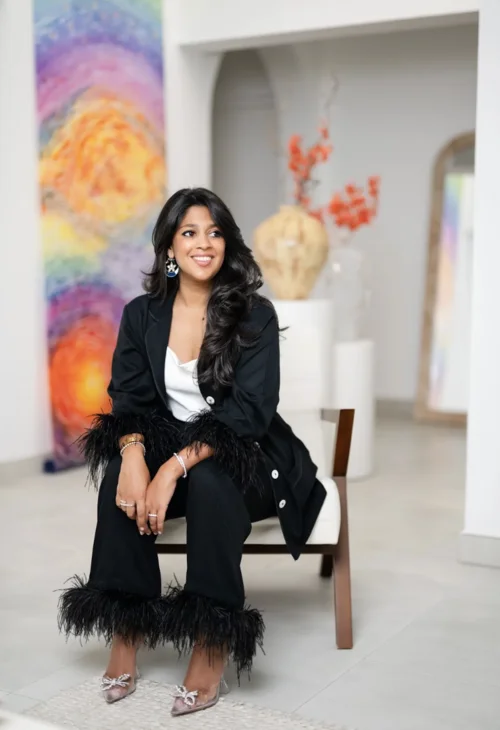


Ahmed grew up in a family where collecting was inseparable from cultural support. Her family spent decades supporting and collecting South Asian modern and contemporary art.
“My grandfather was a passionate advocate of the arts and believed deeply in the role culture plays in shaping society,” she said. “That appreciation was woven into our family life, so art was never something that felt separate from everyday conversation.”
That legacy gave Ahmed an early education in collecting, but her own approach developed through a different lens. Rather than beginning with established names, Ahmed was drawn to artists at the start of their careers. Her collecting journey began in Pakistan at Karachi’s VM Art Gallery “Emerging Talent” exhibition, where graduating students from the country’s leading art schools presented their work to the public.
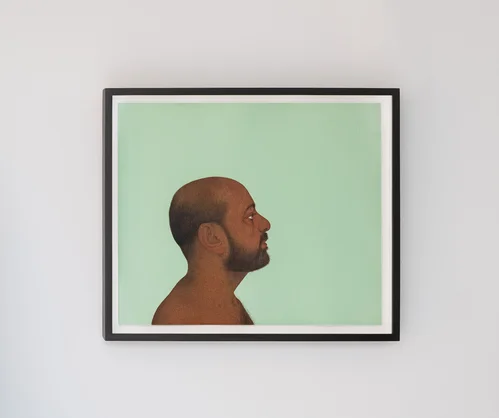

“What drew me was the opportunity to acquire works at such an early stage in an artist’s career and then follow their evolution over time,” she said. “There is something incredibly rewarding about discovering an artist early on and watching their practice develop over the years.”
Her draw to emerging artists has become a defining feature of her art buying but is accompanied by works by established South Asian names. These include Francis Newton Souza, Ali Kazim, and Rashid Rana.
Building a collection rooted in language, memory, and personal history

Ahmed’s eye continues to evolve. What has remained consistent is her attraction to works that engage with language and personal histories. Increasingly, she finds herself drawn to artists who incorporate text into their practice. “Writing carries an emotional weight that transcends language,” she said. “Whether you can read it or not, the rhythm, movement, and presence of text can evoke memory, intimacy and emotion.”
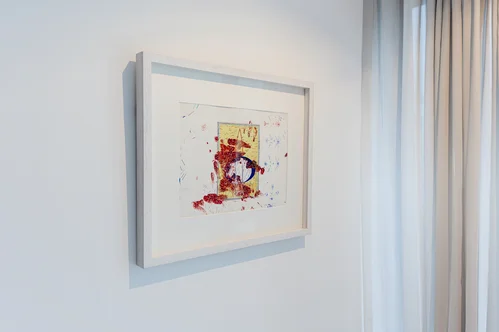

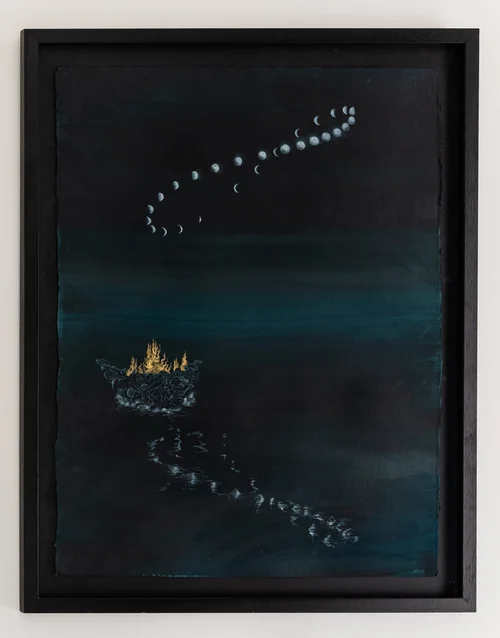
Among the works she returns to most often is Sea, Sermon, Story (2022), a deep blue triptych by Karachi-based artist Anushka Rustomji that explores the sea and sky as ancient, shifting sites for the sacred. “I’ve always been drawn to Anushka’s ability to weave together personal narratives, history, and memory through an incredibly delicate visual language,” Ahmed said. “It’s one of those works that reveals something new every time I spend time with it.”
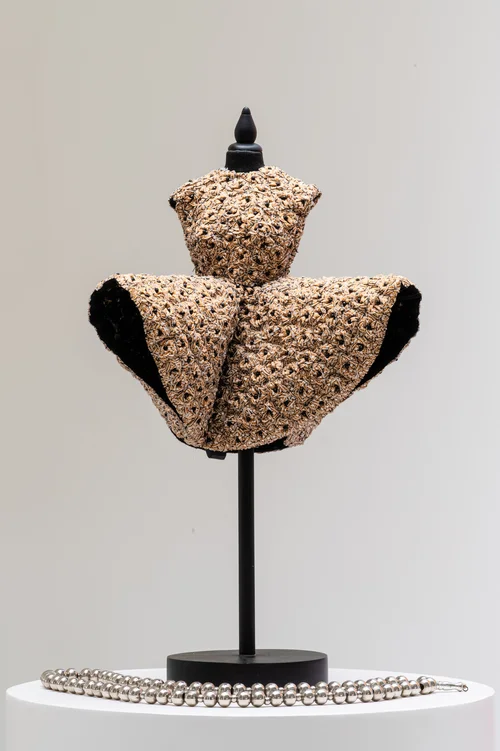
She also speaks similarly about Pakistani artist Bushra Waqas Khan, whose work Sub Rosa (2021) occupies a prominent place in her home. The sculpture’s midsection billows outward, even as the whole form holds itself upright, steady as a mannequin. “I love the way her work combines beauty, craftsmanship, and social commentary while remaining incredibly elegant and visually captivating,” she said. Khan was shortlisted for the 2021 Jameel Art Prize, organized by the Victoria and Albert Museum in partnership with the Dubai institution Art Jameel.
Investing in artists before the spotlight
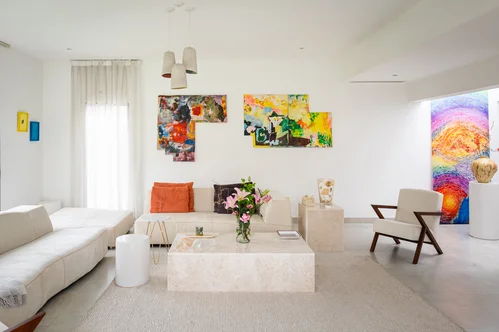

Brightly colored works by the neo-miniaturist artist Wardha Shabbir hold a similar significance, particularly given Ahmed’s long relationship with the artist’s practice. Acquired years before Shabbir’s inclusion in the 2026 Venice Biennale main exhibition, “In Minor Keys,” they reflect a recurring pattern within the collection of identifying artists at the early stages of their careers. “Having followed her career for many years now, it is incredibly rewarding to watch her practice evolve,” she said. “My advice is always to buy what genuinely resonates with you rather than what you think you should buy.”
Her latest acquisition continues that trajectory. She is currently acquiring a work by New York–based artist Aiza Ahmed, whose practice has recently explored the Attari-Wagah border ceremony, enacted daily by the military on the border of India and Pakistan since 1959. “As someone whose own life has been shaped by connections across Karachi, Dubai and London, I found the work deeply resonant,” she said.
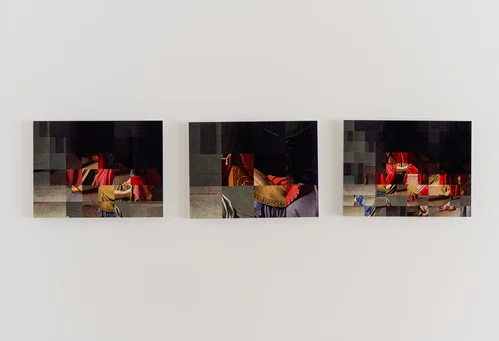

Still, like many collectors, Ahmed can recall a few works that got away. She points to a bench by Rana Begum at Art Dubai in the early 2010s. “At the time, it felt like a significant purchase, and I hesitated,” she said. “Looking back, not only has the value increased substantially, but it was also such a beautiful example of her practice.” More recently, she missed a work by Misha Japanwala, whose sculptural practice explores the body and questions around self-representation. “I would have loved to have added one of her moulded works to my collection,” Ahmed said.
Ahmed’s collection captures a generation of South Asian artists at a moment of extraordinary international visibility. But its real strength lies in the quieter years before that visibility arrived. Her collection is not only a record of where South Asian art is now, but of the artists she chose to believe in before the wider world caught up.


