





The US State Department is now accepting design proposals for the 2027 Venice Biennale of Architecture, with stipulations echoing its application process for this year’s Venice Biennale: designs should “exemplify America’s exceptionalism,” and “advance and complement U.S. foreign policy and public diplomacy objectives.”
Per the proposal submission guidelines, the ideal architectural design would “promote the achievements of American architectural communities and enhance America’s global competitiveness in the creative and built environment sectors.” The commission should also “offer constructive artistic and cultural channels to counter negative perceptions and advance safety and security in the United States and worldwide.”
The application deadline is July 23 for the commission and accompanying grant, which this year is $475,000—a $100,000 increase from the previous cycle.
The theme for 2027 Architecture Biennale’s main exhibition is “Do Architecture—For the Possibility of Coexistence Facing a Real Reality,” which explores architectural approaches to coexistence amid global climate change. Wang Shu and Lu Wenyu, cofounders of Hangzhou-based Amateur Architecture Studio, will serve as artistic directors. As with the Art Biennale, national pavilions do not necessarily have to sync up with the main exhibition, though many often do. Any country recognized by Italy can submit to participate in the Biennale, with each nation handling the selection process for their respective pavilions.
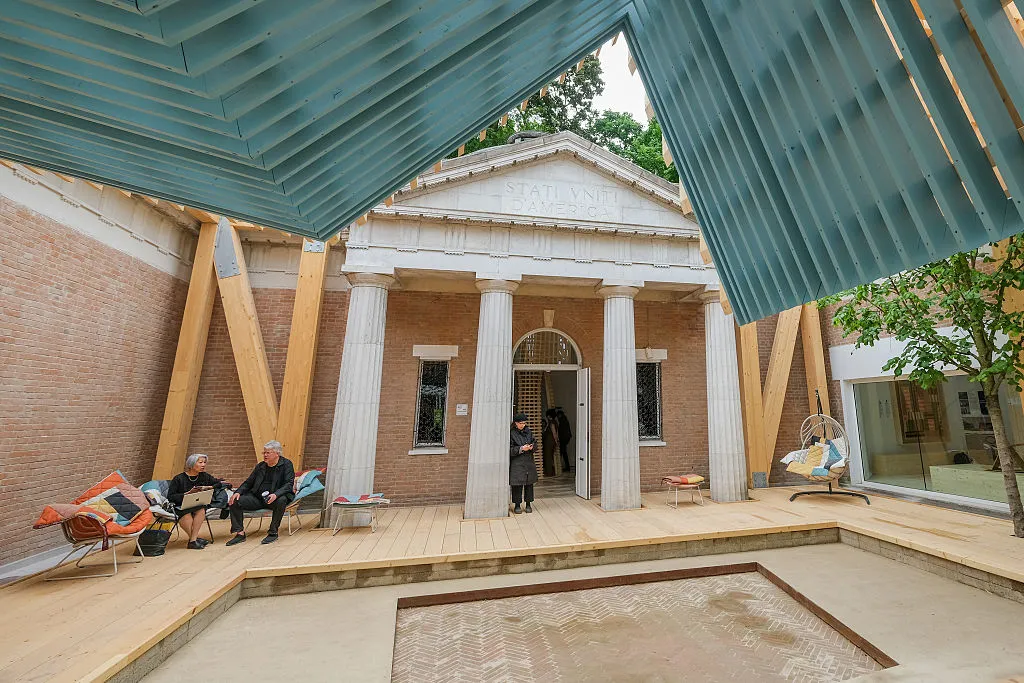
The State Department provided architectural drawings of the US Pavilion, a 1929 Palladian structure designed by William Adams Delano and Chester Holmes Aldrich, for download. Located in the Giardini in Venice, the pavilion is currently hosting an exhibition by Alma Allen, a once little-known sculptor who grabbed global attention amid a contentious application process.
In 2025, the Trump administration released guidelines for the Venice Biennale requiring that the American presentation “reflect and promote American values” and foster “peaceful relations between the United States and other nations.” What followed was an unprecedented selection process: delayed and then restructured months before the Biennale’s opening in May, with the State Department scrapping the country’s long-standing selection model, in which a panel of experts from the National Endowment for the Arts reviewed proposals submitted by museums. In an eyebrow-raising break from protocol, commissioner status was handed to the American Arts Conservancy, a newly formed nonprofit led by Jenni Parido—who lacked museum experience—in collaboration with independent curator Jeffrey Uslip.
Reports also surfaced that several high-profile artists declined Trump’s invitation to represent the US at the prestigious exhibition, including photographer William Eggleston and sculptor Barbara Chase-Riboud, who allegedly cited concerns about the political context and untested leadership. Alma Allen was announced as the representative in November of last year and ultimately presented a suite of abstract sculptures in bronze, wood, and mineral.


