





This week a Dutch journal is publishing the first comprehensive account of Van Gogh’s admiration for the country’s great artists of the 17th century: Vermeer, Rubens, Rembrandt, Hals, Van Ruisdael and Van Goyen. The texts (in English) are in Oud Holland: Journal for Art of the Low Countries.
Admiration for Vermeer
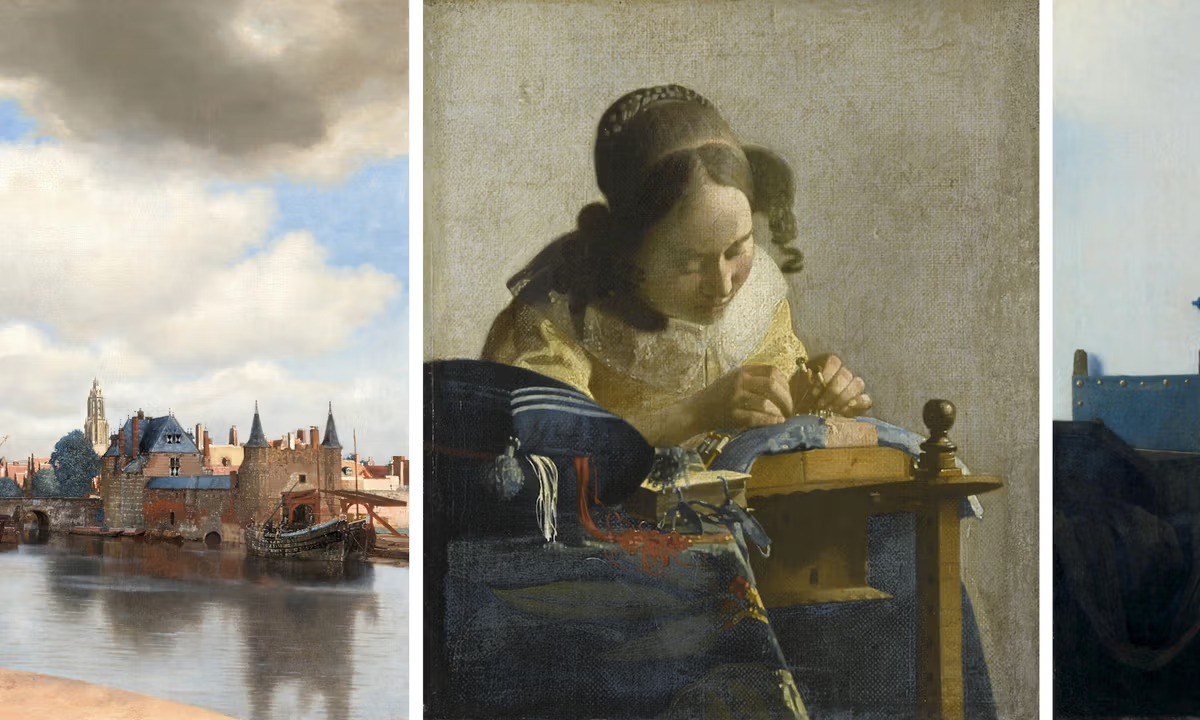
Van Gogh’s love of Johannes Vermeer is now established, but Elmer Kolfin, an art historian at the University of Amsterdam, probes deeper. He works out that Van Gogh would have seen just three Vermeers: View of Delft (1660-61, Mauritshuis, The Hague), The Lacemaker (1666-68, Louvre, Paris) and Woman in blue reading a Letter (1662-64, Rijksmuseum, Amsterdam). However, Van Gogh knew more about Vermeer from books and journals.
Kolfin also discusses the intriguing suggestion that Van Gogh was influenced by the Delft master’s use of blue and yellow. Writing from Arles in September 1888, Vincent commented to his brother Theo: “The dome of the sky is a wonderful blue, the sun has a pale sulphur radiance, and it’s soft and charming, like the combination of celestial blues and yellows in paintings by Vermeer of Delft. I can’t paint as beautifully as that, but it absorbs me so much that I let myself go.”
Van Gogh’s The Yellow House (September 1888)
Van Gogh Museum, Amsterdam (Vincent van Gogh Foundation)
Just a week or so later Van Gogh painted one of his masterpieces, The Yellow House (September 1888), depicting his home (in the centre of the composition) set under a powerful deep-blue sky.
Inspired by Rubens
Peter Paul Rubens represented an important inspiration for Van Gogh for a much shorter period, essentially the three months that he lived in the old master’s home city of Antwerp in the winter of 1885-86. As Teio Meedendorp, the senior research at the Van Gogh Museum, demonstrates in his Oud Holland essay on Rubens, Van Gogh was inspired by the master’s portraits, particularly his use of colour in the modelling of faces.

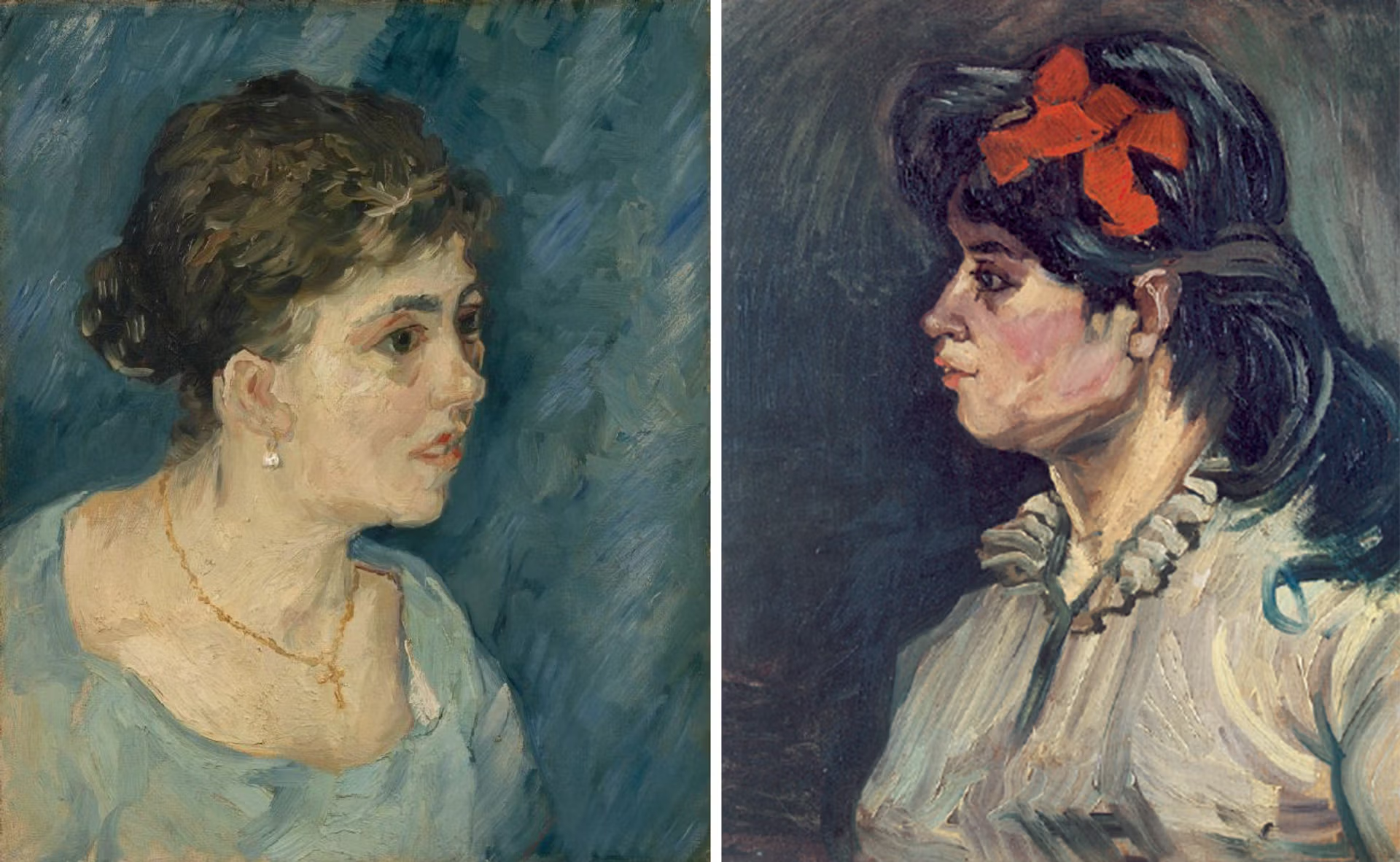
Van Gogh’s Portrait of a Woman (December 1885) and Head of a Woman with a scarlet Bow (December 1885-January 1886)
Van Gogh Museum, Amsterdam (Vincent van Gogh Foundation) and private collection
While in Antwerp, Van Gogh painted three portraits of female sex workers. Writing to Theo about Head of a Woman with a scarlet Bow (December 1885-January 1886), Vincent commented that he was trying to capture “a whore’s expression”.
Something of Rubens’ style of modelling can be seen in Van Gogh’s work, particularly in Portrait of a Woman, with opaque light yellow and pink areas in the face, and accentuated shadows and red accents near the eyes.
On 14 December 1885, when Vincent started painting the female portraits, he wrote to Theo that Rubens “is certainly making a strong impression on me”, particularly “by his way of drawing the features in a face with strokes of pure red”. He singled out the blonde heads in Rubens’ Saint Theresa of Avila through Christ’s intervention rescuing Bernardinus of Mendoza from purgatory (1630-1635), a large altarpiece in what was then called the Musée Ancien.

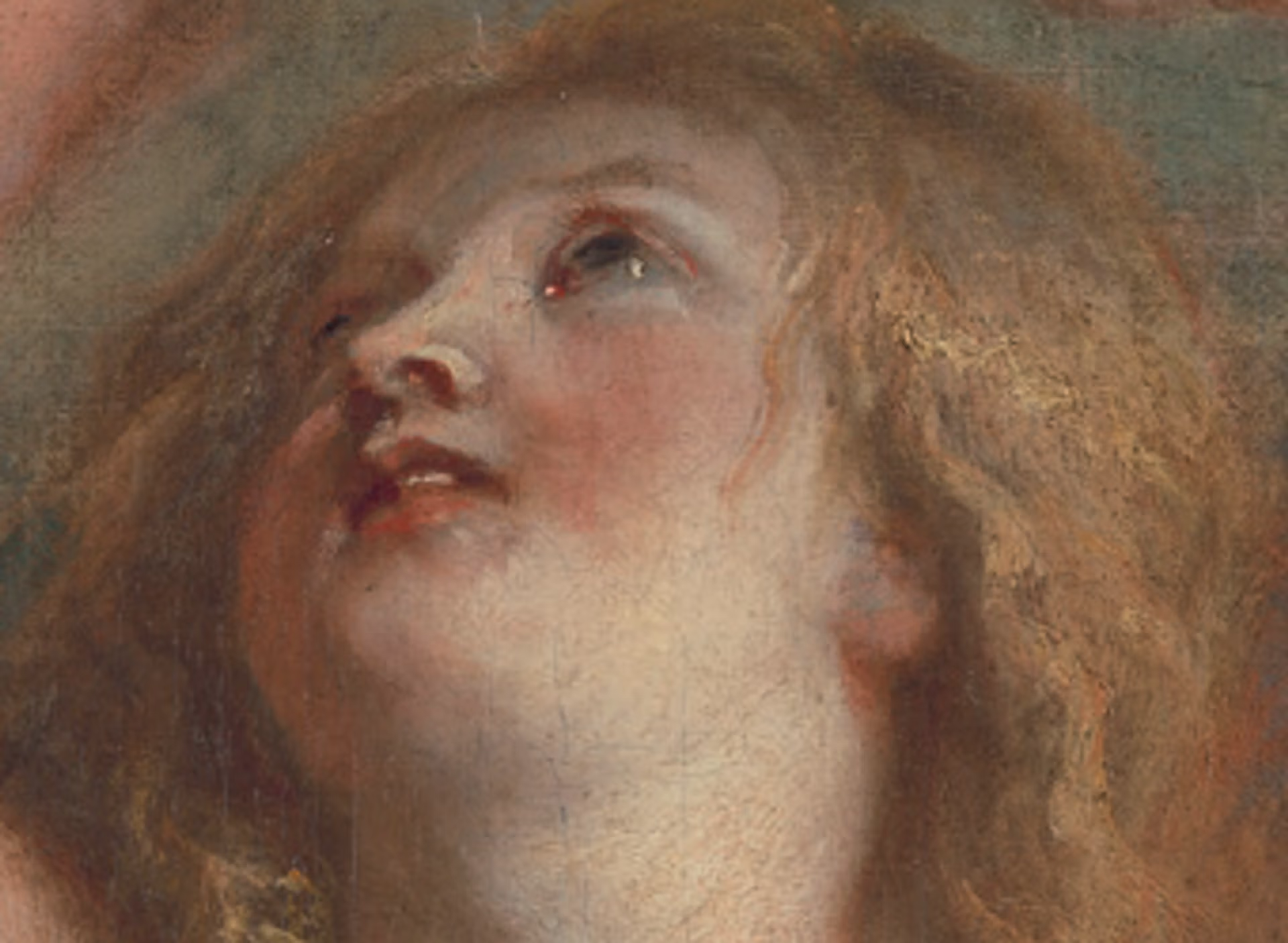
Rubens’ Saint Theresa of Avila through Christ’s intervention rescuing Bernardinus of Mendoza from purgatory (1630-35) (detail)
Royal Museum of Fine Arts Antwerp
Looking at Rembrandt
An essay by Alison McQueen, an art historian at McMaster University in Ontario, focusses on Van Gogh and Rembrandt van Rijn. Van Gogh remained a great admirer of the old master throughout his life.
Both artists ultimately became renowned for their numerous and powerful self-portraits. Rembrandt painted just over 40 and Van Gogh completed 35. Van Gogh was inspired by the number and quality of Rembrandt’s self-portraits, but in style and colouration the work of the two artists could hardly be more different.
Although Van Gogh probably only knew Rembrandt’s painted self-portraits through black-and-white reproductions, he singled out two in his letters: The Prodigal Son in the Inn (Self-portrait with Saskia) (around 1635, Gemäldegalerie Alte Meister, Dresden) and Self-portrait as Zeuxis (1662-63, Wallraf-Richartz Museum, Cologne). He knew Rembrandt’s etched self-portraits.

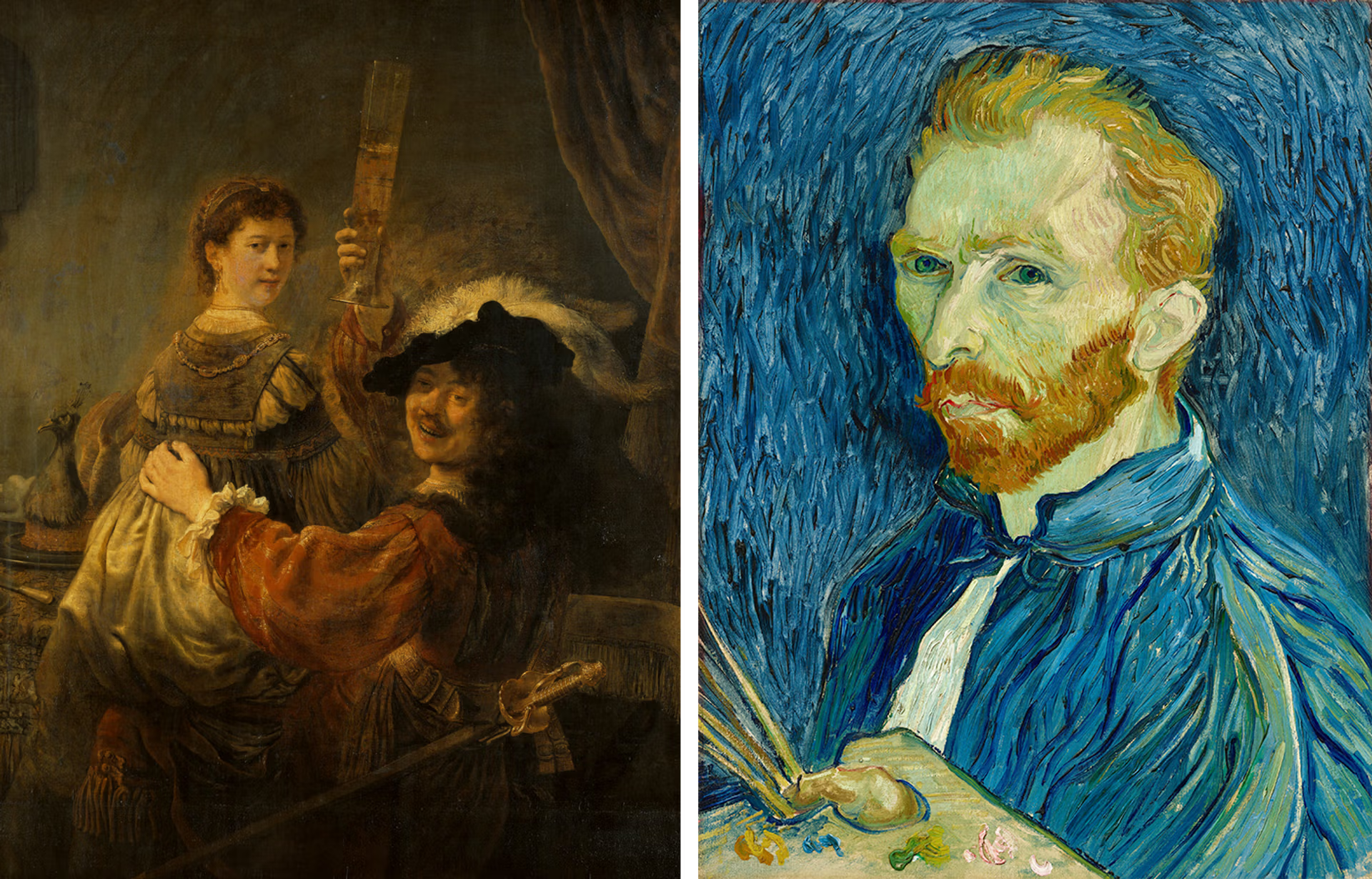
Rembrandt’s The Prodigal Son in the Inn (Self-portrait with Saskia) (around 1635) and Van Gogh’s Self-portrait (September 1889)
Gemäldegalerie Alte Meister, Dresden and Musée d’Orsay, Paris
Vincent praised Rembrandt in September 1889 in a letter to his sister Wil. This was the very moment that he was working on two of his finest self-portraits, done just after his recovery from a mental crisis at the asylum of Saint-Rémy-de-Provence. These paintings are now at the the Musée d’Orsay in Paris and the National Gallery of Art in Washington, DC.
In his letter, Vincent told Wil that “I’ve done two portraits of myself, one of which is quite in character” (both are fine works, but he is more likely to be referring to the Musée d’Orsay’s self-portrait with a background of swirling lines). He then goes on to refer to a self-portrait by his colleague Armand Guillaumin, saying that “it’s one of the rare things that would hold up alongside even the old Dutchmen Rembrandt and Hals”.
Other artists featured in the Oud Holland essays are Frans Hals (by Christopher Atkins), Jacob van Ruisdael (by Iris Louwersheimer) and Jan van Goyen (by Dien Bos and Elmer Koflin).
The Adventures with Van Gogh blog will be taking a summer break in July and August, during which time a selection of articles from our archive will be updated and posted on Fridays. Normal posting will resume on 4 September.
Martin Bailey is a leading Van Gogh specialist and special correspondent for The Art Newspaper. He has curated exhibitions at the Barbican Art Gallery, Compton Verney/National Gallery of Scotland and Tate Britain.

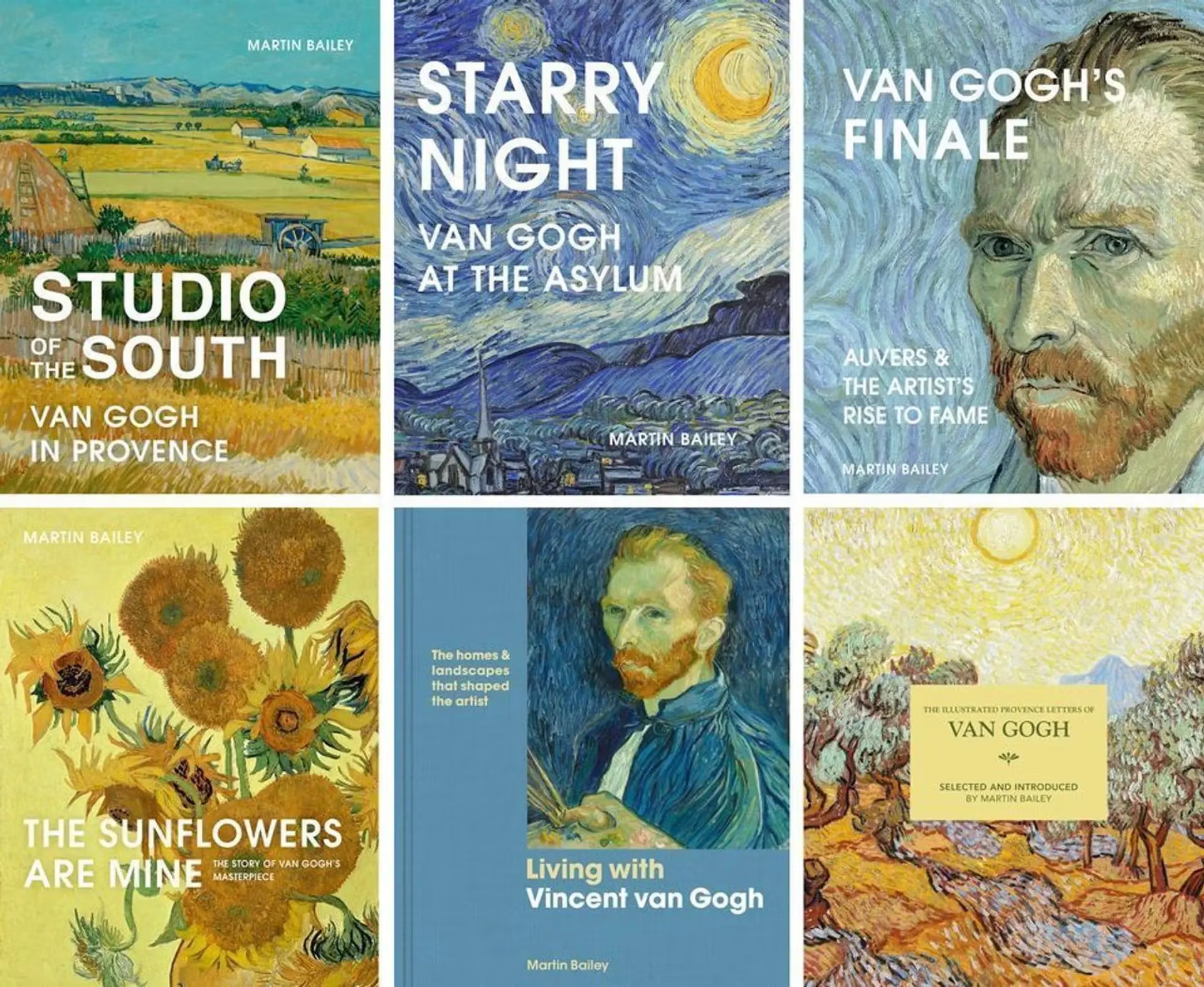
Martin Bailey’s recent Van Gogh books
Martin has written a number of bestselling books on Van Gogh’s years in France: The Sunflowers Are Mine: The Story of Van Gogh’s Masterpiece (Frances Lincoln 2013, UK and US), Studio of the South: Van Gogh in Provence (Frances Lincoln 2016, UK and US), Starry Night: Van Gogh at the Asylum (White Lion Publishing 2018, UK and US) and Van Gogh’s Finale: Auvers and the Artist’s Rise to Fame (Frances Lincoln 2021, UK and US). The Sunflowers are Mine (2024, UK and US) and Van Gogh’s Finale (2024, UK and US) are also now available in a more compact paperback format.
His other recent books include Living with Vincent van Gogh: The Homes & Landscapes that shaped the Artist (White Lion Publishing 2019, UK and US), which provides an overview of the artist’s life. The Illustrated Provence Letters of Van Gogh has been reissued (Batsford 2021, UK and US). My Friend Van Gogh/Emile Bernard provides the first English translation of Bernard’s writings on Van Gogh (David Zwirner Books 2023, UKand US).
To contact Martin Bailey, please email vangogh@theartnewspaper.com
Please note that he does not undertake authentications.
Explore all of Martin’s adventures with Van Gogh here


