





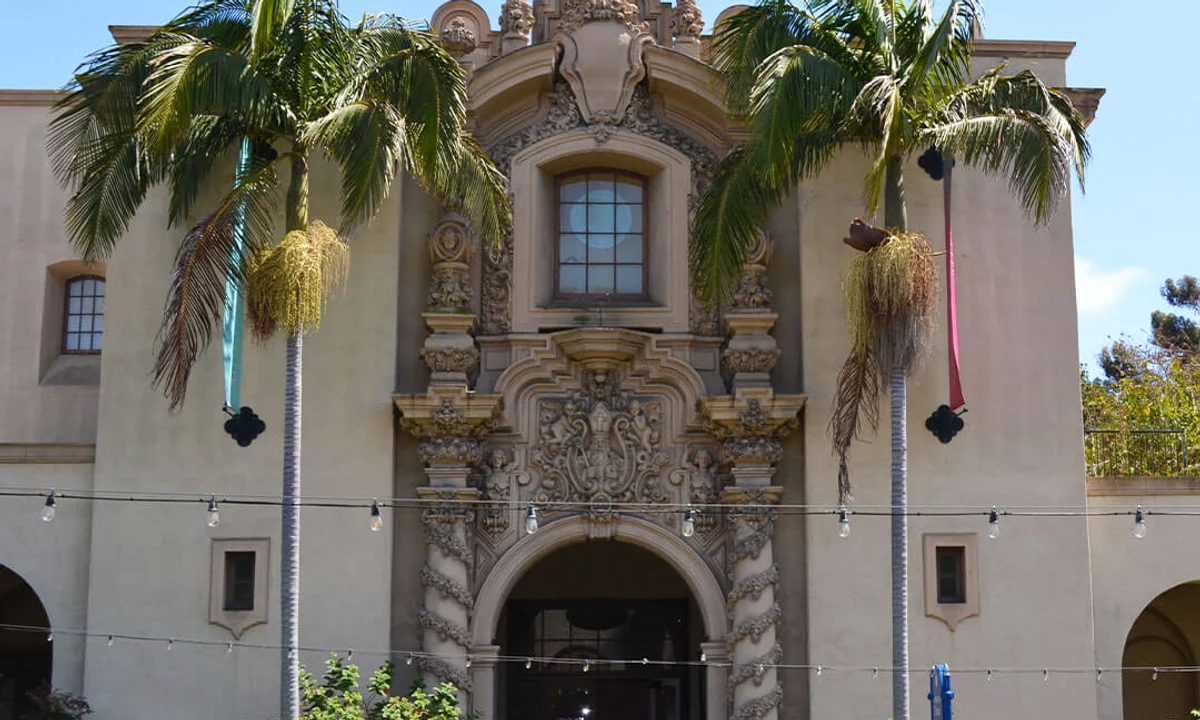
The Institute of Contemporary Art, San Diego (ICA) recently laid off eight staff members, almost half its employees. The layoffs—which took place between 29 July and 16 August—included the museum’s only curator and its director of learning and engagement. The museum cited an ongoing financial crisis. Additionally, its director of operations resigned on 29 July.
The ICA’s main campus in Balboa Park is now closed to the public. Its satellite campus in Encinitas remains open for art classes, as does its outdoor public Sculpture Trail.
On 19 August, a letter of no confidence was sent to the ICA board by a group former and current staff members calling for the removal of the museum’s director, Andrew Utt.
The letter, shared with The Art Newspaper, includes a financial analysis of the museum’s publicly available tax documents for 2022, 2023 and 2024. It cites three consecutive years of mounting financial instability under Utt, marked by unpaid bills, bounced checks and late payments, leaving the museum “unable to meet payroll, maintain staffing or sustain its public-facing operations”.
According to employees, an emphasis on “revenue generation” created a tense relationship between operational staff and executive leadership, which eventually raised the question as to what or whom the revenue would benefit.
“We’ve all witnessed the erosion of the focus and commitment to art and artists within the organisation, and we’ve had to fight hard to keep our basic identity as a space that actually supports artists,” Dianna Elizardo, a former ICA employee, tells The Art Newspaper. “It’s Utt’s hastily produced solutions that put staff departments in competition for resources, and that’s problematic for events and exhibits.”
In an email to The Art Newspaper, a representative of the ICA board confirmed receipt of the letter and said the board is responding directly to its signatories. “The board is meeting regularly and is taking an active role in the organisation’s oversight,” the representative’s statement reads. “We have engaged outside counsel and begun a review of our finances and governance.”
Reached for comment, Utt said he stands by the board’s statement.
Because of recent developments at the ICA, the museum’s current exhibition (Cat Gunn: if only by the light of a new moon) was shut down one month ahead of its scheduled closing date of 13 September. According to Gunn, the decision was made without informing them. The artist has further cited extremely late payments, poor communication and last-minute logistical changes by executive leadership that dramatically altered the nature of the exhibition.
As part of Gunn’s yearlong artist-in-residence programme, they were promised a monthly stipend of $500 between January and December 2025, per their contract. Gunn says that the initial payment, meant for materials and supplies, was six months late, leaving them unable to start their residency until July 2025, when five months of payments were made in bulk.
Payments continued on an irregular basis and were not made in full until December, they say. Gunn adds that Utt told them the ICA was in a “financial crisis”. The artist says that while they had an “amazing experience” with the curatorial team, “the instability of the institution itself as an entity was very jarring, and I felt like I was being jerked around”.
Both Gunn and former staff claim that Utt’s decisions have put them in precarious financial positions. Staff note that their final paychecks have either been delayed, the checks bounced or they were not sent at all. According to California state labour law, a discharged employee must receive all wages due (including accrued vacation) immediately upon termination. Affected ICA employees have submitted claims to the state’s Department of Industrial Relations Labor Commission.
After a previous round of layoffs at ICA’s campus in Encinitas in autumn and winter of 2025, the remaining staff were expected to absorb the responsibilities of terminated employees. For years, the visitor experience team also took on installation and exhibition duties without additional compensation, effectively doubling workers’ responsibilities. Meanwhile, the education and events teams were expected to maintain full operations despite significant cuts to programme funding.
“We know there is a demand and a need within museums and for workers for some sort of protection,” Elizardo says. “What might it look like to have a museum workers’ union for San Diego at large?”


