







It was in the middle of June that Van Gogh began painting wheatfields in 1890. A month later, he wrote to his family that he had become “wholly absorbed in the vast expanse of wheatfields against the hills, large as a sea”. He was then living in the farming village of Auvers-sur-Oise, creating panoramic landscapes. Van Gogh’s efforts in mid-July culminated in five of his most memorable late pictures, completed just days before he made the fateful decision to end his life.
Once one knows what Van Gogh wrote about these wheatfields, it is difficult to look at the paintings without thinking about what came next. On 10 July, Vincent wrote to his brother Theo and sister-in-law Jo: “They’re immense stretches of wheatfields under turbulent skies, and I made a point of trying to express sadness, extreme loneliness.” This outpouring of emotion came at a time when he was feeling abandoned, lacking support from family and friends.
Vincent then made an abrupt U-turn in the very same paragraph. He added that “these canvases will tell you what I can’t say in words, what I consider healthy and fortifying about the countryside”. He may have feared turbulence, but he loved nature. Vincent must have been trying to reassure Theo and Jo about his mental state, but the letter reveals apparent confusion and contradictory feelings.
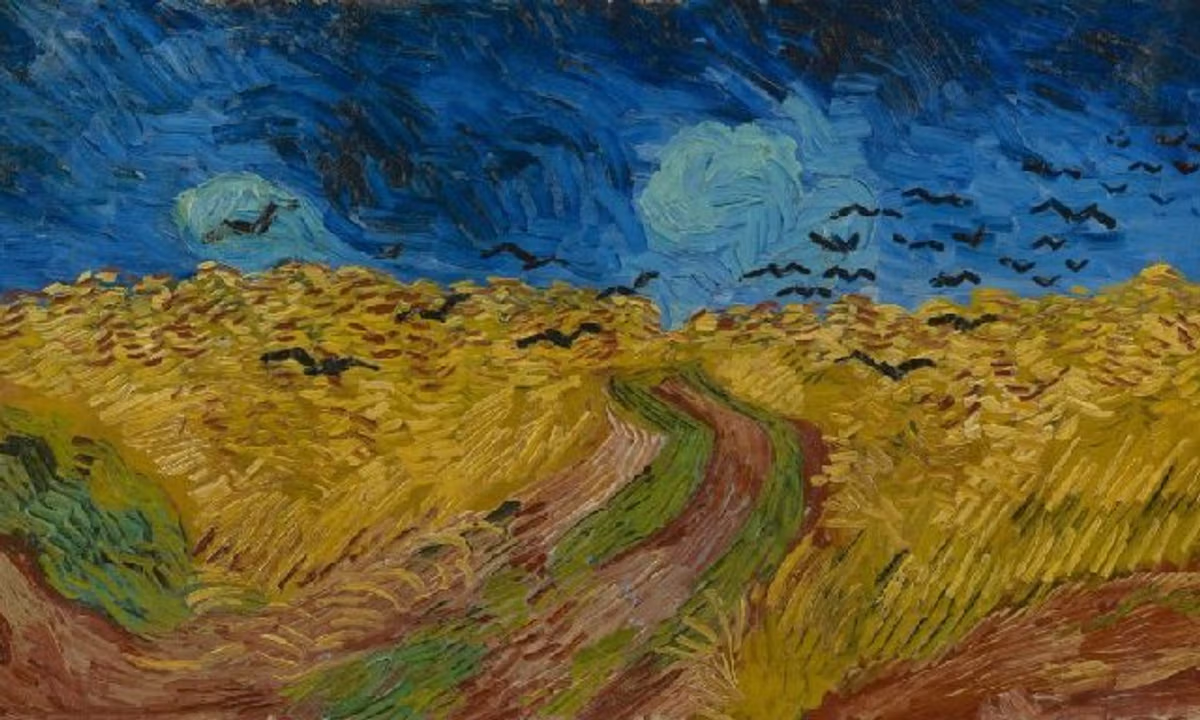
Although long assumed to be Van Gogh’s final picture, Wheatfield with Crows is now believed to have been painted on 8 July, just before the two cited letters. The wheat in the fields has not yet been harvested, suggesting it is early in the month, and the painting is not mentioned in a letter from a week or so later when he records his most recent works. The scene with the crows is therefore likely to have been one of the landscapes he describes as under “turbulent skies”.
In Wheatfield with Crows, three paths diverge, with no destination in sight. Just above the mature wheat, a pack of crows swoops low, but most striking is the unnatural and threatening sky.
Van Gogh’s Wheatfield under Thunderclouds (July 1890)
Van Gogh Museum, Amsterdam (Vincent van Gogh foundation)
Wheatfield under Thunderclouds (July 1890) is another of Van Gogh’s late double-square panoramic landscapes, this one giving an idea of the full expanse of the fields. It was probably painted the day after the scene with the crows. Astonishingly, Van Gogh was at that time completing a painting a day.
This landscape is imaginary, although loosely based on the fields that the artist knew well, a few minutes’ walk from the café where he lodged. In Auvers, wheat was grown on the undulating Vexin plain just above the valley of the River Oise. Interspersed with the wheat were fields of other crops, such as the dark green area in the centre of the composition.
In Wheatfield under Thunderclouds the oppressive and threatening stormy sky dominates the composition. A small sprinkling of red flowers (perhaps poppies) in the central foreground breaks up the greens and yellows. The landscape is depicted from a bird’s eye view, looking down at the patchwork of fields, which recede towards the horizon.

Van Gogh’s The Fields (July 1890)
Private collection
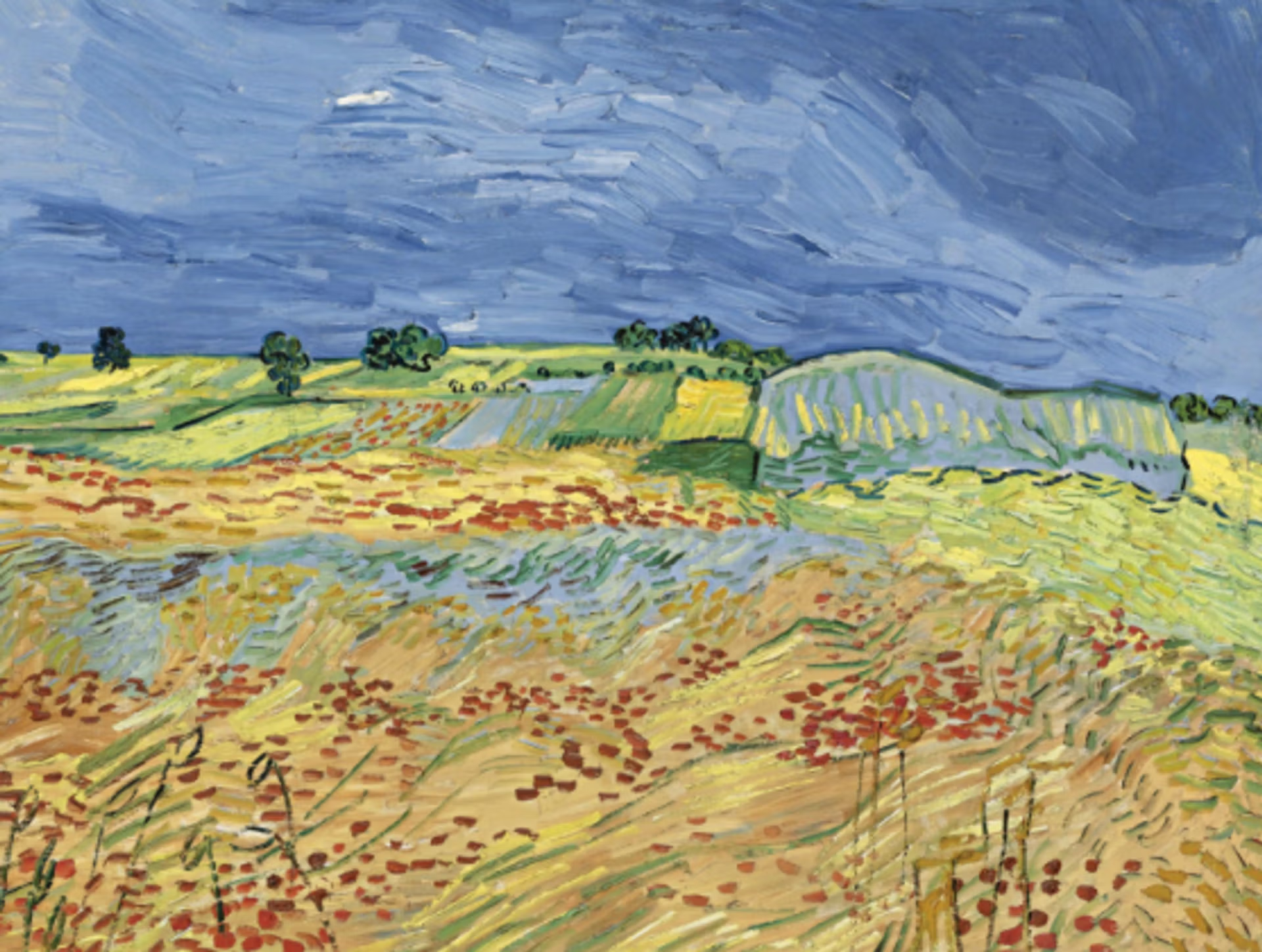
The Fields (July 1890) is yet is a further exploration of a tempestuous sky. This time the wheat is more golden, suggesting that it was painted a few days later, shortly before the harvest. Flowers have proliferated, smothering the fields with scarlet spots.

Van Gogh’s Wheatfields with Reaper, Auvers-sur-Oise (July 1890)
Toledo Museum of Art
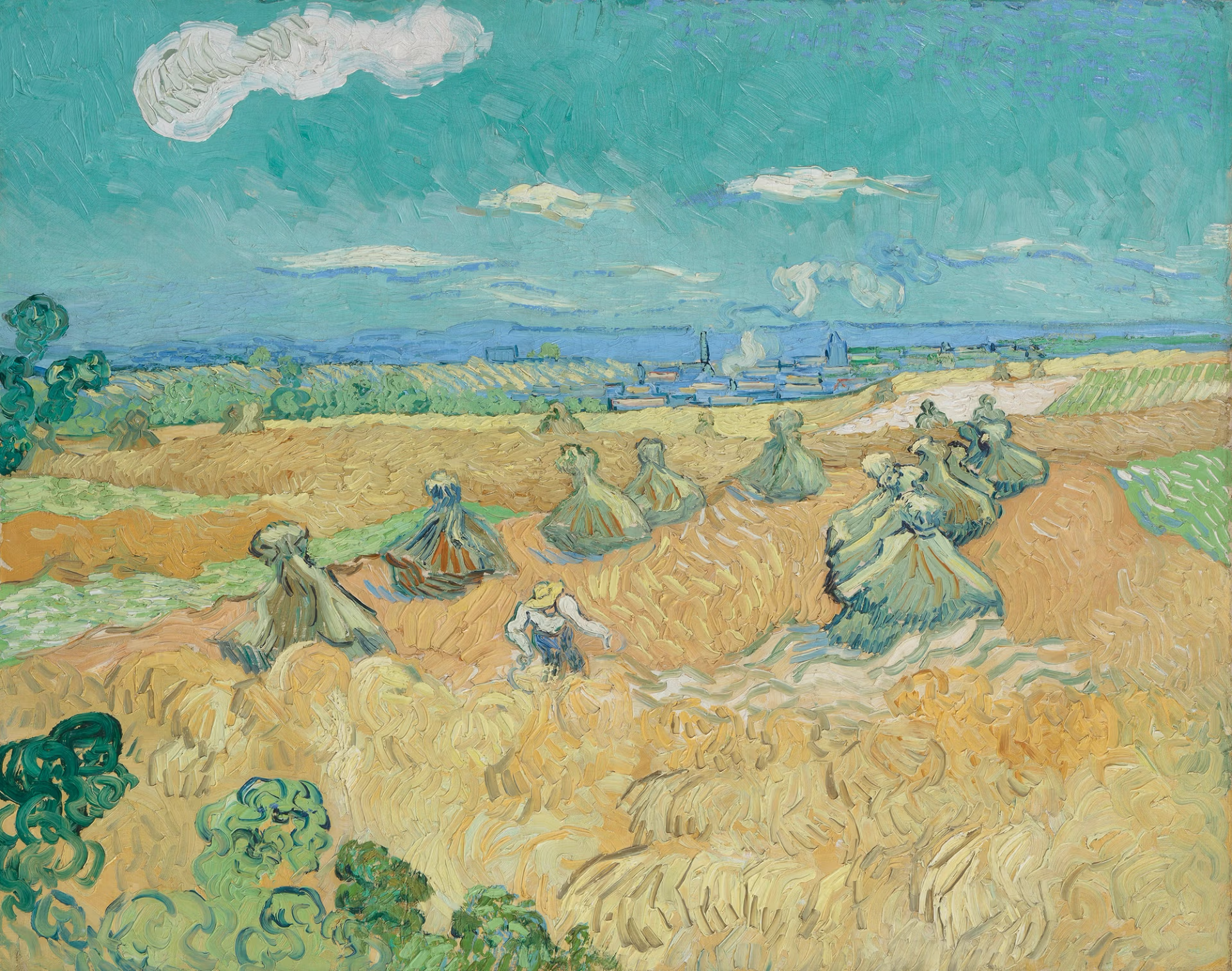
Wheatfields with Reaper, Auvers-sur-Oise is rather different, probably painted a few days after the “turbulent skies”. The stacked wheat shows that the harvest has just begun, suggesting a mid-July date. With the central figure of a reaper, it is almost Van Gogh’s only Auvers landscape to include a human presence. On the horizon one can just make out the village, with its church tower and factory chimney. On the left horizon, one glimpses the other side of the Oise, with more distant hills in blue.

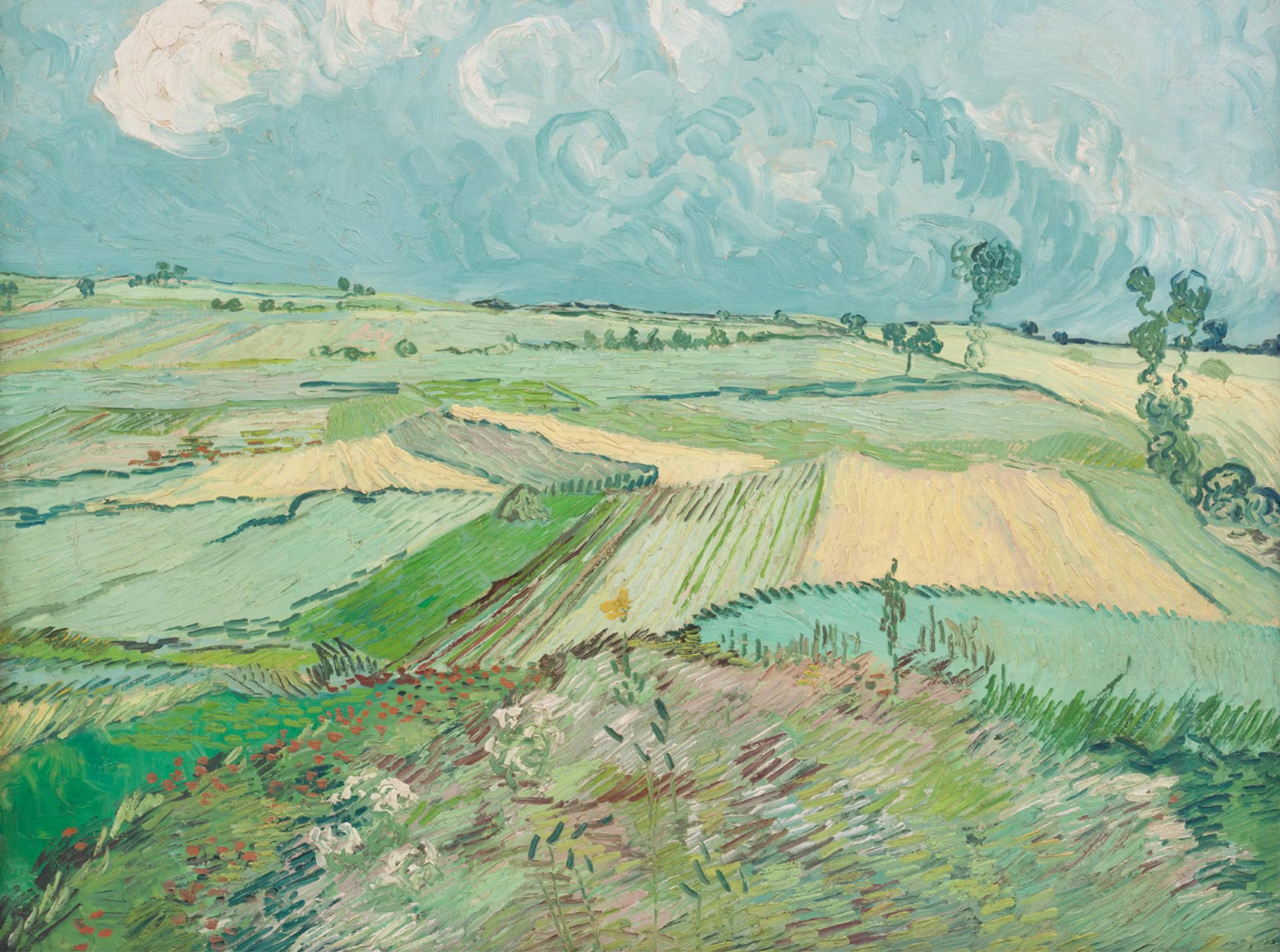
Van Gogh’s Wheatfields after the Rain (July 1890)
Carnegie Museum of Art, Pittsburgh
Wheatfields after the Rain (July 1890) depicts a patchwork of fields: wheat turning a rich golden brown and green areas with other crops. The fields head off at an angle, then veer off in another direction before reaching the horizon.
Around the centre of the composition two darker green fields converge, producing a chevron effect at their meeting point. On the right, three exaggeratedly tall trees reach upwards. White clouds ascend above patches of dark blue, suggestive of a receding storm.

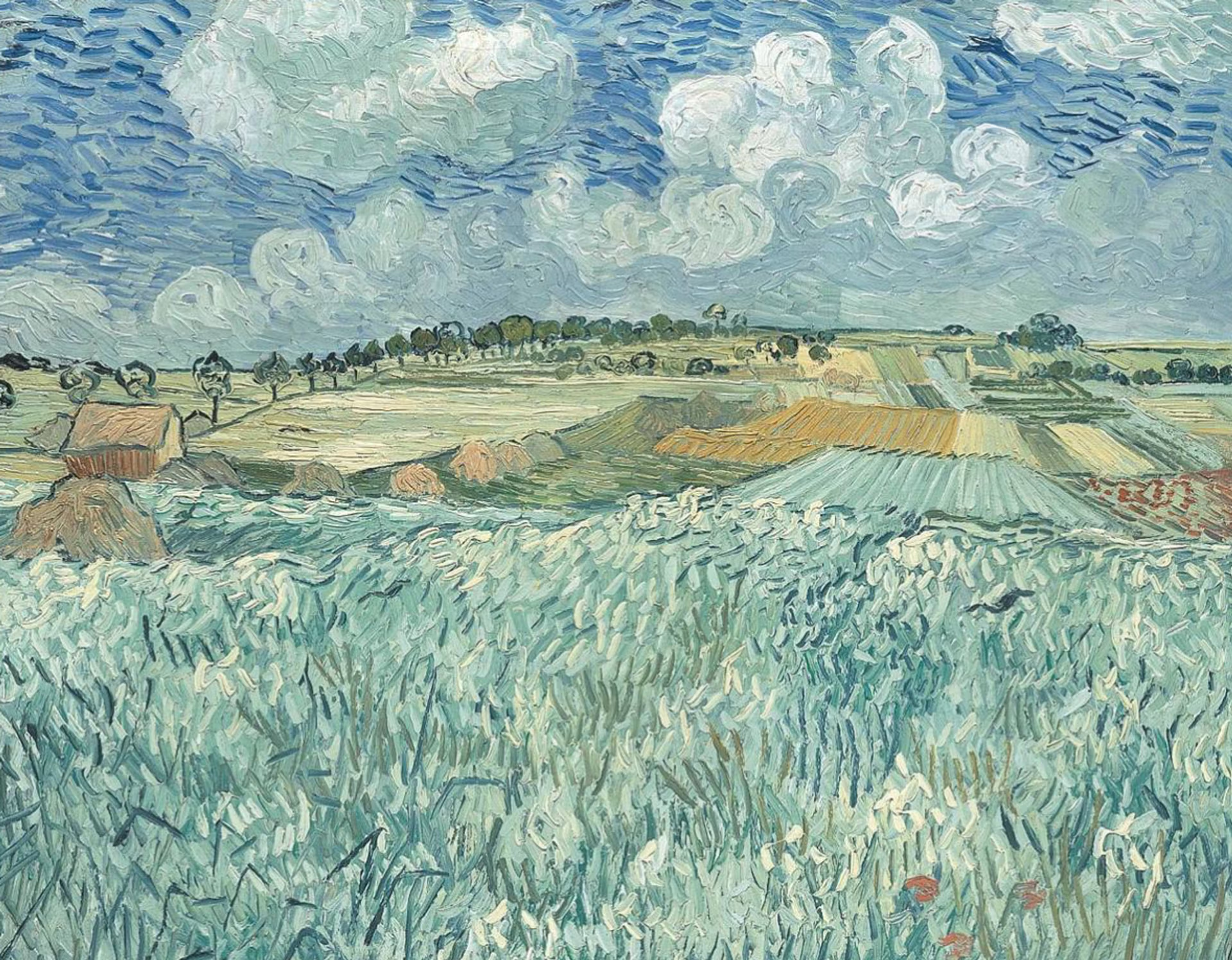
Van Gogh’s Plain near Auvers-sur-Oise (July 1890)
Neue Pinakothek, Munich
The final two wheatfields were completed just over a week before the artist’s suicide. Vincent described them in a letter to Theo on 23 July as “wheat after the rain”.
In Plain near Auvers-sur-Oise (July 1890), the fields stretch into the distance beneath billowing clouds. The lively foreground, composed of short strokes of paint, gives the impression of a windy day. The yellowish fields are ripening wheat. Three red poppies near the lower-right corner catch the eye, while white flowers dot the foreground. Just visible above the field on the right side, two flicks of dark paint indicate a bird, presumably a crow.
On the left, are signs of local life: a farming hut, a row of recently harvested wheat stacks and a tree-lined track. The lane probably represents the route that runs north from Auvers towards the village of Hérouville.
Cycle of life
Wheat held a deeply symbolic significance for Van Gogh: farmers would sow seeds in autumn, the roots would sprout towards the end of the winter, the fields would turn green in spring, and finally the crop would ripen to a burnished gold in June, nearly ready for reaping. And so the cycle would continue, year after year.
Van Gogh had drawn and painted wheatfields throughout his career, in different places and at different times of the year. Although he lived in Auvers for only ten weeks, it was during the best period to observe the changes. When he arrived from the asylum of Saint-Rémy-de-Provence, in May, the fields would have been deep green. The crop then turned a golden brown and the harvest would have begun just before his death.
Auvers represented the final harvest that Van Gogh observed—and captured in paint. Ultimately, his troubles overwhelmed him. On 27 July 1890, during a short but intense mental crisis, he shot himself in his beloved wheatfields.
Other Van Gogh news

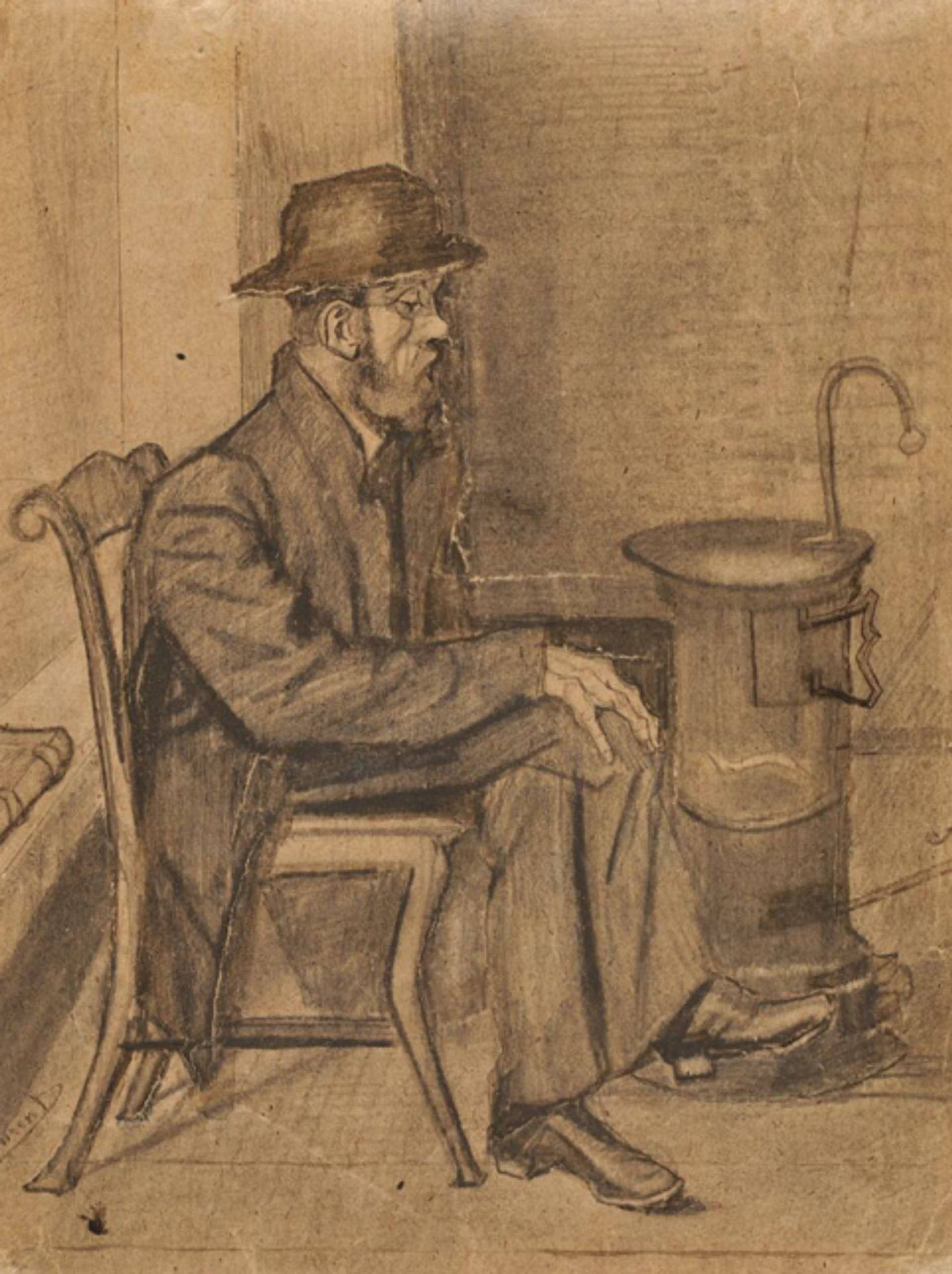
Van Gogh’s Old Man warming himself (Vieux se chauffant) (1881-82)
Courtesy Sotheby’s
Van Gogh’s drawing Old Man Warming Himself is to be auctioned at Sotheby’s, London on 25 June. The estimate is £350,000-450,000. Dating the work, which depicts a man dressed in a thick coat and hat, has been difficult. The date now given by Sotheby’s is 1881-82, which means it was done in either the southern Dutch village of Etten or, more likely, The Hague.
Old Man warming himself has not been exhibited since the 1960s, when it was shown at the Los Angeles County Museum of Art. The drawing was last sold in 1992, also by Sotheby’s, when it was bought by British businessman Joe Lewis, whose wealth came partly from currency trading and property development.
The Van Gogh will be sold at Sotheby’s in their Modern Day Sale as part of a suite of “masterpieces” owned by the Lewis family. Works from this collection, lauded as the most expensive to ever be offered in the UK, already achieved £35.8m (with fees) between four School of London paintings in March, and will feature in a dedicated single-owner sale estimated to raise more than £200m on 24 June.
Martin Bailey is a leading Van Gogh specialist and special correspondent for The Art Newspaper. He has curated exhibitions at the Barbican Art Gallery, Compton Verney/National Gallery of Scotland and Tate Britain.

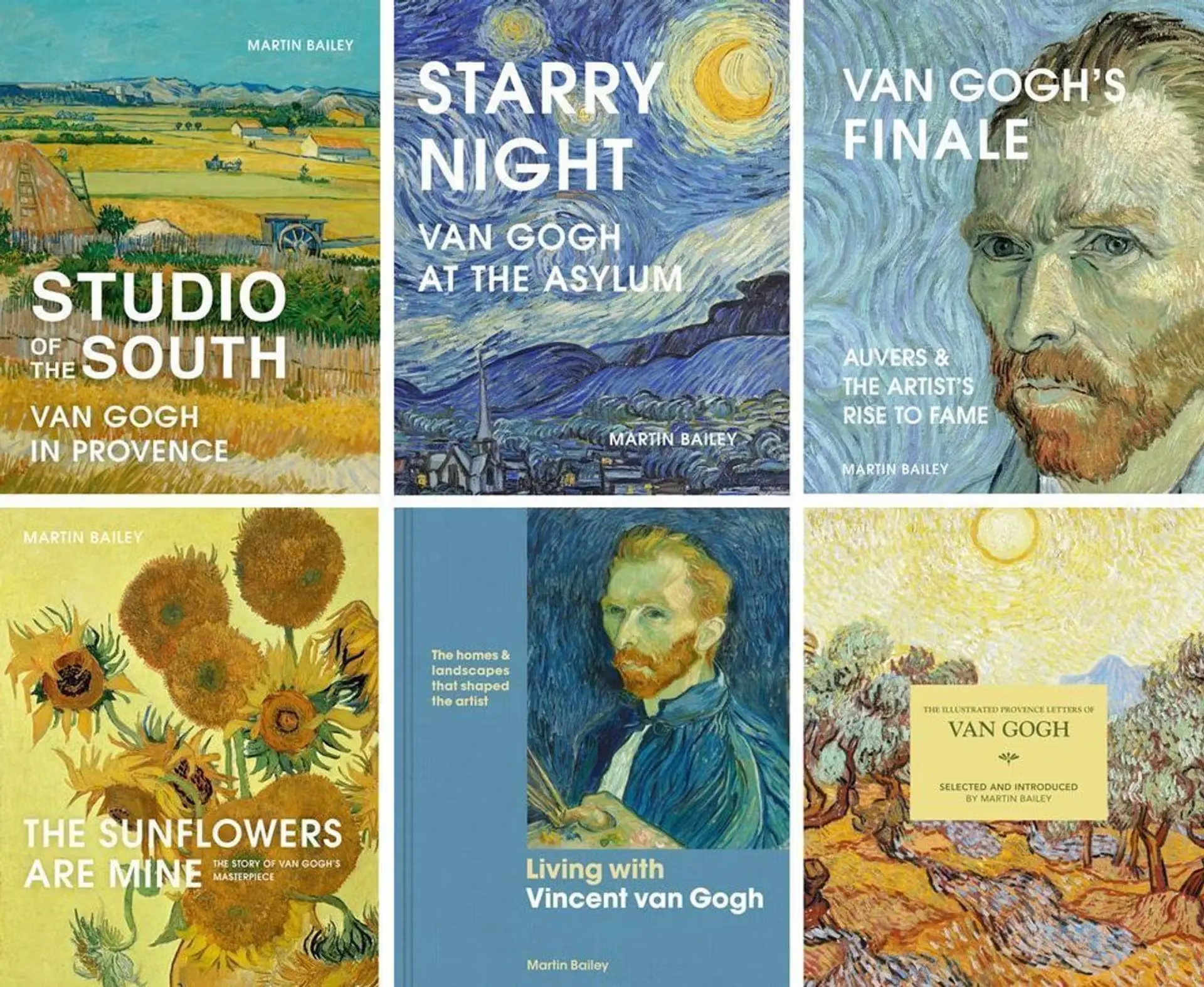
Martin Bailey’s recent Van Gogh books
Martin has written a number of bestselling books on Van Gogh’s years in France: The Sunflowers Are Mine: The Story of Van Gogh’s Masterpiece (Frances Lincoln 2013, UK and US), Studio of the South: Van Gogh in Provence (Frances Lincoln 2016, UK and US), Starry Night: Van Gogh at the Asylum (White Lion Publishing 2018, UK and US) and Van Gogh’s Finale: Auvers and the Artist’s Rise to Fame (Frances Lincoln 2021, UK and US). The Sunflowers are Mine (2024, UK and US) and Van Gogh’s Finale (2024, UK and US) are also now available in a more compact paperback format.
His other recent books include Living with Vincent van Gogh: The Homes & Landscapes that shaped the Artist (White Lion Publishing 2019, UK and US), which provides an overview of the artist’s life. The Illustrated Provence Letters of Van Gogh has been reissued (Batsford 2021, UK and US). My Friend Van Gogh/Emile Bernard provides the first English translation of Bernard’s writings on Van Gogh (David Zwirner Books 2023, UKand US).
To contact Martin Bailey, please email vangogh@theartnewspaper.com
Please note that he does not undertake authentications.
Explore all of Martin’s adventures with Van Gogh here


