






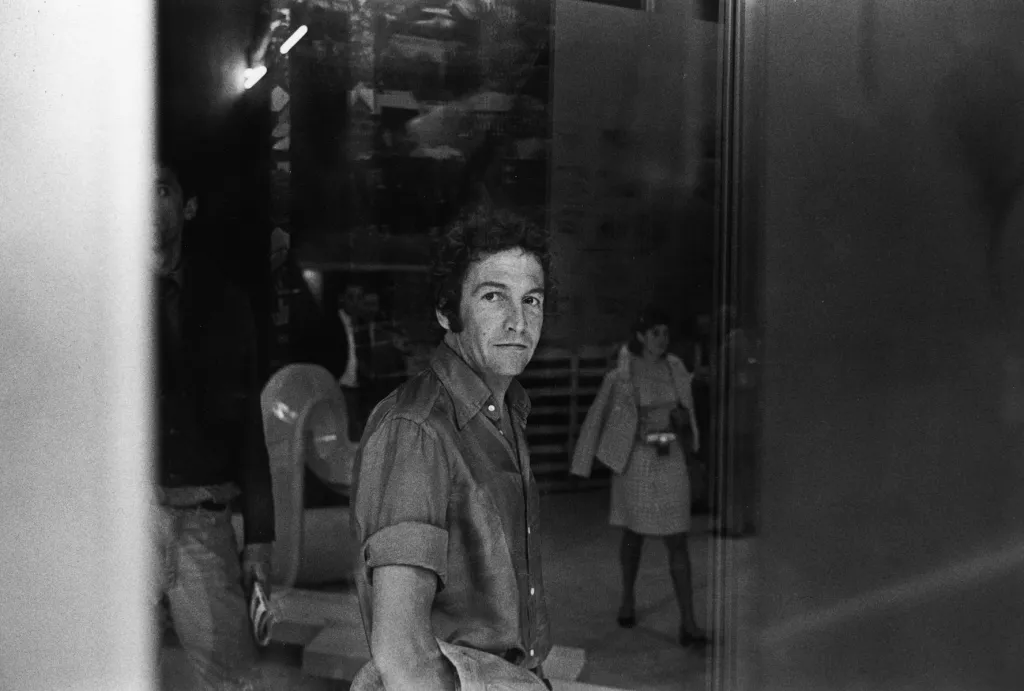
If there’s a single adjective that sums up Robert Rauschenberg (1925–2008), it would have to be protean, though prolific fits as well. Estimated to number some 10,000 works, Rauschenberg’s oeuvre was driven by an expansive sensibility that saw possibilities for art everywhere and a generosity of spirit reflected in his cooperation with other artists.
Rauschenberg’s avidity manifested most famously in his “combines,” begun in the mid 1950s. Harvested from the streets of lower Manhattan, these assemblages of found objects augmented with vigorous applications of paint turned other people’s trash into art-historical treasure, though Rauschenberg’s restless bricolage wasn’t confined to individual pieces. He bounded through multiple mediums as well, including photography, performance, dance, printmaking, and stabs at melding art with technology.
His work was also key to the transition away from the Abstract Expressionists who dominated early postwar New York. Though he retained aspects of AbEx facture, Rauschenberg rejected its psychologized theater of self for celebrations of stuff riddled with coded meanings. In this respect, he was indebted to the Readymades of Marcel Duchamp, and indeed, Rauschenberg and his lover and studio mate in the 1950s, Jasper Johns, were instrumental in rekindling Duchampian irony within midcentury art.
Both Rauschenberg and Johns were labeled Neo-Dadaists in the early going, but rather than dance on the grave of continental self-immolation during the Great War as the Dadaists had done, Rauschenberg and Johns channeled the existential state of Cold War America. Rauschenberg in particular conveyed the sense of the unfettered agency considered a birthright in the United States.
On the occasion of “Rauschenberg 100,” a celebration of the pathbreaking artist’s centennial year, ARTnews surveys his accomplishments


